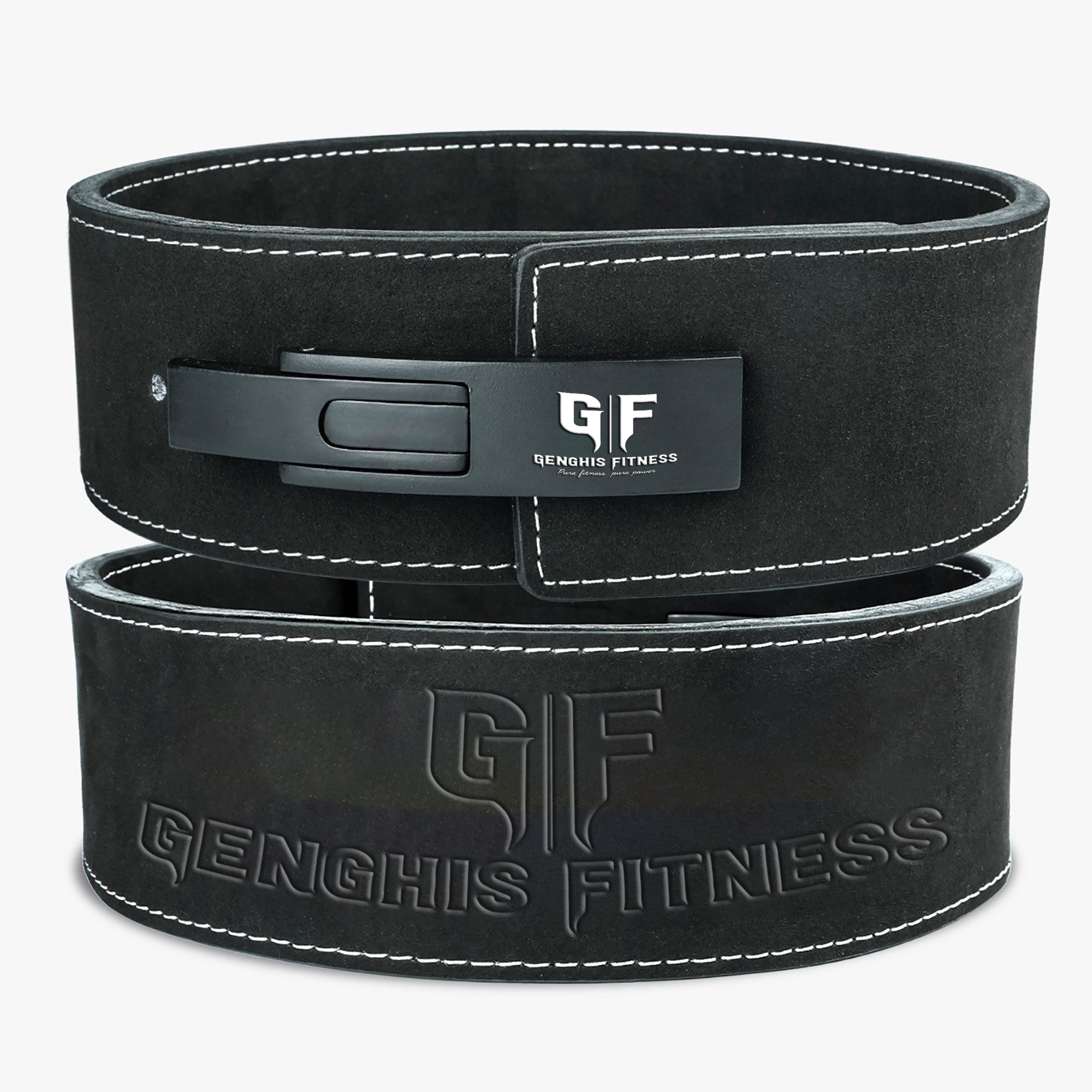
10MM LEVER WEIGHTLIFTING BELT: THE DEFINITIVE GUIDE FOR SERIOUS STRENGTH ATHLETES
The 10mm lever belt is the standard equipment choice for competitive powerlifters, serious strength athletes, and anyone who squats and deadlifts heavy enough that spinal support under load is a genuine performance and safety consideration. It is not beginner equipment or a crutch for weak cores. It is a mechanical tool that increases intra-abdominal pressure, reduces spinal compressive loading, and allows athletes to train at higher intensities more safely across a long career. This guide covers everything you need to know about the 10mm lever belt: how it works, how to choose one, how to use it, and how to make it last.
WHAT A 10MM LEVER BELT DOES FOR YOUR TRAINING
A lifting belt works by providing a rigid surface for the core musculature to brace against, increasing intra-abdominal pressure beyond what the abdominal wall alone can generate. This increased pressure creates a hydraulic effect that reduces compressive loading on the lumbar vertebrae and discs during heavy lifts. The 10mm thickness is the standard for powerlifting competition in most federations because it provides significant rigidity without the extreme stiffness of 13mm belts that some lifters find uncomfortable at the hip flexion angles required in competition squatting and deadlifting.
Research measuring intra-abdominal pressure with and without a lifting belt found increases of 30 to 40 percent in IAP during maximal lifts with a properly fitted, rigid belt. This translates directly to reduced spinal loading that makes heavy training more sustainable over years and decades without accumulating the disc and facet joint stress that unbelted maximal lifting at equivalent intensities would create.
LEVER BELT VS PRONG BELT: WHY LEVERS WIN FOR MOST ATHLETES
The lever mechanism allows the belt to be set to a specific tension position marked on the hole that the lever contacts and then clicked in and out of that position in seconds. Prong belts require threading and adjusting through holes each time the belt is applied, which takes significantly longer and rarely reproduces exactly the same tension from set to set. The practical advantages of lever over prong for most athletes are consistency of tension (same tension every set without variation), speed of application and removal between sets (critical during competition and useful in training), and the psychological comfort of knowing the belt is locked rather than relying on friction of a prong in a hole under heavy loading.
The trade-off is that lever belts require a screwdriver to adjust the lever position when a different tension level is needed. Most athletes set their lever to a single position that works for all their lifting and never change it. Athletes who need significantly different tensions for squatting versus deadlifting (a common preference) may find prong belts more versatile in this specific respect.
HOW TO CHOOSE THE RIGHT 10MM LEVER BELT
LEATHER QUALITY: THE MOST IMPORTANT VARIABLE
The leather quality of a 10mm belt determines its stiffness under bracing, its durability over years of use, and how well it holds its shape across heavy training. Full-grain leather maintains its rigidity across years of use with proper care. Split-grain leather is softer initially and softens further with use, eventually losing the structural stiffness that makes a belt mechanically useful for heavy lifting. Quality full-grain construction is not a luxury upgrade for competitive lifters only. It is the correct construction for any athlete who expects their belt to perform consistently for more than one to two years of serious training.
The Genghis Fitness 10mm lever belt uses full-grain leather construction that maintains its stiffness and shape across training blocks that would reveal the softening in lower-quality alternatives. The lever mechanism is built to lock and release consistently without the mechanism slop that develops in cheaper hardware after months of regular use.
WIDTH: 4-INCH VS OTHER OPTIONS
The most common 10mm lever belt width is 4 inches, which is the maximum width allowed in IPF competition. Four-inch belts provide the most surface area contact with the torso, maximizing the bracing surface available for IAP generation. Narrower belts at 3 inches are sometimes chosen by athletes with shorter torsos where a 4-inch belt contacts the hip bones in the squat bottom position and creates discomfort. For most athletes, 4 inches is the optimal width that delivers maximum mechanical advantage without fitting issues.
SIZING: MEASURE BEFORE YOU ORDER
Measure your waist at the position you intend to wear the belt during training, typically at or just above the iliac crest for squatting and slightly lower for deadlifting. Compare this measurement to the manufacturer’s sizing chart. Lever belts must be sized so that the lever locks at a position that creates the desired tension level. If the belt is too large, the lever cannot provide adequate tension even at its tightest position. If the belt is too small, the lever cannot close at all. The Genghis Fitness lever belt sizing guide matches measurements accurately, and when in doubt between two sizes, the smaller size is typically preferable for lever belt fit.
HOW TO USE A 10MM LEVER BELT CORRECTLY
POSITIONING ON THE TORSO
For squatting, position the belt at or just above the iliac crest, centered on the torso with the lever in front. The belt should cover the lower lumbar region where compressive loading is highest during a squat. For deadlifting, some athletes wear the belt slightly lower to avoid contact between the belt top edge and the lower ribs during the hip flexion at the start of the pull. Experiment to find the position that provides the best support without restricting your movement at the deepest point of the squat or the most flexed position of the deadlift setup.
BRACING AGAINST THE BELT
A belt only increases IAP when the core actively braces against it. Put the belt on, take a deep breath into your belly and lower back simultaneously to expand the torso in all directions, then brace your abs as if you are about to be punched in the stomach. This 360-degree expansion and contraction against the belt’s rigid surface creates the IAP increase that protects the spine. Simply wearing a belt without active bracing provides some support through the belt’s circumferential compression, but active bracing against a stiff belt produces significantly greater IAP than passive belt wearing. Practice this bracing pattern with lighter weights before your heavy sets so it is automatic when the load demands it most.
WHEN TO WEAR YOUR 10MM LEVER BELT
Use your lever belt for sets at or above 80 percent of your one-rep maximum on squats and deadlifts. At intensities below this threshold, the benefit of the belt is smaller and the practice of unbelted lifting maintains the core strength that makes belted lifting more effective by giving the musculature something strong to brace against. Pair the lever belt with knee sleeves for joint warmth throughout the session and lifting straps for high-rep deadlift sets where grip would otherwise limit training volume. This combination covers the three primary training support needs for heavy lower body sessions: spinal support, knee joint warmth, and grip assistance.
CARING FOR YOUR 10MM LEVER BELT
Full-grain leather belts require minimal maintenance but reward consistent basic care with dramatically extended lifespan. Wipe the belt down after each session with a dry cloth to remove chalk and sweat before they saturate the leather. Apply a leather conditioner every two to three months to prevent the leather from drying and cracking, particularly in dry climates or training environments. Store the belt flat or hung straight, not rolled tightly, which can cause the leather to develop a permanent curve that alters its fit. Keep the lever mechanism clean by wiping the pivot point and contact surfaces with a dry cloth and very occasionally applying a drop of machine oil to the pivot pin if the lever begins to feel stiff or gritty.
A properly cared for full-grain leather 10mm lever belt lasts a decade or more of heavy training. Athletes who train seriously for ten years and take care of their belt will likely only need to buy one. That is the cost-per-use equation that makes quality construction the correct economic choice even at a higher upfront price than budget alternatives.
FINAL WORDS
The 10mm lever belt is the foundational piece of heavy training equipment for any serious strength athlete. Get the leather quality right: full-grain only. Get the sizing right: measure carefully and consult the sizing chart. Learn to brace against it correctly: 360-degree expansion and contraction before every heavy rep. Use it strategically on your heaviest sets and maintain it properly to get a decade of reliable performance from a single purchase. The Genghis Fitness 10mm lever belt delivers on all of these criteria. Pair it with quality knee sleeves, lifting straps, and a program that demands what the belt was built to support, and you have a complete heavy training setup that protects your longevity while maximizing your performance.
Certified strength and conditioning specialists with over 10 years of experience in powerlifting, nutrition, and evidence-based fitness content. Based in New York City.
This guide is part of the Genghis Fitness weightlifting belt guides, where 167 articles cover every belt type, training use case, and buying decision from beginner to competition level.