Genghis Fitness · Training and Strength
Best Glute Exercises: EMG-Ranked Movements, Hip Thrust vs Squat Evidence, Programming for Size and Strength, and the Most Common Training Mistakes
Updated 2026 | By Team Genghis Fitness | 22 min read
The gluteus maximus is the largest muscle in the human body by volume and one of the most functionally important muscles for athletic performance. It is the primary hip extensor, responsible for the explosive hip drive that generates power in sprinting, jumping, squatting, deadlifting, and every athletic movement that requires forceful lower body extension. Despite its size and importance, the glutes are chronically underdeveloped in many athletes, partly because sedentary sitting shortens hip flexors and inhibits glute activation, and partly because the most commonly performed lower body exercises (squats and leg presses) do not maximally load the glutes through their full range of motion. Knowing which exercises produce the highest glute EMG activation, understanding why hip thrusts outperform squats for direct glute development, and programming glute training correctly are the foundations of building this critical muscle group effectively.
EMG-Ranked Glute Exercises: Which Movements Activate Most
Electromyography (EMG) research provides objective data on relative muscle activation during different exercises, giving a scientific basis for exercise selection beyond anecdotal preference. Research published in the Journal of Applied Biomechanics by Bret Contreras and colleagues measured gluteus maximus EMG across a comprehensive range of exercises in trained individuals and found the following hierarchy of peak glute activation (normalised to maximum voluntary contraction): barbell hip thrust produced the highest peak activation (averaged approximately 232 percent of MVC), followed by the barbell step-up, lateral band walk, and kneeling squat, while back squats produced considerably lower peak glute activation despite being a staple lower body movement. Single-leg movements generally produced higher glute activation than bilateral equivalents at comparable effort levels, reflecting the greater demand on the stance-side glute during unilateral loading. The practical implication is that hip thrusts and their variations should be the centrepiece of any programme focused on maximal glute development, complemented by unilateral movements like Bulgarian split squats and step-ups for complete gluteal development across the full range of motion.
Hip Thrust vs Squat: What the Research Shows
The hip thrust versus squat debate for glute development has been addressed in controlled training studies that go beyond EMG to measure actual muscle growth outcomes. Research published in PeerJ compared hip thrust training to back squat training over 6 weeks and found that hip thrusts produced greater gluteus maximus growth (measured by ultrasound) and greater improvements in hip thrust strength, while back squats produced greater quad development and greater improvements in squat strength. Neither exercise was superior for overall lower body development, but each produced the expected specificity-of-adaptation results: hip thrusts are superior for glute-specific hypertrophy and hip extension strength, squats are superior for quad development and squat-pattern strength. For athletes wanting to maximise glute size and hip extension power, incorporating both exercises is the optimal strategy, using hip thrusts as the primary glute exercise and squats as the primary quad movement rather than relying on squats alone for complete lower body development. The hip thrust is performed most effectively with a loaded barbell across the hips, sitting on the floor with the upper back against a bench, and driving the hips up until full hip extension is achieved with a posterior pelvic tilt at the top. Protecting the hips during loading is supported by using our hip circle bands for warm-up activation before heavy hip thrust sets.
The Best Glute Exercises Ranked for Athletes
Barbell hip thrust: The gold standard for peak glute activation and glute-specific hypertrophy. Load progressively with a barbell, use full hip extension at the top with a posterior pelvic tilt (squeeze the glutes hard at the top, do not hyperextend the lumbar spine), and perform 3 to 4 sets of 8 to 15 reps as the primary glute exercise.
Romanian deadlift (RDL): Superior to conventional deadlifts for glute stretch-mediated hypertrophy because the hip hinge pattern keeps constant tension on the glutes and hamstrings throughout the movement. The stretched position at the bottom of an RDL is where the majority of glute and hamstring growth stimulus occurs. Perform 3 to 4 sets of 8 to 12 reps with controlled descent. Grip support from our lifting straps allows maximal loading without grip becoming the limiting factor.
Bulgarian split squat: The highest-rated unilateral exercise for combined glute and quad development. The rear foot elevated position increases hip flexor stretch and glute activation on the working leg compared to standard lunges. Perform 3 sets of 8 to 12 reps per leg.
Cable pull-through: A hip hinge pattern with constant cable tension throughout the movement, providing glute activation across the full range from deep hip flexion to full extension. Excellent for athletes who struggle to feel glute activation in barbell movements.
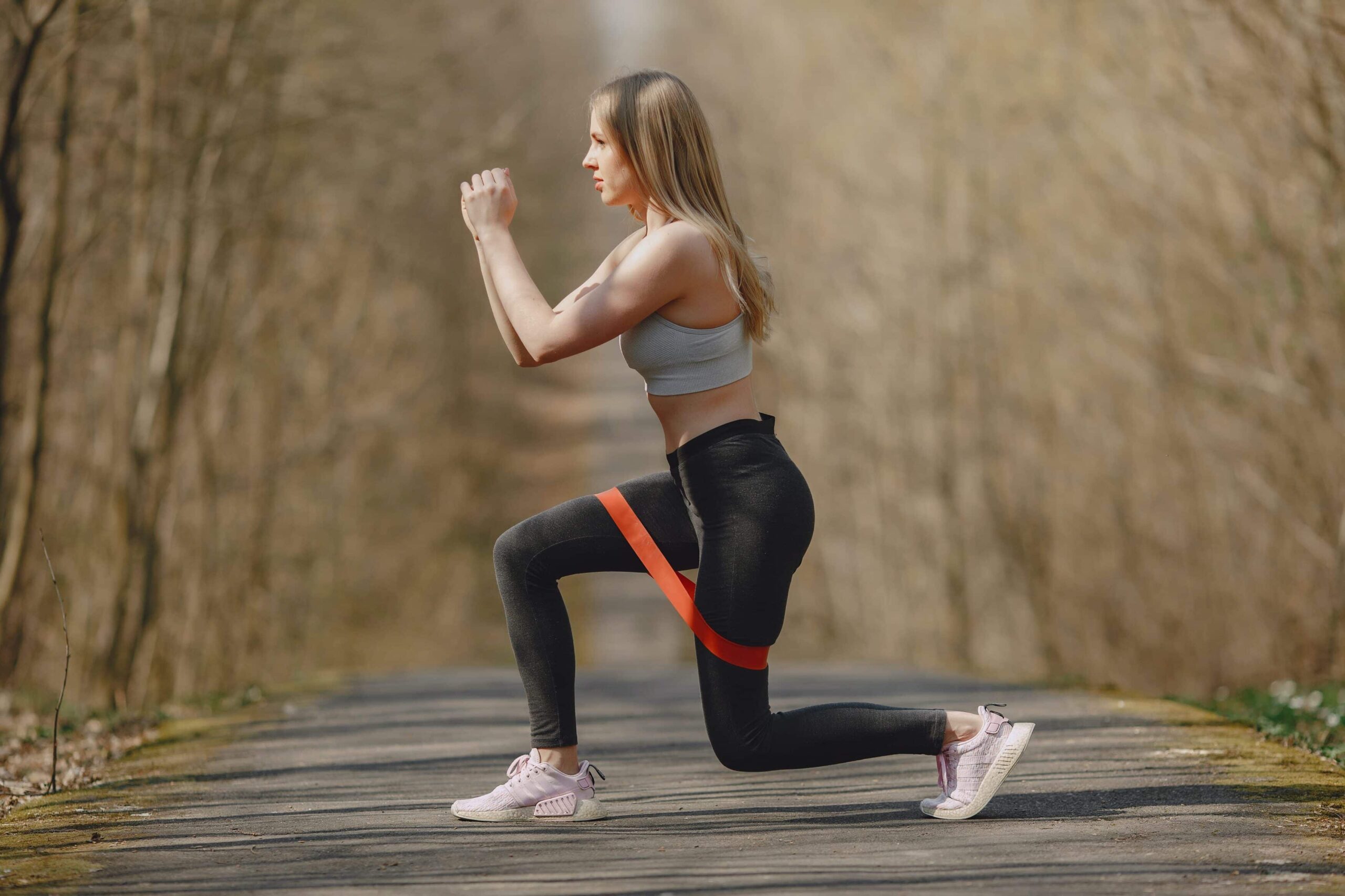
Lateral band walks and clamshells: Target the gluteus medius (the smaller outer glute that controls hip abduction and pelvic stability) and gluteus minimus, which are undertrained in athletes who focus only on the gluteus maximus. Gluteus medius weakness contributes to knee valgus during squats and running, hip drop during single-leg movements, and increased injury risk at the knee and hip. Using hip circle resistance bands for these movements provides progressive overload for the abductors that bodyweight alone cannot provide.
Common Glute Training Mistakes
The most common mistake is relying exclusively on squats and deadlifts for glute development without adding dedicated hip thrust variations. While squats and deadlifts are valuable compound movements, the EMG data clearly shows that hip extension-dominant exercises like hip thrusts produce significantly greater peak glute activation than knee-dominant exercises like squats at comparable effort levels. Adding 2 to 3 sets of hip thrusts or single-leg hip thrusts per session in addition to squats rather than instead of them produces substantially better glute development outcomes. The second common mistake is not achieving full hip extension at the top of hip thrust movements, which reduces peak glute activation at the most important part of the movement. The third mistake is training glutes only with heavy compound movements without addressing the gluteus medius and minimus through abduction work, leaving a functional deficit that increases injury risk and limits the appearance of the outer glute development.
Frequently Asked Questions
How Often Should Athletes Train Glutes?
The gluteus maximus is a large, fatigue-resistant muscle that can tolerate and benefit from higher training frequency than smaller muscle groups. Training glutes 2 to 3 times per week with a mix of heavy compound movements (hip thrusts, RDLs, split squats) and lighter isolation work (band exercises, cable work) is the most effective frequency for maximising hypertrophy in most athletes. Allowing 48 hours of recovery between direct glute sessions is sufficient for most athletes, though heavy hip thrust sessions may require 72 hours before repeating the movement pattern with full intensity. Total weekly volume of 10 to 20 sets per week distributed across 2 to 3 sessions is the evidence-based range for glute hypertrophy in trained individuals.
Do Squats Build Glutes Effectively?
Squats do contribute to glute development, particularly when performed with a deep range of motion (below parallel) and a wide stance that increases glute involvement relative to a narrow stance shallow squat. However, squats are primarily a quad-dominant exercise that produces lower peak glute activation than hip thrust variations at comparable loads. For athletes wanting to maximise both quad and glute development, squats and hip thrusts should be treated as complementary exercises rather than alternatives, with each serving as the primary exercise for its respective dominant muscle group within the same programme.
Build the Engine. Drive Every Rep From Your Biggest Muscle.
Strong glutes power everything. Quality gear supports the training that builds them.
Shop Hip Circle Bands Shop Lifting BeltCertified strength and conditioning specialists with over 10 years of experience in powerlifting, nutrition, and evidence-based fitness content. Based in New York City.
BUILD YOUR GLUTES WITH THE RIGHT RESISTANCE TOOLS
Hip circles activate the glute medius before every set. Ankle straps open up cable work from every angle.
Ankle Straps Knee Sleeves