Genghis Fitness · Gear and Training Accessories
Best Lifting Grips for Deadlifts: Straps vs. Hooks vs. Chalk, When to Use Each, and What Works at Maximum Loads
Updated 2026 | By Team Genghis Fitness 01 19 min read
The grip question for deadlifts splits into two distinct problems: which grip aid provides the most security at maximum loads, and which approach best balances grip assistance with grip strength development across a complete training program. Conflating these two questions leads to poor decisions. An athlete who always uses maximum-security aids sacrifices grip development. An athlete who never uses grip aids limits the training loads they can expose their posterior chain and back to because grip becomes the ceiling before the target muscles are challenged. The answer depends on understanding what each tool does and where it fits in a complete training approach.
The Three Options and What They Each Do
Chalk
Magnesium carbonate chalk applied to the hands before deadlifting increases friction between the palm and the bar knurling by absorbing sweat and adding a dry, high-friction surface. Chalk does not add mechanical grip security beyond friction. It does not prevent the bar from rotating in the hands if grip strength is insufficient to hold the bar stationary. What chalk does is remove the variable of sweat, which at moderate loads is often the primary reason for grip failure rather than true muscular grip strength insufficiency.
A study in the Journal of Athletic Training confirmed that chalk use significantly reduced grip slip frequency during lifting tasks, validating the practical experience that chalk is the simplest and most training-compatible grip aid. Using chalk does not bypass grip strength development the way straps do, making it the most conservative first option for grip support at moderate to high training loads.
Lifting Straps
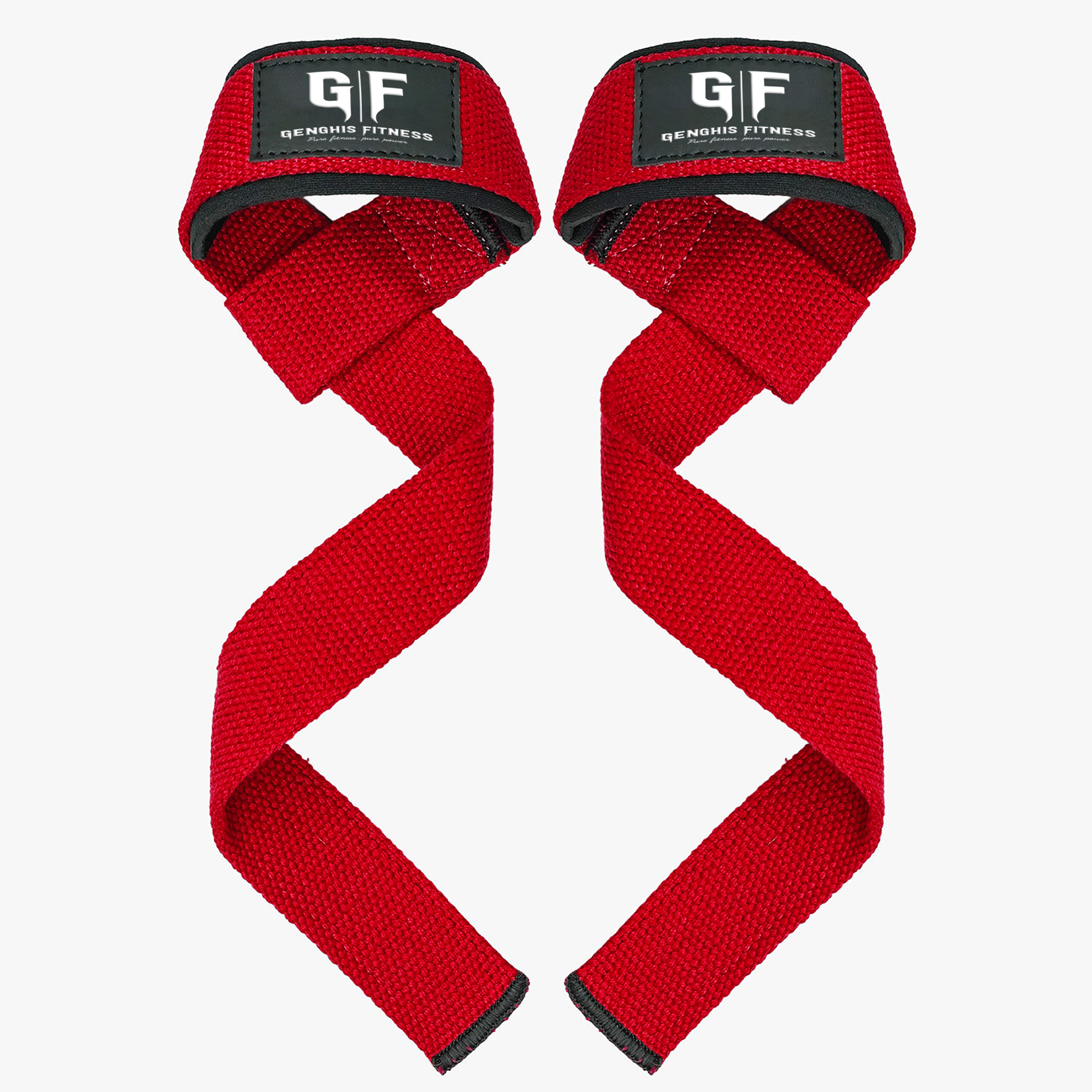
Lifting straps wrap around the wrist and bar, transferring bar load from the fingers and palm to the wrist and forearm structure rather than relying on grip strength alone. Quality lasso straps used correctly are essentially grip-failure-proof at loads up to the capacity of the strap and wrist structure, which for quality leather or nylon straps is well above any training load. For maximum-effort deadlift sets where grip would otherwise be the limiting factor before the primary pulling muscles reach genuine failure, straps allow training at true maximum load without grip as a ceiling. The correct wrapping technique is detailed in our how to use lifting straps guide.
The trade-off is clear: straps completely remove grip development stimulus for the sets they are used on. A training program that uses straps on all pulling sets develops a grip strength gap that becomes apparent whenever straps are unavailable. The standard protocol among experienced strength athletes is to perform warm-up sets and sets below maximum effort without straps (developing grip), and apply straps for the top working sets where training load exceeds what grip alone can handle.
For maximum deadlift loads specifically, the figure-8 lifting straps provide the most secure bar-to-wrist connection available, with a closed loop that makes bar detachment mechanically impossible during a floor deadlift. The practical experience of athletes switching to figure-8 straps for maximum attempts is covered in our figure-8 strap experience guide.
Lifting Hooks
Lifting hooks are metal or hard plastic hook attachments that go around the wrist and have a hook that extends under the bar. Like figure-8 straps, hooks create a closed mechanical connection between the wrist and bar, bypassing grip strength entirely. The advantage of hooks over straps is speed of setup: hooks slip on and off in seconds compared to the 10 to 20 seconds required to wrap straps. The trade-off is that hooks create a more rigid, less adaptable bar interface that some athletes find uncomfortable, particularly at the wrist angle required for pulling exercises. Whether hooks or straps are safer is covered in our lifting hooks safety guide. The full comparison of hooks versus straps for different pulling exercises is in our hooks vs straps guide.
Deadlift-Specific Grip Aid Comparison
| Variable | Chalk | Straps | Hooks |
|---|---|---|---|
| Max-load security | Moderate | Very high | Very high |
| Grip development preserved | Yes (fully) | No | No |
| Setup speed | Instant | 10 to 20 sec | 2 to 3 sec |
| Competition legal | Yes | Yes (raw/classic) | No (most feds) |
| Natural feel on bar | Yes | Yes (with practice) | Takes adjustment |
Recommended Protocol by Training Context
Competitive powerlifter (raw/classic): Chalk for all sets except maximum training deadlift attempts. For maximum attempts in training, lasso straps or figure-8 straps to allow true max effort without grip as the limiting factor. Train without straps on all other sets to maintain grip for competition. Reserve hooks for accessory row work only.
Bodybuilder or recreational strength athlete: Chalk for lighter work, straps for working sets above 75 percent of maximum. No competition restriction on strap use justifies saving some training sets for grip-specific work before applying straps for primary working sets.
CrossFit athlete: Chalk for all deadlift work. The competition context for CrossFit allows chalk but not straps for most events, so training with straps on heavy sets creates a preparation gap. Develop grip strength for competition, use chalk as the primary aid. The full CrossFit grip accessory comparison is in our CrossFit grips guide.
Frequently Asked Questions
Do Grips Make a Meaningful Difference at Sub-Maximum Loads?
At loads below 70 percent of your maximum deadlift, grip is rarely the actual limiting factor if basic chalk use is employed. Grip aids provide their most meaningful benefit at loads where grip would genuinely fail before the primary muscles are exhausted. Training with chalk only up to the loads where grip becomes a genuine limitation, then applying straps, is the most productive protocol for developing both grip strength and posterior chain strength simultaneously.
What About Mixed Grip vs. Double Overhand?
Mixed grip (one hand supinated, one pronated) increases grip capacity by approximately 15 to 20 percent compared to double overhand at maximum loads without any aids. Many lifters use mixed grip without chalk or straps for their working sets as the first line of grip support before resorting to straps. The limitation of mixed grip is the asymmetrical loading it creates, which over years of heavy training can contribute to strength and postural asymmetries. Rotating which hand is supinated each session mitigates this but does not eliminate it entirely.
Pull Your True Maximum. Every Training Session.
Figure-8 straps and leather lasso straps for every deadlift application. Built for serious pulling.
Shop Figure-8 Straps Shop Leather StrapsDeadlift-Specific Grip Considerations At Heavier Loads
As your deadlift training weights climb past the point where chalk alone keeps the bar in your hands through a full working set, the grip choice you make starts to affect how you progress. The primary options are lifting straps, figure-8 straps, hooks, or purpose-built deadlift grips. Each has a different load profile for the hand and a different effect on bar feel. Standard lifting straps wrap around the bar and distribute load across the full palm. Figure-8 straps loop twice around the bar and lock the hand into a fixed position, which eliminates any possibility of the bar rotating in the grip. Hooks remove the hand from the equation almost entirely and transfer load directly to the hook mechanism.
For most competitive powerlifters and serious strength athletes, leather lifting straps represent the best balance between grip security and bar feel. The bar can still rotate slightly within a strap, which is not a problem during a conventional deadlift but matters for sumo where bar spin can affect pull mechanics. Figure-8 straps, like the Genghis Fitness figure-8 lifting straps, are the go-to choice for maximal pulls where the priority is an absolute connection between hand and bar at all costs. Choose based on what your training demands at your current level of development.
Certified strength and conditioning specialists with over 10 years of experience in powerlifting, nutrition, and evidence-based fitness content. Based in New York City.
DEADLIFT GEAR THAT MAKES THE DIFFERENCE
Stop losing reps to grip failure. The right straps and belt keep you pulling heavier, longer.
10mm Lever Belt Lifting Straps Weight Lifting Hooks