Genghis Fitness · Gear and CrossFit Equipment
Best Lifting Grips for CrossFit: How to Choose the Right Material, Size, and Style for Pull-Ups, Barbell Work, and High-Volume WODs
Updated 2026 | By Team Genghis Fitness | 19 min read
CrossFit grips occupy a specific equipment niche that general lifting grips do not fully address. The demands of CrossFit training on the hands are uniquely punishing because the combination of high-volume barbell cycling, kipping pull-ups and muscle-ups, toes-to-bar, and kettlebell work creates skin abrasion and callus tearing at a rate that recreational gym training does not approach. A grip appropriate for a bodybuilder’s pull-down session may be completely inadequate for a 15-minute AMRAP that includes 100 pull-ups and 60 barbell snatches.
This guide covers what CrossFit specifically demands from hand protection gear, the material comparison across all available grip types, sizing and finger hole configuration, when to use each type, and the maintenance practices that extend grip life through demanding training cycles.
What CrossFit Demands from Hand Protection
Standard gym gloves are designed to reduce callus formation and provide cushioning during moderate-load training. They are not designed for the specific demands CrossFit imposes. The requirements for effective CrossFit grips include:
Pull-up bar interface: Kipping pull-ups generate lateral friction across the palm in a way that strict pull-ups do not, because the swinging motion creates a sliding force component on top of the gripping force. A grip material that does not adequately resist this lateral friction wears through rapidly.
Barbell cycling interface: High-rep barbell cycling (power cleans, snatches, thrusters) with a grip creates the same bar-rotation friction problem that lifting straps address for powerlifters. CrossFit grips that wrap the finger holes around the bar during cycling movements must withstand repeated bar rotation contact without tearing.
Minimal bulk: CrossFit transitions between exercises rapidly. A grip that adds significant bulk to the hand changes the bar diameter and reduces proprioceptive feedback during technical barbell movements. Thin grips that protect without bulking are preferred by most experienced CrossFit athletes.
Breathability and sweat management: High-intensity metabolic conditioning produces profuse sweating. A grip that traps heat and moisture creates a secondary slipping problem on top of the primary skin protection problem it was meant to solve.
Material Comparison
Leather
Leather grips are the performance standard for competitive CrossFit athletes. Full-grain leather provides exceptional abrasion resistance, develops improved friction against the bar with use, and allows chalk adhesion that further enhances grip security. The trade-off is cost and break-in period: new leather grips are stiff and less comfortable than worn-in alternatives. Quality leather grips from reputable manufacturers last significantly longer than synthetic alternatives under the same training volume, making them cost-effective despite higher upfront price. The CrossFit lifting grip reviews on our site consistently show leather grips rating highest for durability in heavy competition training contexts.
Silicone
Silicone grips are popular for their immediate comfort, flexibility, and moisture resistance. They do not require break-in and feel comfortable from the first session. Their limitation for high-volume CrossFit use is durability: silicone grips show wear and tearing at stress points faster than leather under equivalent pull-up and barbell cycling volume. For athletes with lower training volume or those new to CrossFit who prioritize immediate comfort, silicone is a reasonable starting point. The leather versus silicone comparison specific to CrossFit application is covered in depth in our leather vs silicone grips guide.
Carbon Fiber
Carbon fiber composite grips are a premium option that combines high abrasion resistance with low profile thickness. The rigid composite structure distributes gripping force broadly across the palm rather than concentrating it at the finger holes. Carbon fiber grips do not conform to the hand the way leather does, which some athletes find uncomfortable on long sets. They are best suited for athletes prioritizing maximum durability at minimum thickness.
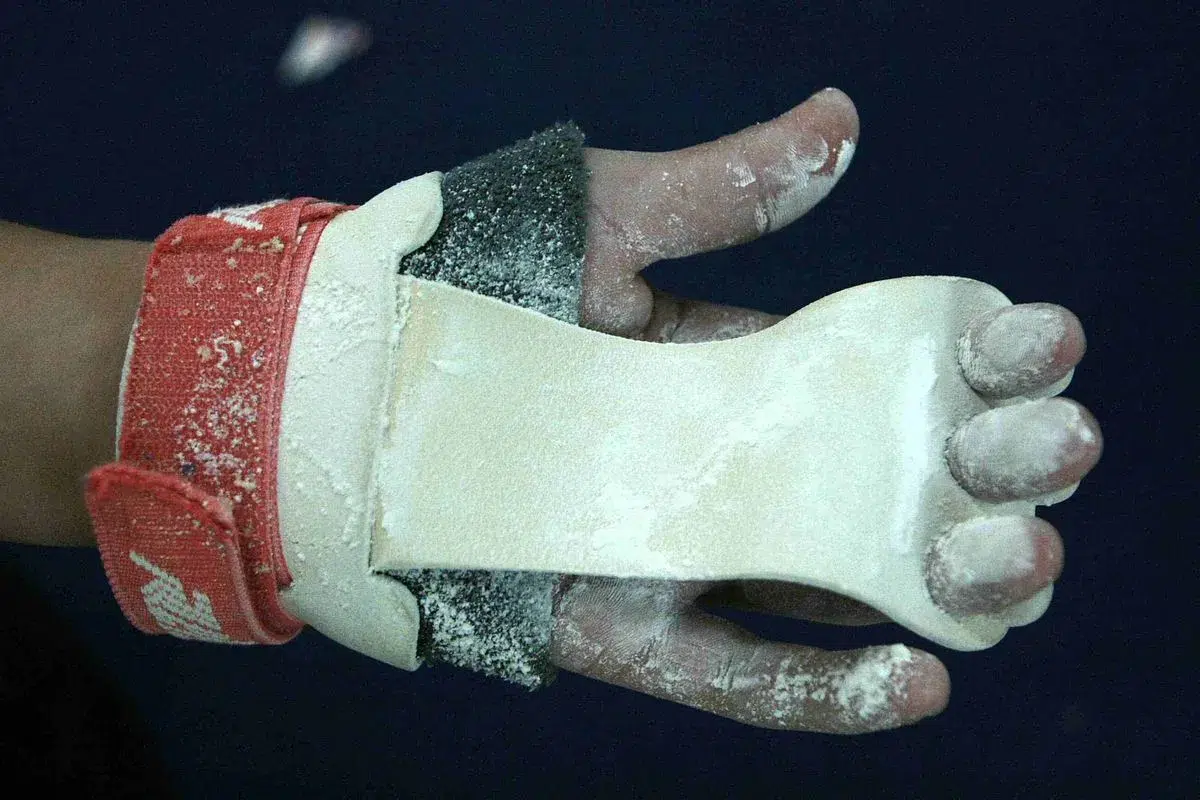
Gymnastics-Style Hand Guards
Traditional gymnastics hand guards cover the palm and wrap around the wrist. Some CrossFit athletes prefer these for the full palm coverage during kipping movements. The trade-off is reduced tactile feedback and increased bulk. For athletes specifically struggling with palm tears (rather than finger tears) during kipping pull-ups and bar muscle-ups, full palm coverage guards address the specific tear pattern.
Sizing and Finger Configuration
CrossFit grips are available in 2-hole and 3-hole finger configurations. The holes accommodate the middle two fingers (2-hole) or middle three fingers (3-hole). The choice depends on the specific tear pattern the athlete is trying to protect:
2-hole grips cover less of the palm but allow more freedom of movement and better proprioceptive feedback during barbell work. They are appropriate for athletes who primarily tear at the fingers rather than across the full palm.
3-hole grips provide more palm coverage and are preferred for kipping movements where the full palm contacts the bar across a wider area. They reduce freedom slightly but protect more of the contact surface during high-volume pull-ups and muscle-ups.
Sizing: most grip manufacturers provide hand measurement guides based on the distance from the base of the palm to the tip of the middle finger. Using the correct size is critical because too-small grips bunch and create pressure points, while too-large grips bunch at the fingers and reduce feel. When between sizes, go down: a slightly tight grip conforms to the hand better than a loose one that bunches during use.
When to Use Grips vs. Train Bare-Handed
Not every CrossFit session requires grips. Using grips on every movement at all times reduces the toughening of the skin that allows experienced athletes to train with less hand protection over time. A balanced approach:
Use grips for: any workout with 30 or more consecutive pull-ups or bar muscle-ups, any workout combining high-rep pull-ups with barbell cycling, any competition or test event, and any workout performed when hands have not recovered from previous sessions and are at risk of reopening existing tears.
Train bare: low-volume strength work on the pull-up bar, moderate barbell volume, any session where the total pull-up volume is under 20 reps, and dedicated grip development sessions. A study in the Journal of Athletic Training confirmed that callus development is a protective adaptation that requires mechanical stimulus to maintain. Training occasionally without grips preserves the skin conditioning that reduces injury risk during the inevitable sessions when grips are unavailable or inappropriate.
Hand Care Alongside Grip Use
Grips protect hands during training but the skin management practice outside training determines how quickly hands recover and how durable skin becomes over a training cycle. Key practices: file calluses regularly to reduce their height but not eliminate them (a flat, firmly-attached callus protects; a tall, loose callus tears and creates a wound). Moisturize hands after training sessions to prevent the skin cracking that creates tear vulnerability. Allow tears to fully heal (typically 5 to 10 days) before training through pain that reopens the wound.
Frequently Asked Questions
Do CrossFit Grips Work with Chalk?
Yes, and leather grips specifically benefit from chalk application because chalk adheres to the leather surface and increases friction against the bar. Apply chalk to the grip surface (not just your hands) for maximum benefit. Silicone grips are less compatible with chalk because the non-porous silicone surface does not allow chalk adhesion in the same way leather does. For high-stakes workouts combining grips and chalk, leather with chalk applied to the grip surface provides the most secure overall hand-to-bar interface.
How Long Do CrossFit Grips Last?
Quality leather grips used 4 to 5 days per week in typical CrossFit training volume last 6 to 18 months before wear through the contact area requires replacement. Silicone grips at equivalent training volume typically last 3 to 8 months. The variability is significant because grip lifespan depends heavily on the specific movements in the training program: a program heavy in kipping pull-ups and muscle-ups wears grips faster than one dominated by barbell cycling. Inspect grips before each session for thin spots, cracks, or tears at the finger holes that could fail during a workout.
Protect Your Hands. Own Every WOD.
CrossFit grips built for high-volume pull-up and barbell work. Leather and silicone options available.
Shop Elbow Sleeves Shop Wrist WrapsCertified strength and conditioning specialists with over 10 years of combined experience in powerlifting, nutrition coaching, and evidence-based fitness content. Based in New York City, the Genghis Fitness team tests every protocol in the gym before writing about it.
For more guides on gym accessories, training equipment, and sport-specific recommendations, visit the gym accessories guides for the complete collection.