

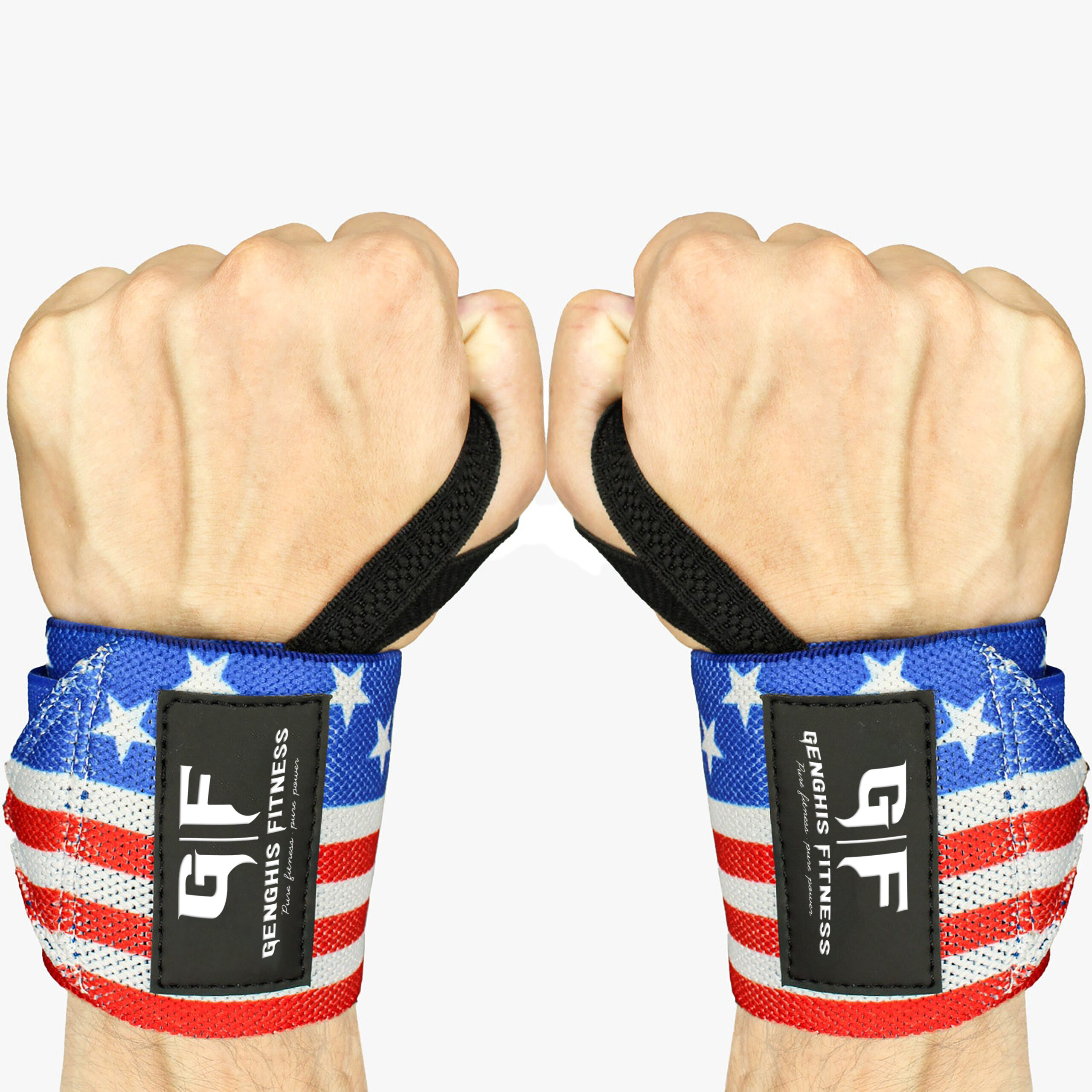

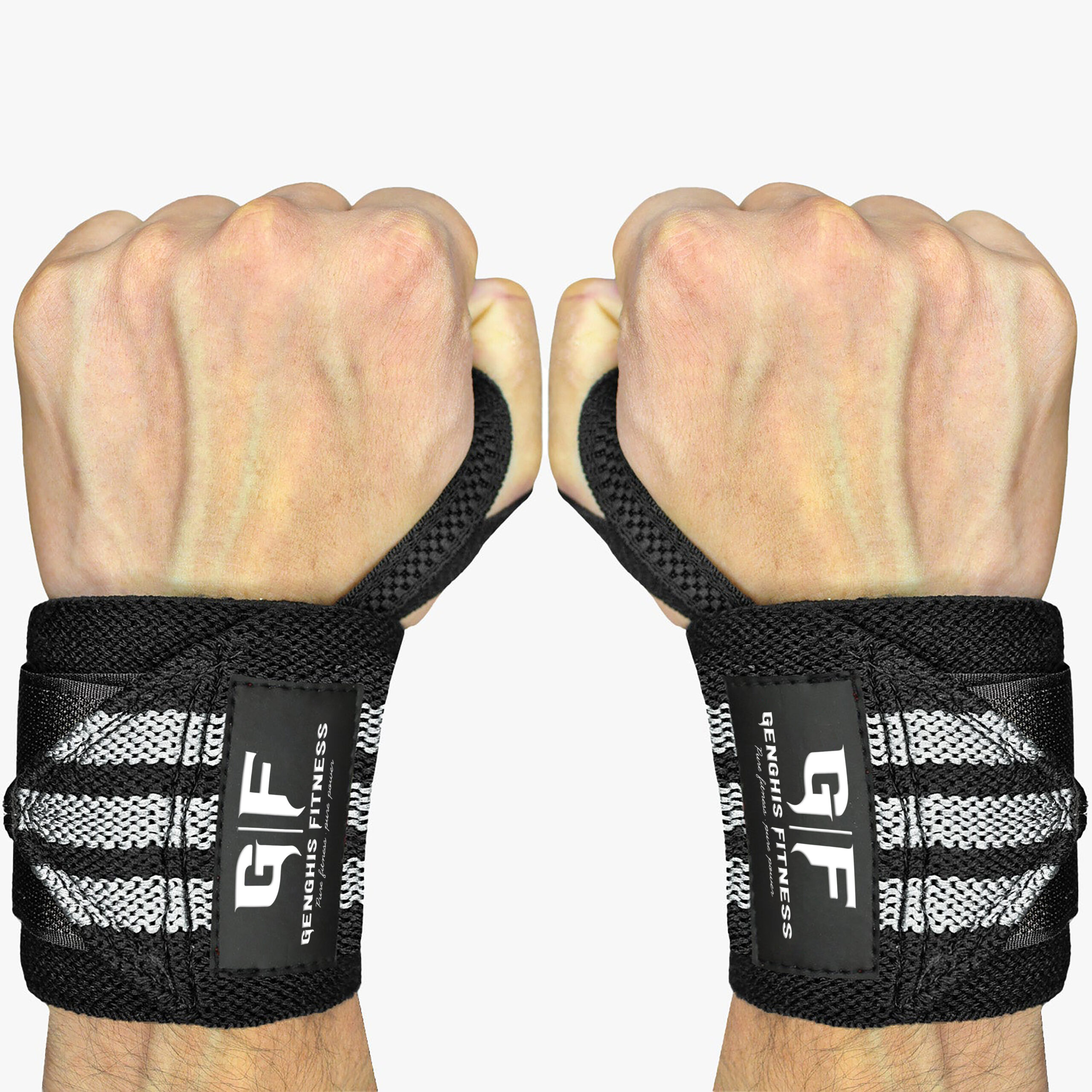
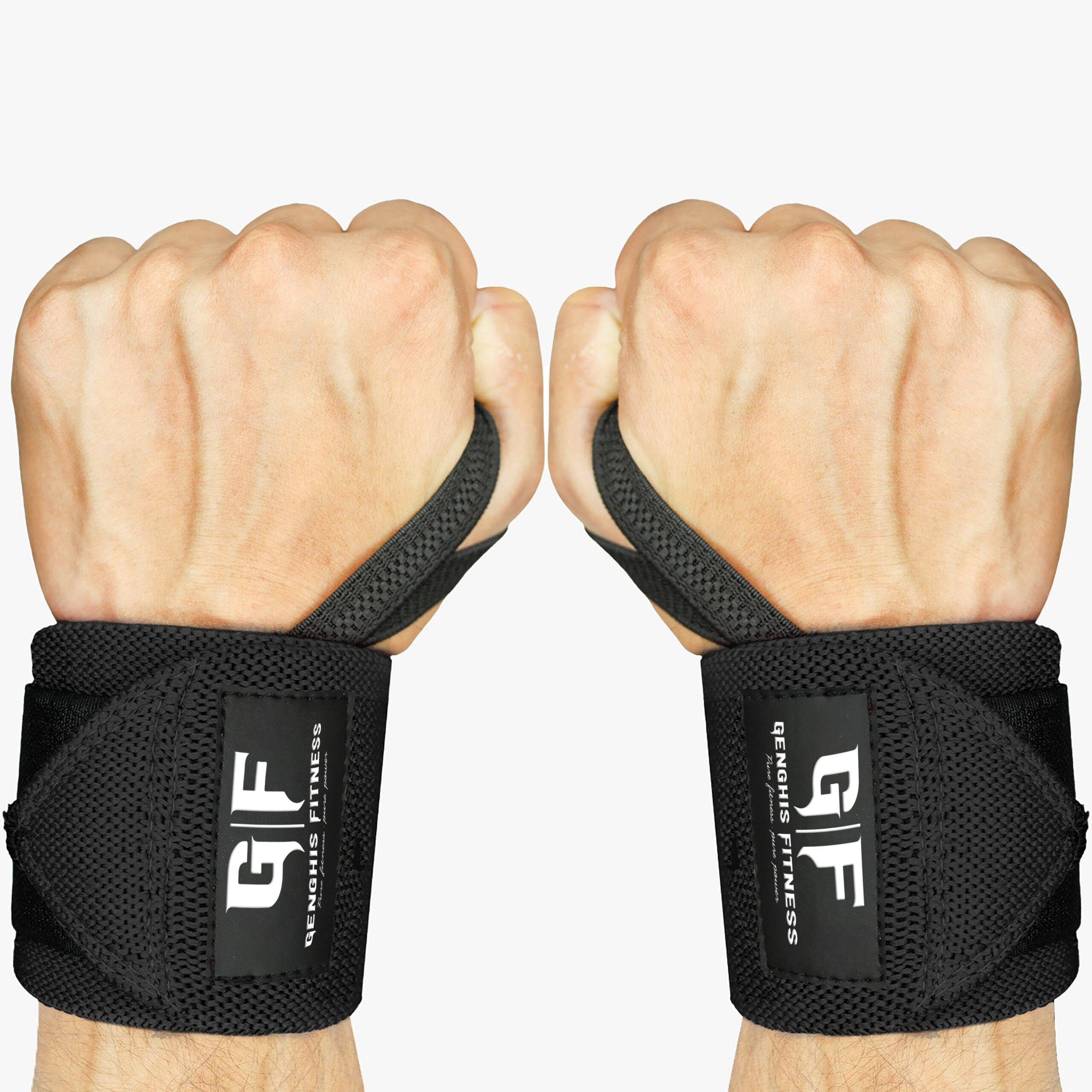
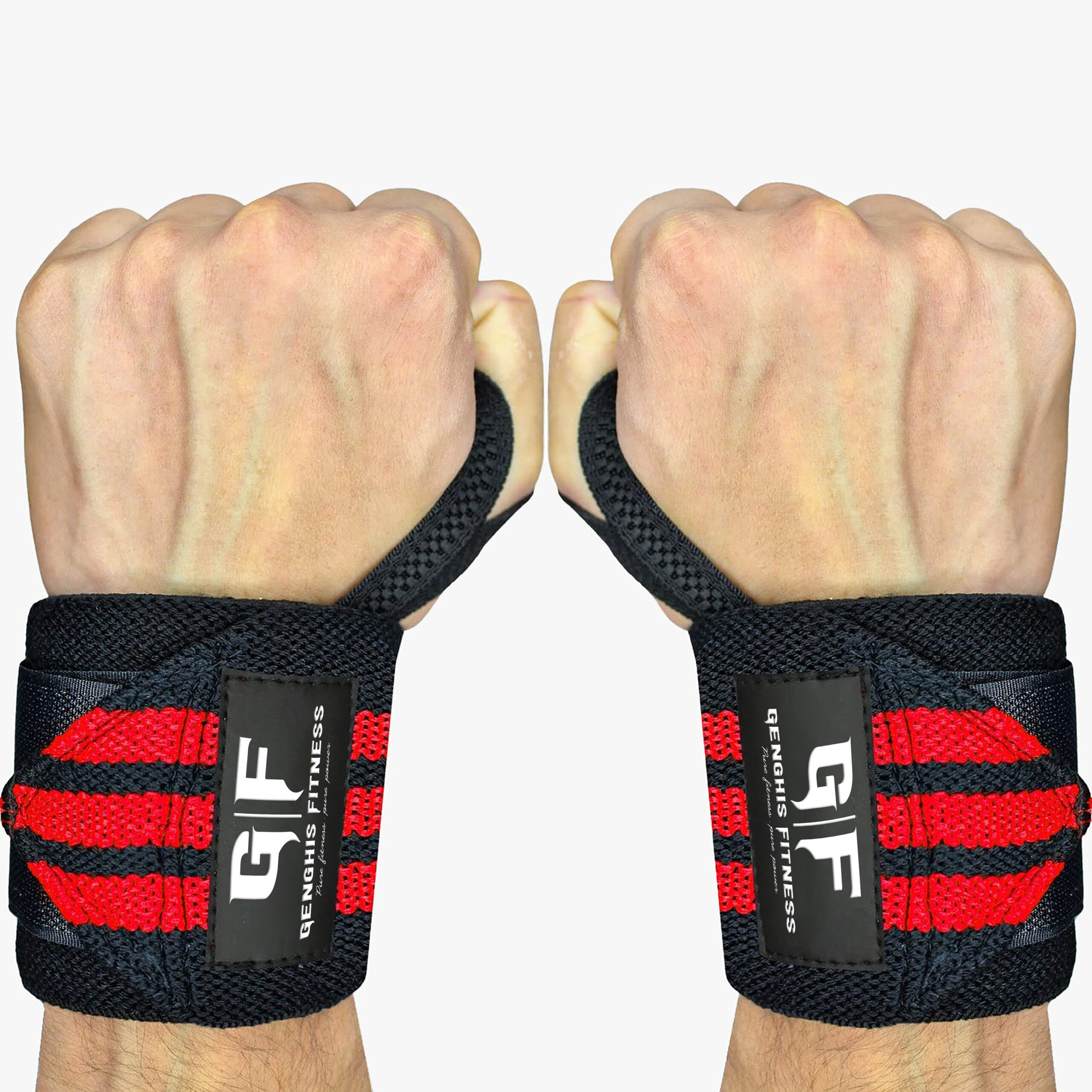

Wrist Wraps for Weightlifting | 12 and 18 Inch
Price range: $20.00 through $23.00
Professional wrist wraps in 12-inch and 18-inch lengths with thumb loop and hook-and-loop closure. Stabilizes the wrist joint for heavy pressing and overhead work. Sold as a pair.
Description
Wrist Wraps Built For Heavy Pressing, Not Just Heavy Bags
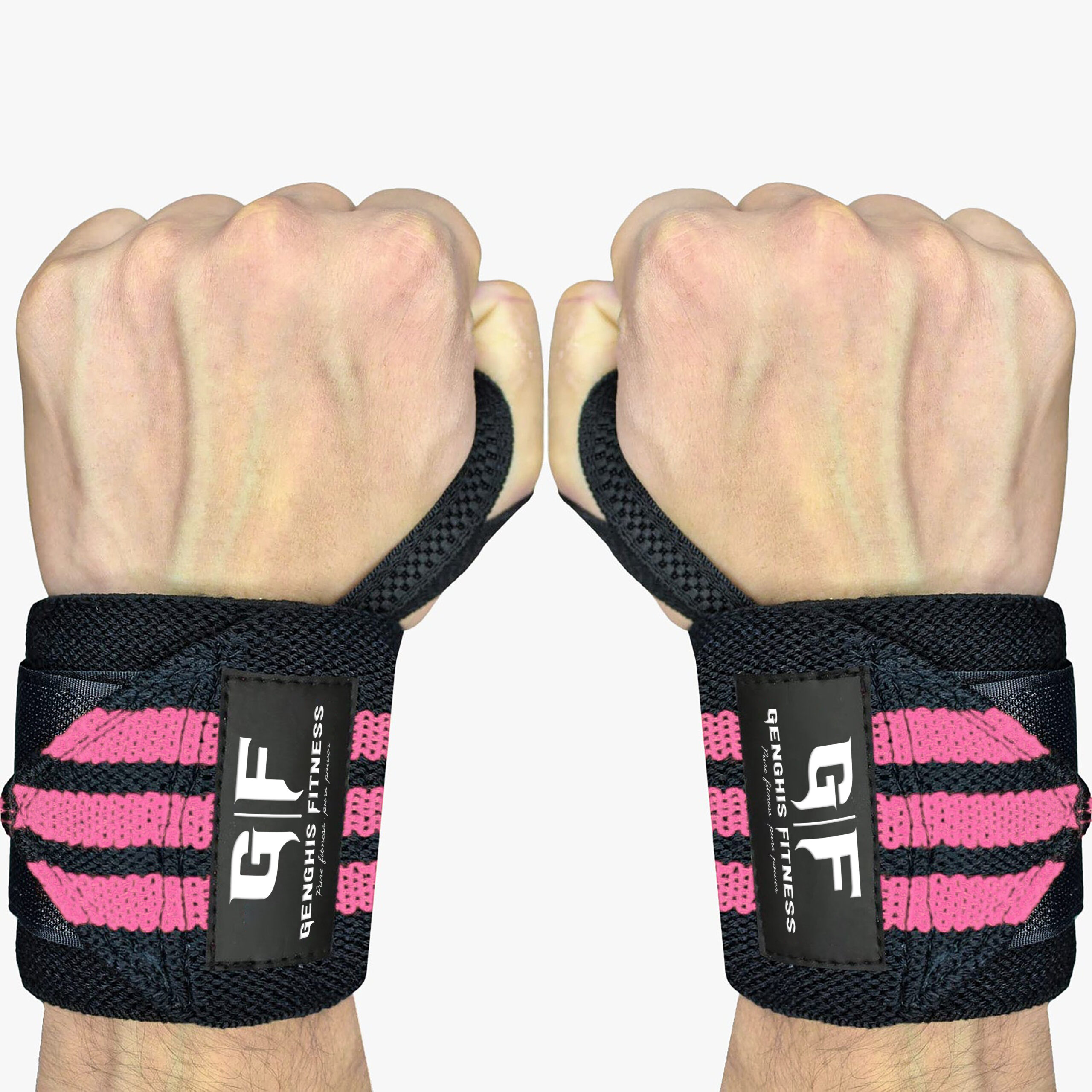
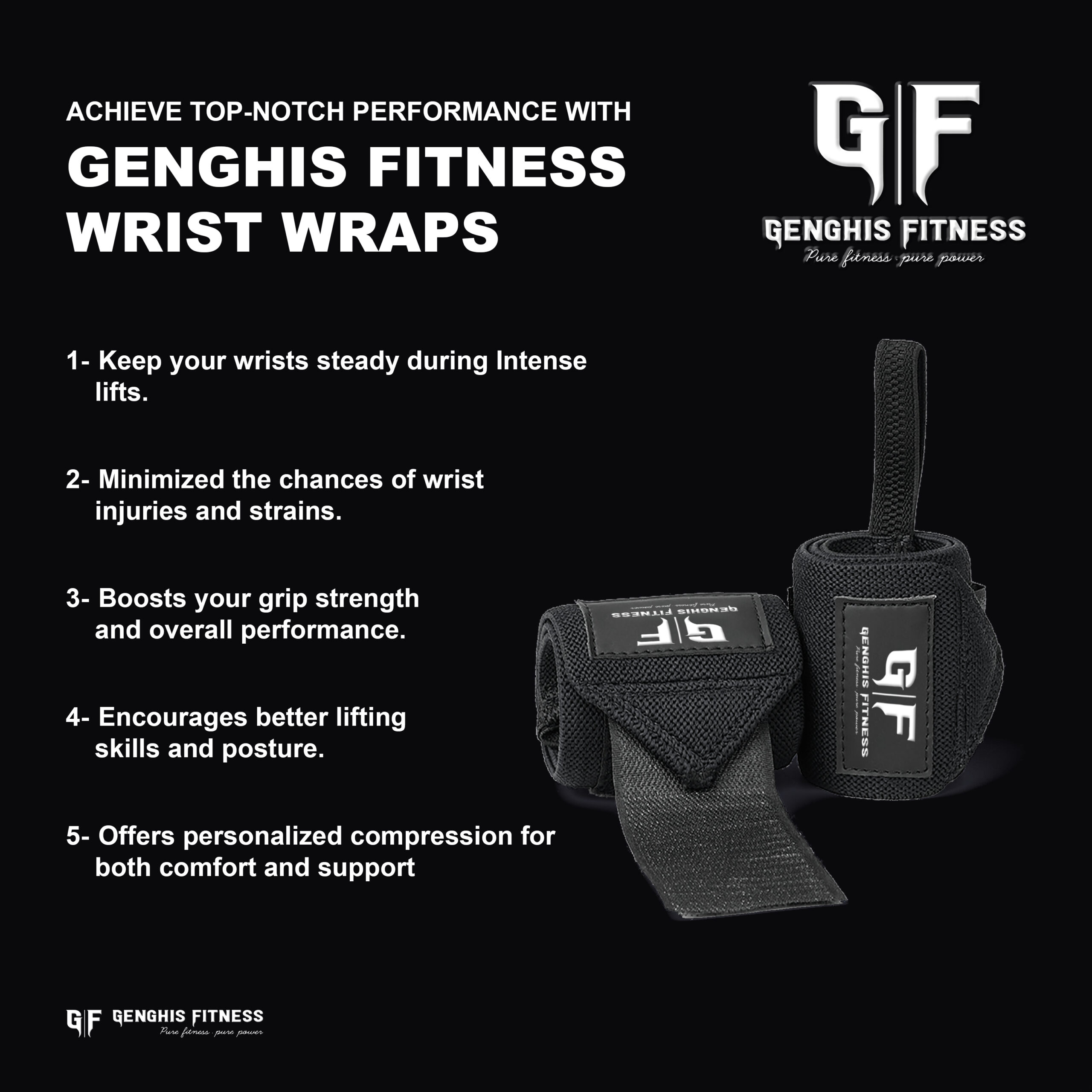
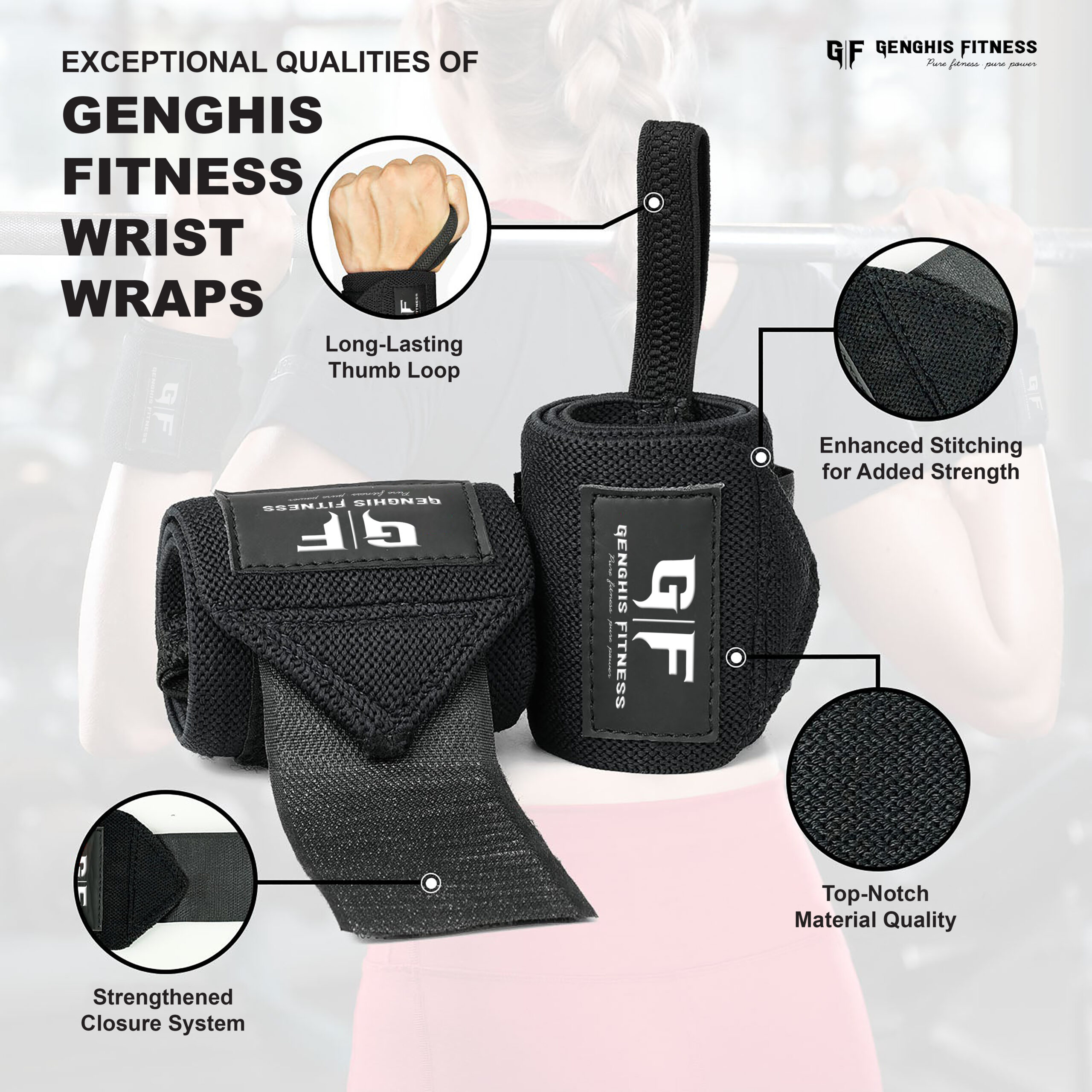
The Genghis Fitness Pro Lifting Wrist Wraps are available in two lengths, 12 inches and 18 inches, each built from a stiff cotton-elastic blend that locks the wrist joint in a neutral position under heavy load. A thumb loop anchors the starting point of the wrap against your hand. You wind the wrap around the wrist two to four times depending on the support level you need, secure the hook-and-loop closure, and your wrist stays rigid through the full pressing range of motion. Sold as a pair in pink, available in multiple sizes.
Most lifters discover they need wrist wraps the same way they discover they need a belt, after the joint starts complaining under load that the wrist was never designed to handle without support. A barbell back squat, a heavy bench press, a strict overhead press, a snatch catch position. These movements put the wrist in extension under load repeatedly over years of training. Wraps spread and manage that stress instead of concentrating it at the joint.
Who Wrist Wraps Are For
Powerlifters use wrist wraps on every working set of the bench press and many use them for squats too. The wrist is in extension during a standard low-bar squat position and wraps reduce the joint stress on long training sessions. If your wrists ache after bench sessions or fatigue before your pressing muscles do, wraps are the direct fix.
Olympic lifters and CrossFit athletes reach for wrist wraps for the catch position in cleans, snatches, and any movement where the bar lands in the wrist crease with load behind it. A rigid wrist wrap creates a platform the bar can sit against more securely. This is not about strength, it is about protecting a joint that takes a lot of sudden eccentric loading in catching movements.
General strength athletes and gym regulars who do a lot of overhead pressing, dumbbell work, and push-based accessory movements will find that wraps on the hardest working sets extend how long they can press before the wrist joint becomes the limiting factor. Wrists do not respond to volume the way muscles do. They fatigue and accumulate stress over sessions. Wraps manage that accumulation intelligently rather than just training through it.
How Wrist Wraps Work Under Load
The wrap works by mechanically limiting wrist extension. When you apply the wrap and close the hook-and-loop, the layered cotton-elastic compresses the wrist joint and prevents it from bending backward past neutral under load. For heavy pressing this means the force travels more efficiently from your hand through your wrist and up your arm into the bar path instead of leaking into joint flex at the wrist.
The 12-inch version provides moderate support with fast application. Two winds around a standard wrist delivers firm but not rigid restriction. This is the right choice for most pressing movements at moderate to heavy intensity, and for athletes who want wrist support without completely removing wrist mobility from the movement pattern. Bench press, strict press, push press, dumbbell pressing.
The 18-inch version is for lifters who want maximum rigidity for competition-level pressing or heavy clean and jerk catches. Three to four winds with an 18-inch wrap creates a noticeably stiffer support structure. Some lifters find the extra rigidity takes a few sessions to get used to because the wrist cannot contribute to micro-adjustments in the catch position as freely. Start with the 12-inch if you have never worn a rigid wrap before. Move to 18-inch when you want more support than the shorter version provides.
How To Choose Length, Tightness, and When To Wear Them
Shorter wraps are faster to apply and remove between sets. Longer wraps give more compression but take a few extra seconds per hand to wind properly. For training sessions where you are moving between pressing movements quickly or rotating exercises, 12-inch wraps keep transitions clean. For powerlifting meets or max effort bench days where every set matters and you have time between attempts, 18-inch wraps are worth the extra application time.
Apply wraps tightly enough that the wrist feels stable but not so tight that your fingers go numb or tingle within the first few reps. Numbness means you are restricting blood flow. Loosen the wrap slightly, rewrap, and check again. It takes a few sessions to calibrate the right tension for your wrist size. Most lifters find their ideal tightness quickly and can replicate it efficiently after a few training sessions.
Do not wear wrist wraps on every set of every pressing movement in every session. Your wrist connective tissue needs to be loaded directly sometimes to maintain its capacity under stress. Use wraps on your heaviest working sets, remove them for warm-up sets and lighter accessory work. This gives you the joint protection when the load is highest and keeps your wrists strong under lighter loads where they can handle the work unassisted.
Key Specifications
- Lengths available: 12 inch and 18 inch
- Material: Cotton-elastic blend with thumb loop
- Closure: Hook-and-loop
- Sold: As a pair
- Best for: Bench press, overhead press, cleans, snatches, heavy pushing movements
- Choose 12 inch: Moderate support, fast application, general pressing
- Choose 18 inch: Maximum rigidity, competition lifting, heavy clean and jerk
Why Buy From Genghis Fitness
Available in 12-Inch and 18-Inch — Match Your Training Level
12-inch for general pressing work. 18-inch for competition-level bench press and maximum rigidity. Both lengths sold as a pair.
Free Worldwide Shipping on Orders $100+ or 3+ Items
Flat rate $12 on smaller orders. Express available. Full shipping policy
30-Day Return Window — No Hassle
Not satisfied? Email [email protected] within 30 days. Refund to original payment method within 10 business days. Return policy
Built for Real Training — Not for the Shelf
Every product is designed and tested for the demands of serious strength training, powerlifting, CrossFit, and competitive athletics.
Related Guides
- Wrist Wraps For Bench Press: Setup, Tension, And When To Use Them
- Wrist Wraps for Powerlifters: Protect the Joint, Press More Weight
- Wrist Wraps for Beginners: When You Need Them and How to Use Them Right
- Best Wrist Wraps For Lifting 2026: What Separates Quality From Junk
- Best Weightlifting Wrist Wraps: A Comprehensive Guide
- Cotton Wrist Wraps vs Neoprene: Which Material Belongs In Your Gym Bag
Frequently Asked Questions
Should I choose 12-inch or 18-inch wrist wraps?
Choose 12-inch wraps for general pressing work, moderate training intensity, and sessions where you move between exercises and need fast application and removal. Choose 18-inch wraps for your heaviest competition-level pressing, maximum effort bench press training, or Olympic lifting where you want maximum wrist rigidity. Athletes new to wrist wraps should start with 12-inch to develop comfort with the restriction before moving to the stiffer 18-inch option.
How tight should I apply wrist wraps?
Tight enough that the wrist feels stable and does not flex backward during the press but not so tight that your fingers go numb, tingle, or change color within the first few reps. Numbness indicates restricted blood flow and requires loosening the wrap. Most athletes find their ideal tension within the first two to three training sessions of wrap use and can replicate it consistently from that point.
When during a training session should I use wrist wraps?
Apply wraps for your working sets on pressing movements at 75 percent intensity or above. Remove them for warm-up sets and lighter accessory work. Your wrist connective tissue needs direct loading at lighter intensities to maintain its capacity under stress. Using wraps on every set eliminates this stimulus. The goal is protection at the loads where the joint is most vulnerable, not replacement of the joint’s natural function across all loads.
Do wrist wraps help with wrist pain during bench press?
Yes, if the pain is related to wrist extension under load. Wraps mechanically limit how far the wrist can bend backward during the press, which reduces the stress on the wrist joint at the point where most pressing-related wrist pain originates. If pain persists through multiple training sessions despite wrap use, consult a sports medicine professional as persistent wrist pain can indicate underlying issues that wraps manage but do not resolve.
How do I wash and maintain wrist wraps?
Hand wash with cold water and mild soap after sessions where the wraps accumulate chalk or sweat. Rinse thoroughly, gently press out excess water, and hang to air dry. Do not machine wash on a hot cycle or tumble dry. Check the thumb loop stitching periodically since this is the highest-stress attachment point in the wrap. Replace wraps when the elastic loses significant tension or the thumb loop shows fraying at the attachment point.
Wrist Wrap Size Guide
Choose Your Length
| Length | Best For | Compression Level | Application Speed |
|---|---|---|---|
| 12 inch | General pressing, bench press, moderate overhead | Firm support | Fast — 2–3 winds |
| 18 inch | Competition bench press, heavy cleans, maximum rigidity | Maximum support | Slower — 3–4 winds |
Wrist Circumference Reference
| Wrist Circumference | Fit |
|---|---|
| 5.5 – 8.5 in (14 – 21.5 cm) | Standard fit — both 12-inch and 18-inch |
| Over 8.5 in (over 21.5 cm) | Wrap slightly looser and use fewer winds |
Measure your wrist circumference at the narrowest point just above the wrist bone. Wrist wraps are not sized by wrist circumference — both lengths fit the full adult range. Your choice of 12-inch versus 18-inch is based on the support level and movement type, not wrist size.
Additional information
| Weight | .14 kg |
|---|---|
| Dimensions | 2.5 × 2 × 1 cm |
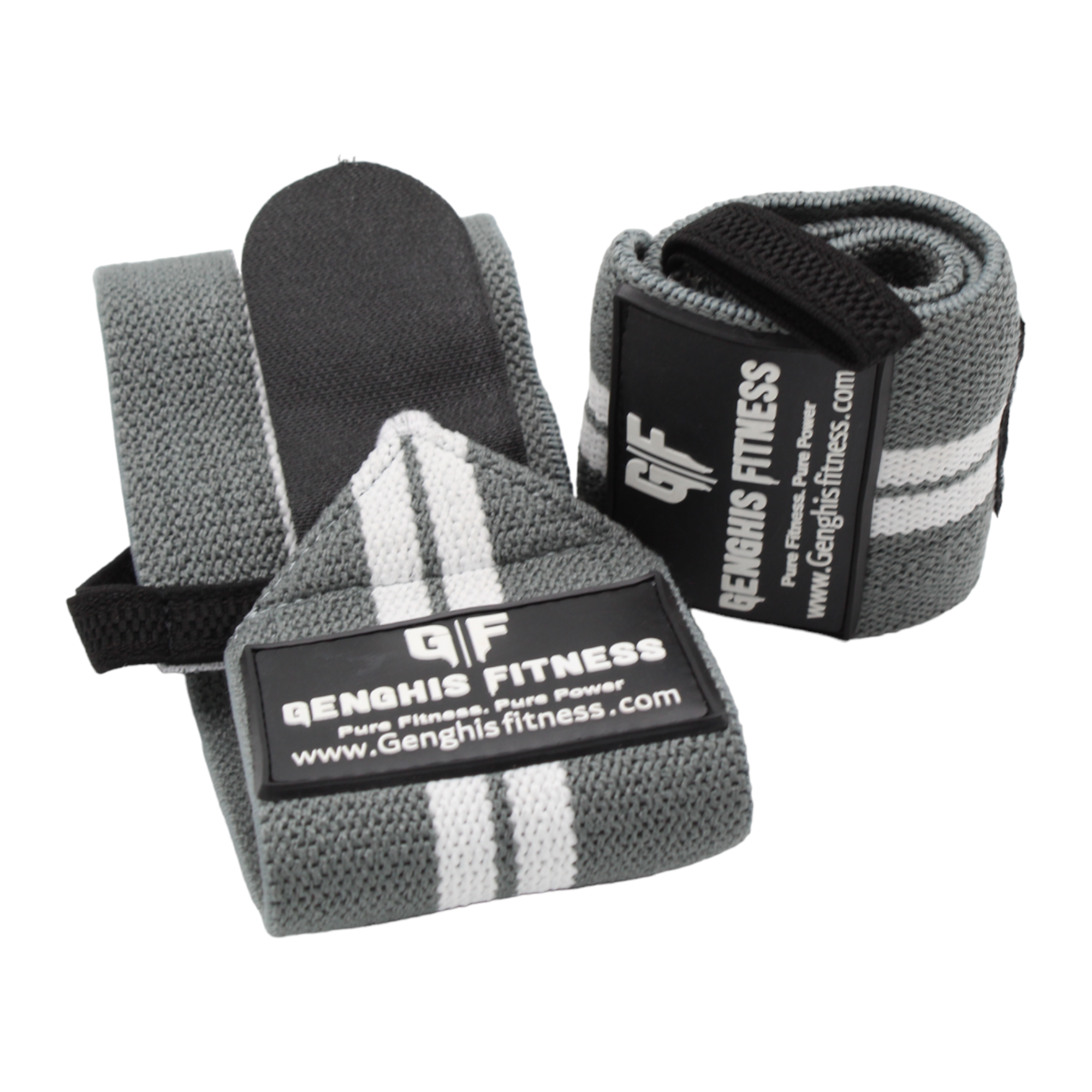
| COLOR | Black / Pink Strap, Black-Pink strap wrist wraps, GREY / WHITE STRAP, Grey-white straps-wrist wras |
| SIZE |
You must be logged in to post a review.
Related products
-

Figure 8 Lifting Straps | Max Deadlift Grip
$29.00Select options This product has multiple variants. The options may be chosen on the product page -
Reversible Elbow Sleeves | 7mm Neoprene Compression
$57.00Select options This product has multiple variants. The options may be chosen on the product page -
-


Reviews
There are no reviews yet.