Genghis Fitness · Body Composition and Training
How to Lose Arm Fat: Why Spot Reduction Does Not Work, What Actually Does, and the Training and Nutrition Protocol That Changes Upper Body Composition
Updated 2026 | By Team Genghis Fitness | 22 min read
Arm fat reduction is among the most frequently searched body composition goals, and it is also one of the most misunderstood. The core misconception driving most ineffective arm fat approaches is spot reduction, the belief that exercising a specific area of the body burns fat preferentially from that area. This belief is not supported by the research. Body fat is mobilised systemically from fat stores throughout the body in response to a caloric deficit and hormonal fat mobilisation signals, not locally from the muscles being exercised. This means that performing hundreds of tricep kickbacks and overhead extensions will build arm muscle but will not preferentially burn arm fat above fat from any other part of the body. Understanding why spot reduction fails and what actually changes body fat distribution allows athletes to take an evidence-based approach to upper body composition that produces real and lasting results.
The Spot Reduction Myth: What Research Shows
The definitive research on spot reduction was published in the Journal of Applied Physiology, which examined fat cell size in the arms of dominant versus non-dominant arms of tennis players who had trained one arm far more than the other for years. If spot reduction worked, the dominant arm should have substantially less subcutaneous fat from all that additional muscular work. The study found no significant difference in arm fat between the dominant and non-dominant arms, despite massive differences in muscle development between the two sides. Multiple subsequent studies using localised exercise protocols have consistently confirmed that exercising a specific body part does not preferentially reduce fat in that area above what general caloric deficit produces. The mechanism is straightforward: lipolysis (fat breakdown) is governed by systemic hormonal signals (primarily epinephrine binding to adrenergic receptors on fat cells) and is not locally controlled by the activity of nearby muscles. When you exercise, epinephrine is released systemically, mobilising fat from across the entire body according to each individual’s genetically determined fat mobilisation pattern.
What Actually Changes Arm Appearance
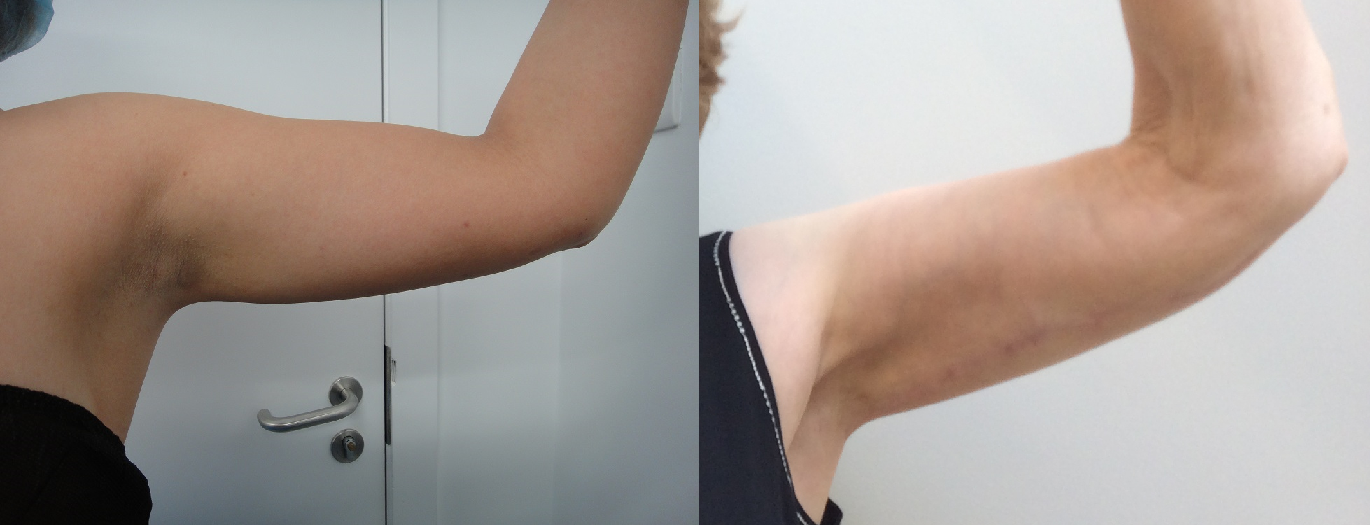
Two things change how arms look: total body fat percentage reduction (which reduces subcutaneous fat throughout the body including the arms) and upper arm muscle development (which increases arm circumference and definition while reducing the relative proportion of fat to muscle visible at the surface). The combination of these two factors, achieved through a caloric deficit with high protein intake for fat loss alongside progressive resistance training for muscle preservation and development, is the only evidence-based approach to changing arm composition.
For total body fat reduction, a modest caloric deficit of 300 to 500 calories per day below total daily energy expenditure, combined with high protein intake (0.7 to 1 gram per pound of bodyweight) to preserve muscle mass during the deficit, produces sustainable fat loss of approximately 0.5 to 1 pound per week without the muscle loss associated with aggressive caloric restriction. This approach and its evidence base are covered in detail in our evidence-based fat loss guide.
Upper Arm Training for Composition Change
While arm-specific exercises do not spot-reduce arm fat, they do build the triceps and biceps muscles that improve the appearance of the upper arm by adding definition and reducing the relative prominence of subcutaneous fat. The triceps make up approximately two-thirds of upper arm volume, making tricep development the primary driver of upper arm size and shape. Key exercises for arm composition change include:
Close-grip bench press and dips: Compound pressing movements that load the triceps with heavy weight through a significant range of motion. These produce more total muscle mass stimulus than isolation exercises and should form the foundation of tricep training. Our bench blaster sling supports pressing movements during arm development training.
Overhead tricep extension: The long head of the triceps (the largest head, responsible for most arm thickness) is only fully activated when the arm is raised overhead, making overhead extensions essential for complete tricep development. Use dumbbells, cables, or a barbell for progressive overload.
Cable pushdown and skull crushers: Isolation exercises that allow precise targeting of the lateral and medial tricep heads. Use these as accessory movements after compound pressing, aiming for 3 sets of 10 to 15 reps with a squeeze at full extension.
Barbell and dumbbell curls: Bicep curls and their variations (hammer curls for brachialis, incline curls for long head stretch) develop the bicep complex that forms the front of the upper arm. Consistent progressive overload across 3 to 4 sets of 8 to 12 reps per session produces bicep hypertrophy. Using an arm blaster stabilises the upper arms during curls, isolating the biceps more effectively and preventing swinging that reduces the training stimulus.
Hormonal Factors in Upper Body Fat Distribution
The location where individuals store body fat is largely genetically and hormonally determined. Women typically have higher relative body fat in the upper arms, hips, and thighs due to the influence of oestrogen on fat cell distribution (oestrogen promotes fat storage in these regions as preparation for pregnancy and lactation). Men typically store fat preferentially in the abdominal region. This means the rate at which arm fat reduces relative to fat from other areas varies between individuals and cannot be directly controlled. Some people will see arm fat reduce relatively early in a fat loss phase; others will see it persist longer as fat mobilises from other areas first. The only option for these individuals is to continue the fat loss process until total body fat percentage is low enough that arm fat is also visibly reduced.
Frequently Asked Questions
How Long Does It Take to Lose Arm Fat?
The timeline depends entirely on current body fat percentage, the target fat level for visible arm definition, and the rate of fat loss. Most people begin seeing measurable changes in arm circumference after 4 to 8 weeks of consistent caloric deficit and training. Visible definition of the tricep and bicep at the surface of the arm typically requires reaching below 20 percent body fat for women and below 15 percent for men, as these are approximate thresholds at which subcutaneous fat in the arms becomes thin enough for muscle definition to be visible. At a sustainable fat loss rate of 0.5 to 1 pound per week, reaching these thresholds from significantly higher body fat levels may require 3 to 6 months of consistent effort.
Do Push-Ups Help with Arm Fat?
Push-ups develop the triceps, chest, and anterior deltoid effectively but do not spot-reduce arm fat for the same reasons described above. However, push-ups as part of a caloric deficit training programme contribute to the total weekly training volume and caloric expenditure that supports fat loss, and they build the tricep muscle mass that improves arm appearance as body fat reduces. Treating push-ups as a muscle-building exercise rather than a fat-burning one sets correct expectations and allows for proper progressive overload planning.
Build the Arms. Drop the Fat. Do Both the Right Way.
Evidence-based training requires evidence-based gear.
Shop Arm Blaster Shop Lifting BeltCertified strength and conditioning specialists with over 10 years of experience in powerlifting, nutrition, and evidence-based fitness content. Based in New York City.