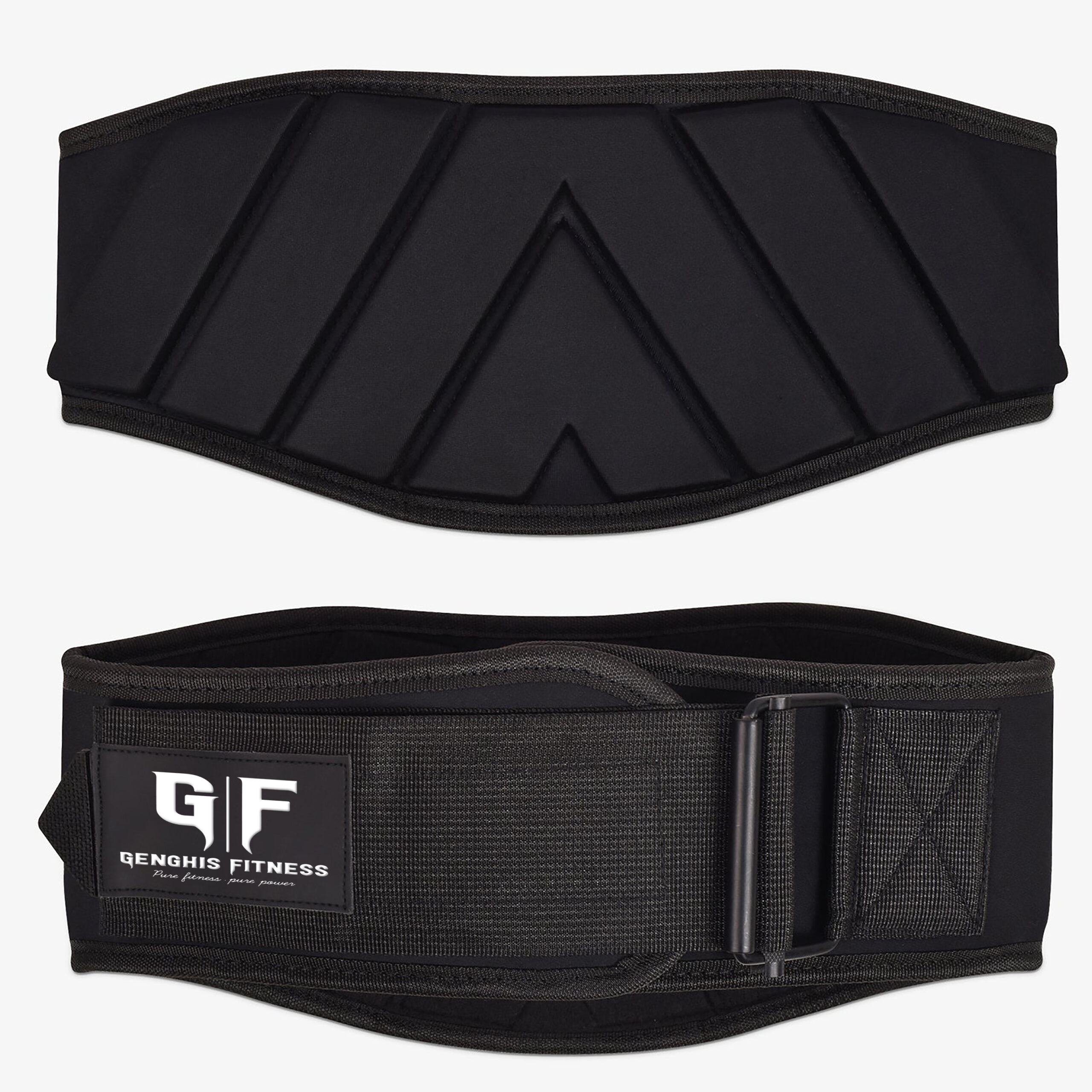
Neoprene Weightlifting Belt: What It Does and Who It Is For
A neoprene weightlifting belt is a core support tool made from flexible synthetic rubber that wraps around the lower back and abdomen during barbell training. Unlike rigid leather belts, neoprene conforms to the shape of your torso, stays comfortable through dynamic movement patterns, and requires no break-in period. It provides genuine support for moderate to heavy training loads and is the practical belt choice for athletes whose programming includes more than just heavy compound barbell work.
How Neoprene Provides Core Support
Neoprene works through compression rather than rigidity. When you tighten the belt and brace your core before a lift, the neoprene applies even pressure around the midsection and gives your contracted abdominal and lower back muscles a surface to brace against. This increases intra-abdominal pressure compared to training without a belt, which stabilizes the lumbar spine under load.
The flexibility of neoprene means this support operates across a wider range of body positions than a rigid leather belt allows. An overhead squat with a neoprene belt is comfortable. A clean receiving position is unimpeded. A box jump with the belt on does not restrict the hip flexion range you need. A rigid leather belt would limit each of these.
Who Gets the Most From a Neoprene Belt
CrossFit athletes and functional fitness competitors are the primary beneficiaries of neoprene belt design. A typical CrossFit session might include heavy barbell cycling, gymnastics movements, carries, and conditioning pieces within a single hour. The Genghis Fitness Neoprene Weightlifting Belt comes on and off in under three seconds with the double hook-and-loop closure, making it practical for the varied demands of functional fitness rather than a tool you have to commit to wearing or remove entirely.
Olympic weightlifters who snatch and clean regularly reach for neoprene because the positions they train in require joint mobility that a stiff leather belt restricts. The pull phase of the lift benefits from core support. The catch position in the squat snatch and clean needs hip and thoracic freedom that neoprene provides and leather does not.
General strength athletes who train three to five days per week with varied programming will find neoprene handles the workload across the full range of movements in their programming. Heavy squats, Romanian deadlifts, overhead press, barbell rows — neoprene provides appropriate support for all of them without the rigidity of leather becoming a limitation on the accessory and moderate-intensity work.
Sizing a Neoprene Belt
Neoprene belts size like clothing rather than leather belts. Take your waist measurement at navel height while relaxed. Choose the size that corresponds directly to your measurement. The hook-and-loop closure gives you fine adjustment within your size, so there is more tolerance in neoprene sizing than in hole-based leather belts. If you fall between sizes, the larger option gives more room for the continuous closure adjustment.
The belt should sit just above the hip bones, covering the lower back and the upper part of the abdomen. Position it before closing the hook-and-loop so the double closure strips sit at the front center. Apply enough tension that the belt resists when you breathe into your belly before bracing, but not so tight that you cannot take a full diaphragmatic breath. A belt that prevents you from breathing into it defeats the mechanism it is supposed to support.
Neoprene Belt Care and Longevity
Neoprene is easy to maintain. Wipe the surface with a damp cloth after sessions where sweat and chalk accumulate. For a deeper clean, hand wash with mild soap and cold water, rinse thoroughly, and hang to air dry completely before storing. Do not machine wash on a hot cycle or tumble dry. Heat degrades neoprene over time by breaking down the foam structure that gives the material its compressive properties.
Store the belt flat or hanging rather than rolled tightly or folded. Compressed neoprene stored in a deformed shape for extended periods can develop permanent creases that affect how evenly it distributes pressure during training. A belt stored properly between sessions will maintain its original compression characteristics for years of regular use.
Related reading
Benefits of Neoprene Weightlifting Belt | Neoprene vs Leather Weightlifting Belt | Neoprene Belt for Powerlifting
Common Questions About Neoprene Belts
Can I use a neoprene belt for powerlifting competition? Not in tested federations that require leather construction. The IPF, USAPL, and most major raw powerlifting federations specify single-ply leather as the required material. A neoprene belt meets none of those requirements. For competition, a leather belt is required.
How tight should a neoprene belt be? Tight enough that you feel genuine resistance when you breathe into your belly before bracing, but not so tight that the breath itself is restricted. The belt provides support by giving your bracing muscles something to push against. A belt that prevents the breath from expanding the abdomen cannot be braced against properly. Apply the belt at a tightness where you can still take a full diaphragmatic breath, then brace hard against it before initiating the lift.
Is a neoprene belt better than no belt at all for deadlifts? Yes, for most training scenarios. Any belt that increases intra-abdominal pressure compared to unbelted lifting provides meaningful lumbar support during heavy pulling. A neoprene belt does this effectively at the training intensities most athletes work at most of the time. The advantage of leather over neoprene becomes relevant at near-maximum loads. At sub-maximum training loads where the majority of volume lives, neoprene provides the support benefit without the rigidity limitation.
What width neoprene belt should I choose? The standard 4-inch width is appropriate for most lifters. Wider belts cover more of the lower back and provide support over a larger surface area but can interfere with hip flexion in movements that require the torso to hinge forward significantly. A 4-inch belt provides the right balance of coverage and mobility for the full range of barbell training movements.
One practical detail that new neoprene belt users sometimes overlook is position during the lift. The belt should maintain consistent position throughout the movement. If the belt slides up toward the ribcage during a squat descent or shifts laterally during a deadlift pull, it is either too loose or positioned incorrectly before the set. Close the hook-and-loop over the front center of your abdomen, not off to one side, and tighten to the point where the belt cannot rotate during the movement. A belt that shifts during a set is not providing consistent support and is a sign the fit needs adjustment before loading heavily.