Genghis Fitness · Gear Guides
Benefits of a Neoprene Weightlifting Belt: What It Genuinely Provides, Where It Excels, and How to Get the Most from This Style
Updated 2026 | By Team Genghis Fitness | 22 min read
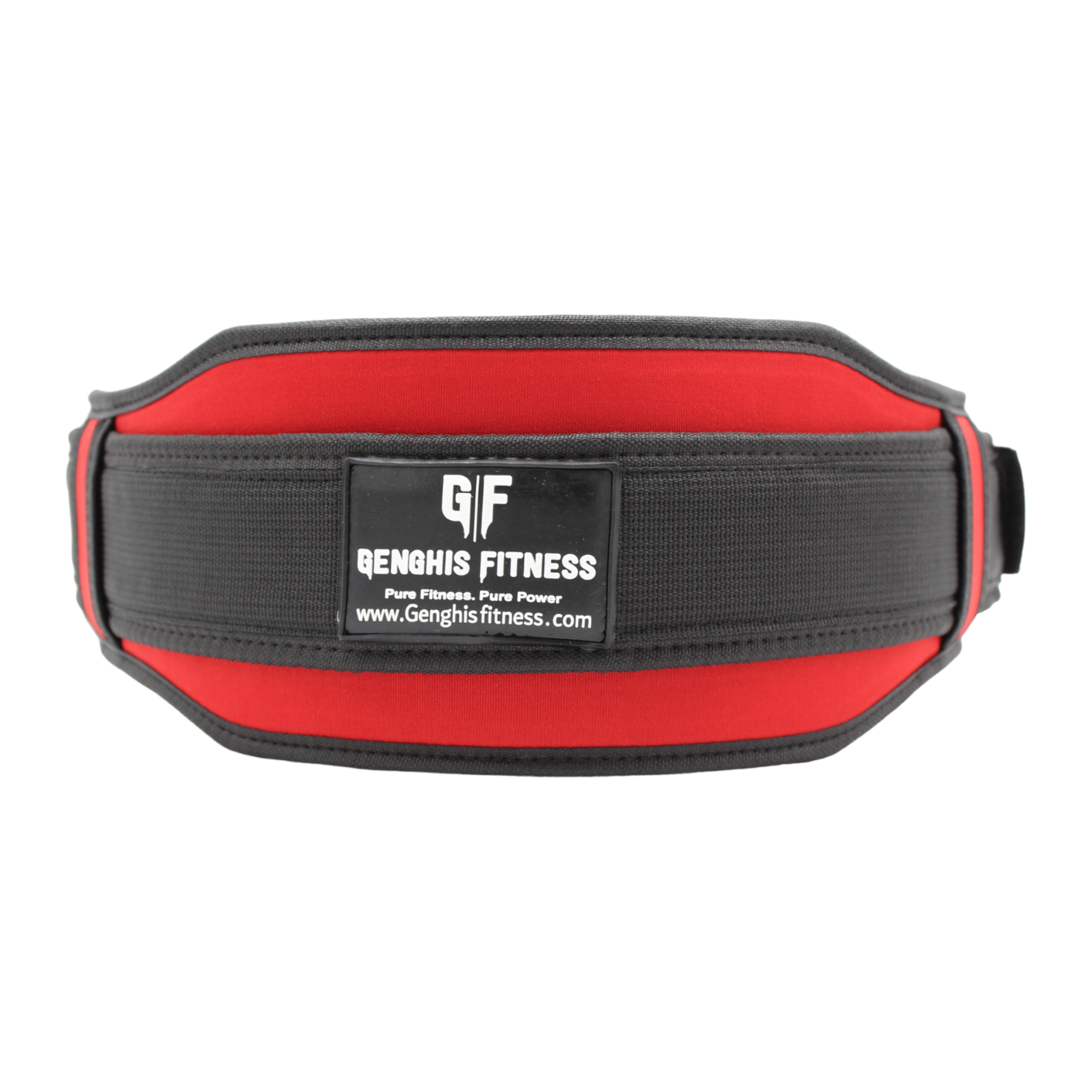
The neoprene weightlifting belt has a reputation problem in serious strength training circles that is partially deserved and partially the result of comparing the wrong tool to the wrong application. Criticisms of neoprene belts are valid when they are used as the primary belt for maximum-effort powerlifting. They are not valid when neoprene is evaluated for what it actually does well: thermal insulation at the lumbar spine and abdominal region, proprioceptive feedback at moderate training loads, immediate comfort without a break-in period, and occupational or general fitness support across extended periods of physical activity.
Understanding the genuine benefits of a neoprene belt, grounded in the mechanisms that drive those benefits rather than marketing claims, allows you to determine whether neoprene belongs in your training toolkit, how to use it most effectively, and when other belt materials provide meaningfully better support for specific training goals.
Benefit 1: Thermal Insulation That Leather Cannot Provide
Neoprene (polychloroprene foam) is a closed-cell elastomeric material with exceptional thermal insulation properties per unit of thickness. A 7mm neoprene belt worn around the lower back maintains elevated tissue temperature throughout a training session, including during the 2 to 3 minute rest periods between heavy sets when the working tissues would otherwise begin to cool.
Why tissue temperature matters for training: muscle and connective tissue extensibility increases with temperature. Warm hamstrings, erector spinae, and iliopsoas are less susceptible to acute strain from unexpected loading. Warm synovial fluid in the lumbar facet joints provides better lubrication and lower friction during the spinal loading of squats and deadlifts. Research published in the International Journal of Sports Medicine confirmed that sustained tissue warmth through compression garments and supports reduces acute injury incidence during resistance training sessions in cold ambient conditions.
Leather and nylon belts do not provide thermal insulation. A leather belt worn during a set is conductive and neither retains nor adds tissue warmth. For athletes who train early in the morning before their core temperature has risen, who train in cool garage or outdoor facilities during autumn and winter months in the northern United States and Europe, or who have chronic lower back tightness that worsens with cold, the neoprene belt’s thermal benefit is genuinely meaningful and not replicated by any other belt material.
Benefit 2: Proprioceptive Feedback for Movement Quality
The circumferential compression of a neoprene belt around the lower back and abdomen creates a continuous sensory input about the position and movement of the lumbar spine and abdominal region throughout the training session. This proprioceptive signal is documented in research on compressive joint supports. A study published in the Journal of Athletic Training found that compressive joint supports significantly improved joint position sense (proprioceptive acuity) in subjects with and without prior injury, with the improvement being greatest in subjects whose baseline proprioception was most impaired.
For athletes learning compound movements, returning from lower back injury, or who have chronically poor awareness of their lumbar spine position during squats and deadlifts, the proprioceptive feedback from neoprene compression is a training tool that supports better movement mechanics. This awareness can gradually be internalised through training with the belt so that beltless movement mechanics improve as a consequence of the proprioceptive training the belt provides.
Benefit 3: Immediate Comfort Without Break-In
Full-grain leather belts at 10mm require 3 to 6 weeks of regular training use before the leather’s flex points soften enough to be genuinely comfortable during deep squats and hip hinge movements. During this break-in period, the belt can dig uncomfortably into the ribs at the bottom of a squat or create pressure points at the anterior hip during the deadlift setup. This is not a defect; it is the rigidity that makes leather effective. But it does mean a leather belt purchased for an athlete who needs immediate comfortable support while recovering from a lower back injury, or for someone who wants to start using a belt right away without the break-in friction, is not the right immediate solution.
Neoprene conforms to the body immediately. There is no break-in period. The belt is comfortable from the first session, which makes it the appropriate choice for immediate use applications: post-injury return to training, new lifters building belt familiarity, occupational use where sustained comfort is the priority, and general fitness training where spending 4 to 6 weeks breaking in a stiff leather belt is not practical. The Genghis Fitness neoprene belt provides this immediate comfort alongside the thermal and proprioceptive benefits.
Benefit 4: Versatility Across Training Modalities
Neoprene belts are comfortable and appropriate for a wider range of exercises than stiff leather belts. A leather powerlifting belt is specifically designed for squats, deadlifts, and overhead presses. Its rigidity that makes it excellent for these movements makes it uncomfortable or impractical for exercises requiring trunk rotation, lateral flexion, or sustained lower load work. A neoprene belt can be worn comfortably during kettlebell swings, rowing exercises, loaded carries, CrossFit-style workouts, and general fitness circuits where a stiff leather belt would create friction and restriction that reduces comfort without providing meaningful additional support.
For athletes who follow mixed training programs that combine barbell strength work with functional fitness, circuits, or metabolic conditioning, neoprene provides adequate support across all training modalities without requiring a belt change or removal during different exercise types.
Benefit 5: Mild IAP Support at Moderate Loads
Neoprene does provide intra-abdominal pressure support at moderate loads. The IAP amplification is less than that provided by rigid leather or nylon because neoprene deforms under bracing force rather than resisting it completely. Research establishing that belt rigidity is the primary determinant of IAP amplification, published in the Journal of Strength and Conditioning Research, contextualises this limitation accurately. At moderate training loads, however, the IAP support from neoprene is meaningful and contributes to lumbar spine stability during the exercises where the belt is appropriately used.
The key nuance: “moderate loads” for IAP purposes means approximately 50 to 75 percent of maximum compound lift loads. At these intensities, neoprene’s compliance is not a practical limitation because the spinal loading does not demand maximum possible IAP amplification. A neoprene belt providing 60 percent of the IAP amplification that a leather belt provides is adequate and beneficial at these intensities. At 85 to 100 percent of maximum, the gap between neoprene and leather becomes a meaningful performance variable, which is why the recommendation in our neoprene for powerlifting guide is to transition to leather for maximum-effort training.
The Complete Neoprene Belt Benefit Summary
| Benefit | Neoprene | Leather | Nylon |
|---|---|---|---|
| Thermal insulation | Excellent | None | Minimal |
| Proprioceptive feedback | Good | Good | Good |
| IAP amplification at max loads | Moderate | Maximum | High |
| Immediate comfort | Excellent | Requires break-in | Good |
| Exercise versatility | Highest | Competition lifts only | High |
| Longevity | 2 to 4 years | 10 to 20 years | 3 to 5 years |
Frequently Asked Questions
Should You Wear a Neoprene Belt for Every Exercise in a Training Session?
No. Using a belt continuously throughout a training session, including during exercises and rest periods where it provides no benefit, reduces the proprioceptive training stimulus for the core bracing muscles that benefit from unassisted training. Use the neoprene belt for the exercises where its thermal and proprioceptive benefits are most relevant (compound lower back and core loading movements), and train other exercises without it. This approach maximises the specific benefits of belt use while maintaining the adaptive stimulus for core musculature that beltless training provides.
Can You Use a Neoprene Belt Post-Surgery or During Rehabilitation?
This depends entirely on the surgery and rehabilitation protocol. For athletes returning from lumbar spine surgery, a neoprene belt’s thermal and proprioceptive properties can support rehabilitation by maintaining tissue warmth and improving position awareness during the cautious early return-to-training phases. However, any belt use during post-surgical rehabilitation should be specifically cleared with the treating surgeon or physiotherapist, who will have specific guidance about appropriate intra-abdominal pressure levels during each rehabilitation phase. Belts should not be used as a substitute for medical clearance during post-surgical recovery.
How Does a Neoprene Belt Compare to a Lower Back Brace?
A weightlifting neoprene belt and a medical or occupational lower back brace serve different functions. A weightlifting belt is worn snugly to provide IAP support and proprioceptive feedback during active loaded exercise, not for sustained passive support. A lower back brace is typically worn loosely for extended periods to support the lumbar spine during sedentary or lightly active periods without creating the abdominal compression that characterises weightlifting belt use. Using a weightlifting neoprene belt as an all-day back brace is not appropriate because sustained abdominal compression at rest reduces core muscle activation and may cause discomfort. The occupational lower back brace guide covers the appropriate format for sustained daily support in our gym and work back brace guide.
Warm. Supported. Comfortable from the First Set.
Neoprene belt for warmth and moderate support across all training styles. Leather for maximum loads.
Shop Neoprene Belt Shop Leather BeltCertified strength and conditioning specialists with over 10 years of experience in powerlifting, nutrition, and evidence-based fitness content. Based in New York City.
TRAIN WITH EQUIPMENT THAT MATCHES YOUR EFFORT
Serious strength training demands serious gear. A lever belt, quality straps, and knee sleeves are not accessories. They are tools.
Lifting Straps Knee SleevesThis guide is part of the Genghis Fitness weightlifting belt guides, where 167 articles cover every belt type, training use case, and buying decision from beginner to competition level.