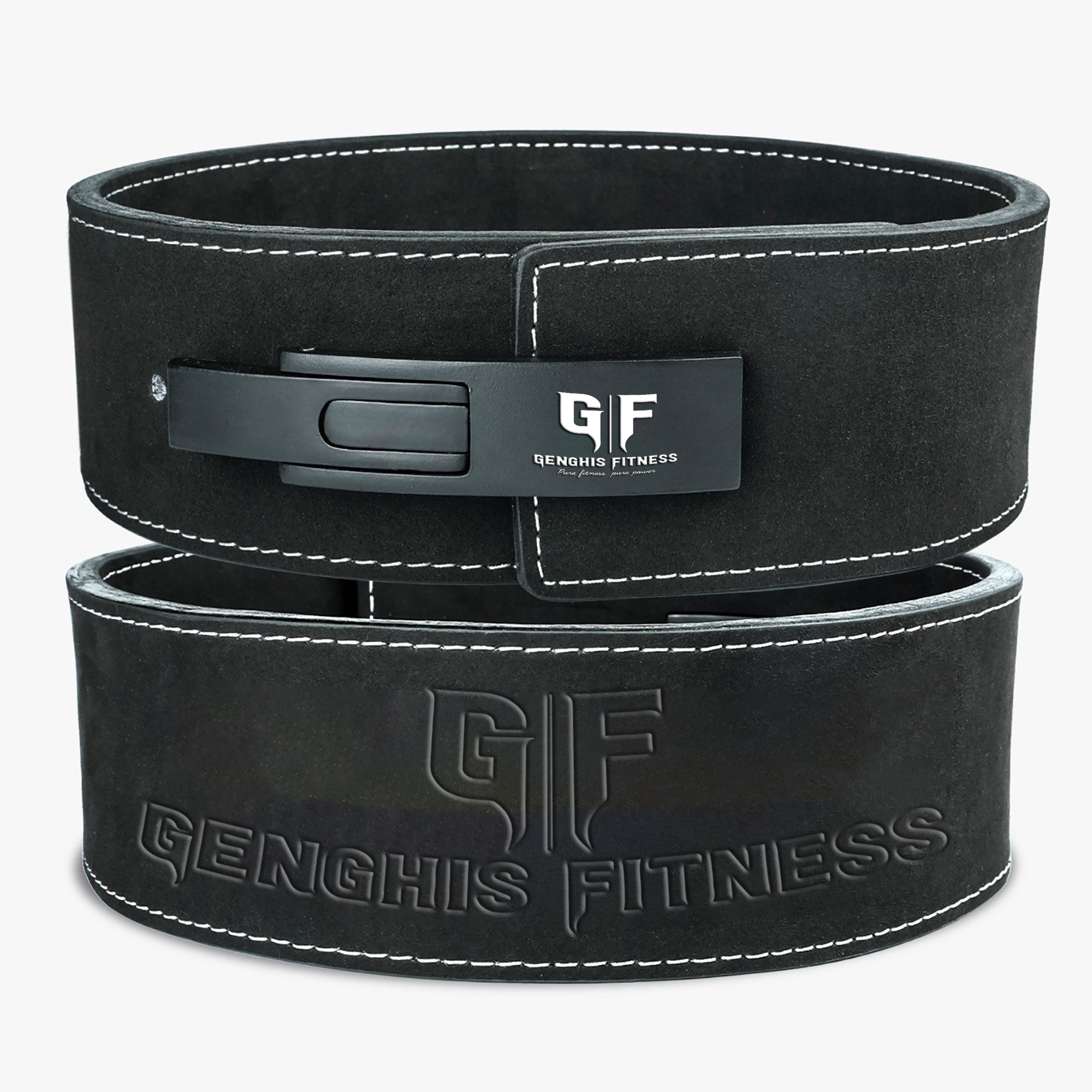
Genghis Fitness · Gear and Powerlifting Equipment
Powerlifting Lever Belt: Why Competitive Powerlifters Choose It, How to Set It Up, and Whether It Is the Right Belt for Your Training
Updated 2026 | By Team Genghis Fitness | 19 min read
The lever belt is the competition standard for most serious powerlifters and for good reason. In the context of a squat competition where athletes perform three attempts at maximum weight with strict time constraints between attempts, the lever belt’s ability to be applied and removed in under 3 seconds versus 15 to 30 seconds for a prong belt is not a trivial convenience. It is a practical advantage that accumulates across warm-up sets, openers, and competition attempts into meaningful time savings and consistent application every single set.
This guide covers what specifically distinguishes a powerlifting lever belt from other belt types, the lever mechanism in detail, how to set it up correctly, the specific advantages and disadvantages versus prong belts, the weight classes and training contexts where lever belts are most appropriate, and what to look for in a quality powerlifting lever belt.
What Makes a Lever Belt a Powerlifting Belt
A powerlifting lever belt combines three specifications: leather construction (full-grain, vegetable-tanned at 10mm or 13mm thickness), 4-inch uniform width to meet federation dimensional specifications, and a lever closure mechanism. These specifications together define the competition-legal powerlifting belt used in IPF, USAPL, USPA, and most major sanctioned federations. Any of these specifications changed produces a belt that may still be useful for training but does not meet competition equipment standards.
The lever closure specifically distinguishes this from other powerlifting-grade leather belts. The same leather specification with a prong closure is still a competition-legal belt in most federations, but the lever version is overwhelmingly preferred by competitive athletes for the speed and consistency advantages described above. The full leather belt quality framework including leather grades and construction standards is covered in our comprehensive leather belt quality guide.
The Lever Mechanism: How It Works
The lever mechanism consists of a metal plate with a hinged arm that flips over a hook. The belt passes through a slot in the lever housing, and a series of holes in the belt allow the lever to be mounted at different positions that correspond to different tightness settings. When the lever arm is flipped closed, it presses a small hook into the belt hole, locking the belt at the selected tightness. When the lever arm is flipped open, the hook releases and the belt can be removed over the hips immediately.
Setting up the lever requires positioning it so that it closes firmly at the desired tightness. The process: thread the belt through the lever housing, wear the belt at your working tightness (use the two-finger guide described in our how to wear a lifting belt guide), and mount the lever at the hole that produces a firm but not forced closure. This setup takes about 5 minutes with a small screwdriver and only needs to be repeated when bodyweight changes significantly. The Genghis Fitness 10mm lever belt uses a steel lever mechanism with standard hole spacing that accommodates the full adjustment range most athletes need.
Lever vs. Prong: The Definitive Comparison for Competitive Use
| Factor | Lever | Single Prong |
|---|---|---|
| Application speed | 2 to 3 seconds | 15 to 30 seconds |
| Consistency of tightness | Identical every time | Varies slightly per use |
| Tightness adjustability | One setting (screwdriver to change) | Any hole, any time |
| Best for bodyweight fluctuation | Less practical | Highly practical |
| Competition use | Dominant choice | Used by some |
| Durability | Hardware can loosen over time | Simpler, more robust mechanism |
Who Should Buy a Powerlifting Lever Belt
Buy a lever belt if: You compete in powerlifting or plan to compete within the next 12 months. You train at consistent bodyweight with minimal weight cut or bulk fluctuations. You train with high volume on your main competition lifts and value the speed consistency that lever closure provides across many sets per session. You want the same belt for training and competition to ensure your bracing mechanics are identical in both contexts.
Consider a prong belt instead if: You are female and experience meaningful waist circumference variation across your hormonal cycle (as discussed in our lifting belt for women guide). You are in a significant weight loss or gain phase where your belt tightness changes frequently. You are a recreational lifter without competitive goals who values the flexibility of a prong over the speed of a lever. You train across multiple disciplines with varied movement demands where different tightness settings are appropriate for different exercises.
Frequently Asked Questions
Do Lever Belts Need Maintenance?
The leather requires the same conditioning maintenance as any leather belt (conditioner every 6 to 12 months, wipe down after use, store flat). The lever mechanism specifically needs periodic tightening of the mounting screws, which can loosen through repeated opening and closing cycles. Check the two screws mounting the lever to the leather every 3 to 4 months and tighten with a small screwdriver if any looseness develops. A loose lever that has play in the mechanism is less secure and can develop further play rapidly. The lever hinge itself does not require lubrication under normal training conditions. A study in the Journal of Strength and Conditioning Research confirmed the performance value of belt rigidity for intra-abdominal pressure generation, reinforcing why keeping the lever mechanism tight and functional matters for competition performance.
Can You Use a Lever Belt for Deadlifts?
Yes, lever belts are appropriate for deadlifts. The same bracing and spinal protection benefits apply. Some lifters prefer to set the lever belt slightly looser for deadlifts than squats to accommodate the hip flexion position at setup, which requires the lever to be remounted to a different hole. Athletes who use the same tightness for both movements do not need to adjust. For the deadlift-specific consideration of figure-8 straps as a complementary grip accessory to lever belt use, see our figure-8 straps guide.
Compete with the Best. Train with the Same Belt.
10mm lever belt. Full-grain leather. Steel lever. IPF-spec dimensions. Built for the platform.
Shop 10mm Lever Belt Shop Powerlifting BeltAdjusting Your Lever Belt For Different Movements
One of the most underappreciated aspects of lever belt ownership is that the optimal tightness setting differs meaningfully between movements. For squats, most lifters want the belt cinched as tight as possible while still allowing a full breath and brace at the bottom position. For deadlifts, particularly conventional deadlifts where the torso angle changes significantly through the pull, some athletes prefer the lever set one notch looser than their squat setting to avoid the belt digging into the abdomen during the lockout phase. For overhead pressing movements where the belt is worn primarily as a reminder to maintain core tension rather than for maximal support, a noticeably looser setting is appropriate.
The lever mechanism on a quality belt, like the Genghis Fitness 10mm lever belt, uses a standard Phillips screwdriver to reposition the lever across multiple holes in the belt. Spend a session or two dialing in your preferred setting for each movement category before committing to a single position. Most experienced lever belt users end up with two marked settings: one for squatting and one for everything else. Mark your preferred positions on the belt with a small piece of tape or a marker until the settings are memorized. This takes the guesswork out of setup and ensures you start every heavy set with your belt in the exact position you trained to expect.
Certified strength and conditioning specialists with over 10 years of experience in powerlifting, nutrition, and evidence-based fitness content. Based in New York City.
TRAIN WITH EQUIPMENT THAT MATCHES YOUR EFFORT
Serious strength training demands serious gear. A lever belt, quality straps, and knee sleeves are not accessories. They are tools.
Lifting Straps Knee SleevesExplore the full weightlifting belt guides for lever belt comparisons, leather belt reviews, neoprene belt recommendations, sizing guides, and sport-specific belt selection across powerlifting, CrossFit, and Olympic lifting.