


Powerlifting Leather Belt | 10mm Single-Prong
$120.00
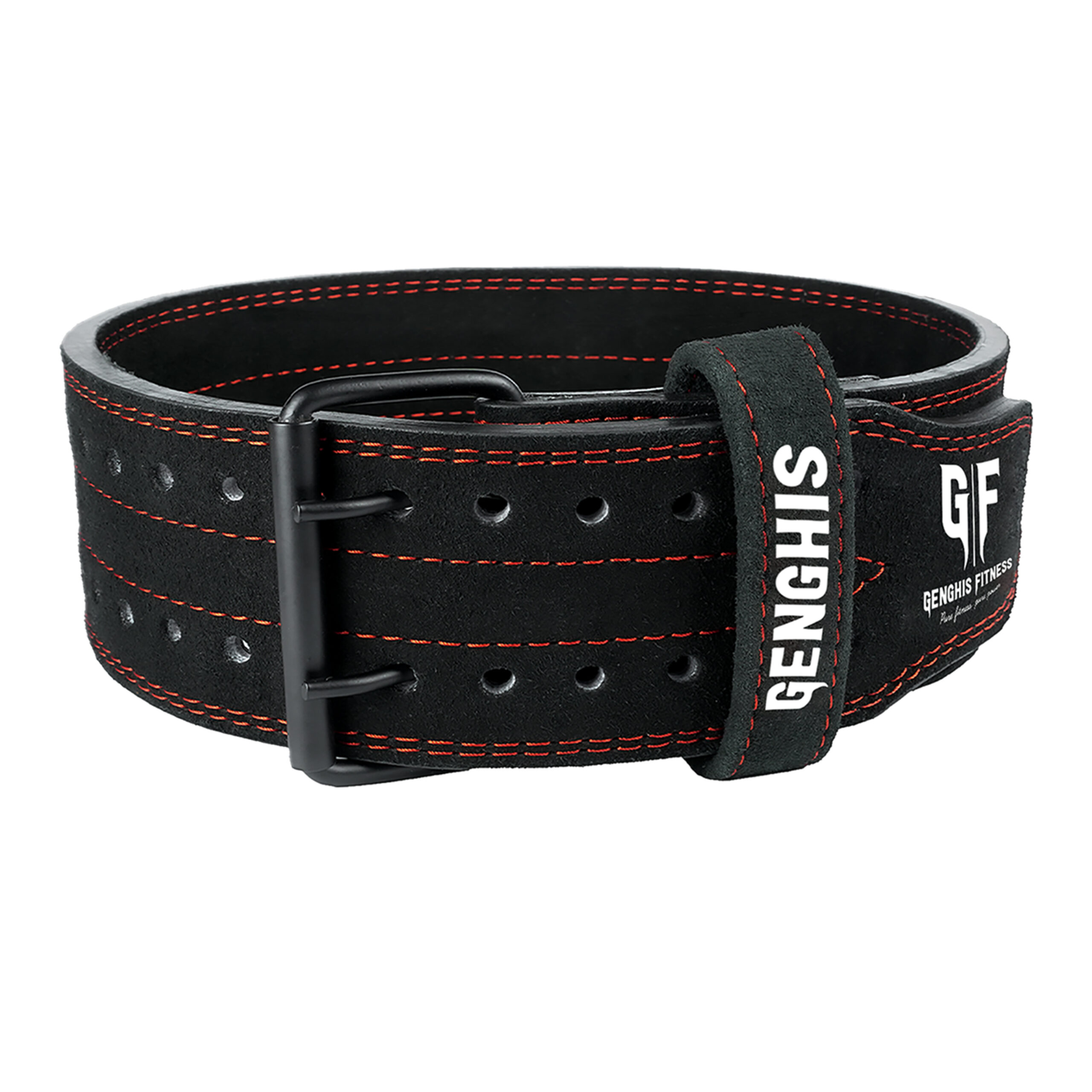
10mm full-grain leather powerlifting belt with single-prong steel buckle. Uniform 4-inch width, suede lining, double-stitched edges. The standard competition belt for raw powerlifters who need reliable maximum IAP support on every heavy set.
Description
The Powerlifting Leather Belt That Goes With You From Training To The Platform
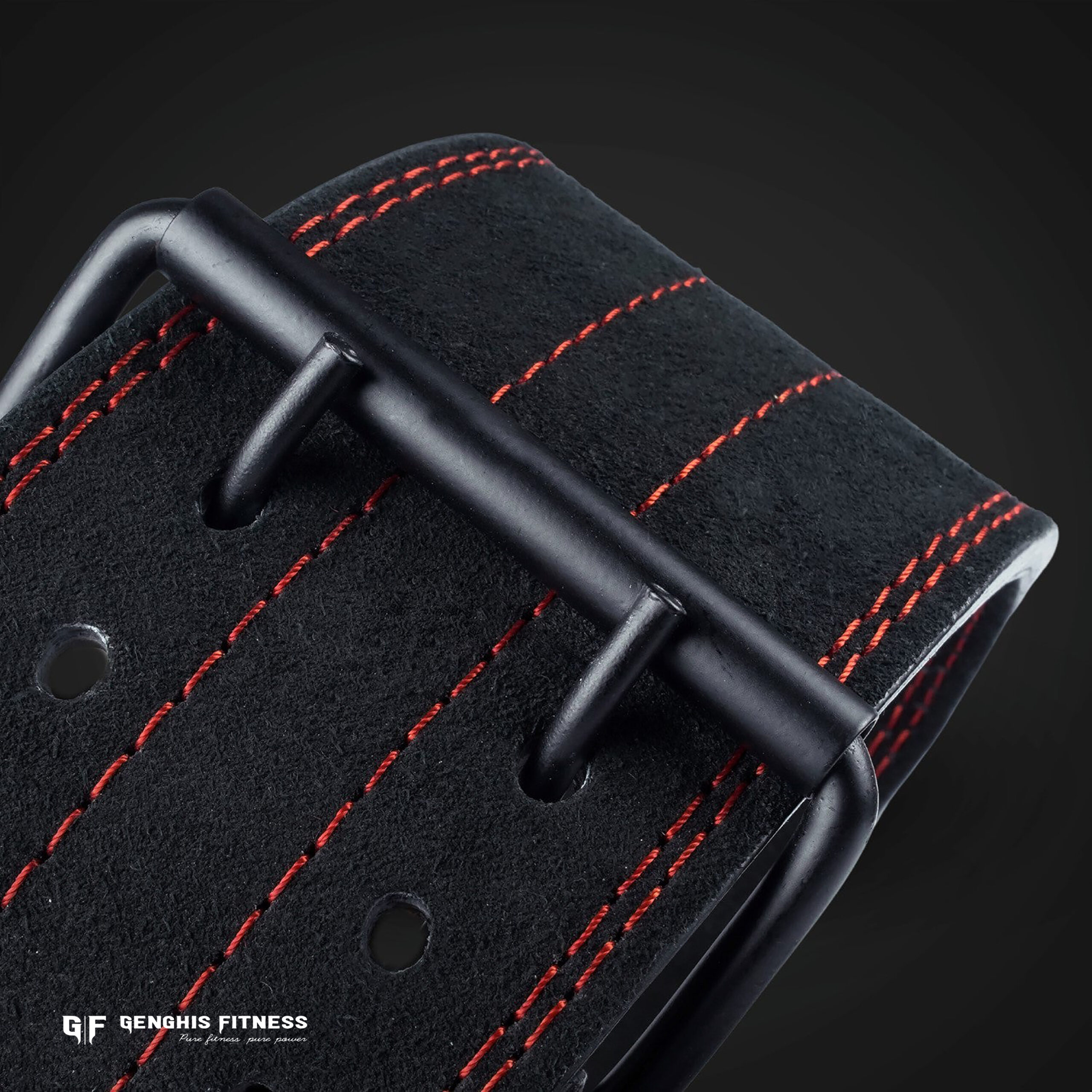
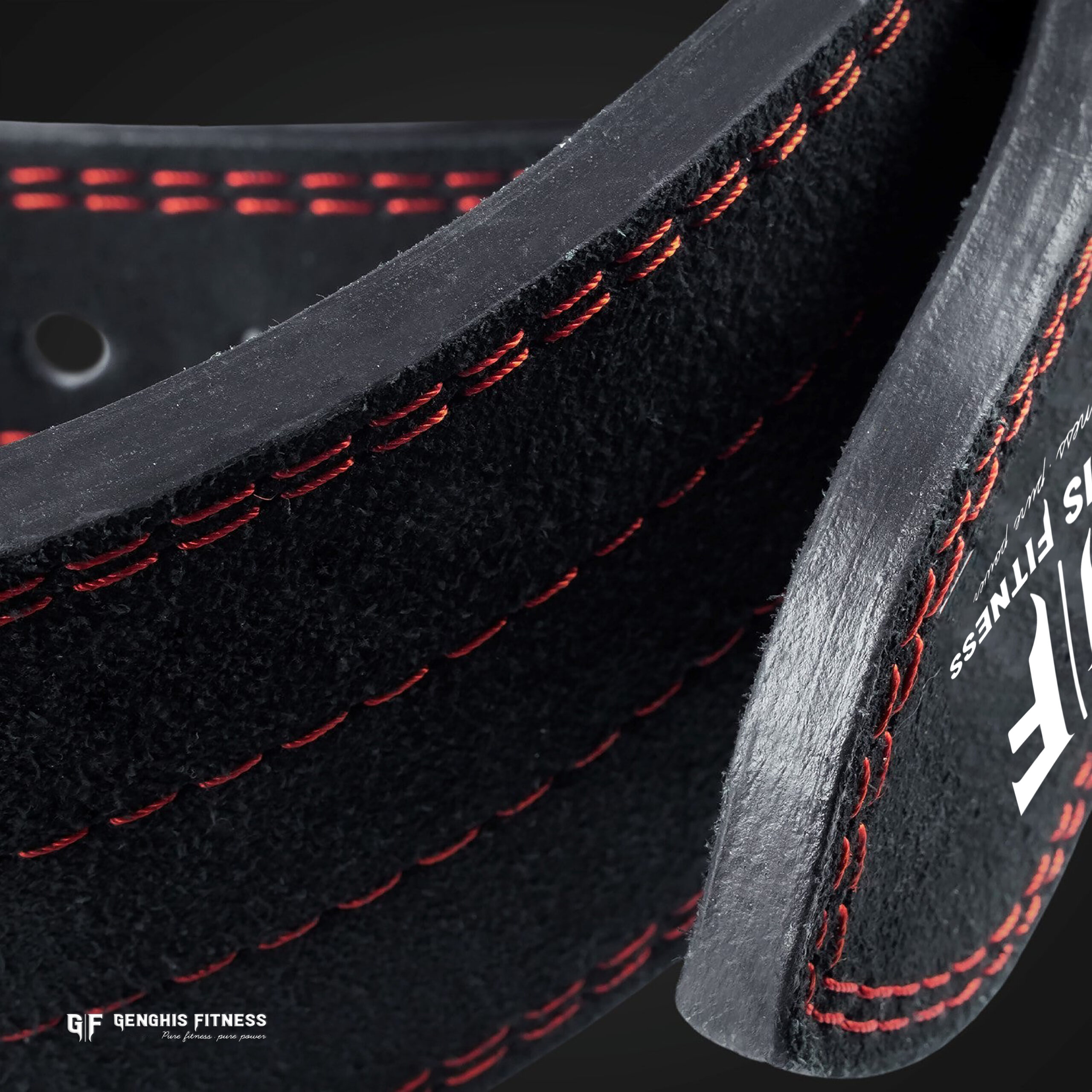
The Genghis Fitness Powerlifting Leather Belt is a single-prong 10mm full-grain leather belt in a uniform 4-inch width from front to back. Single-prong belts are the most universally accepted closure type across every powerlifting federation worldwide, including the IPF, USAPL, CPU, and the majority of smaller regional federations. The belt is built from a single ply of full-grain leather tanned to a consistent 10mm thickness, finished with suede inner lining that grips against your singlet, and reinforced with double-stitching along the entire perimeter. This is the standard competition belt. It is also the belt that gets you ready to use a competition belt because it trains you in the same equipment you will compete in.
The single-prong closure system adjusts hole by hole, giving you precise and repeatable tightness across different movements and different phases of training. You find your squat hole and your deadlift hole early in your training with this belt, mark them if needed, and every subsequent session starts with the same position without any guesswork. The steel prong and buckle frame are built to survive years of the compressive and tensile forces applied by competition-weight loading without stretching, bending, or developing play in the mechanism.
Who This Belt Is For
Competitive raw powerlifters who compete in tested or equipped federations need equipment that matches federation specifications. The Genghis Fitness powerlifting belt meets the single-ply leather requirement, the 4-inch maximum width, and the single-prong closure that most federations accept. Confirm your specific federation’s rulebook requirements before competition because specifications vary between organizations. For the majority of raw powerlifting federations operating in the US and internationally, this belt is competition-legal.
Athletes who are not competing but who train at competition-level loads need competition-level equipment. If you regularly squat and deadlift above 80 percent of your maximum for multiple sets, the compressive forces on your spine during those sets warrant a belt that provides maximum intra-abdominal pressure support. A neoprene or nylon belt provides useful support at moderate intensities. At maximum training loads, full-grain leather at 10mm is the appropriate tool.
Lifters who are six months or more into serious barbell training and have developed consistent bracing mechanics are ready for this belt. Using a stiff leather belt before you understand intra-abdominal pressure and how to brace effectively produces less benefit because the belt cannot compensate for incomplete bracing mechanics. Learn to brace without a belt first, then add the belt to enhance support you already know how to create.
How 10mm Full-Grain Leather Works Under Load
Full-grain leather at 10mm is rigid enough to function as a stable surface for your contracted core muscles to push against when you take a breath and brace before a lift. The mechanism of a lifting belt is not that it holds your back in position. The mechanism is that it gives your abdomen something to push outward against, which increases intra-abdominal pressure, which stabilizes the spine more effectively than muscular bracing alone can achieve at maximum loads. The rigidity of the belt is what makes this work. A flexible belt bends when you push against it and reduces the pressure differential.
Full-grain leather, as opposed to split-grain or bonded leather alternatives, maintains this rigidity through years of heavy training because the natural fiber structure of the outer hide is preserved intact. Lower-grade leathers compress and soften over time, losing the surface hardness that makes the pressure mechanism effective. A full-grain belt you buy today will perform identically in ten years because the fiber structure does not break down under normal training loads.
Break-In, Sizing, and Long-Term Care
Expect two to four weeks of regular use before this belt feels broken in. A new 10mm full-grain leather belt is noticeably stiff and the first few training sessions require some adjustment as the leather begins to conform to your torso shape. Train in it on every heavy session and some moderate sessions to accelerate the break-in. Do not just pull it out for maximum effort days because the belt will take longer to conform to your specific torso dimensions.
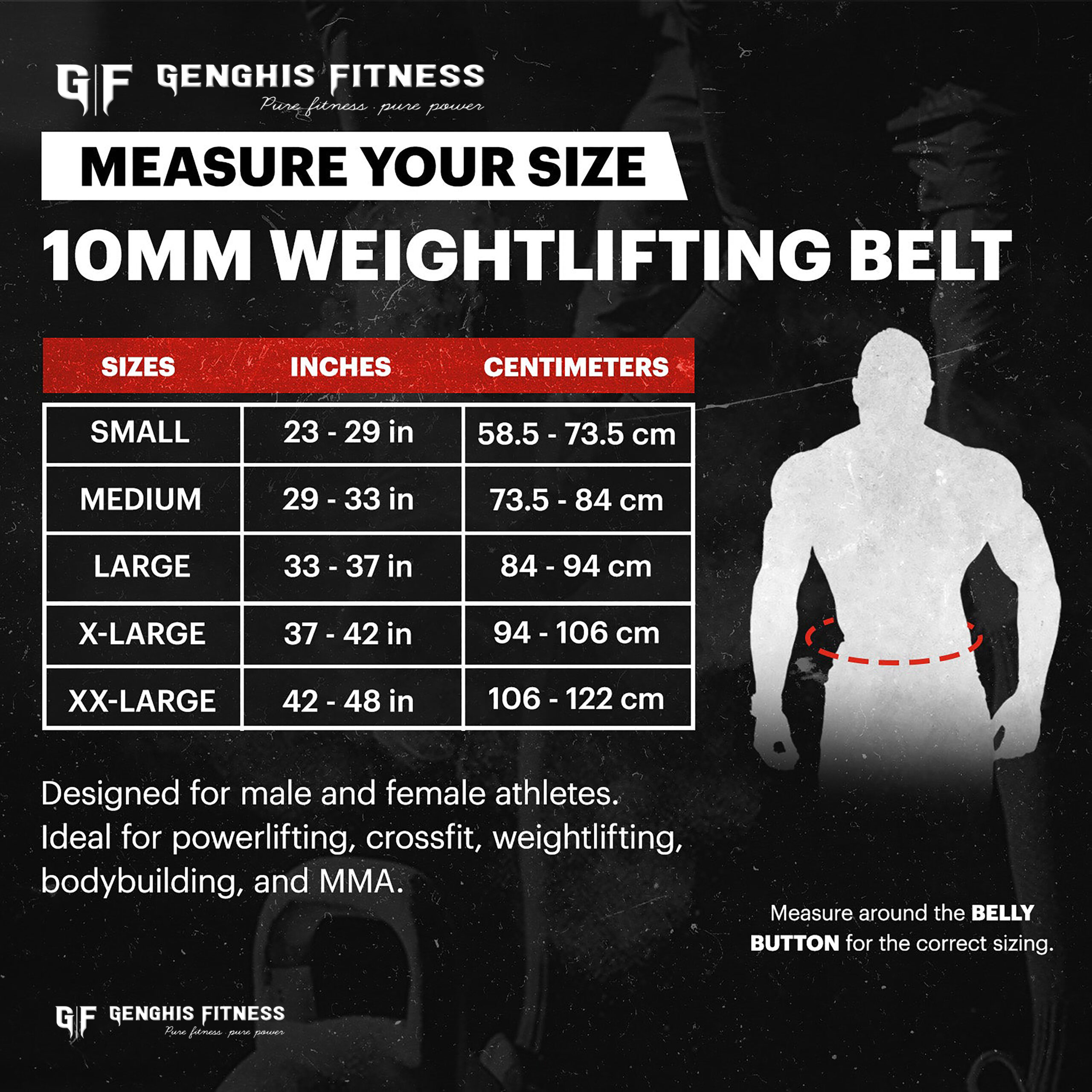
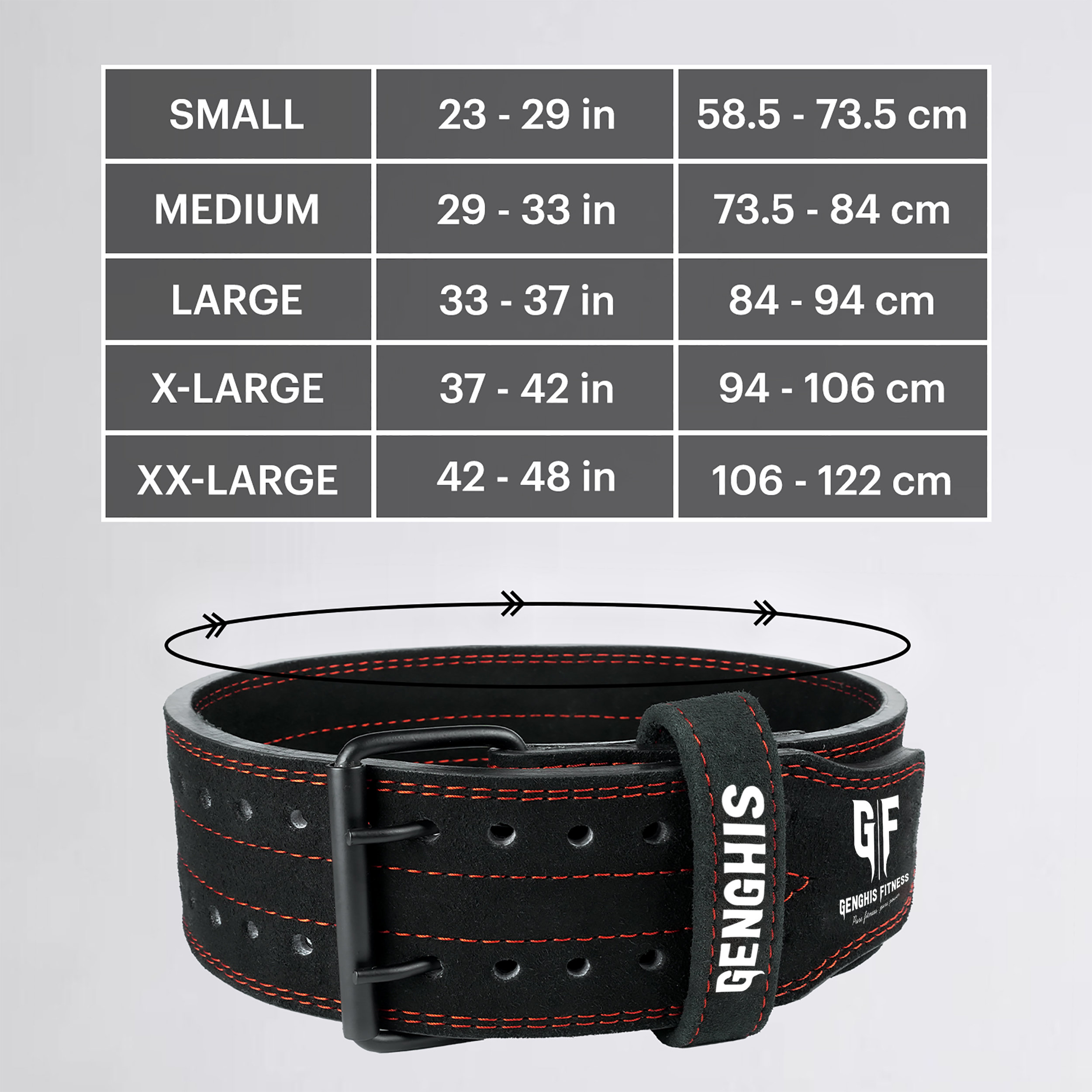
Size the belt so your most-used hole is the middle hole of the row. This gives you adjustment range on either side for different movements or different points in the training season. If your measurement puts you between sizes, the smaller size is correct for a leather belt. The leather stretches slightly over the break-in period and a correctly sized belt will settle into its final fit after the first month of use.
Wipe the outside surface clean with a dry cloth after training. Treat the leather with a quality leather conditioner every few months to prevent cracking and maintain suppleness in the outer fibers. Do not soak the belt in water or clean it with harsh chemicals. Store flat or hung rather than folded to prevent permanent creasing in the leather structure.
Key Specifications
- Thickness: 10mm uniform full-grain leather
- Width: 4 inches uniform throughout
- Closure: Single-prong steel buckle
- Lining: Suede inner grip surface
- Stitching: Double-stitched reinforced edges
- Federation compliance: IPF, USAPL compatible, verify with your specific federation
- Available sizes: S through XL
Why Buy From Genghis Fitness
IPF and USAPL Approved — Competition Ready
Single-prong leather closure, 10mm full-grain leather, and uniform 4-inch width meet IPF and USAPL raw powerlifting equipment standards. Always confirm with your federation.
Free Worldwide Shipping on Orders $100+ or 3+ Items
Flat rate $12 on smaller orders. Express available. Full shipping policy
30-Day Return Window — No Hassle
Not satisfied? Email [email protected] within 30 days. Refund to original payment method within 10 business days. Return policy
Built for Real Training — Not for the Shelf
Every product is designed and tested for the demands of serious strength training, powerlifting, CrossFit, and competitive athletics.
Related Guides
- How to Break In a Powerlifting Belt: Complete Guide for Leather Belt Owners
- Powerlifting Belt Sizing Guide: Get The Fit Right The First Time
- Powerlifting Belt Benefits: What A Belt Actually Does For Your Lifts
- 10MM Powerlifting Belt: The Gold Standard for Strength Training
- Neoprene vs Leather Weightlifting Belt: The Definitive Comparison
- Top Picks for Best Lifting Belt – Secure Your Lift!
Frequently Asked Questions
Is the single-prong powerlifting belt legal in IPF and USAPL competitions?
Yes. A single-prong leather belt is the most universally accepted closure type across powerlifting federations including the IPF, USAPL, CPU, and most regional federations. Confirm your specific federation’s current equipment rules before competing since specifications can vary by organization and update over time.
What is the difference between 10mm and 13mm belt thickness?
A 10mm belt provides the rigidity required for maximum intra-abdominal pressure support at competition loads and is the standard competition thickness in most powerlifting federations. A 13mm belt offers slightly more rigidity but is not permitted in all federations and can feel more restrictive during warm-up. For most competitive and recreational powerlifters, 10mm is the correct choice.
How should I tighten this belt correctly for squats versus deadlifts?
Most athletes use a slightly tighter hole for squatting and one hole looser for deadlifting. The squat requires bracing with the hips lower and the belt positioned more horizontally, so a tighter fit supports the higher intra-abdominal pressure of the squat bottom position. The deadlift requires more hip flexion freedom, so a marginally looser setting keeps the belt comfortable through the pull without restricting the hip drive at lockout.
How do I care for a full-grain leather belt?
Wipe the outer surface with a dry cloth after each training session to remove chalk and sweat. Apply a quality leather conditioner every two to three months to prevent cracking and maintain the natural fibers. Never soak the belt in water or use harsh chemical cleaners. Store it flat or hanging rather than folded to prevent permanent creasing in the leather.
At what training level should I start using a powerlifting belt?
Most athletes benefit from introducing a belt when their squat and deadlift working sets regularly exceed 80 percent of their one-rep maximum. Before that threshold, training without a belt builds the core stability and bracing mechanics that make belt use effective. Using a belt before understanding how to create intra-abdominal pressure manually reduces the support benefit since the belt enhances bracing you already know how to do rather than replacing it.
Belt Size Guide
| Size | Waist (inches) | Waist (cm) | Fits belt hole |
|---|---|---|---|
| XS | 20 – 24 in | 51 – 61 cm | Holes 2–4 |
| S | 25 – 29 in | 64 – 74 cm | Holes 2–4 |
| M | 30 – 34 in | 76 – 86 cm | Holes 2–4 |
| L | 35 – 39 in | 89 – 99 cm | Holes 2–4 |
| XL | 40 – 44 in | 102 – 112 cm | Holes 2–4 |
| XXL | 45 – 49 in | 114 – 124 cm | Holes 2–4 |
Measure your waist at navel height while relaxed and not flexed. Order so your most-used training tightness falls on hole 3 of 5. Between sizes? Order the smaller size — leather stretches slightly during break-in.
Additional information
| Weight | 1 kg |
|---|---|
| Dimensions | 8 × 6 × 2 cm |
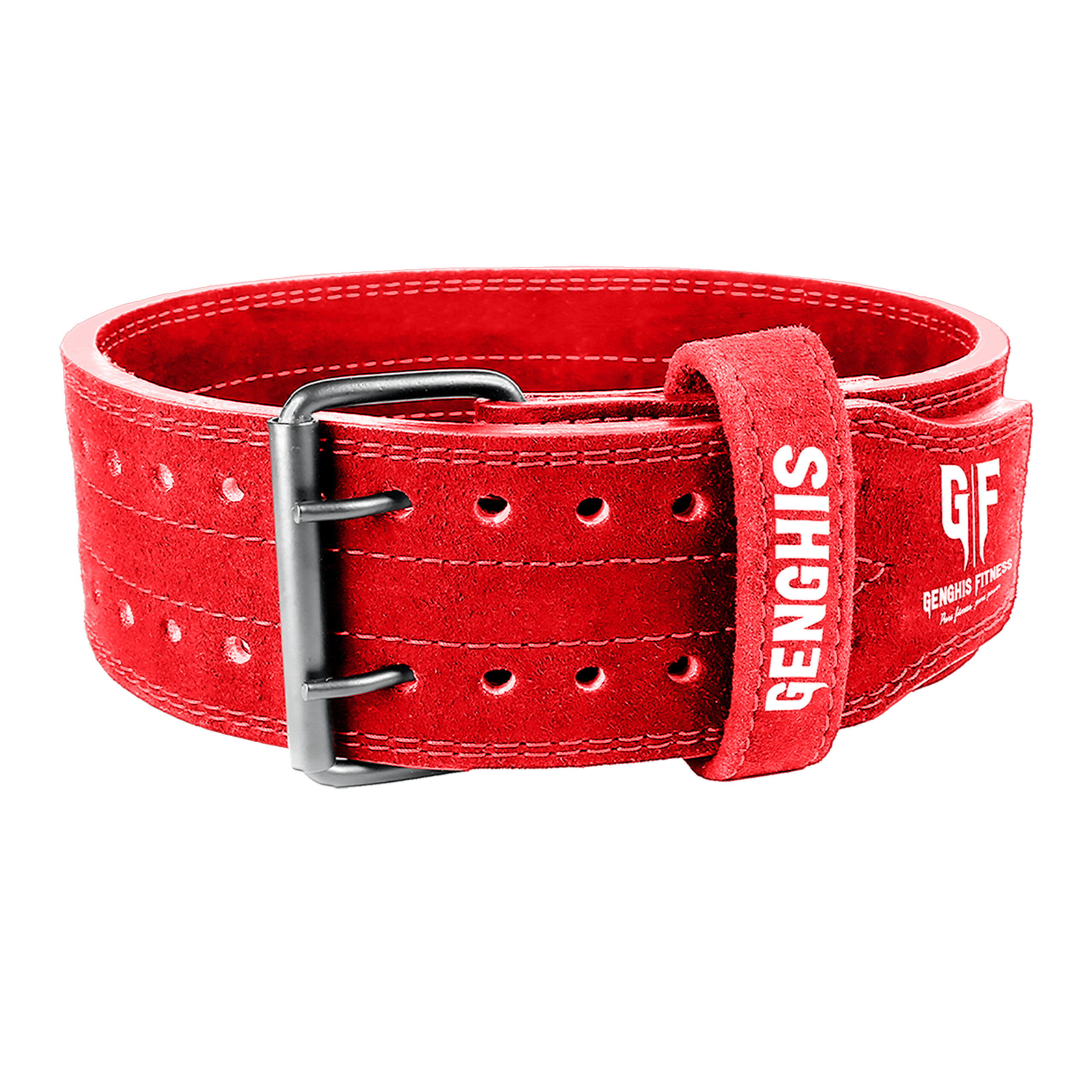
| COLOR | 10MM Weightlifting Belt_BLACK, 10MM Weightlifting Belt_BROWN, 10MM Weightlifting Belt_RED |
| SIZE |
You must be logged in to post a review.
Related products
-

Knee Wraps for Weightlifting | 78-Inch Heavy Duty
$24.00Select options This product has multiple variants. The options may be chosen on the product page -
Bench Blaster Sling | Bench Press Overload Tool
$35.00Select options This product has multiple variants. The options may be chosen on the product page -
Ankle Straps for Cable Machine | Padded Neoprene
$30.00Select options This product has multiple variants. The options may be chosen on the product page -
Nylon Lifting Belt | 4-Inch Auto-Lock Lever Closure
$26.00Select options This product has multiple variants. The options may be chosen on the product page


Reviews
There are no reviews yet.