Genghis Fitness · Equipment and Grip Training
Heavy Lifting Hooks: How They Work, When to Use Them Over Straps, Best Exercises, Safety Considerations, and Top Picks
Updated 2026 | By Team Genghis Fitness | 22 min read
Lifting hooks are a grip assistance tool that differs fundamentally from lifting straps in mechanism and application. While straps wrap around the wrist and the bar to distribute the load across the wrist and palm, hooks are rigid metal or composite devices that strap to the wrist and hook directly over the bar, creating a mechanical connection that requires almost no grip involvement from the hand at all. This complete grip elimination makes hooks the most effective tool for pulling exercises in athletes whose grip strength is severely limiting their training volume and intensity, and for athletes with hand injuries, arthritis, or grip strength deficits that make sustained gripping painful. Understanding the trade-offs between hooks and straps, and knowing which exercises benefit most from each tool, allows athletes to make informed accessory choices that improve training quality without creating unnecessary dependency.
How Lifting Hooks Work
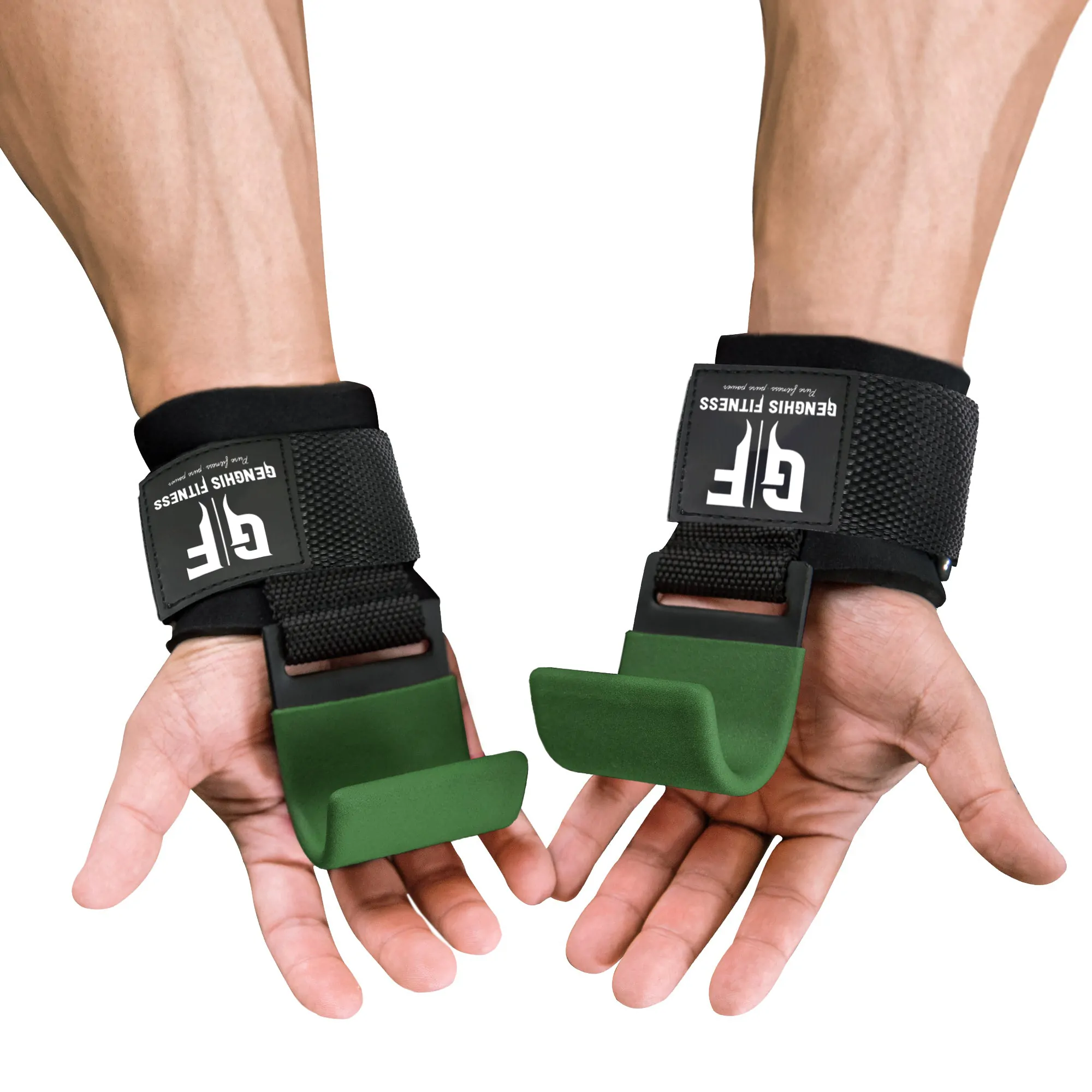
A lifting hook consists of a padded wrist wrap that secures to the wrist above the palm, with a metal hook (typically zinc alloy, steel, or aluminium) extending from the base of the palm over the fingers. The hook wraps over the bar or dumbbell handle during the exercise, allowing the load to hang from the hook rather than being gripped by the fingers and thumb. The athlete essentially becomes a passive suspension point for the weight, with the hook bearing the entire load. This eliminates both the gripping force requirements and the muscular fatigue in the intrinsic hand muscles, forearm flexors, and grip that would otherwise limit pulling exercise performance. The Genghis Fitness weight lifting hooks feature a padded wrist wrap and heavy-duty zinc alloy hook rated for the loads encountered in serious strength training.
Hooks vs Straps: When to Use Each
The choice between hooks and straps for grip assistance is not arbitrary. Straps maintain partial grip engagement because the bar must still be held within the strap loop; they reduce the grip demand but do not eliminate it. Hooks eliminate grip involvement almost entirely. This fundamental difference produces different use cases. Straps are better for exercises requiring some degree of hand and finger control, particularly those with natural rotation of the bar or dumbbell during the movement (like rows and Romanian deadlifts), where the hook’s fixed position can feel awkward or restrict the natural movement path. Research on grip assistance tools published in the Journal of Strength and Conditioning Research found that both straps and hooks allow significantly greater pulling exercise volume before grip failure compared to bare hand training, with hooks providing the greater absolute grip fatigue elimination. Hooks are better for movements with a fixed bar path where hand position is consistent, particularly lat pulldowns, cable rows on fixed-path machines, and rack pulls where the bar travels vertically without rotation. The complete hooks versus straps comparison with specific exercise recommendations is in our hooks vs straps guide.
Best Exercises for Lifting Hooks
Lat pulldown: The fixed cable path and consistent hand position on the bar make this an ideal hook exercise. With hooks, the athlete can focus entirely on lat activation and retraction without grip fatigue interrupting long sets.
Seated cable row: Fixed-path cable rows benefit from hooks for the same reason as lat pulldowns. The hooks allow sustained back muscle training volume without grip becoming the limiting factor in high-volume back sessions.
Rack pulls and partial deadlifts: The rack pull (deadlift starting from above the knee) involves a purely vertical bar path and consistent grip position, making hooks practical. At very heavy loads used in rack pulls specifically for upper back and trap overloading, grip is almost always the first failure point without assistance.
Barbell shrugs: The vertical bar path and static grip position of shrugs make them one of the most natural hook exercises. Hooks allow the trapezius muscles to be trained to failure without the forearm flexors giving out first, which is the standard failure mode in unassisted heavy shrugs.
Dumbbell rows (single arm): The fixed position of the dumbbell during a supported single-arm row is amenable to hooks, allowing the lat and rhomboid to be trained to failure without grip interference.
Safety Considerations
Lifting hooks are safe for the exercises described above when quality hooks are used and the load does not exceed the hook’s rated capacity. The primary safety concern is using hooks in exercises with unpredictable bar movement where the hook’s fixed connection could prevent the athlete from releasing the bar if balance or position is lost. Overhead pressing, Olympic lifting, and any exercise where the bar might need to be dropped suddenly should never use hooks. Squats and bench press should never use hooks. Hooks are appropriate only for pulling exercises with controlled, predictable bar paths. Additionally, hooks do not develop grip strength; athletes who use hooks exclusively for all pulling exercises over extended periods may develop a grip strength deficit that creates problems in grip-dependent activities. Including at least some unassisted pulling work to maintain grip strength development alongside hook-assisted sessions is the balanced approach covered in our lifting hooks safety guide.
Maintaining Grip Strength Alongside Hook-Assisted Training
The most important consideration for athletes who use lifting hooks regularly is maintaining the grip strength they remove from the equation during hook-assisted sets. Grip strength has documented associations with overall strength and functional performance. Athletes who use hooks for all pulling exercises across entire training cycles can develop a grip strength deficit that creates problems in competition lifts without assistance. The balanced approach is to designate certain sets within each session as unassisted grip training while using hooks for the remainder to allow back muscle training at maximum quality. Specific grip training including farmer carries, dead hangs, and towel pull-ups can be added explicitly to maintain and develop grip strength alongside hook-assisted back training. The comprehensive grip strength development programme is at our grip strength training guide. For exercises where a natural bar feel matters such as conventional and Romanian deadlifts, lifting straps are the better grip assistance tool because they accommodate the natural wrist movement through the full range of motion rather than fixing the wrist in the hook position.
Frequently Asked Questions
Are Lifting Hooks Better Than Straps for Deadlifts?
Straps are generally the better choice for conventional deadlifts over hooks because the hook’s rigid position can feel awkward during the slight forward bar lean at the start position and does not accommodate the natural wrist position as well as straps do through the full range of motion. Hooks are more appropriate for rack pulls, partial deadlifts, and machine-based pulling exercises. For conventional and Romanian deadlifts, quality lifting straps provide the most natural and effective grip assistance with full range of motion accommodation.
How Much Weight Can Lifting Hooks Handle?
Quality steel or zinc alloy lifting hooks are typically rated for 200 to 400 kg depending on construction quality, which exceeds the loads any athlete will use in pulling exercises during their lifetime. The failure mode for poor-quality hooks at high loads is typically the hook straightening (bending open) under load rather than fracture, which is why purchasing hooks from reputable manufacturers with published load ratings is important. Inspect hooks periodically for any signs of deformation, particularly at the hook bend, and replace if any deformation is visible.
Train the Back. Not the Grip. Hooks Make the Difference.
Quality hooks rated for the weight you actually lift.
Shop Lifting Hooks Shop Lifting StrapsCertified strength and conditioning specialists with over 10 years of combined experience in powerlifting, nutrition coaching, and evidence-based fitness content. Based in New York City, the Genghis Fitness team tests every protocol in the gym before writing about it.
The full gym accessories guides covers how to load a dip belt, use an arm blaster correctly, and how hip circle bands fit into a lower body warm-up.