Lifting Straps for Deadlifts & Pulling Movements
Lifting straps eliminate grip as the limiting factor in your pulling training. When your back can handle more volume and load than your hands can hold, straps let you train your posterior chain to its actual capacity instead of stopping every set when the grip gives out. This page covers every strap type in the Genghis Fitness lineup, how each one works, and which belongs in your training at each stage.
Shop Lifting Straps

Leather Weight Lifting Straps | Heavy Duty Deadlift
Full-grain leather lasso straps. Maximum grip for heavy deadlifts, rows, and rack pulls. Improves with use.
From $24 — View →

Figure 8 Lifting Straps | Max Deadlift Grip
Closed-loop design physically cannot release under load. For maximum-effort deadlifts and near-max pulling.
From $20 — View →
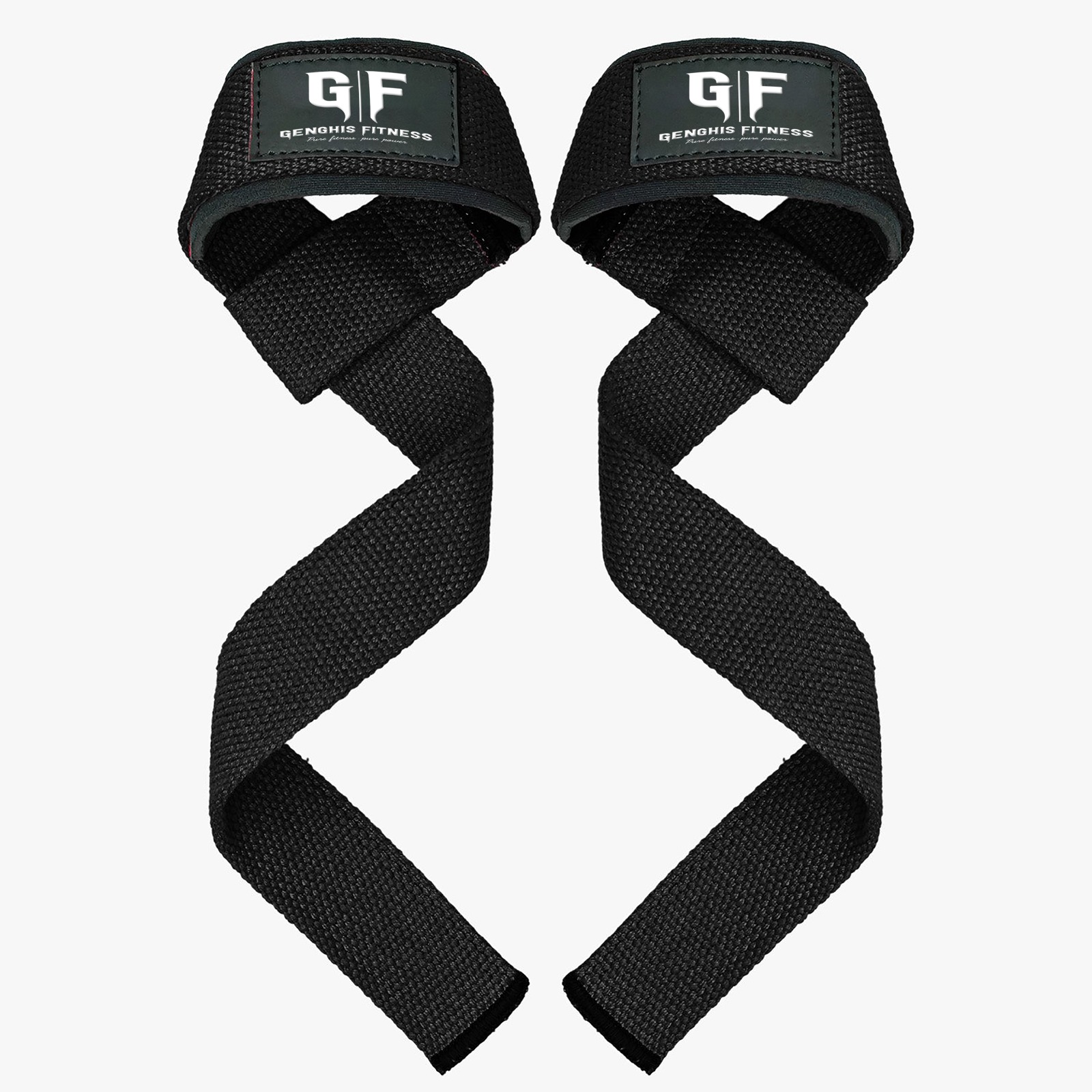
Cotton Lifting Straps | 24-Inch Lasso Style
Woven cotton lasso straps. No break-in, ready from session one. The right starting point for new strap users.
From $10 — View →
Cotton vs Leather vs Figure-8 — Which Strap Is Right for You?
The three strap types serve different intensity ranges and purposes. Using the wrong strap at the wrong intensity range either leaves performance on the table or introduces instability at maximum loads. Here is the direct breakdown.
| Cotton Straps | Leather Straps | Figure-8 Straps | |
|---|---|---|---|
| Best for | Accessory rows, moderate pulls | Heavy working sets, all pulling | Max deadlifts, record attempts |
| Max intensity | Up to ~80% 1RM | Up to ~95% 1RM | 100% — any load |
| Break-in | None — ready session one | 3-5 sessions | 3-5 sessions |
| Touch-and-go | Yes | Yes | No — reset each rep |
| Setup time | 5 sec/hand | 5-8 sec/hand | 8-12 sec/hand |
| Price | $10 | $24 | $20 |
How to Use Lifting Straps Correctly
For lasso-style straps — both cotton and leather — thread the free end of the strap through the loop to form a wrist cuff. Position the cuff at the base of your palm with the tail exiting toward the floor. Hook the tail under the bar from the near side, wind it once or twice around the barbell, and close your hand over the tail and the bar. Under load, the wrap tightens because pulling tension increases friction between the strap and the knurling. The bar does not need to move for the strap to lock in — it locks as you initiate the pull.
For figure-8 straps, pass one loop over your wrist and hook the bar-side loop under and around the barbell. Pull both loops snug before closing your hand. The closed-loop system tightens further under load and cannot unwind during the pull regardless of the force applied. Figure-8 straps require 3 to 5 sessions before setup becomes automatic.
When to Use Straps — and When Not To
Use straps on your heaviest working sets where grip fatigue would otherwise compromise the quality of the pulling movement. Your back, hips, and legs are the target muscles on a deadlift. Your grip should not be the reason those muscles stop working before their capacity is reached. Straps let you train the posterior chain to its actual limit.
Do not use straps on every set of every session. Your raw grip strength needs direct loading to maintain its capacity. Pulling raw on warm-up sets and moderate-intensity accessory work keeps grip strength developing while straps handle the heaviest loads where grip would otherwise be the bottleneck. The athletes with the strongest grip on the platform are the ones who trained raw on lower intensity work and used straps only where the load demanded it.
Which Exercises Benefit Most from Straps
Conventional and sumo deadlifts, Romanian deadlifts, barbell bent-over rows, Pendlay rows, seated cable rows, chest-supported rows, barbell shrugs, rack pulls, and any pull-up or lat pulldown variation where grip fatigue compounds over sets. On any of these movements where you notice your hands giving out before the target muscles are fully worked, that is the signal that straps belong in the session.
Free US Shipping on Orders $100+ or 3+ Items
30-day returns. Ships from New York. Shipping policy →
LIFTING STRAPS
54 guides covering every aspect of lifting straps: figure-8 vs lasso, leather vs cotton, how to apply them, when to use them, and why straps belong in every serious pulling program.
Lifting straps remove grip as the limiting factor in pulling movements. Your lats, hamstrings, and back can handle significantly more load than your forearms and hands can hold — straps close that gap. The right strap type depends on your training style, your load levels, and whether you need to release the bar quickly. Use these guides to choose correctly and use them effectively.
Figure-8 Straps
Maximum mechanical security. The strap of choice for near-maximum deadlift training.
Leather Straps
Superior bar grip under heavy loads. The durable, no-slip choice for serious pulling.
Cotton & Nylon Straps
Soft, quick to apply, and adequate for most training loads. The practical everyday strap.
Straps for Exercises
How to use straps specifically for deadlifts, rows, and other pulling movements.
By Sport & User
Straps for powerlifters, CrossFit, bodybuilders, women, and beginners.
Reviews & Comparisons
Strap comparisons, brand reviews, and material guides.
How-To & Care
How to use, apply, clean, and maintain your lifting straps correctly.
General Guides
Everything else — strap types, when to use them, and how to choose.
GENGHIS FITNESS LASSO LIFTING STRAPS
Cotton construction, correct length, and a secure winding mechanism that stays in place through maximum-effort pulling. For every heavy deadlift, row, and shrug session.
Shop Lifting StrapsFIGURE-8 LIFTING STRAPS
Mechanically locks the bar to your wrist. For the heaviest pulls in your training where standard lasso straps no longer provide sufficient security.
Shop Figure-8 Straps