USING WEIGHT LIFTING STRAPS FOR PULL-UPS: WHEN IT HELPS AND HOW TO DO IT RIGHT
Using lifting straps for pull-ups is one of the least discussed but most practically valuable applications of grip assistance equipment. Most lifters associate straps exclusively with deadlifts and rowing movements, which are their primary application, but the pull-up presents a specific grip challenge that straps address effectively in certain training contexts. When grip fatigue from earlier pulling work limits pull-up volume in a session, when weighted pull-ups at heavy loading compromise the quality of the lat contraction, or when high-rep pull-up sets for back volume accumulation are limited by forearm pump rather than back strength, straps convert the pull-up from a grip-limited exercise into a back-limited exercise and allow the target muscles to be trained to genuine fatigue.
WHY PULL-UPS CREATE A SPECIFIC GRIP CHALLENGE
The grip challenge in pull-ups is different from the grip challenge in deadlifts. In a deadlift, the bar is stationary and the grip must support a straight downward pull against the weight’s tendency to roll out of the hand. In a pull-up, the bar is stationary and the grip must support the full bodyweight plus any added resistance while the hands move through a range of positions as the elbows flex and the shoulders externally rotate during the ascent. This dynamic grip demand, combined with the extended time under tension of a full-range pull-up compared to a deadlift rep, produces forearm and grip fatigue that accumulates significantly faster than most athletes expect, particularly when pull-ups are programmed after heavy deadlift or row work that has already stressed the same forearm musculature.
WHICH STRAP TYPE WORKS BEST FOR PULL-UPS
LOOP STRAPS: THE PRACTICAL EVERYDAY CHOICE
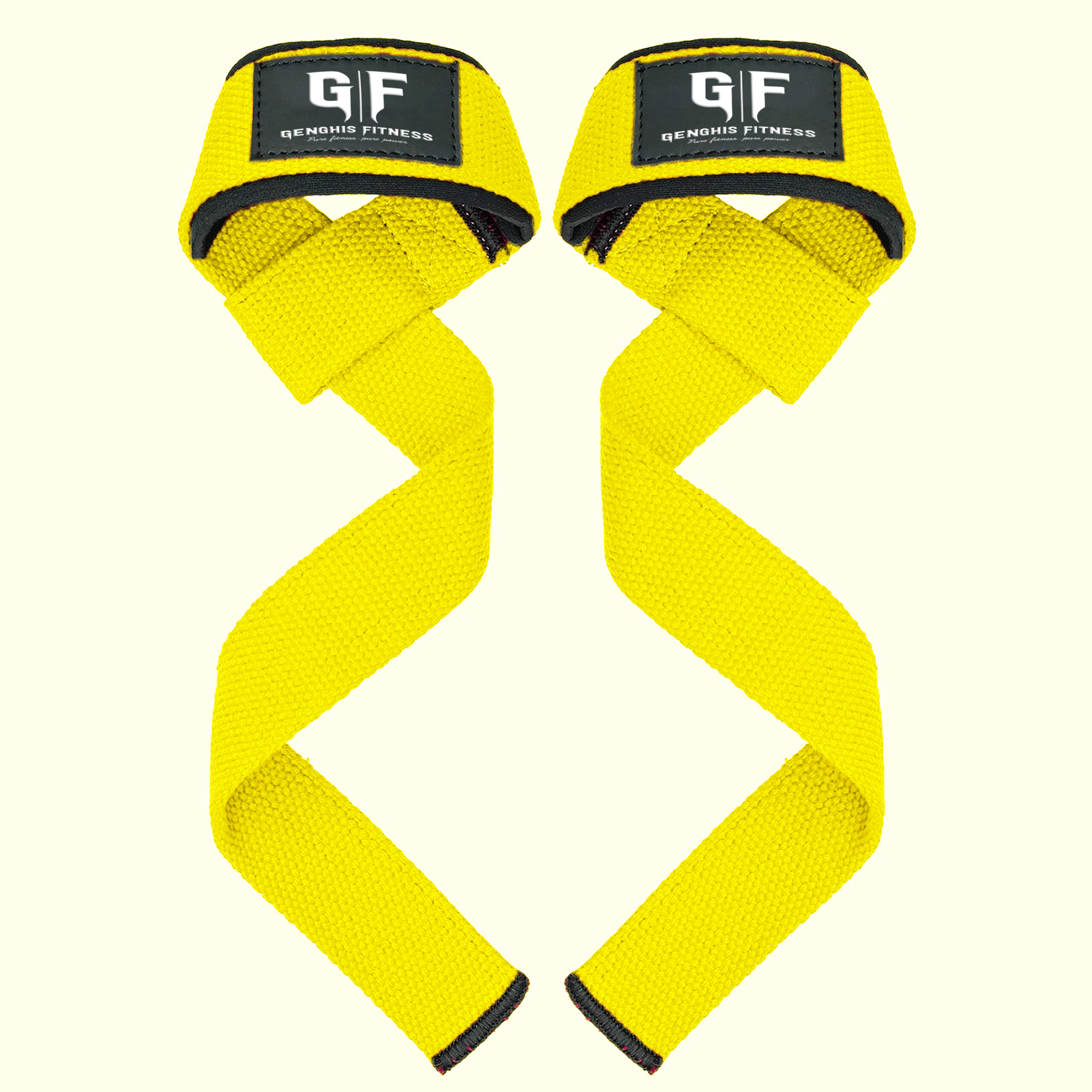
Standard loop lifting straps are the most practical strap type for pull-ups because they wrap quickly around the bar and allow the grip to be repositioned between reps without the full unwrapping required by figure 8 straps. Loop straps for pull-ups are applied by threading the loop end around the pull-up bar and wrapping the tail once or twice around the bar before gripping the tail and the bar together. The strap sits between the bar and the palm, creating a friction interface that is significantly more secure than bare hand contact alone. This application is faster and less fussy than for deadlifts because the pull-up bar is fixed and allows a more leisurely wrapping setup than the time pressure of approaching a loaded deadlift bar.
LEATHER STRAPS FOR HEAVY WEIGHTED PULL-UPS
Cotton loop straps provide adequate grip security for bodyweight and lightly weighted pull-ups. Leather lifting straps are preferred by many experienced athletes for heavier weighted pull-ups because the firm, non-stretch surface of full-grain leather provides better bar feel and more secure grip than cotton under dynamic loading conditions with significant added weight. Leather straps also conform to the pull-up bar surface with use, developing a custom grip pattern that cotton maintains less distinctly. For athletes doing weighted pull-ups with 45 pounds or more of added weight from a dip belt, leather straps are the practical choice for grip security that matches the load demands.
FIGURE 8 STRAPS FOR MAXIMUM EFFORT WEIGHTED PULL-UPS
Figure 8 lifting straps are technically applicable to pull-ups but less practical than loop straps for this exercise. The closed-loop design of figure 8 straps eliminates grip failure as a possibility, but the application time and the fixed wrist commitment are more cumbersome for pull-up training than for deadlift training. Figure 8 straps are worth considering for maximum effort weighted pull-up attempts where the additional security of the closed loop genuinely matters, but for the majority of pull-up strap applications including high-rep sets and moderate weighted work, loop straps provide the right balance of security and practical usability.
THE TRAINING CONTEXTS WHERE PULL-UP STRAPS GENUINELY HELP
The primary applications where straps genuinely improve pull-up training quality are: high-rep back volume sets where the goal is lat and upper back development and grip fatigue would otherwise cut sets short before the back musculature has reached the training stimulus threshold; weighted pull-up sessions where added weight from a dip belt or weighted vest creates grip demands that limit how much weight can be used productively; and pull-up sets programmed after heavy deadlift or row work that has already pre-fatigued the grip musculature. In all three contexts, straps allow the athlete to continue training the target muscles productively rather than stopping prematurely due to a grip variable that is not the training goal of the exercise.
THE RESEARCH CASE FOR ELIMINATING GRIP LIMITATIONS IN BACK TRAINING
Research on progressive overload and lat hypertrophy confirms that volume and load progression in pulling movements are the primary drivers of upper back and lat development. Grip fatigue that forces premature set termination reduces both the volume and the load available to the target muscles, directly limiting the development stimulus. Straps eliminate this limitation in the specific training contexts where it applies, allowing the full training stimulus to be delivered to the muscles that pull-ups are designed to develop. This is the same principle that makes straps valuable for deadlifts and rows, applied to pull-ups in the contexts where grip is genuinely the limiting factor rather than the target muscle group.
CORRECT WRAPPING TECHNIQUE FOR PULL-UP STRAPS
The wrapping technique for pull-up straps differs slightly from deadlift strapping. For pull-ups, position the strap loop around the bar and wrap the tail over the top of the bar rather than under. Grip the bar with the strap tail between the palm and the bar surface. This wrapping direction works with the pulling motion of the pull-up rather than against it, as the pulling direction of the exercise tightens the strap against the bar rather than loosening it. Keep the wrist in a neutral position during the set rather than allowing the wrist to flex back, which maintains the most efficient force transmission from the pulling muscles through the strap to the bar.
BUILDING A COMPLETE UPPER BODY PULLING SETUP
Build a complete upper body pulling setup around your strap use for pull-ups. Pair straps with elbow sleeves for joint warmth during extended pull-up volume sessions where the repeated elbow flexion under load can create cumulative joint stress across many sets. For weighted pull-up sessions, use the dip belt with chain to add precise incremental loading and straps to eliminate grip as the limiting variable so that progressive overload in the back musculature drives the adaptation rather than grip strength development. After completing pull-up volume, shift to the lever belt for any heavy deadlift or squat work in the same session where spinal support becomes the priority.
FINAL WORDS
Using lifting straps for pull-ups is not about avoiding grip training or taking shortcuts. It is about ensuring that when you program pull-ups for back development, the back is actually the limiting factor in the set rather than grip fatigue from accumulated pulling work. Use straps on pull-up sets where grip is genuinely limiting the quality or volume of the target muscle stimulus. Train grip strength and forearm endurance separately with bare-handed pulling work at appropriate intensities. The Genghis Fitness lifting straps and leather weight lifting straps are built for exactly this kind of strategic equipment use: the right tool applied to the right exercise at the right time to produce the best possible training stimulus.
Certified strength and conditioning specialists with over 10 years of experience in powerlifting, nutrition, and evidence-based fitness content. Based in New York City.
NEVER LOSE A REP TO GRIP AGAIN
Lifting straps let you focus on back activation instead of hand fatigue on every heavy pulling set.
Weight Lifting Hooks