Genghis Fitness · Strength Training Foundations
Compound Lifts: Why They Build More Muscle and Strength Than Isolation Exercises, the Big Five Movements, and How to Programme Them
Updated 2026 | By Team Genghis Fitness | 22 min read
Compound lifts are exercises that load multiple joints simultaneously, requiring coordinated activation of multiple muscle groups in a single movement. The squat loads the hip and knee joints simultaneously, activating the quads, glutes, hamstrings, and spinal erectors together. The deadlift loads the hip, knee, and ankle chain alongside the entire posterior chain and grip. The bench press loads the shoulder and elbow simultaneously, activating the pectorals, anterior deltoid, and triceps. This multi-joint loading is why compound lifts produce significantly greater muscle growth, strength development, and hormonal response than single-joint isolation exercises, and why every evidence-based strength programme uses compound lifts as its foundation rather than treating isolation work as the primary stimulus.
Why Compound Lifts Produce Superior Results
The superiority of compound over isolation exercises for overall strength and muscle development is supported by multiple lines of evidence. First, compound lifts produce greater total mechanical tension per unit of training time because they load more muscle mass simultaneously. A barbell squat to failure loads far more total muscle tissue than a leg extension to failure in the same time period, producing a greater systemic growth stimulus. Second, compound lifts produce a larger acute hormonal response. Research published in Medicine and Science in Sports and Exercise confirmed that multi-joint, large-muscle compound exercises produce significantly greater post-exercise testosterone and growth hormone elevations than single-joint isolation exercises, reflecting the greater systemic demand and larger muscle mass recruited. Third, compound lifts develop functional strength that transfers to athletic performance and daily life because they train muscles in the coordinated multi-joint patterns that real-world movement demands, rather than the isolated single-joint patterns that have limited functional transfer.
The Big Five Compound Lifts
Barbell back squat: The most systemically demanding lower body exercise, loading the quads, glutes, hamstrings, and spinal erectors under a direct compressive load. The squat has the highest anabolic hormone response of any single exercise due to its loading of the largest muscle groups in the body. Essential equipment includes a powerlifting belt for heavy work and knee sleeves for joint support and warmth during high-volume training.
Conventional deadlift: The most total-body compound lift, loading the posterior chain from the plantar flexors through the trapezius in a single movement at loads that typically exceed squat maxima. The deadlift develops grip strength, posterior chain power, and total body structural integrity that no other exercise matches. Using lifting straps for heavy deadlift sets prevents grip from limiting the posterior chain stimulus.
Barbell bench press: The primary upper body horizontal pushing exercise, loading the pectorals, anterior deltoid, and triceps simultaneously under the highest loads achievable in horizontal pressing. The bench press is the standard measure of upper body pressing strength in most strength sports and the primary pectoral development exercise in every bodybuilding and powerlifting programme. Wrist wraps protect the wrists under heavy loads.
Barbell overhead press: The standing overhead press loads the deltoids, upper trapezius, triceps, and core stabilisers in a vertical pressing pattern, building shoulder strength and overhead stability that the bench press does not develop. The standing version requires core bracing and lower body stability, making it more athletically transferable than the seated shoulder press machine alternative.
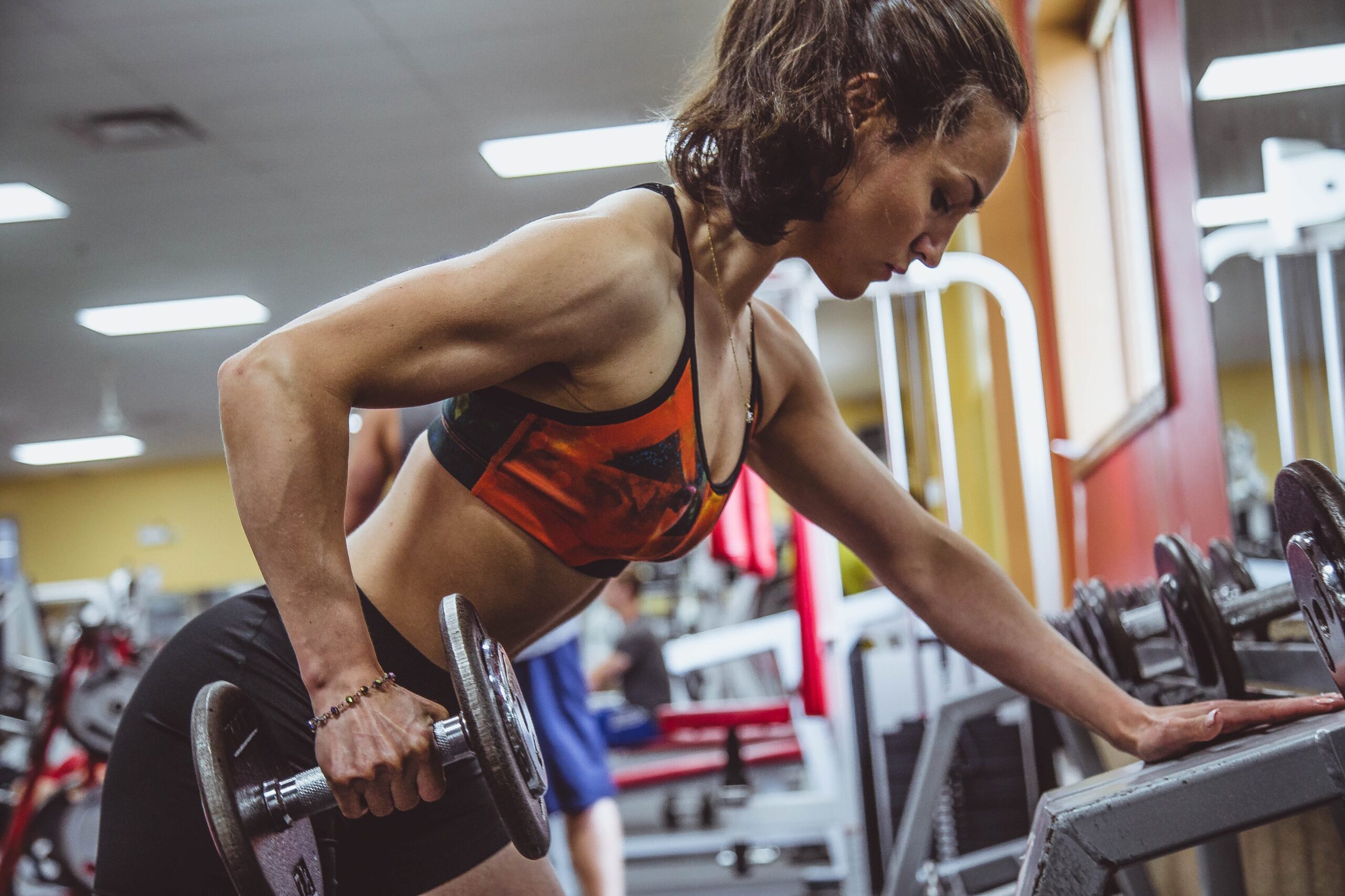
Barbell row: The primary compound upper body pulling exercise, loading the latissimus dorsi, rhomboids, rear deltoids, and biceps in a horizontal pulling pattern that directly opposes and balances the bench press. Maintaining a pressing-to-rowing ratio of at least 1:1 prevents the anterior shoulder dominance that heavy bench pressing creates. The barbell row is the most loaded horizontal pulling movement available and produces the greatest total back muscle activation of any rowing variation.
How to Programme Compound Lifts
The most evidence-supported approach to programming compound lifts distributes them across the training week with adequate recovery between sessions of the same movement pattern. For most athletes training 3 to 5 days per week, squatting 2 to 3 times per week, deadlifting 1 to 2 times, bench pressing 2 to 3 times, overhead pressing 1 to 2 times, and rowing 2 to 3 times covers all major movement patterns with appropriate frequency for strength development. The loading prescription depends on the goal: strength development uses sets of 3 to 6 reps at 80 to 90 percent of maximum, hypertrophy uses sets of 6 to 12 reps at 65 to 80 percent, and muscular endurance uses sets of 12 to 20 reps at 50 to 65 percent. Compound lifts should be performed at the beginning of each session when the athlete is freshest, before any isolation or accessory work that follows. The complete strength training periodisation approach is covered in our powerlifting programming guide.
Compound Lifts and Chronic Hormonal Adaptation
Training programmes built around heavy compound lifts produce chronic adaptations in the hormonal environment that support ongoing muscle protein synthesis across months. Athletes training primarily with compound movements at heavy loads consistently show higher resting anabolic hormone profiles compared to athletes whose training is primarily machine-based isolation work. Compound lifts also develop neural efficiency and inter-muscular coordination that isolation exercises cannot produce: a powerlifter who squats 250 kg has trained the nervous system to coordinate every muscle simultaneously at maximum effort, creating neuromuscular patterns that transfer to athletic explosive power in ways a leg press programme does not. Equipping heavy compound sessions with a powerlifting belt, knee sleeves, and lifting straps allows athletes to train at the loads that produce these adaptations without grip or joint fatigue becoming premature limiting factors. The complete periodisation approach is in our muscle building guide.
Frequently Asked Questions
Do Beginners Need Isolation Exercises Alongside Compound Lifts?
No. Beginners receive sufficient stimulus for all major muscle groups from compound lifts alone during the first 6 to 12 months of training, because the novel training stimulus produces hypertrophy from any effective loading. A beginner programme consisting only of squats, deadlifts, bench press, overhead press, and rows will produce complete body development with no meaningful gaps. Isolation exercises become valuable as the athlete becomes more advanced and specific weak points or aesthetic goals require targeted work that compound movements do not adequately address. Beginning with isolation exercises before establishing a compound lift foundation wastes training time on lower-stimulus movements when the higher-stimulus compound lifts would produce faster overall development.
How Many Compound Lifts Should You Do Per Session?
Two to three compound lifts per session is the practical range for most athletes. A lower body session might include squat as the primary movement and Romanian deadlift as the secondary, followed by isolation accessory work. An upper body session might include bench press as the primary and barbell row as the secondary, with isolation work following. Performing more than three heavy compound lifts per session creates accumulated fatigue that degrades technique and reduces the quality of later sets below the threshold for effective stimulus. Distributing compound lift volume across multiple sessions per week produces better total results than trying to consolidate all compound work into fewer, longer sessions.
Build on the Foundation. Compound Lifts First. Everything Else After.
The strongest athletes in the world built their base on compound movements and quality gear.
Shop Powerlifting Belt Shop Lifting StrapsCertified strength and conditioning specialists with over 10 years of experience in powerlifting, nutrition, and evidence-based fitness content. Based in New York City.
TRAIN WITH EQUIPMENT THAT MATCHES YOUR EFFORT
Serious strength training demands serious gear. A lever belt, quality straps, and knee sleeves are not accessories. They are tools.
10mm Lever Belt