DIP BELTS: THE MOST UNDERUSED TOOL FOR BUILDING SERIOUS UPPER BODY STRENGTH
Bodyweight dips and pull-ups have a ceiling. Once you are moving through full sets of 15 or 20 clean reps with crisp form, you have outgrown them for strength development purposes. The answer is not more reps. It is more weight. A dip belt is exactly what converts a bodyweight movement into a loaded compound exercise that continues to drive muscle and strength gains no matter how strong you get. Yet walk into most commercial gyms across the US and Europe and you will find a dip belt hanging unused in a corner while athletes waste months on tricep pushdowns and cable crossovers that will never build what weighted dips can.
HOW A DIP BELT WORKS AND WHAT MAKES A GOOD ONE
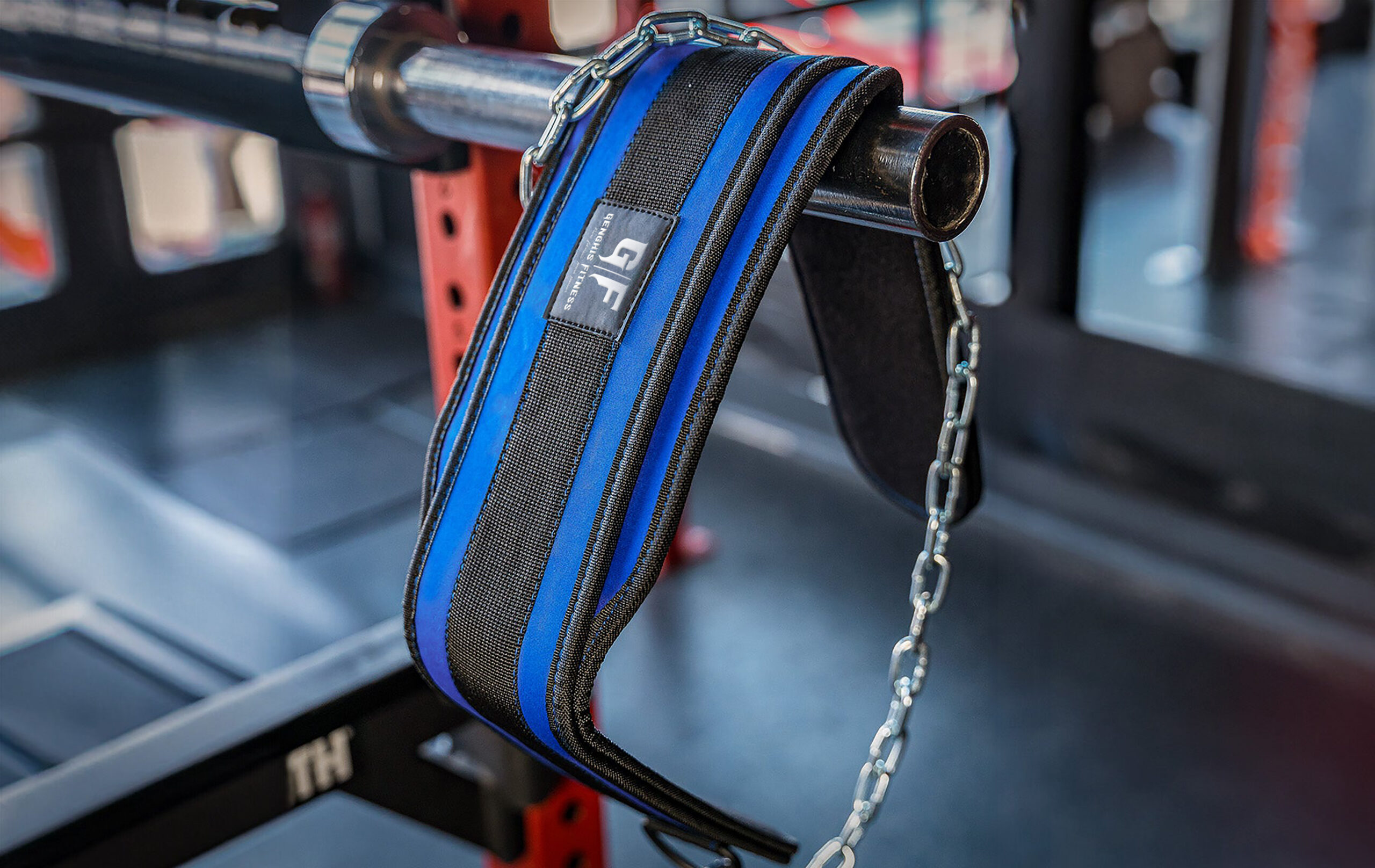
A dip belt is a wide padded belt that sits around your hips with a chain hanging from both sides. Weight plates or kettlebells are loaded onto the chain, and the load hangs between your legs as you perform dips or pull-ups. The hip-level attachment point is critical. Loading at the hips keeps the weight directly below your center of gravity, which maintains your natural movement pattern rather than pulling you forward or backward. A chest-height harness or a belt that sits at the waist shifts the load vector in ways that compromise your mechanics and put unnecessary stress on your lower back.
The key construction elements in a quality dip belt are padding thickness and material, chain strength and length, and the carabiner or clip mechanism that secures the weight. Wide, dense foam padding on nylon or neoprene backing distributes the load across a larger hip surface area, which becomes critical when you are working with 45, 90, or 135-plus pounds hanging between your legs. The chain should be rated well above the maximum weight you will ever use. The clip mechanism needs to be able to be attached and removed with loaded plates on it, which means spring-loaded gate carabiners or solid D-rings with secure locking gates. Our dip belt with chain is built to handle serious loading with all of these quality requirements met in the hardware and padding construction.
WEIGHTED DIPS: THE LOADED MOVEMENT THAT BUILDS COMPLETE PRESSING STRENGTH
Weighted dips target the lower chest, triceps, and anterior deltoid through a longer range of motion than the bench press achieves. Because the scapulae are free to move naturally rather than pinned to a bench, the shoulder blades go through their full protraction and retraction range, which develops the serratus anterior and lower trapezius in a way that flat pressing never fully loads. This makes weighted dips one of the few pressing movements that builds complete chest development from inner to outer and upper to lower, rather than the flat mid-chest emphasis that bench press alone creates.
Progressive overload on dips works exactly like it does on any barbell movement. Add 5 to 10 pounds when you hit the top of your rep target with solid form. Track the loads and reps the same way you track your bench numbers. Lifters who take weighted dips seriously consistently report carryover to their raw bench press, which is supported by research on pressing movement pattern transfer available through PubMed. The tricep strength and shoulder stability built through heavy weighted dips transfers directly to the lockout position of the bench press.
WEIGHTED PULL-UPS WITH A DIP BELT: THE VERTICAL PULL MOST ATHLETES NEGLECT
The same belt that loads your dips loads your pull-ups, and loaded pull-ups are arguably even more neglected than loaded dips in most training programs. The weighted pull-up is one of the best exercises for building lat width, rear deltoid development, and overall back thickness. Every pound you can add to your pull-up transfers to a wider, stronger back and improved performance on deadlifts and rows.
The progression from bodyweight to a 45-pound plate hanging from a dip belt on a dead-hang pull-up with full range of motion and controlled tempo is a meaningful strength achievement that most recreational lifters never approach. Athletes who do reach that level consistently display the kind of upper body development that years of cable rows and lat pulldowns cannot replicate.
HOW TO PROGRAM WEIGHTED DIPS AND PULL-UPS INTO YOUR TRAINING
Treat weighted dips and pull-ups as your primary compound upper body movements, not as accessories to the bench press and row. Program them early in your upper body sessions when you are fresh, after your warm-up but before isolation work. Sets of three to eight reps with added weight develop strength. Sets of eight to twelve develop hypertrophy. Both loading ranges are valuable depending on your training phase.
A simple weekly structure that works for most intermediate athletes is two weighted dip sessions and two weighted pull-up sessions per week, with loads increased by the smallest available increment when you hit the top of your rep range with two reps in reserve. This straightforward progressive overload model applied consistently over six to twelve months produces upper body development that impresses even experienced lifters.
Support your dip and pull-up training with accessories that protect your joints under repeated heavy loading. Wrist wraps reduce wrist flexion stress during dips. Elbow sleeves keep the joint warm and supported through high-volume upper body sessions and help manage the elbow tendon stress that can accumulate with heavy weighted dips over time. Building these habits early protects your joints for the long-term training career that serious upper body strength requires.
COMMON MISTAKES WITH DIP BELT TRAINING AND HOW TO FIX THEM
The most common mistake with weighted dips is letting the torso tip too far forward as load increases. A slight forward lean is natural and targets the lower chest more effectively, but excessive forward lean shifts the demand onto the shoulder and bicep tendon at the front of the joint, creating cumulative stress that leads to anterior shoulder pain over time. Keep your elbows tracking in line with or slightly behind your wrists throughout the movement, and resist the urge to pitch your chest down as the weight gets heavy.
With weighted pull-ups, the most common error is shortening the range of motion. When a plate is hanging from your hips and the load gets challenging, it is tempting to stop the rep short at the top before achieving chin-over-bar, or to cut the descent short to avoid the stretch at the bottom. Both errors rob you of the full stimulus. Full range of motion is what builds complete lat length and shoulder girdle stability across the entire movement arc. Lower fully to a dead hang on every rep, even when the weight makes that feel like the hardest part of the movement.
Finally, do not neglect the loading side. Many lifters use a dip belt for months with the same bodyweight or a single light plate because the jump from bodyweight to loaded feels intimidating. Start with just 10 or 25 pounds and work the same progressive overload principles you would apply to any barbell lift. The belt is capable of handling far more than most athletes will ever load onto it. Trust the equipment, focus on technique, and add weight consistently. The results accumulate in ways that few other upper body training decisions can match.
Certified strength and conditioning specialists with over 10 years of experience in powerlifting, nutrition, and evidence-based fitness content. Based in New York City.
ADD WEIGHT. FORCE ADAPTATION.
A dip belt with chain loads weighted dips and pull-ups like no bodyweight session can.
Lifting StrapsRelated guides and comparisons are collected in the weightlifting belt guides, covering all belt materials, thicknesses, closure systems, and sport-specific recommendations in one location.
More accessory guides are in the gym accessories guides, organized by equipment type for fast reference.