WEIGHT LIFTING STRAPS AND WRIST SUPPORT: HOW TO PROTECT YOUR WRISTS AND MAXIMIZE EVERY PULLING SESSION
Why Your Wrists Are the Weak Link in Heavy Pulling
The wrist joint is not built for the demands of maximal-load deadlifts, rows, and shrugs performed multiple times per week over years of training. It is a complex arrangement of eight small carpal bones, multiple tendons, and a network of ligaments that prioritizes fine motor control over raw compressive load tolerance. When you deadlift 400 pounds with bare hands, the wrist is being asked to transmit enormous tensile and shear forces it was not architecturally designed to handle repeatedly without eventual wear. The good news is that two simple tools, lifting straps and wrist wraps address this problem from complementary angles and together create a complete wrist protection system for serious pulling training.
Lifting straps reduce the load the wrist must transmit by shifting the tensile force from the fingers and palm into the strap wrapped around the bar, transferring it along the forearm rather than concentrating it at the wrist joint. Wrist wraps stabilize the wrist joint itself by limiting hyperextension and providing compression that supports the surrounding tendons and ligaments during heavy loads. Used together strategically, these two tools allow athletes to train at maximal pulling intensities without accumulating the wrist joint stress that leads to chronic tendinopathy, sprains, and carpal tunnel issues. Research published in the Journal of Human Kinetics confirmed that grip fatigue from unsupported wrist loading directly limits pulling volume before target muscles fail, making wrist support tools a genuine performance advantage on top of their protective function.
Understanding the Difference: Straps vs Wrist Wraps
What Lifting Straps Do
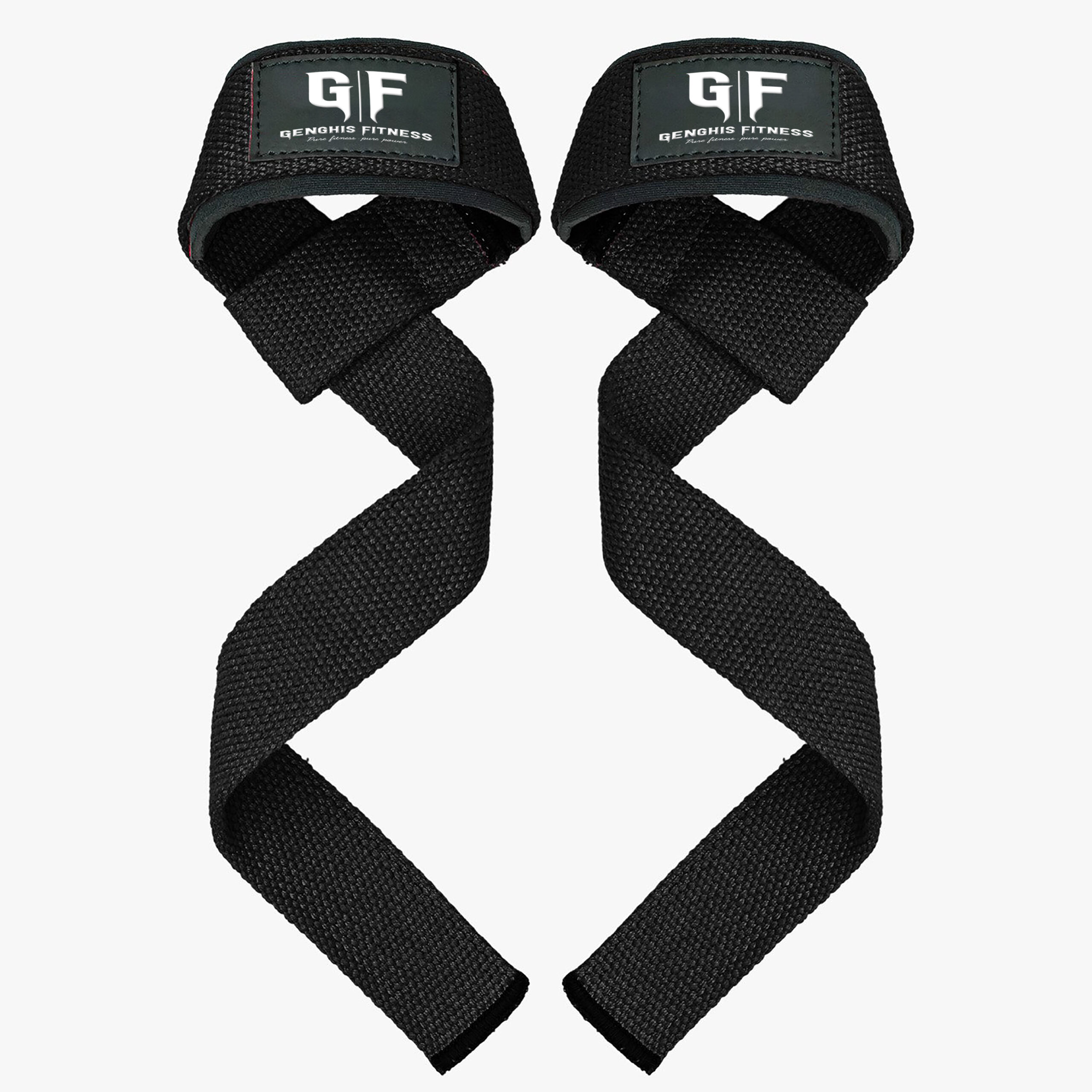
Lifting straps are lengths of fabric or leather that wrap around both your wrist and the bar, creating a mechanical link that reduces how hard your fingers must grip to hold the bar under load. The load travels from the bar through the strap and into your forearm, bypassing the fingers entirely. This is why straps allow you to deadlift or row significantly more weight for significantly more reps than your bare grip can manage. Leather lifting straps offer the most durable grip surface and the most direct load transfer. Figure-8 straps lock the hand to the bar entirely for maximum security on near-maximal deadlift loads.
What Wrist Wraps Do
Wrist wraps are stiff fabric bands that wind around the wrist joint and secure with a Velcro or thumb loop closure. They do not reduce how hard you grip. Instead, they brace the wrist joint against hyperextension under load. During a heavy bench press, overhead press, or dumbbell work, the wrist tends to bend backward under the weight, which places excessive stress on the wrist extensors and the carpal ligaments. Wraps prevent this bending and keep the wrist in a neutral, strong position throughout the movement. They also provide compressive support that reduces inflammation around the wrist tendons during high-volume sessions.
Using Both Together
For heavy pulling movements like deadlifts, rack pulls, and rows, straps are the primary tool and wraps are optional. Most athletes find straps alone are sufficient for pulling. For pressing movements like bench press, overhead press, and heavy dumbbell work, wraps are the primary tool and straps are irrelevant since you are not wrapping anything around a pull bar. Some athletes with existing wrist issues or particularly heavy pulling loads use both simultaneously on deadlifts and heavy rows, letting the strap handle grip load while the wrap stabilizes the joint under that load. This combination is appropriate for athletes managing wrist injuries while continuing to train.
Choosing the Right Lifting Straps for Wrist Support
Loop Straps for Versatility
Standard loop straps are the most widely used type for good reason. They wrap around the bar in one to three passes, provide secure grip assistance, and release quickly when the bar is set down. The wrist loop sits close to the wrist bone, distributing load along the forearm. For athletes who use straps across multiple exercises in a session, including deadlifts, rows, and shrugs, loop straps offer the versatility to move quickly between movements without resetting complex strap configurations.
Leather Straps for Maximum Durability
Leather straps provide the most durable grip surface and the most rigid load path of any strap type. The stiffness of quality leather means the strap does not stretch or deform under maximal loads, which gives a more consistent feel from rep one to rep five of a heavy set. Athletes who train heavy pulling movements four to five days per week and put significant demands on their equipment find leather outlasts nylon and cotton alternatives by years.
Wrist Padding and Width
For wrist comfort specifically, the width and padding of the strap wrist loop matters. A wider wrist loop distributes the load across more surface area, reducing pressure on individual bony prominences. Narrow loops that dig into the wrist bones create discomfort that breaks concentration during heavy sets. If wrist comfort is a primary concern, look for straps with padded or wider-than-standard wrist sections, or consider pairing standard straps with a thin wrist wrap underneath to add cushioning at the contact point.
Choosing the Right Wrist Wraps for Lifting
Stiffness Levels
Wrist wraps come in varying degrees of stiffness. Flexible wraps made from cotton or elastic blends provide mild support and compression suitable for moderate-load training and general wrist comfort during high-rep work. Stiff wraps made from dense woven cotton with minimal elasticity provide rigid bracing appropriate for maximal-load pressing and overhead work where wrist stability is critical. Competitive powerlifters use the stiffest available wraps for competition bench press attempts. For general training, a medium-stiffness wrap works across most pressing movements.
Length
Wrist wraps typically come in 18, 24, and 36-inch lengths. Shorter wraps provide fewer layers of compression and suit lighter training loads and smaller wrists. Longer wraps allow more layers and a higher degree of bracing support for heavier loads. For powerlifting-style heavy bench pressing, 36-inch wraps are standard. For general training and Olympic lifting where mobility must not be compromised, 18 to 24 inch wraps strike the right balance of support and freedom.
Building a Complete Wrist Protection Protocol
A practical wrist protection protocol for a serious training week looks like this: use lifting straps on all pulling movements above 70 to 80 percent of your one-rep maximum, use wrist wraps on all heavy pressing movements above the same threshold, train all lower-intensity sets without either tool to preserve natural grip and wrist strength development, and apply both simultaneously only when managing an active wrist issue that requires maximum protection at all loading levels.
Consistency with this protocol builds wrist resilience over time rather than creating dependence. The straps and wraps are tools applied at the loading levels where the wrist joint is genuinely at risk. Below those levels, the wrist trains naturally and gets stronger. Above those levels, the tools protect the joint and allow training quality to remain high. Add lifting hooks to your toolkit for the heaviest shrug and rack pull work where even straps may not provide sufficient security, and you have a complete grip and wrist support system for every pulling scenario in your training.
FINAL WORDS
Wrist health is one of the most overlooked long-term investments in any lifting career. Athletes who ignore accumulating wrist stress eventually face injuries that sideline them for weeks or months at exactly the point when their training is building real momentum. A 20-dollar investment in quality straps and wraps prevents that. Use lifting straps to protect the wrist from grip overload during pulling, use wrist wraps to brace the joint during heavy pressing, and train smart enough to keep both wrists in the game for a full career.
Certified strength and conditioning specialists with over 10 years of experience in powerlifting, nutrition, and evidence-based fitness content. Based in New York City.