Genghis Fitness · Equipment and Beginner Training
Weight Lifting Straps for Beginners: When to Start Using Them, Which Type to Buy First, How to Wrap, and the Grip Training Balance
Updated 2026 | By Team Genghis Fitness | 22 min read
New lifters face conflicting advice about straps: some coaches say never use them and build grip strength first, others use straps for everything from the first session. The evidence-based answer is more nuanced and more useful than either extreme: straps are appropriate from the beginning of serious pulling training when grip is the genuine limiting factor for a given exercise, and avoiding straps out of a principle disconnected from actual grip capacity creates suboptimal training outcomes that serve neither grip development nor posterior chain development. This guide gives beginners the clear framework for when to start using straps, which type to buy first, and how to use them correctly from day one.
When Beginners Should Start Using Straps
The right time to add straps is when grip failure consistently limits training quality on pulling exercises, not at a specific training age or strength level. For many beginners, this occurs earlier than expected: grip strength development lags behind back and posterior chain strength development in the first 6 to 12 months, meaning that deadlift and row progress can be limited by grip before the target muscles have reached an adequate training stimulus. The practical test: if you complete your planned sets with appropriate weights without grip failure, you do not yet need straps. If grip regularly fails before the posterior chain is adequately trained, adding straps for the heaviest 2 to 3 work sets immediately improves training quality. Research published in the Journal of Strength and Conditioning Research confirmed that strap-assisted pulling allows significantly greater volume before grip failure, directly supporting the use of straps when grip is the genuine limiting factor.
Which Strap Type to Buy First
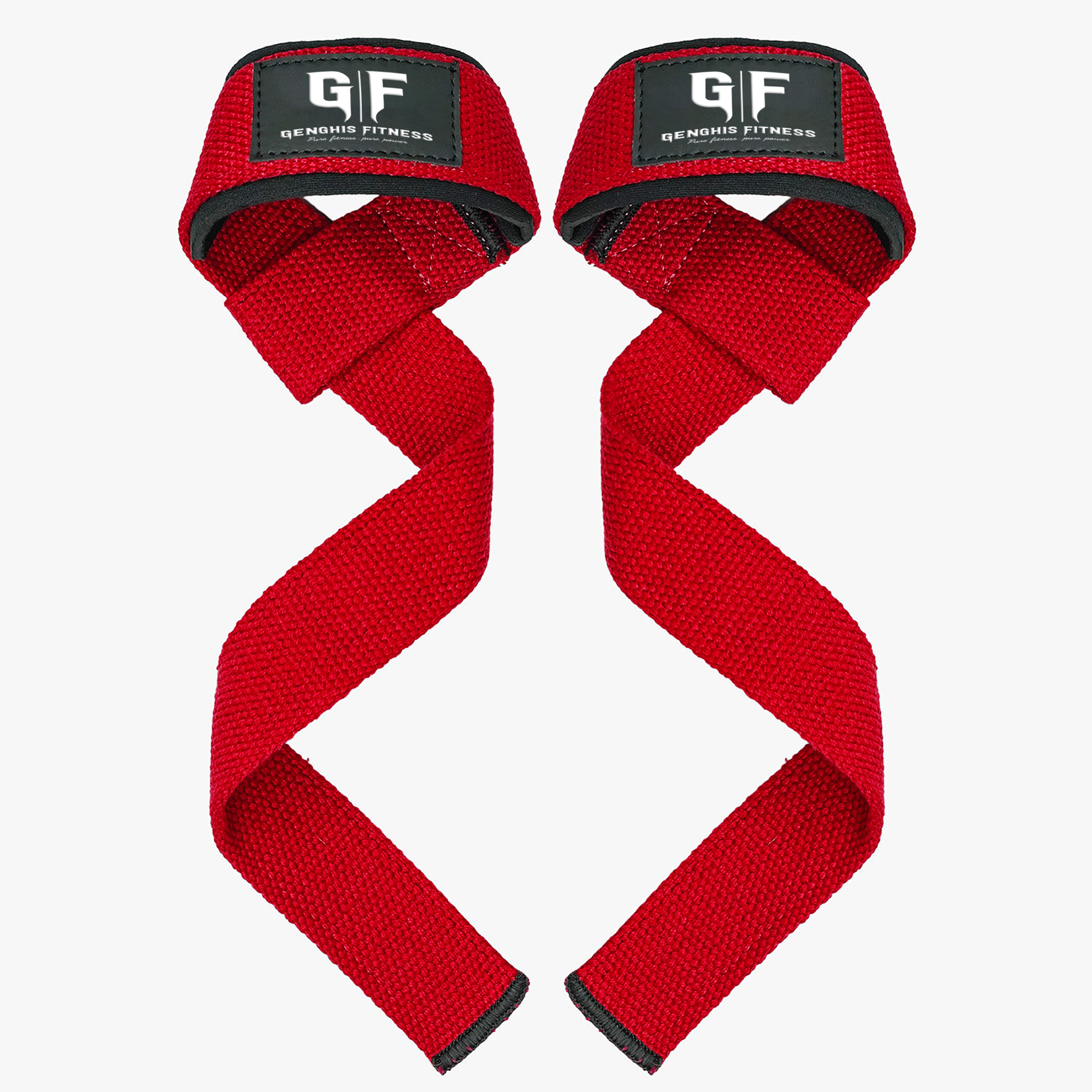
For beginners, standard loop straps in cotton or nylon at 10 to 25 USD are the appropriate first strap purchase. The performance differences between cotton and leather that justify leather at heavier loads are not relevant at beginner training weights. A simple, well-constructed cotton or nylon loop strap provides all the grip assistance a beginner needs while learning the wrapping technique and developing the habit of strategic strap use. The Genghis Fitness standard lifting straps represent the appropriate entry-level option with the construction quality to handle beginner training loads without the leather premium that is not yet functionally justified. When training loads increase to the range where leather outperforms cotton (above approximately 150 kg on deadlifts), upgrading to leather straps becomes the appropriate progression.
How to Wrap: The Beginner Technique Guide
The correct wrapping technique for beginners to learn from the first session: Thread one end of the strap through the loop to form a wrist cuff. Slide the cuff over the wrist with the strap tail emerging from the thumb side of the hand. Position the hand on the bar in your normal grip position. Pass the strap tail under the bar from the front, then over the top of the bar. Wrap around the bar one to two more times. Roll the wrist over the bar to tighten the wrap against the bar surface. The strap should feel fully locked against the bar with no slack. Many beginners make the mistake of not wrapping tight enough, leaving slack that allows the strap to shift during the lift and reducing both security and the benefit of using the strap at all. The complete technique guide with exercise-specific instructions is in our how to use lifting straps guide.
Balancing Strap Use with Grip Development
The most important habit for beginners to establish from the first session of strap use is selective application: straps for the heaviest work sets where grip is the genuine limiting factor, no straps for all warm-up sets and lighter working sets. This approach ensures that strap use enhances training quality without eliminating the grip training stimulus that warm-up and lighter sets provide. Many beginners who use straps for all sets across their entire training career develop a grip strength deficit that becomes apparent when they attempt exercises or activities that require unassisted grip at loads their posterior chain can handle. Explicit grip training through farmer carries, dead hangs, and thick bar exercises alongside selective strap use builds both the grip strength and the posterior chain strength that comprehensive athletic development requires. Pairing lifting straps with a lifting belt for the heaviest sets when back training progresses to loads where IAP support is beneficial creates the foundational equipment setup for serious strength training.
Building Pulling Habits That Last: Equipment from the Start
The equipment habits beginners establish in their first 6 to 12 months of training tend to persist and compound across the entire training career. Establishing correct strap use habits from the beginning, specifically the selective heavy-set-only protocol that balances grip development with posterior chain development, builds an equipment practice that continues to serve the athlete as training loads progress through the intermediate and advanced stages. Pairing the strap habit with a lifting belt introduced at the appropriate load threshold (when deadlifts and squats regularly exceed 80 percent of maximum) creates the core protective equipment setup that addresses both grip and spinal support needs as training intensity increases. Beginners who develop the habit of using chalk for lighter sets and straps for heavier sets, rather than relying on one tool for all work, build the most comprehensive approach to managing the grip demands of serious pulling training. The complete guide to wrapping technique for specific exercises at different load levels is in our how to use lifting straps guide. Wrist wraps for pressing exercises complete the wrist support side of the equipment kit as pressing loads increase alongside pulling loads during the beginner development phase.
Frequently Asked Questions
Should Beginners Use Figure-8 Straps?
No. Figure-8 straps are specialist tools for maximum-load deadlifts at loads that beginners do not yet approach. The mechanical lock of the figure-8 design also prevents quick bar release, which creates a safety concern for beginners who may not yet have the technique consistency to guarantee controlled bar placement under all conditions. Standard loop straps handle all beginner training loads safely and with more forgiving movement characteristics. Figure-8 straps become appropriate only when training regularly above 180 to 200 kg on deadlifts, which represents an advanced training level well beyond the beginner phase.
Do Straps Slow Grip Strength Development?
Only if used exclusively for all sets without any unassisted grip training. Beginners who use straps selectively (heaviest sets only) while leaving lighter sets unstrapped develop grip strength normally through the unstrapped sets. Beginners who strap every single set across every session at every load do reduce their grip training stimulus relative to training without straps, and may develop a grip strength lag compared to their other strength qualities. The selective use protocol eliminates this concern entirely and is the approach consistently recommended by experienced coaches and supported by the research on grip training alongside strap use.
Start Right. Build Grip and Posterior Chain Together.
The straps that every serious beginner needs for their first heavy pulls.
Shop Lifting StrapsShop for BeginnersCertified strength and conditioning specialists with over 10 years of experience in powerlifting, nutrition, and evidence-based fitness content. Based in New York City.