BENEFITS OF WEIGHT LIFTING STRAPS: WHY EVERY SERIOUS PULLING ATHLETE SHOULD USE THEM
The benefits of weight lifting straps are specific, measurable, and directly relevant to every athlete who performs heavy pulling exercises as a regular part of their training. Straps eliminate the grip limitation that prevents the posterior chain from being trained to its genuine capacity during deadlifts, rows, and pull-ups at heavy loading. Without straps, forearm flexor fatigue determines when a heavy pulling set ends. With straps, the target muscle group determines when the set ends. This single change in what limits each set produces significantly more posterior chain training stimulus at equivalent session durations and loading levels, which compounds across training years into more total development than grip-limited pulling produces.
PRIMARY BENEFIT: POSTERIOR CHAIN QUALITY AT HEAVY LOADING
The primary benefit of weight lifting straps is posterior chain training quality at heavy loading. Research on grip fatigue and pulling exercise performance at submaximal and near-maximal loads confirms that forearm flexor fatigue is a primary limiting factor at intensities above 80 percent of maximum, and that strap use at these intensities allows the sets to be determined by posterior chain fatigue rather than grip fatigue. The practical implication is that every heavy deadlift or row set performed with straps delivers more glute, hamstring, and upper back training stimulus than the same set performed without straps at equivalent loading, because the set can continue past the point where bare-hand grip would have failed.
VOLUME ACCUMULATION ACROSS TRAINING WEEKS AND YEARS
Volume accumulation is a secondary benefit that builds on the primary performance quality benefit. Athletes who train heavy pulling exercises with straps consistently accumulate more total pulling volume across training weeks and training years than grip-limited athletes performing equivalent exercises, because they are not managing forearm soreness and recovery between sessions as a limiting variable. The forearm flexors are not a primary training target during deadlifts and rows, and treating them as the limiting variable in these exercises by training without straps reduces the specificity of the posterior chain development program rather than adding productive forearm training that could not be addressed more effectively through dedicated forearm work.
INJURY RISK REDUCTION FOR WRISTS AND FOREARMS
Injury risk reduction from consistent strap use is a benefit that most athletes do not explicitly anticipate but consistently report after switching. The sustained tensile loading on the wrist flexor tendons and posterior wrist capsule that heavy bare-hand pulling accumulates over high-frequency training creates chronic wrist and forearm discomfort in many athletes. Straps transfer the majority of this load to the strap material and mechanical connection with the bar, reducing the per-session wrist and forearm loading that accumulates into the chronic discomfort that strap use prevents when applied consistently from early in the training career rather than reactively after the discomfort develops.
MATCHING STRAP TYPE TO EXERCISE CONTEXT
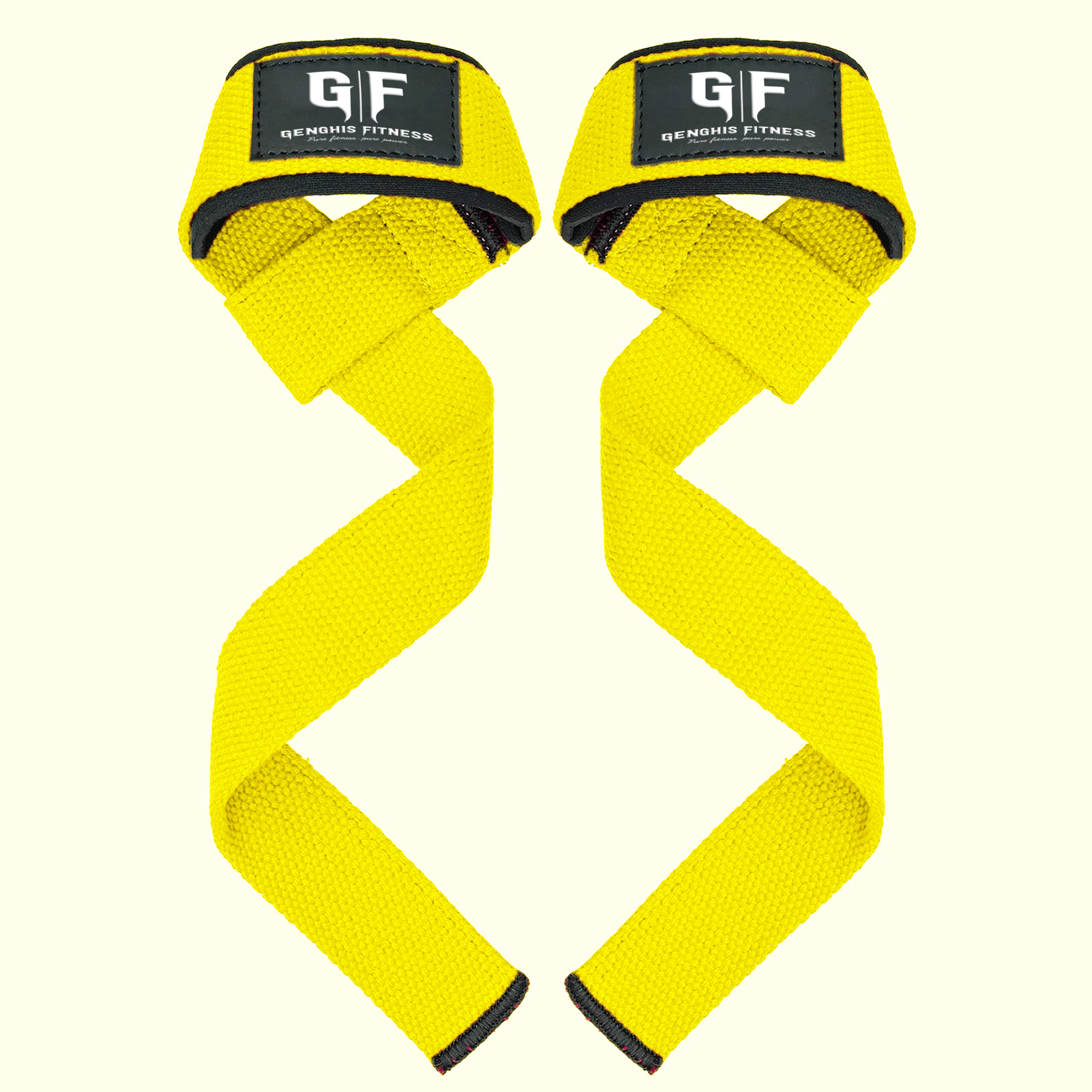
The Genghis Fitness loop lifting straps in nylon provide the everyday heavy pulling volume application where bar feel and application speed are both relevant. The leather lifting straps provide the tactile bar feedback advantage of full-grain leather for the heavy sets where bar connection quality is prioritized. The figure 8 straps provide the maximum mechanical security for near-maximum deadlift and rack pull attempts where eliminating grip failure as a possibility is the priority. The lifting hooks provide the fastest application and removal for accessory pulling work where session transitions are frequent. Each tool provides the core benefit of grip assistance with specific secondary properties matched to different training contexts.
WRIST WRAPPING TECHNIQUE FOR MAXIMUM BENEFIT
Wrist wrapping technique affects how much of the strap’s grip assistance is transferred effectively during the pull. Thread the loop end under and around the bar, with the tail wrapping in the direction that the bar’s natural rotation during the pull will tighten rather than loosen. One to two wraps around the bar for most training applications, with three wraps for the heaviest single-attempt pulls. The tighter the wrap, the more the bar and strap move as a single unit during the pull rather than the bar sliding within a loose strap. Proper wrapping amplifies every other benefit that straps provide by ensuring the mechanical connection is fully engaged from the start of each rep.
ADDRESSING THE GRIP STRENGTH CONCERN
The concern that strap use reduces grip strength development is addressed by the training protocol rather than by avoiding straps entirely. Train grip strength specifically through dedicated forearm and grip exercises, through bare-hand sets at sub-maximum intensities on pulling days where grip development is a specific program goal, and through competitive grip sports if grip is a performance target. Do not sacrifice posterior chain training quality at heavy intensities to develop grip through passive limitation. Train both grip and posterior chain strength with the tools appropriate for each goal, and each develops more completely than a compromise approach that sacrifices one to develop the other. The most effective grip strength development occurs through exercises specifically designed for that purpose, such as towel pull-ups, thick bar deadlifts, and farmer carries, rather than through the passive grip limitation that bare-hand heavy deadlifts impose as an unintended constraint on exercises intended primarily for posterior chain development.
THE LONG-TERM DEVELOPMENT ADVANTAGE OF INTELLIGENT STRAP USE
The long-term training outcome difference between athletes who use straps intelligently and those who never use them is visible in the posterior chain development and pulling strength trajectories across multi-year training careers. Athletes who consistently train their heaviest pulling work with straps develop more complete posterior chain mass and strength because every set of every heavy pulling session delivers the stimulus intended for the posterior chain rather than being cut short by grip. This consistent additional stimulus across thousands of training sessions produces the cumulative development advantage that makes strap use one of the highest-return equipment decisions available to serious strength athletes. The compound effect of consistently better training quality on every heavy pulling session, which occurs because grip is never the limiting factor, produces a posterior chain development trajectory that bare-hand training fundamentally cannot match at equivalent volumes and intensities, because the quality of each individual stimulus unit is lower when grip failure precedes posterior chain fatigue on every heavy set.
PAIRING STRAPS WITH A BELT FOR COMPLETE HEAVY PULLING SUPPORT
Pair straps with a quality lever belt for the heavy compound pulling sessions where both spinal protection and grip management are needed to train at genuine capacity. The belt manages the lumbar spine. The straps manage the grip. Together they remove the two primary secondary limitations in heavy deadlift and row training and allow the posterior chain to be the sole determinant of training intensity and volume on the sessions where posterior chain development is the goal.
FINAL WORDS
The benefits of weight lifting straps are clear, evidence-supported, and available to every athlete who performs heavy pulling exercises: better posterior chain training quality at heavy loading, more total pulling volume across training weeks and years, reduced chronic wrist and forearm injury risk, and the freedom to match the correct strap type to each exercise context using the full tool kit available. The loop straps, leather straps, figure 8 straps, and hooks collectively cover every pulling exercise at every loading context. Use them appropriately and consistently, and the posterior chain development they enable compounds into the pulling strength that defines serious strength training.
Certified strength and conditioning specialists with over 10 years of experience in powerlifting, nutrition, and evidence-based fitness content. Based in New York City.