MOBILITY GLUTE BAND: HOW TO COMBINE ACTIVATION AND HIP MOBILITY FOR BETTER COMPOUND TRAINING
Glute band mobility work combines resistance band activation with the hip mobility development that effective glute function requires. The glute complex, particularly the gluteus medius and gluteus maximus, functions across a wide range of hip positions and movement planes that static stretching and heavy compound training both address incompletely. Resistance band exercises that simultaneously challenge glute activation and develop the hip range of motion those muscles function through produce more complete glute preparation than either mobility work or activation exercises performed in isolation. This integrated approach is what makes glute band mobility work more effective as a warm-up and recovery protocol than the sequential stretch-then-activate approach most athletes use.
WHY BAND RESISTANCE PRODUCES BETTER GLUTE ACTIVATION THAN STRETCHING ALONE
Hip circle bands worn just above the knees provide constant resistance to the hip abduction pattern throughout every lower body movement, activating the gluteus medius across both the concentric and eccentric phases of exercises that the band is combined with. The constant resistance during movement, rather than the intermittent resistance of traditional band exercises, produces an activation stimulus that persists throughout the full exercise rather than only at the specific phase where the band is stretched. Research on hip abductor activation and knee valgus during lower body loading confirms that inadequate gluteus medius activation is a primary contributor to the knee valgus collapse pattern that creates injury risk during squatting and jumping, making glute band activation a direct intervention against this specific injury mechanism.
BANDED HIP HINGE: ACTIVATION MEETS MOBILITY IN ONE MOVEMENT
The banded hip hinge with the hip circle band above the knees combines glute activation with the hip hinge mobility development that deadlift and Romanian deadlift patterns demand. Stand with the band positioned above the knees and feet hip-width apart. Push the hips backward into a hip hinge while pressing the knees outward against the band to maintain activation of the gluteus medius throughout the hinge. Lower until a strong hamstring stretch is felt with the back flat, then drive the hips forward through full hip extension with deliberate glute contraction at the top. This combines the hip extensor activation of the hip hinge pattern with the abductor activation of the band resistance in every rep.
LATERAL BAND WALKS: GLUTEUS MEDIUS STRENGTH AND ABDUCTION MOBILITY
Banded lateral band walks develop both the gluteus medius strength and the hip abduction mobility that squat technique and single-leg athletic movements require. Place the band above the knees and walk laterally while maintaining a slight squat position with constant tension on the band at every step. The walking movement creates continuous hip abduction and adduction loading through the full range of lateral hip motion, activating the gluteus medius across its full available length rather than only at the most mechanically advantaged position. Research on lateral hip strength and lower extremity movement quality confirms that lateral band walk training produces improvements in gluteus medius strength and single-leg stability that transfer directly to better squatting mechanics.
BANDED CLAMS: ISOLATED GLUTEUS MEDIUS ACTIVATION IN SUPINE
Banded clams combine hip external rotation and abduction in a supine position that isolates the gluteus medius from the dominant hip flexor and hamstring musculature that assists during standing exercises. Lie on the side with the band just above the knees, hips and knees bent to 45 degrees. Keep the feet together and rotate the top knee toward the ceiling through full hip external rotation while maintaining the pelvis in a stable, non-rotating position. This pelvic stability requirement is the technical standard that most athletes miss, allowing the pelvis to rotate backward and recruiting the lower back and hip flexors to assist the movement. True gluteus medius isolation from the clamshell requires the pelvis to stay completely still throughout every rep.
BANDED GLUTE BRIDGES: COMPLETE GLUTE ACTIVATION IN ONE EXERCISE
Banded glute bridges integrate hip extension strength, gluteus maximus activation, and the abductor activation of the band into a single movement that produces more complete glute development stimulus than any of these components provides in isolation. Lie on the back with the band above the knees, feet flat on the floor hip-width apart. Press the knees outward against the band before initiating the bridge to pre-activate the gluteus medius, then drive the hips upward through full hip extension with deliberate glute squeeze at the top. The combined abduction and extension demand activates both the gluteus maximus and gluteus medius simultaneously, producing a more complete glute activation stimulus than standard glute bridges without band resistance.
MONSTER WALKS: DYNAMIC HIP MOBILITY AND GLUTE ACTIVATION
Monster walks with the band above the knees develop glute and hip mobility through a walking pattern that challenges hip abduction in a more dynamic, functional pattern than lateral band walks produce. Walk forward in a wide stance with the toes pointing outward at 30 to 45 degrees while maintaining constant band tension and pushing the knees outward against the band at every step. This movement pattern approximates the hip position and abductor demand of athletic cutting movements and deep squat descent, making it a specific preparation exercise for the movement qualities that heavy compound training and athletic performance share.
THE COMPLETE GLUTE BAND WARM-UP SEQUENCE
A practical glute band mobility warm-up sequence that addresses both activation and mobility in five to eight minutes: lying clams for 15 reps per side, banded glute bridges for 15 reps, lateral band walks for 10 steps each direction, monster walks for 10 steps each direction, banded hip hinges for 10 reps. This sequence progressively builds from isolated activation in the supine position through increasingly integrated movement patterns that approach the complexity of the compound exercises it prepares. Performing this sequence before every lower body training session consistently improves glute activation quality during the subsequent compound work within four to six weeks of regular practice.
PAIRING BAND WORK WITH COMPLETE LOWER BODY TRAINING SUPPORT
Pair glute band mobility work with knee sleeves worn throughout every lower body training session for joint warmth that complements the activation and mobility work the bands provide. The lever belt addresses lumbar spine support during the heavy compound exercises that follow the band warm-up. For cable-based glute exercises that extend the band work into heavier progressive loading, the ankle strap cable machine enables the cable kickback, hip abduction, and hip flexor drive exercises that build on the activation foundation that band work establishes.
FINAL WORDS
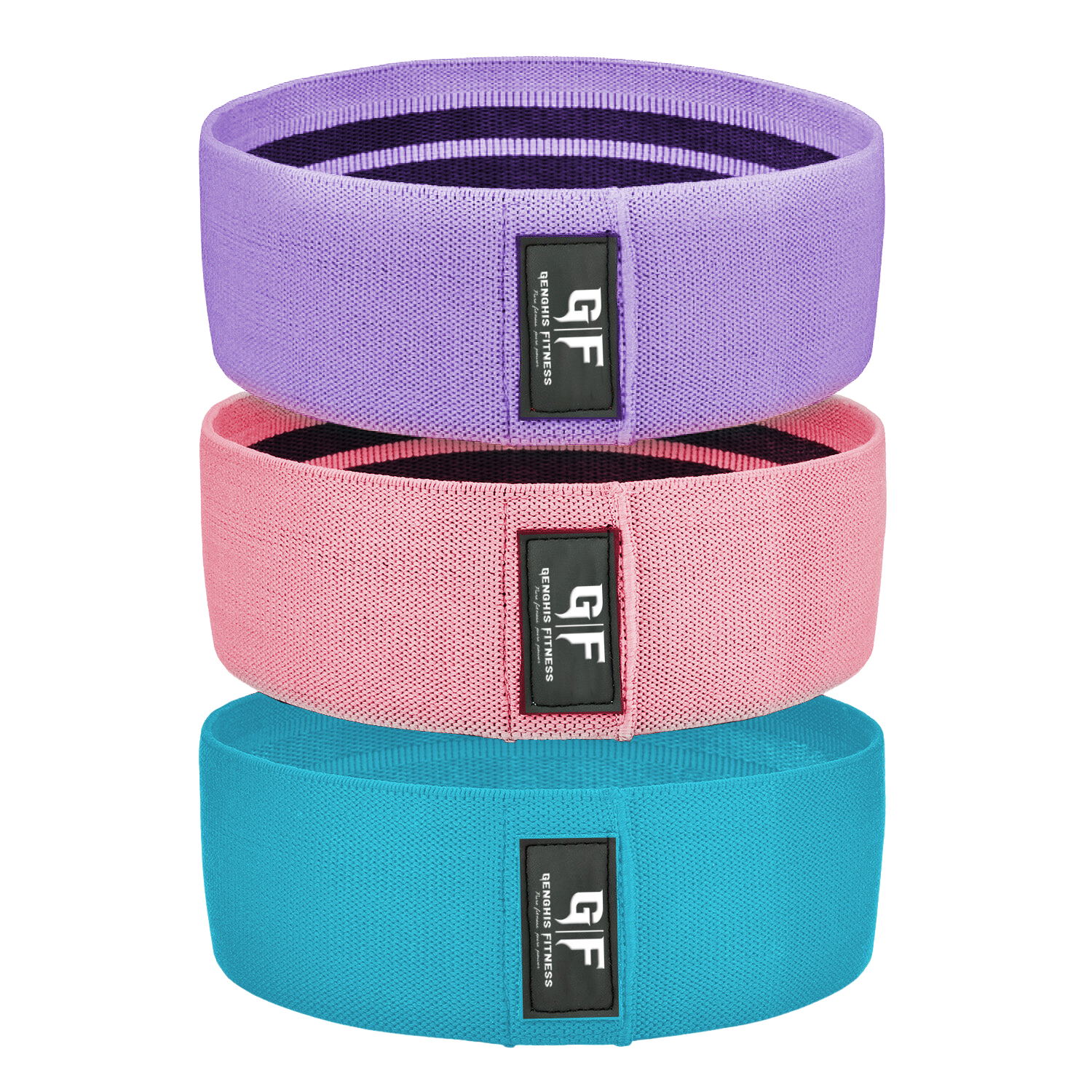
Glute band mobility work is the most time-efficient and equipment-accessible method for simultaneously developing the gluteus medius activation quality, hip abduction mobility, and hip extension strength that complete glute function requires. The Genghis Fitness hip circle bands provide the constant resistance through hip abduction movements that produces the activation advantage over static resistance alternatives. Perform the five-exercise sequence before every lower body session, maintain the technical standards for each exercise especially the pelvic stability requirement in clamshells, and let the accumulated activation quality from consistent warm-up practice compound into measurably better glute recruitment and knee tracking quality during the heavy compound training that follows. Athletes who track their squat depth and knee tracking quality across training blocks consistently report improvements in both variables within four to six weeks of adding the complete glute band warm-up sequence before every lower body session, confirming that the activation work produces the movement quality improvements that glute strength research predicts.
Certified strength and conditioning specialists with over 10 years of experience in powerlifting, nutrition, and evidence-based fitness content. Based in New York City.