Best Calcium Supplements: Types, Absorption, and How to Choose the Right One
Calcium is the most abundant mineral in the human body and the primary structural component of bone and teeth. It also plays essential roles in muscle contraction, nerve signaling, blood clotting, and enzyme activation. Despite being widely available in food, calcium deficiency is genuinely common, particularly among people who avoid dairy, follow plant-heavy diets, train intensively, or are in age groups with elevated needs.
The calcium supplement market is large and confusing. Multiple forms exist with different absorption rates, different elemental calcium content, and different side effect profiles. Understanding these differences allows you to choose a supplement that actually serves your needs rather than one that just appears on the front page of a search.
How Much Calcium Do You Actually Need
The recommended daily intake for calcium varies by age and life stage. Adults aged 19 to 50 need approximately 1,000 milligrams per day. Adults over 50 need 1,200 milligrams. Adolescents aged 9 to 18 need 1,300 milligrams because of rapid bone development. These numbers represent total calcium from all sources, including food.
A cup of plain yogurt contains roughly 300 milligrams. A glass of milk contains approximately 300 milligrams. A cup of cooked kale or bok choy provides 150 to 200 milligrams. If your diet includes two to three daily servings of calcium-rich foods, you may already be meeting your needs without supplementation. Supplementing beyond your actual deficit provides minimal additional benefit and carries some risks at high doses.
The Main Types of Calcium Supplements
Calcium Carbonate
Calcium carbonate is the most widely available and least expensive form of calcium supplement. It has the highest elemental calcium content of any supplement form, at approximately 40 percent elemental calcium, meaning a 1,250 milligram tablet provides 500 milligrams of actual calcium. The significant limitation is that calcium carbonate requires stomach acid for absorption and should always be taken with food. People with reduced stomach acid production absorb calcium carbonate poorly.
Research indexed on PubMed confirms that calcium carbonate taken with meals has absorption rates comparable to food-based calcium in people with normal stomach acid. Common side effects include constipation and gas, which can be minimized by taking it with food, spreading doses throughout the day, and staying well hydrated.
Calcium Citrate
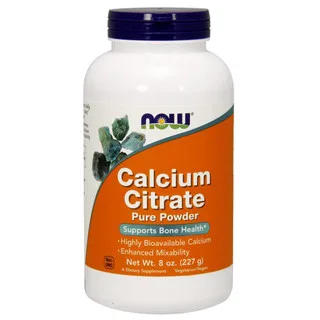
Calcium citrate is the preferred form for people with reduced stomach acid, those taking proton pump inhibitors, older adults, and anyone who experiences digestive discomfort from calcium carbonate. It contains approximately 21 percent elemental calcium but is absorbed significantly better on an empty stomach and does not require stomach acid for absorption. Calcium citrate is also less likely to cause constipation.
The trade-off is higher cost and larger pill size or more pills needed to achieve the same elemental calcium dose as carbonate. For most people with digestive sensitivities or reduced acid production, the superior absorption and tolerability of calcium citrate makes it the better choice despite the higher price.
Calcium Phosphate
Calcium phosphate (hydroxyapatite) is a naturally occurring form that mirrors the mineral structure of bone and teeth. It has reasonable bioavailability and is less likely to cause gastrointestinal side effects than carbonate. Some research suggests it may have advantages for bone density maintenance over other forms, though this evidence is not as robust as the comparative data for carbonate versus citrate.
What Affects Calcium Absorption
Several factors significantly influence how much of the calcium you consume actually reaches your bloodstream. Vitamin D is the most important co-factor: without adequate vitamin D, the intestinal transport proteins that move calcium from the gut into the bloodstream are not produced in sufficient quantities. Taking calcium without adequate vitamin D produces limited benefit. Most guidelines recommend pairing calcium supplementation with 1,000 to 2,000 IU of vitamin D3 daily.
Dose size matters for absorption efficiency. The body can absorb a maximum of roughly 500 milligrams of elemental calcium at one time. Splitting your daily supplemental dose into two or three smaller doses spread across the day is more effective than taking one large dose. A 1,000 milligram supplement taken all at once delivers far less absorbed calcium than two 500 milligram doses taken morning and evening.
High oxalate foods (spinach, rhubarb, beet greens) bind calcium in the gut and reduce absorption when consumed at the same time as calcium-rich foods or supplements. This does not mean avoiding these foods, only being aware that pairing them with your calcium source reduces the calcium absorbed from that meal. Caffeine in large amounts also slightly increases urinary calcium excretion, though the effect is modest at typical intake levels.
Calcium and Bone Health for Athletes
Athletes engaged in regular weight-bearing and resistance training have a meaningful advantage in bone density maintenance because mechanical loading directly stimulates bone remodeling and mineral deposition. The principle that bone adapts to the loads placed on it means that consistent loading through training produces denser, stronger bone than sedentary living regardless of calcium intake.
That said, calcium intake still matters for athletes. High-volume endurance athletes who sweat heavily lose calcium in sweat. Female athletes with irregular or absent menstrual cycles due to low energy availability experience bone density losses that calcium alone cannot prevent but inadequate calcium accelerates. Use your training gear to train hard and recover well: the knee sleeves and nylon lifting belt keep your joints supported through every session.
Calcium Supplement Safety and Upper Limits
The tolerable upper intake level for calcium is 2,500 milligrams per day for adults aged 19 to 50, and 2,000 milligrams for adults over 50. Exceeding these levels from supplements is associated with kidney stone formation in people prone to them, and some large observational studies have suggested associations between high supplemental calcium intake and cardiovascular events, though this remains an active area of debate.
The practical takeaway is to supplement only to cover your actual dietary gap rather than taking the maximum dose assuming more is better. Get as much calcium as possible from food sources and use supplements to bridge the specific shortfall. Most adults who include two to three servings of calcium-rich foods daily need only 200 to 500 milligrams of supplemental calcium at most to meet their daily requirements.
Food Sources Worth Prioritizing
Before reaching for a supplement, audit your diet. Dairy products (milk, yogurt, cheese) are the most bioavailable food sources of calcium for most people. Non-dairy alternatives include fortified plant milks, canned fish with bones (sardines and salmon provide 200 to 300 milligrams per serving), tofu made with calcium sulfate (400 to 500 milligrams per half cup), edamame, and dark leafy greens (kale, bok choy, broccoli are better absorbed than spinach because of lower oxalate content).
Building your calcium intake around whole food sources first and supplementing the gap is the safest and most effective approach. This strategy provides calcium alongside the other minerals, vitamins, and compounds in food that work synergistically rather than relying on an isolated mineral supplement to carry all the load.
FINAL WORDS
The best calcium supplement is the one that matches your specific digestive tolerance, pairs with adequate vitamin D, and fills only the gap that diet does not cover. Calcium carbonate is cost-effective when taken with food and stomach acid is normal. Calcium citrate is better tolerated when acid is limited or digestive sensitivity exists. Split your doses, eat calcium-rich foods, and support your training with the gear and the nutrition that actually moves results forward.
Certified strength and conditioning specialists with over 10 years of experience in powerlifting, nutrition, and evidence-based fitness content. Based in New York City.