


4-Inch Leather Weightlifting Belt | Single-Prong Deadlift Belt
44,00 €
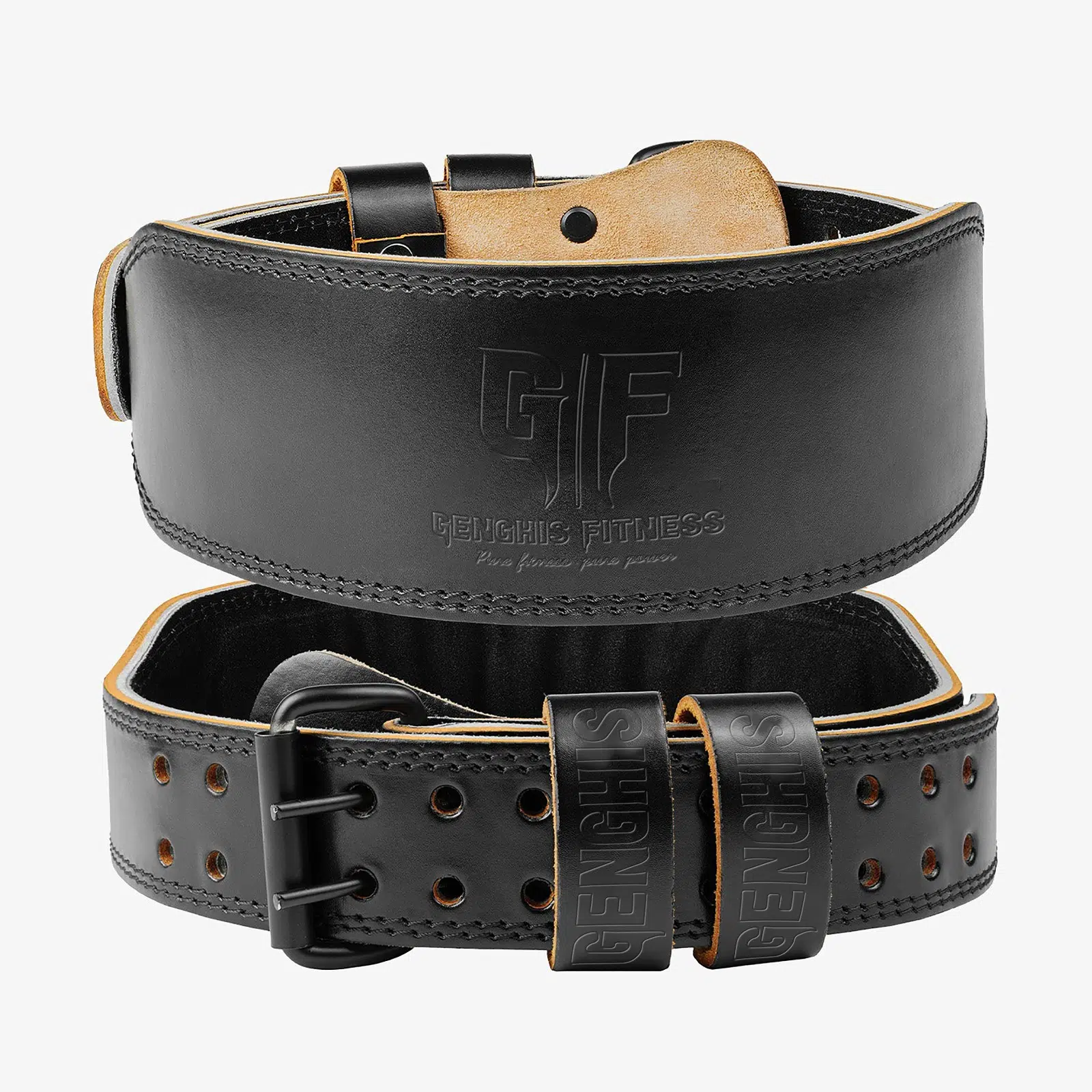
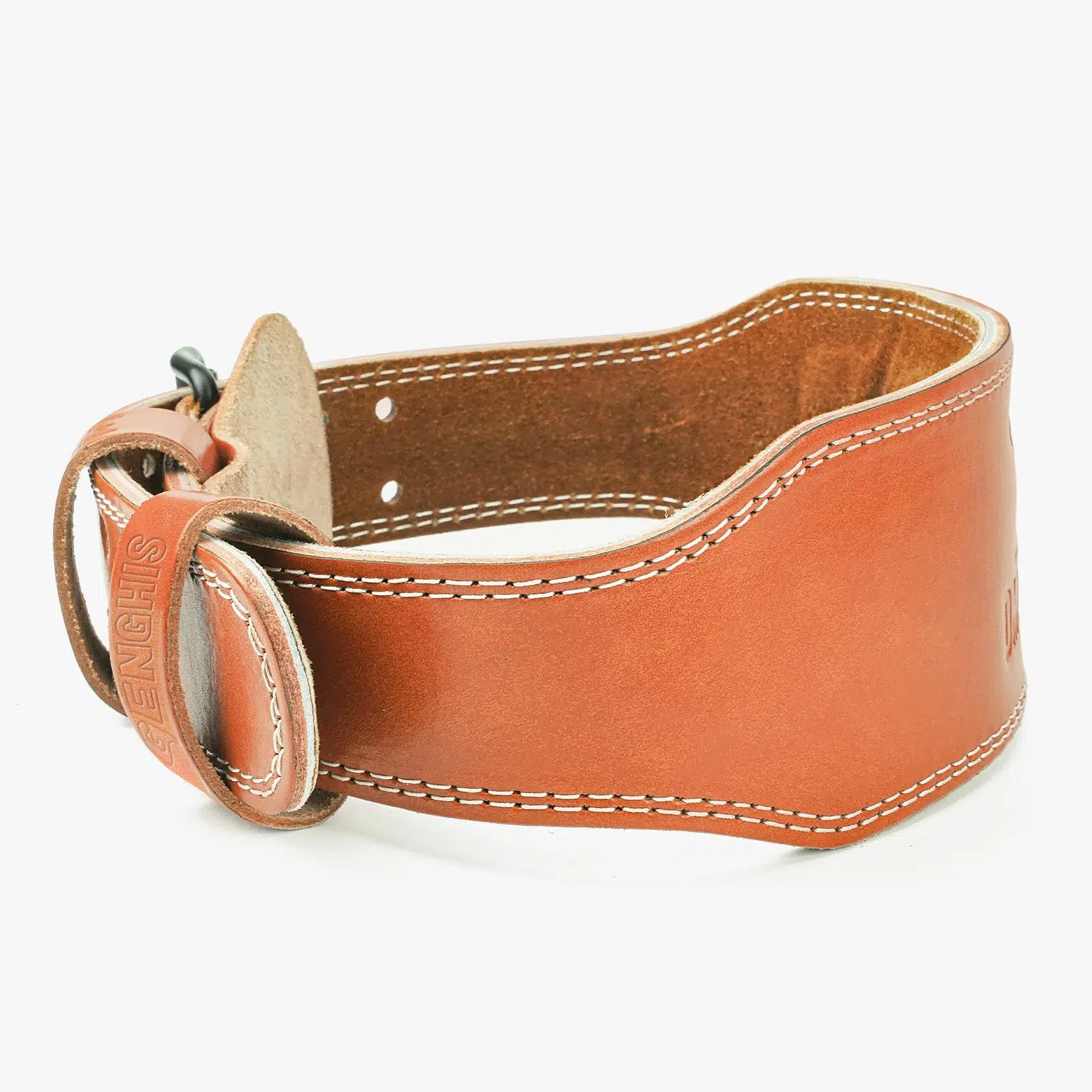
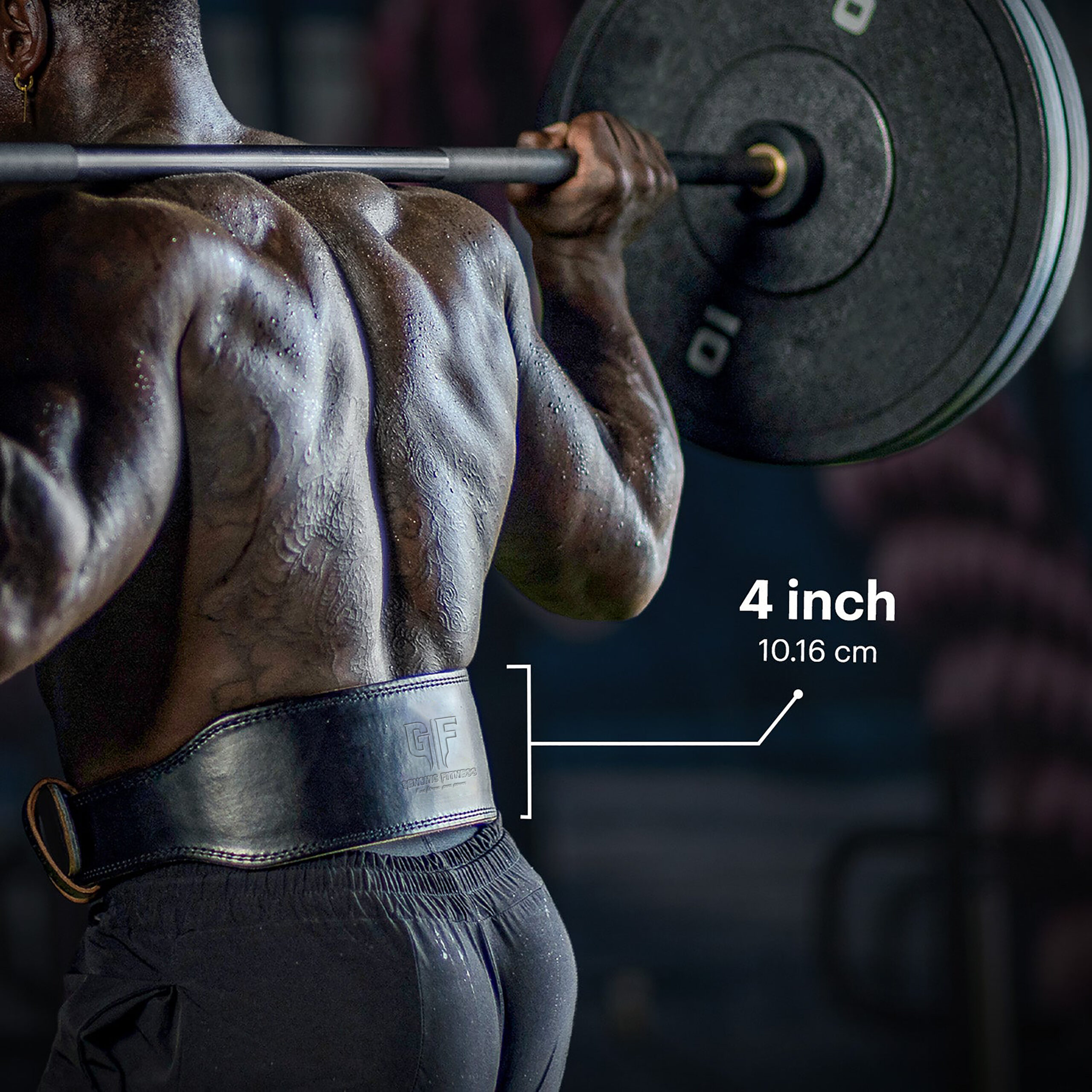
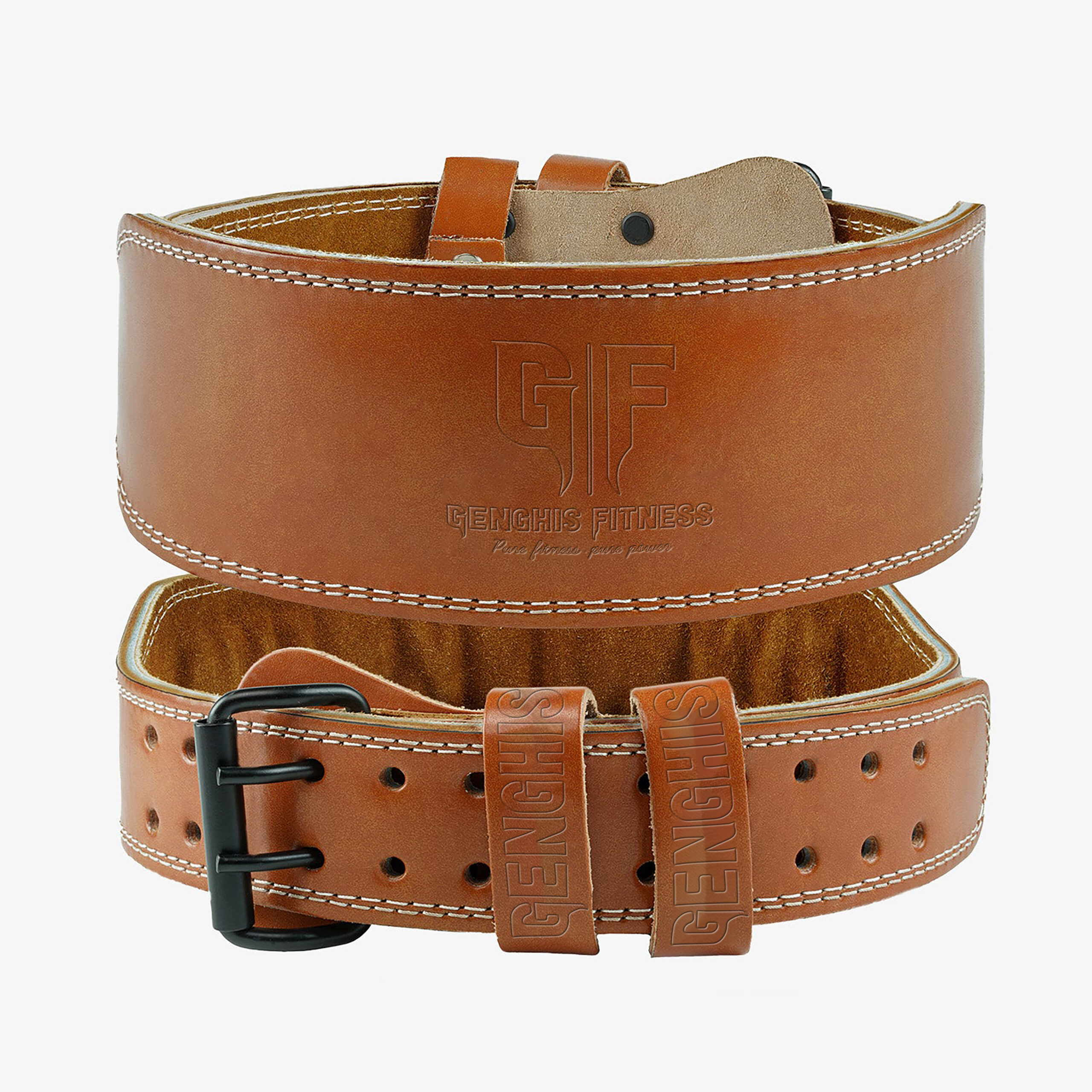
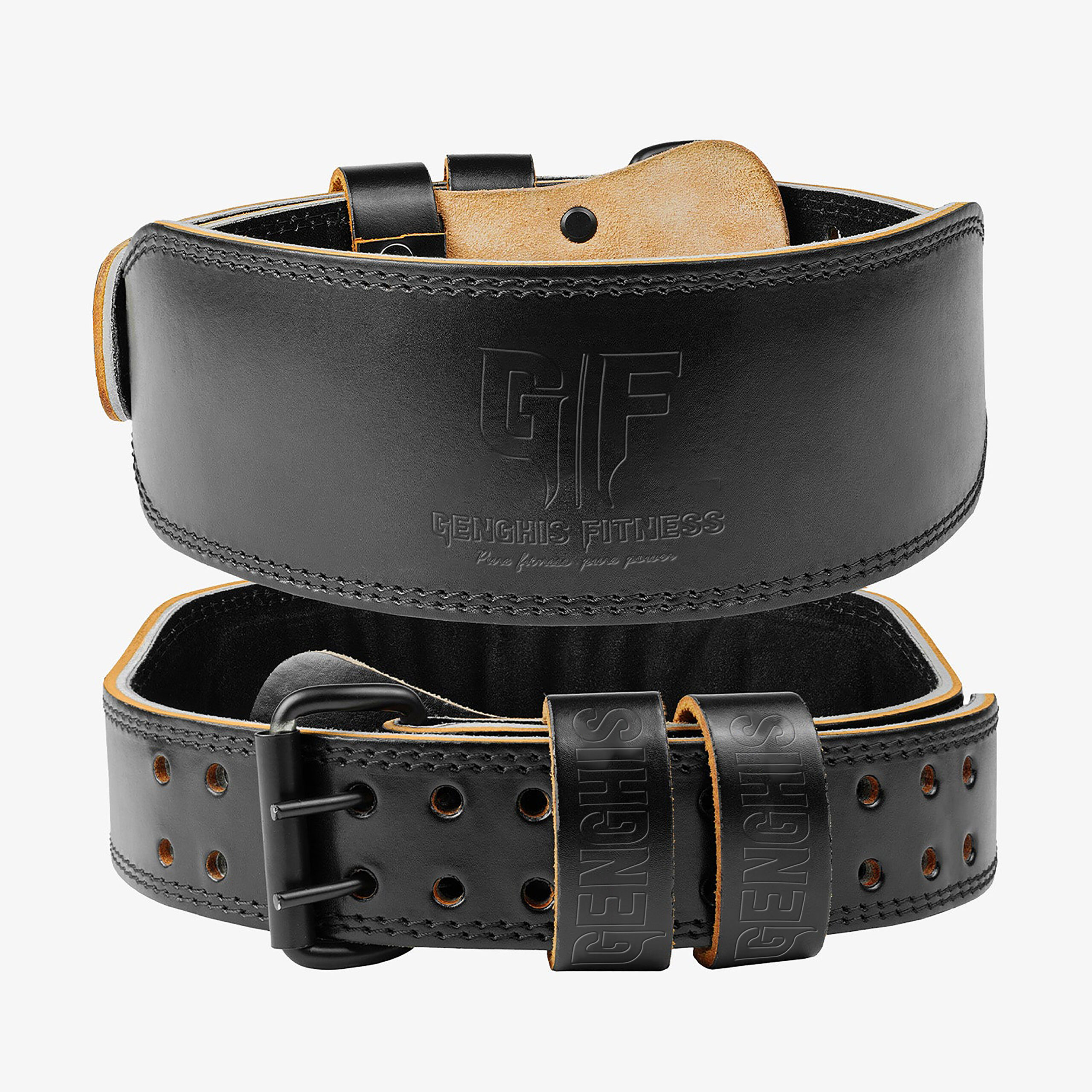
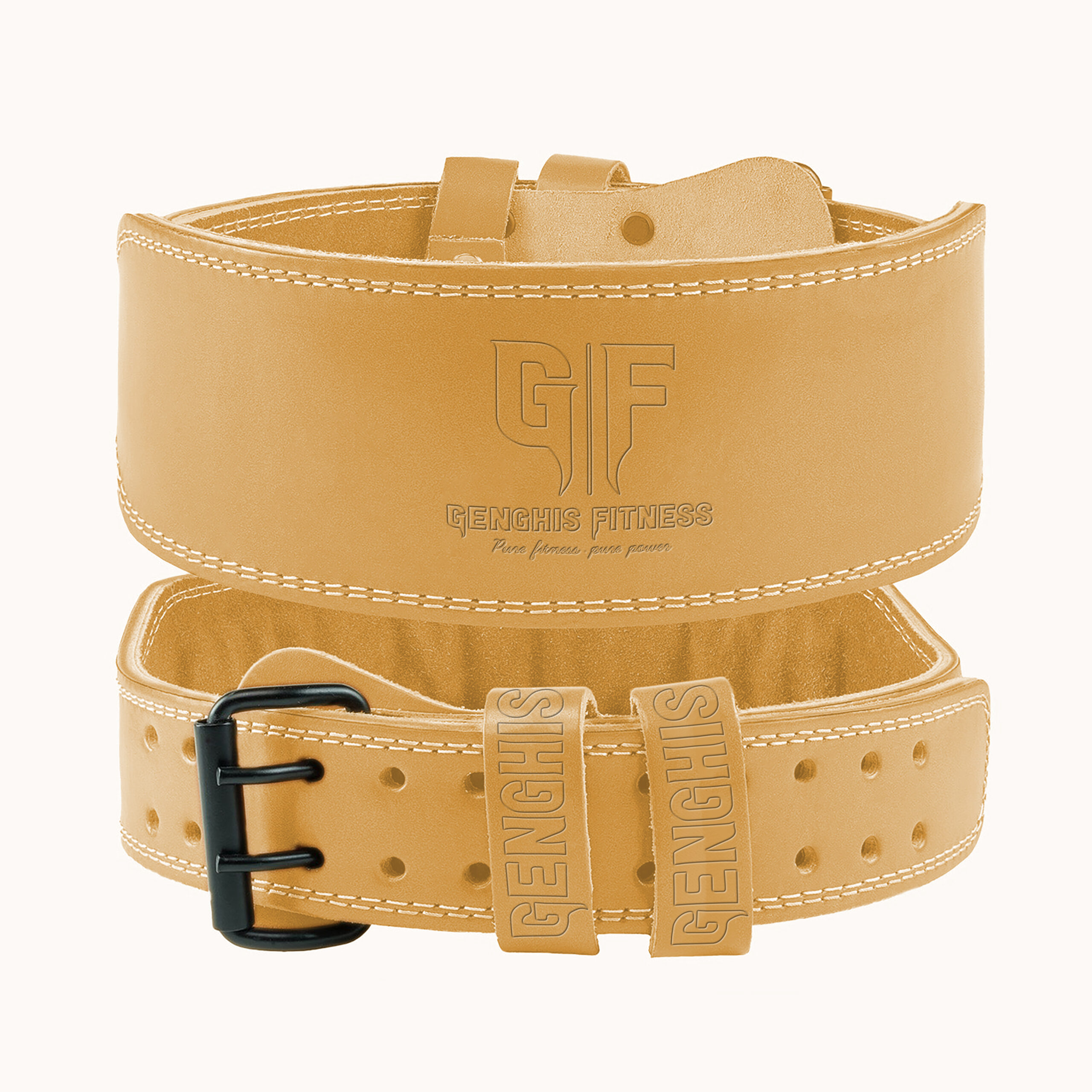
Genuine leather 4-inch weightlifting belt with double-prong steel buckle. Uniform width provides full lumbar support for squats, deadlifts, and overhead work. Breaks in to your body shape and outlasts neoprene alternatives by years.
Description
The 4-Inch Leather Weightlifting Belt Built For Every Heavy Movement
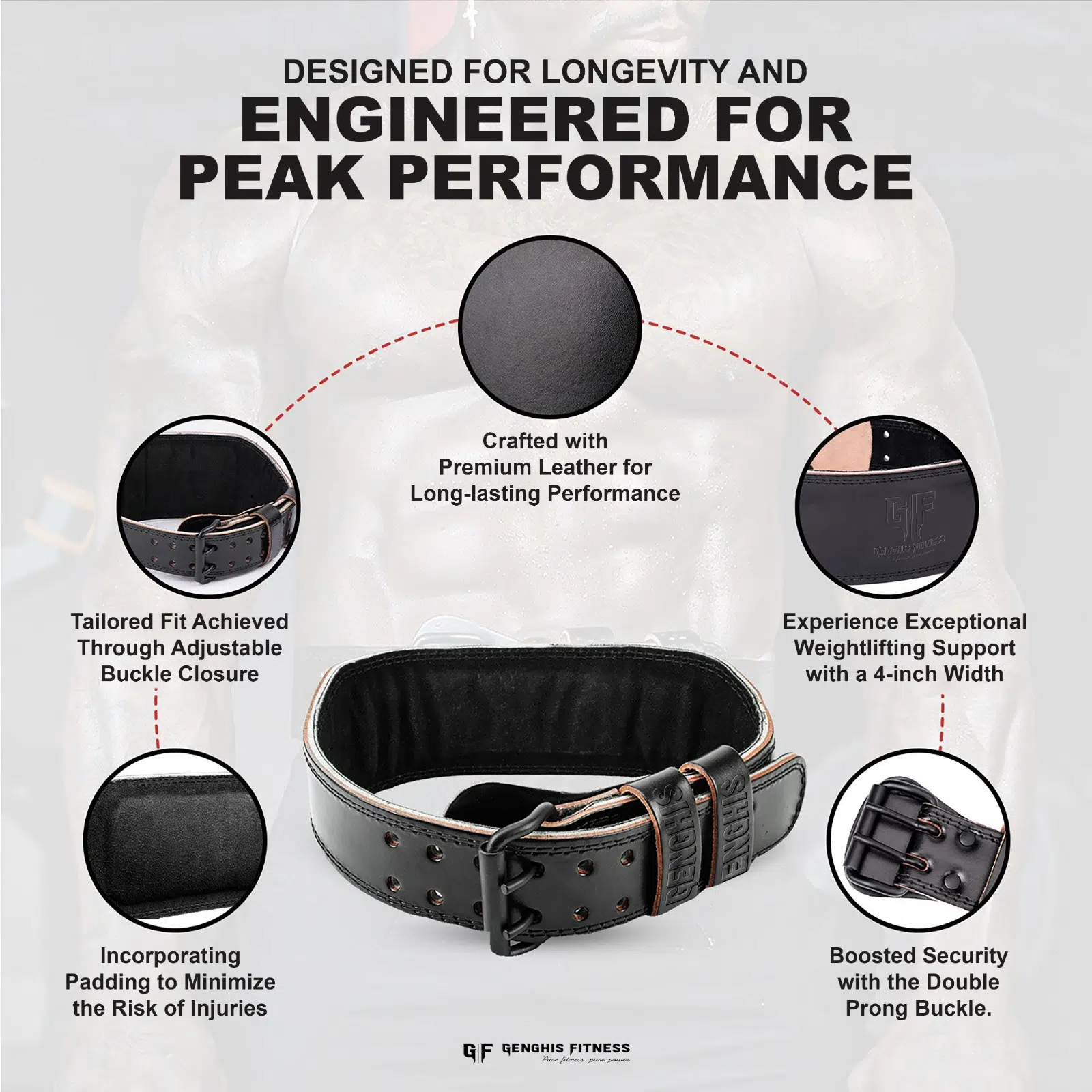
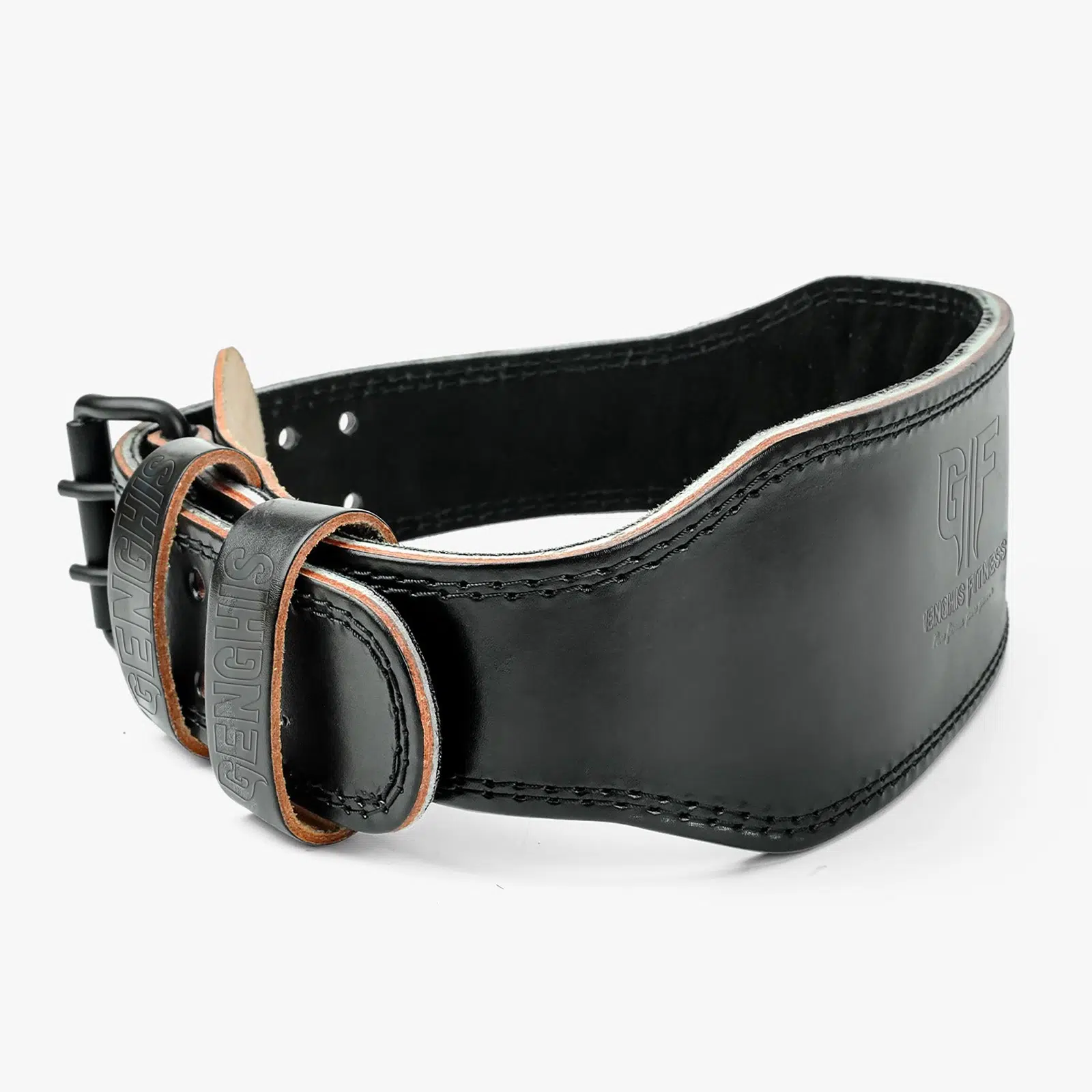
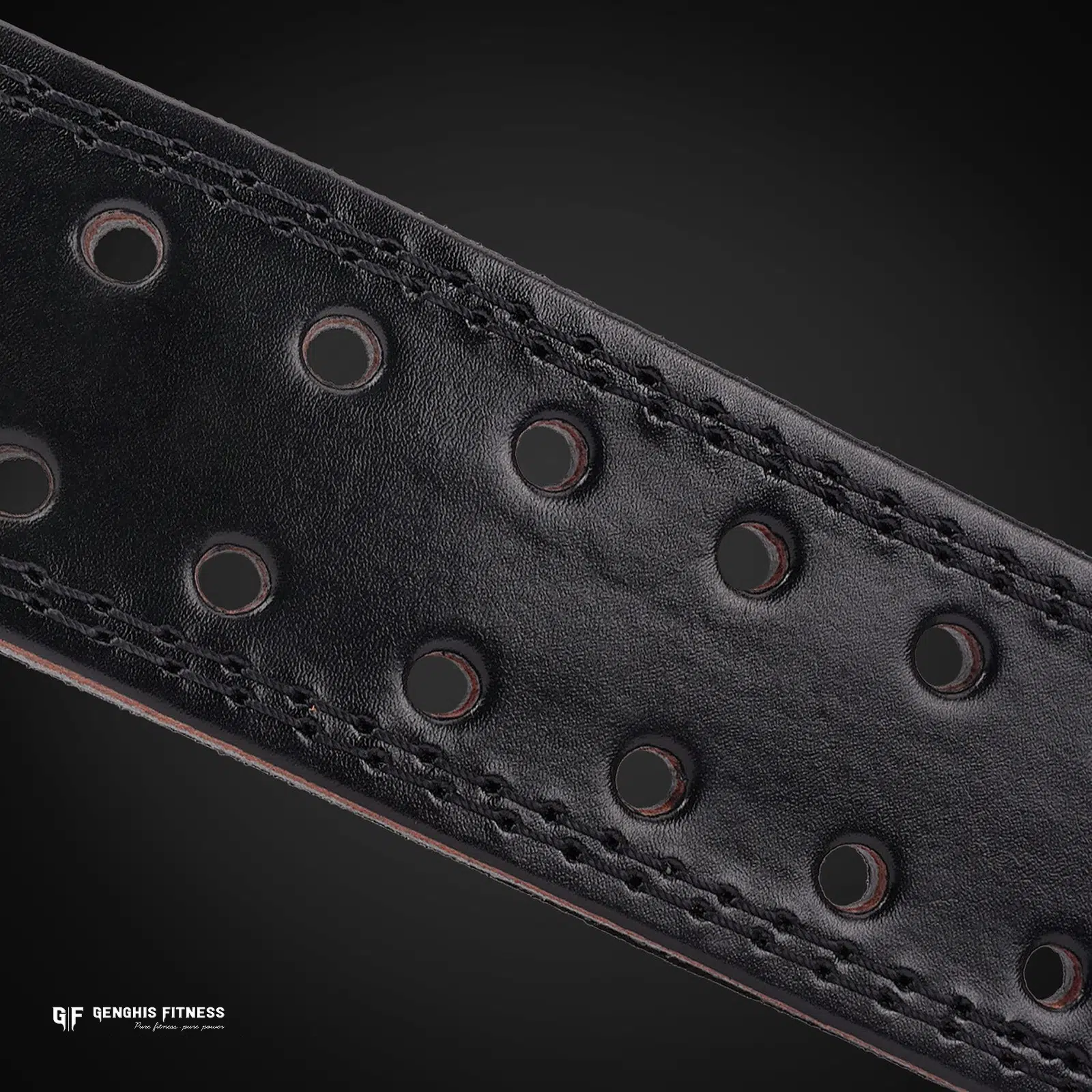
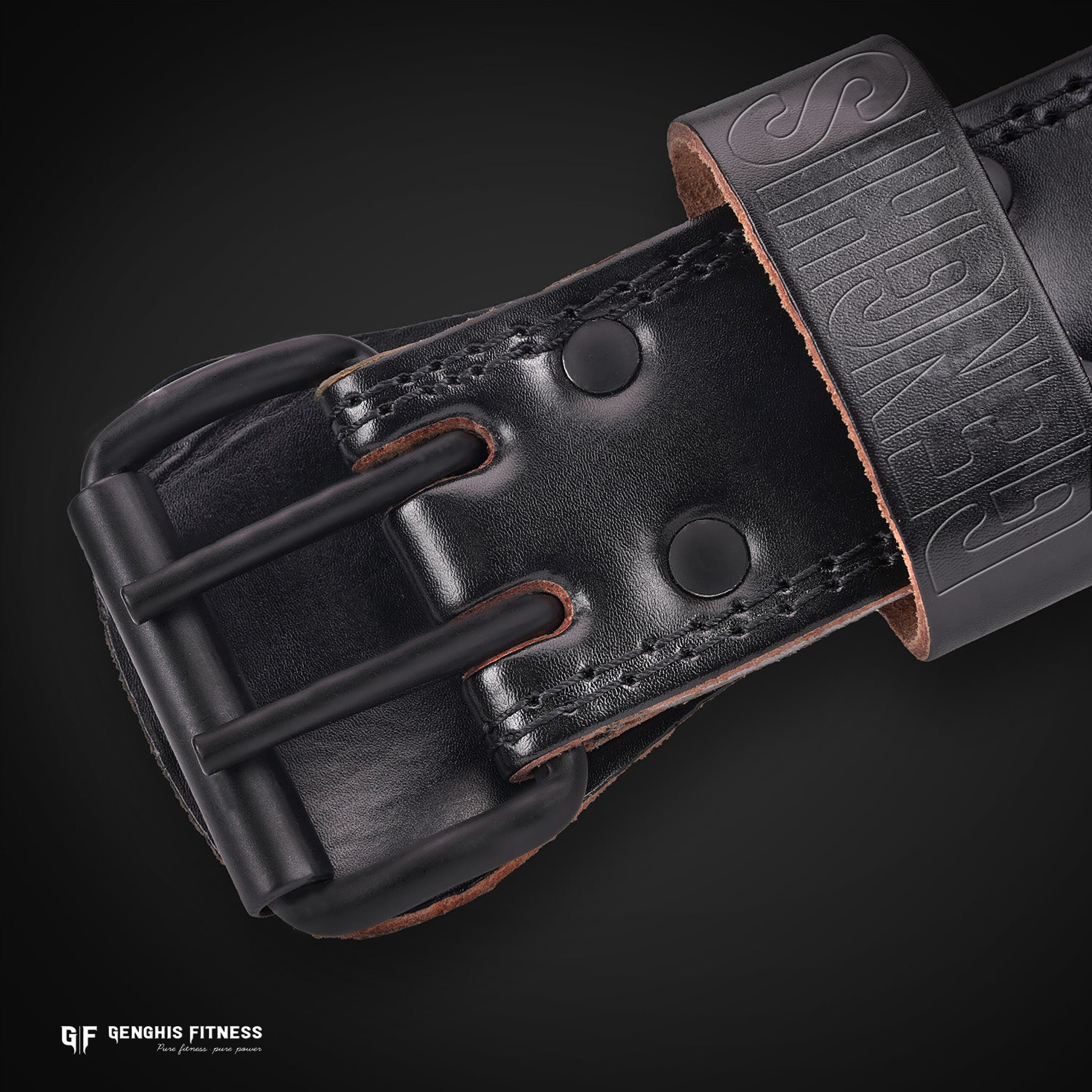
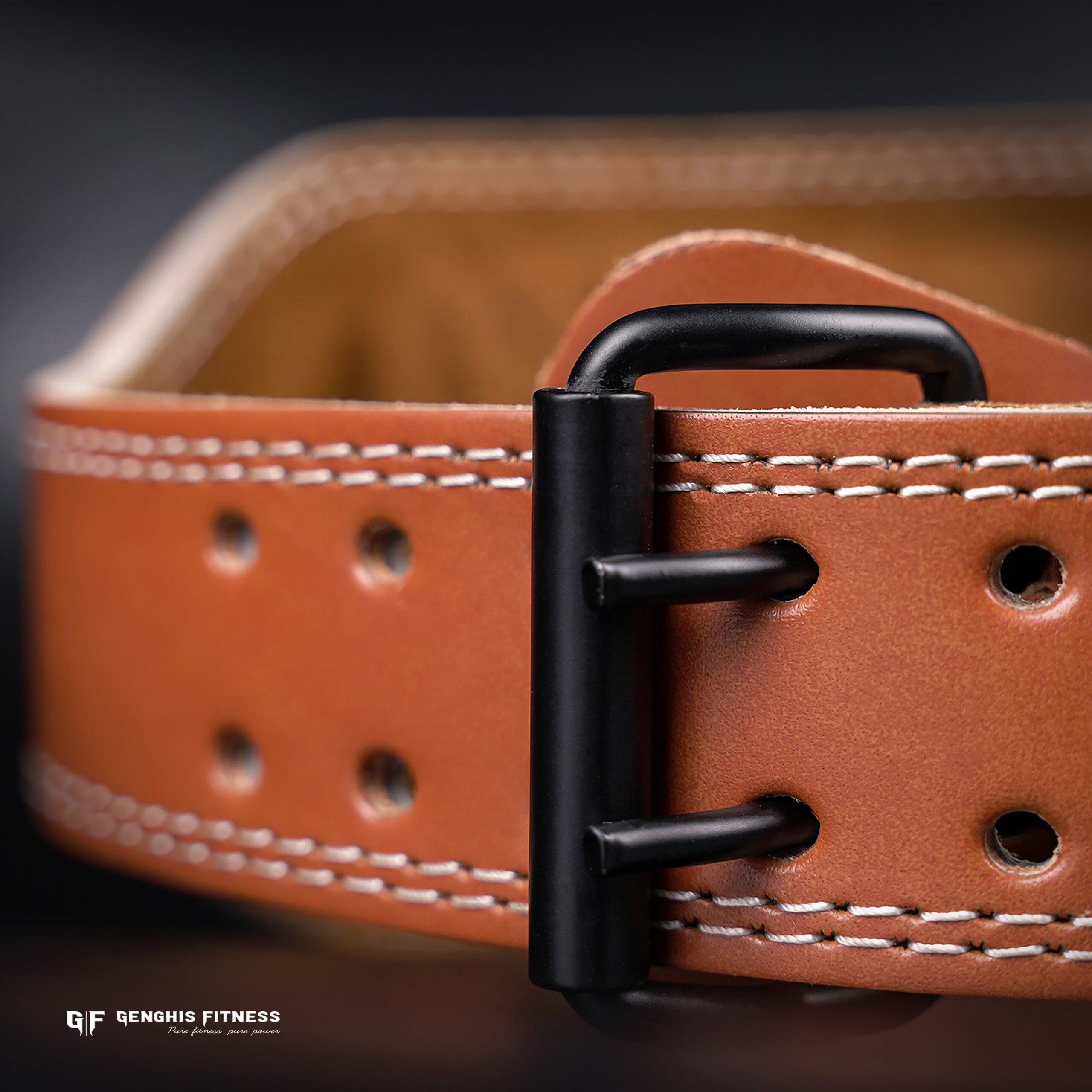
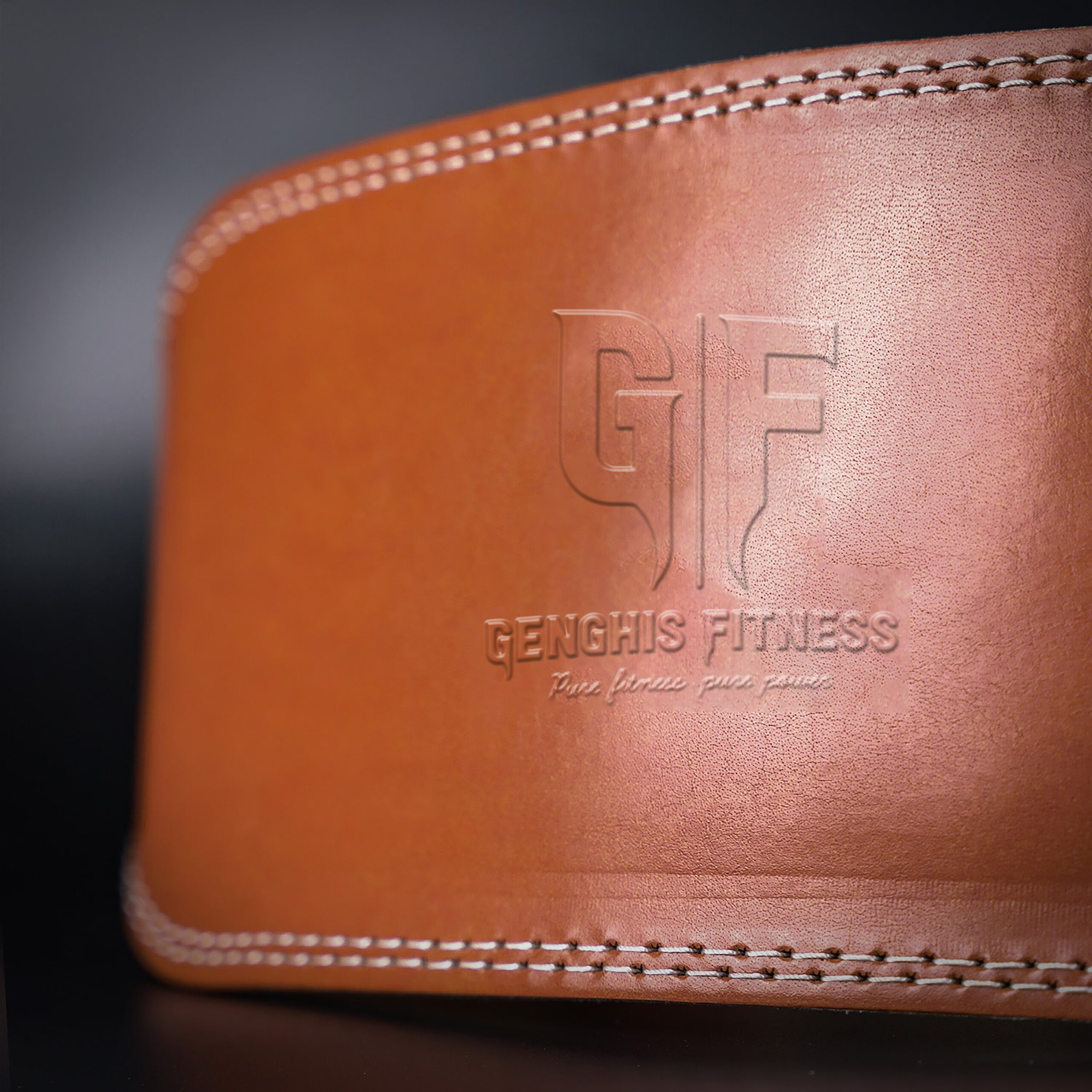
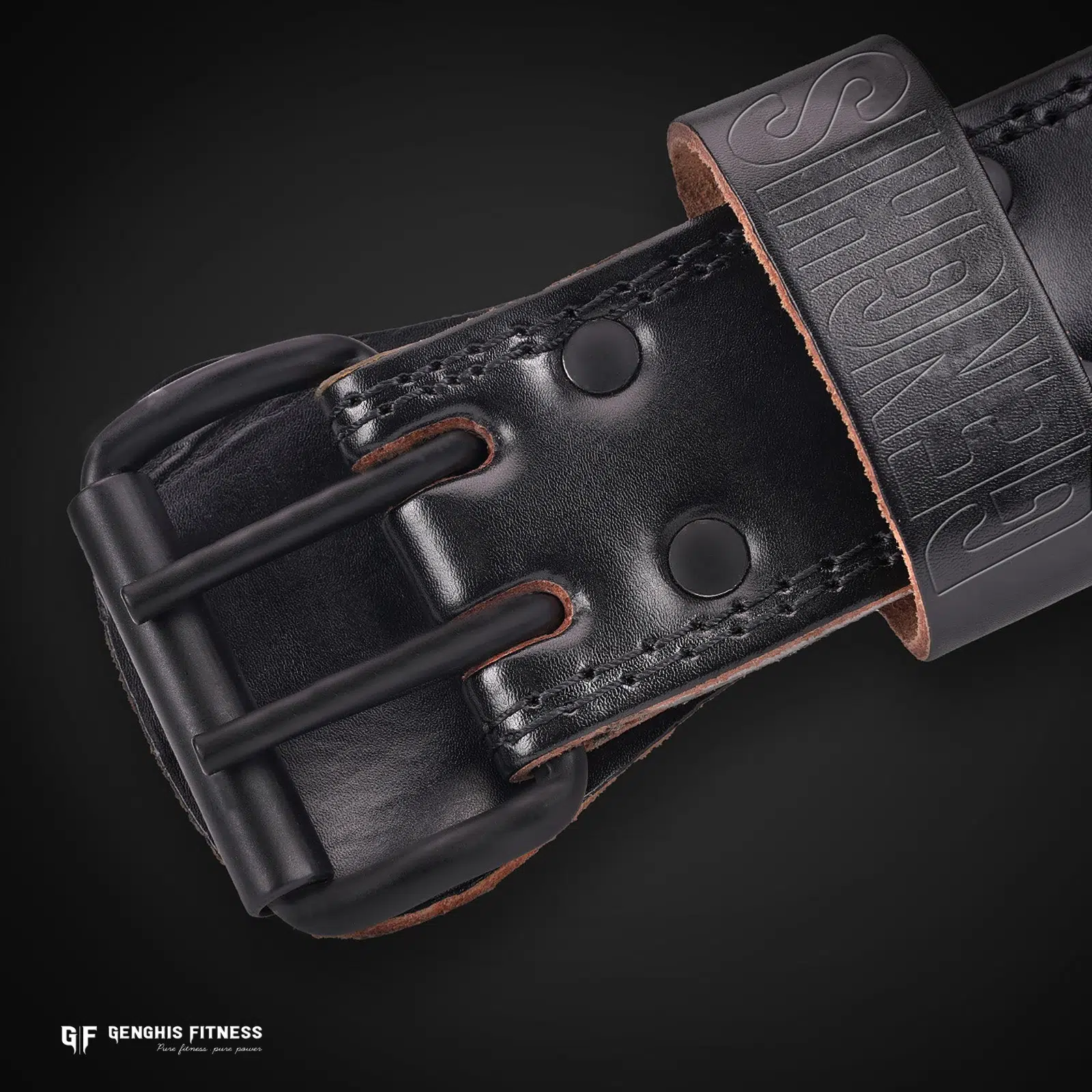
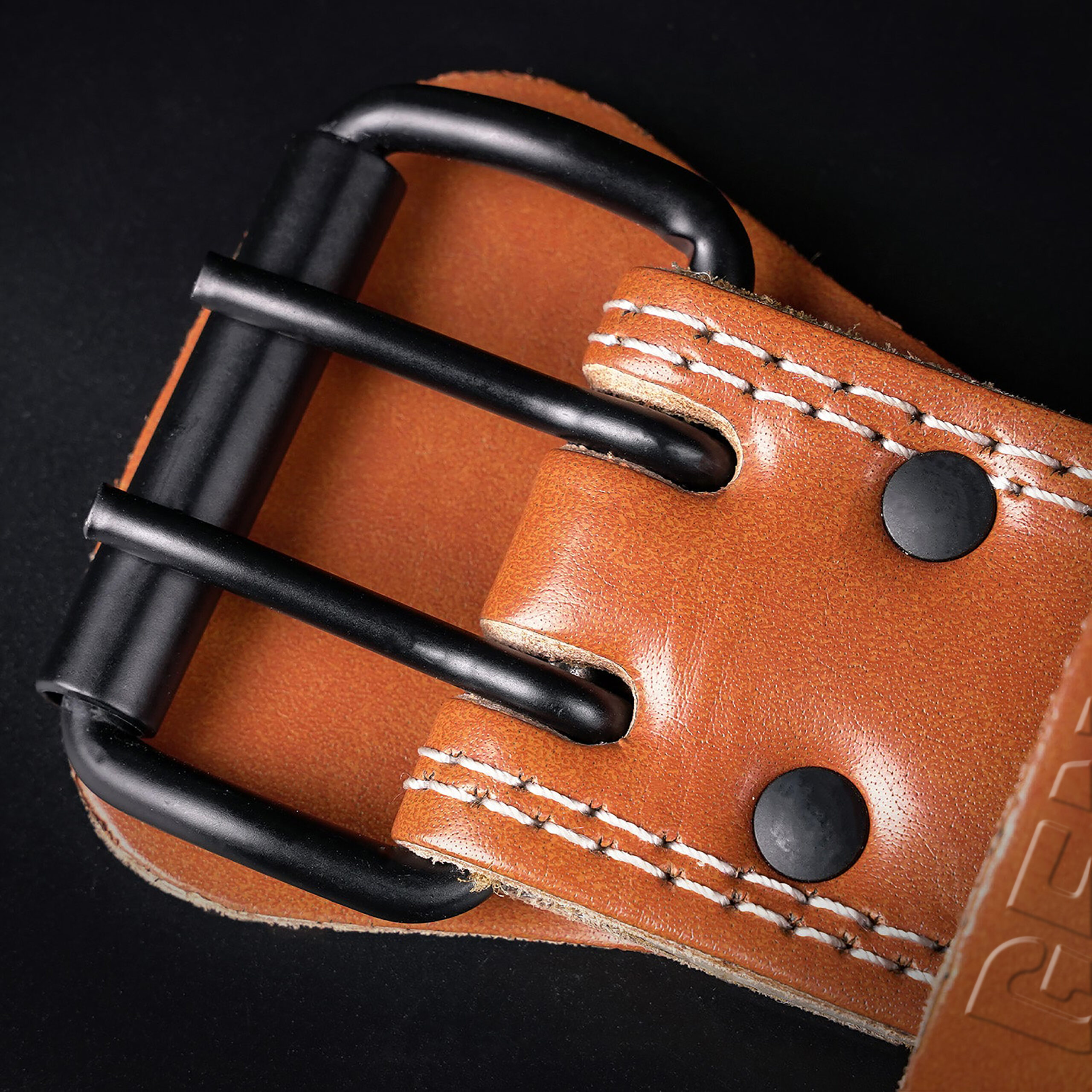
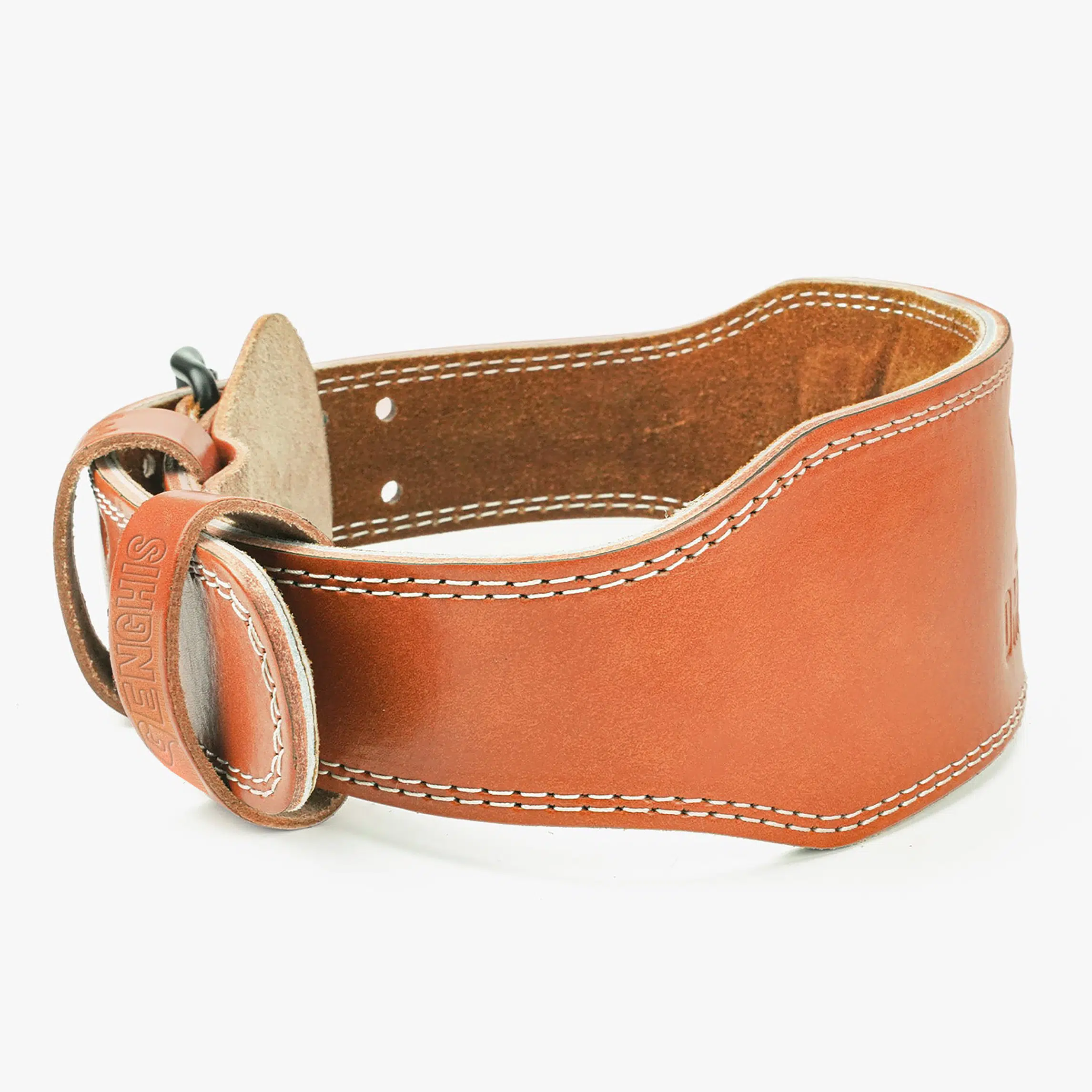
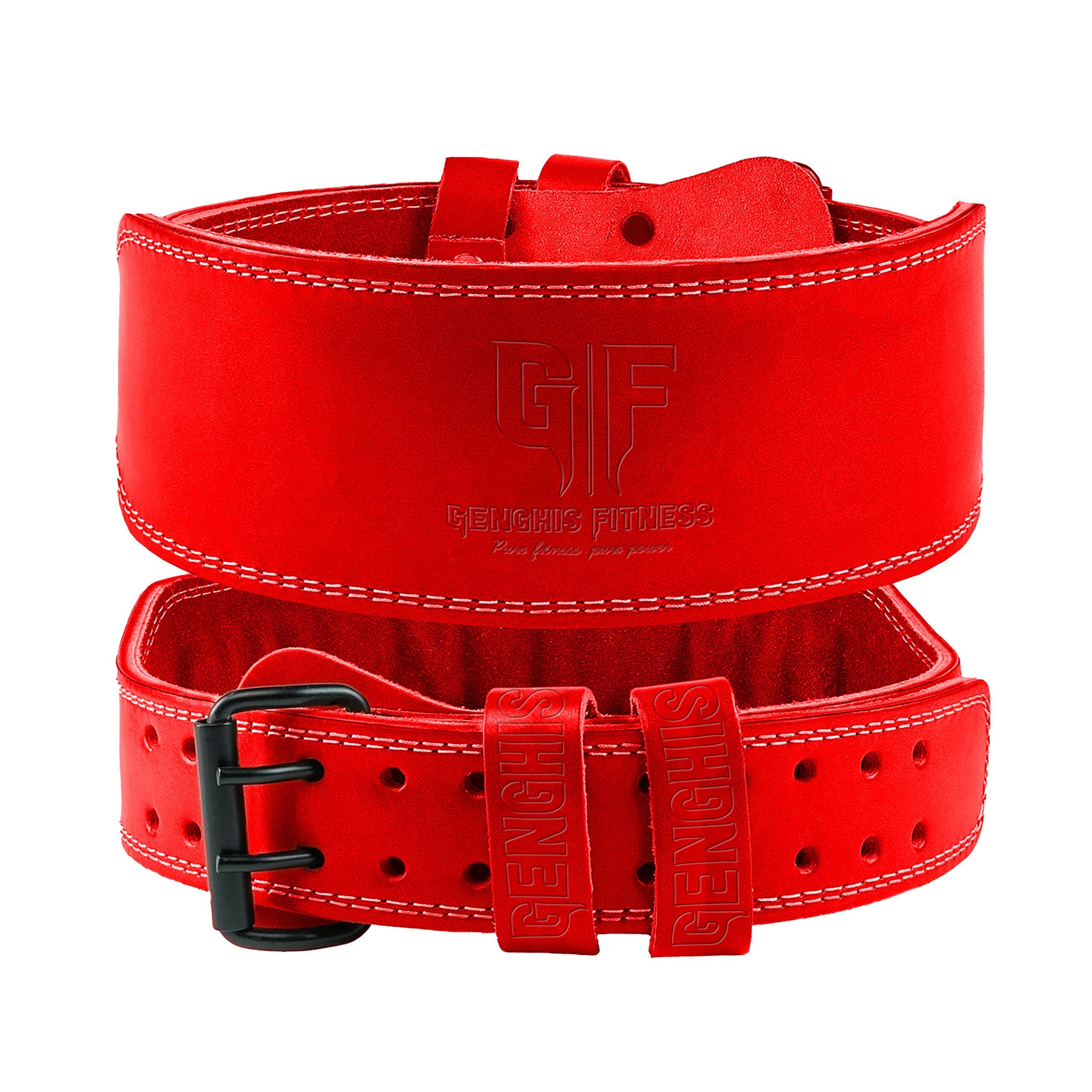
The Genghis Fitness 4-Inch Leather Weightlifting Belt is a genuine leather belt in a uniform 4-inch width from front to back. It closes with a double-prong steel buckle, which gives you two points of contact against the belt holes for a secure, repeatable fit that does not slip under load. The leather is full-grain construction tanned to a consistent thickness throughout. The inside surface has suede lining that grips against your training shirt or singlet to keep the belt in position through the descent of a squat or the pull of a deadlift. Double-stitched edges run the full perimeter.
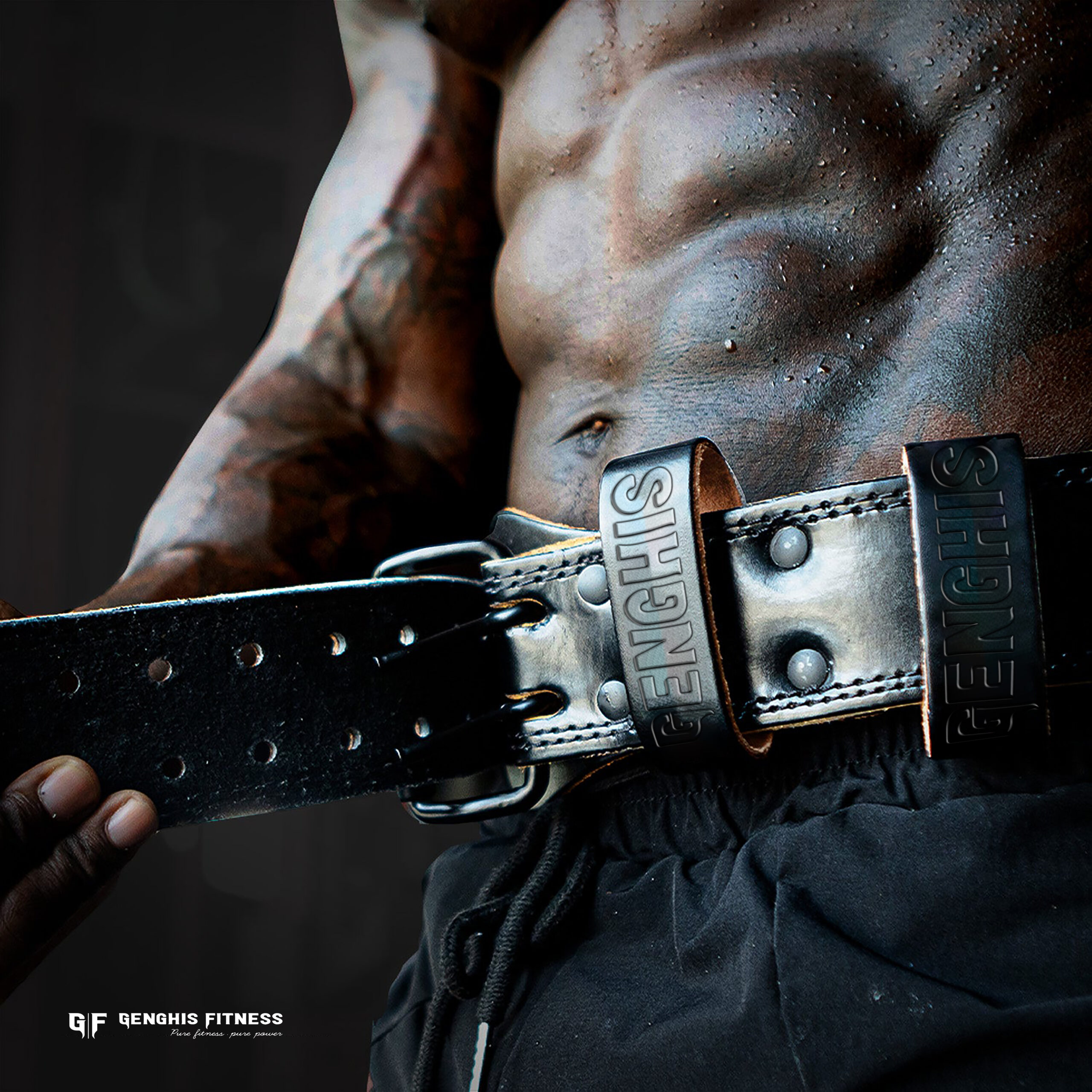
The double-prong design is the most common belt closure in strength gyms worldwide. Both prongs lock into the same set of holes simultaneously, creating more contact surface against the leather than a single prong covers. Once locked in, the belt stays exactly where you set it without any tendency to rotate or shift during the set. The trade-off compared to a lever belt is that removal takes slightly longer between sets because both prongs need to be released. For athletes who do not need between-set removal speed, the double-prong is a reliable, uncomplicated system that has served competitive lifters for decades.
Who This Belt Is For
Strength athletes at the intermediate to advanced level who train squats, deadlifts, Romanian deadlifts, overhead press, and barbell rows will get consistent use from this belt across all their primary movements. The uniform 4-inch width provides adequate lumbar support for all of these lifts without the tapered front that some general-purpose belts use. A uniform-width belt creates even pressure distribution around the entire torso, which supports intra-abdominal pressure more effectively than a belt that narrows at the front.
Athletes who compete in powerlifting federations that specify a maximum belt width of 4 inches will find this belt competition-legal for those specifications. Check your federation’s rulebook for the exact width allowance and closure requirements before competition. The single versus double prong question matters in some federations, so confirm your specific rules.
Beginners building their first training belt collection should consider whether the break-in time of full-grain leather fits their current training stage. A new full-grain leather belt is stiff for the first two to four weeks of use. It takes consistent training sessions under load before the leather begins to conform to the shape of your torso. The result after break-in is a belt that fits better than any neoprene or nylon belt because it has literally molded to your body. But the first few weeks require patience that some newer lifters find frustrating. If you want a belt that feels comfortable immediately, start with neoprene and move to leather when you are ready for a long-term investment.
How The Leather Construction Works
Full-grain leather maintains the natural fiber structure of the outer hide layer, which is the densest and most mechanically strong part of the animal hide. Under repeated compressive loading in heavy training, full-grain leather holds its shape and rigidity over years where lower-grade leather alternatives compress and lose their support characteristics. A quality full-grain leather belt purchased today will still be providing the same support ten years from now with normal care.
The suede inner surface creates friction against your shirt or skin that prevents the belt from riding up during the descent phase of a squat or shifting laterally during a conventional deadlift pull. When a belt rotates during a set, the contact between the leather and your torso becomes uneven and some of the support benefit is lost. Suede lining eliminates that problem. Once the belt is tightened and you take a breath to brace, it stays in position for the duration of the set.
Break the belt in by wearing it for warm-up sets as well as working sets, not just on heavy days. Consistent use through all temperature ranges and movement patterns accelerates the leather conforming to your shape. Some athletes speed the process by bending the belt against itself to soften the leather slightly before their first few training sessions. This is normal and does not damage the belt.
How To Choose Your Size and Fit
Measure your waist at navel height while relaxed, not while flexed or braced. Most athletes size their belt so the middle hole of the five-hole row is the hole they most commonly train at. This gives you two holes tighter for squat positions and two holes looser if you need to adjust for deadlift or overhead work. If your measurement puts you between sizes, the smaller size is generally the right choice for a leather belt because the leather will stretch and soften over time.
Tighten the belt to a level where you can still take a full diaphragmatic breath before bracing. If you cannot expand your abdomen against the belt, it is too tight. The belt provides support by giving you something rigid to brace against when you create intra-abdominal pressure, not by constricting your midsection. A belt that is so tight you cannot breathe into it defeats the mechanism it is supposed to support.
Key Specifications
- Material: Full-grain leather with suede inner lining
- Width: 4 inches uniform throughout
- Closure: Double-prong steel buckle
- Stitching: Double-stitched reinforced perimeter
- Available sizes: S through XL
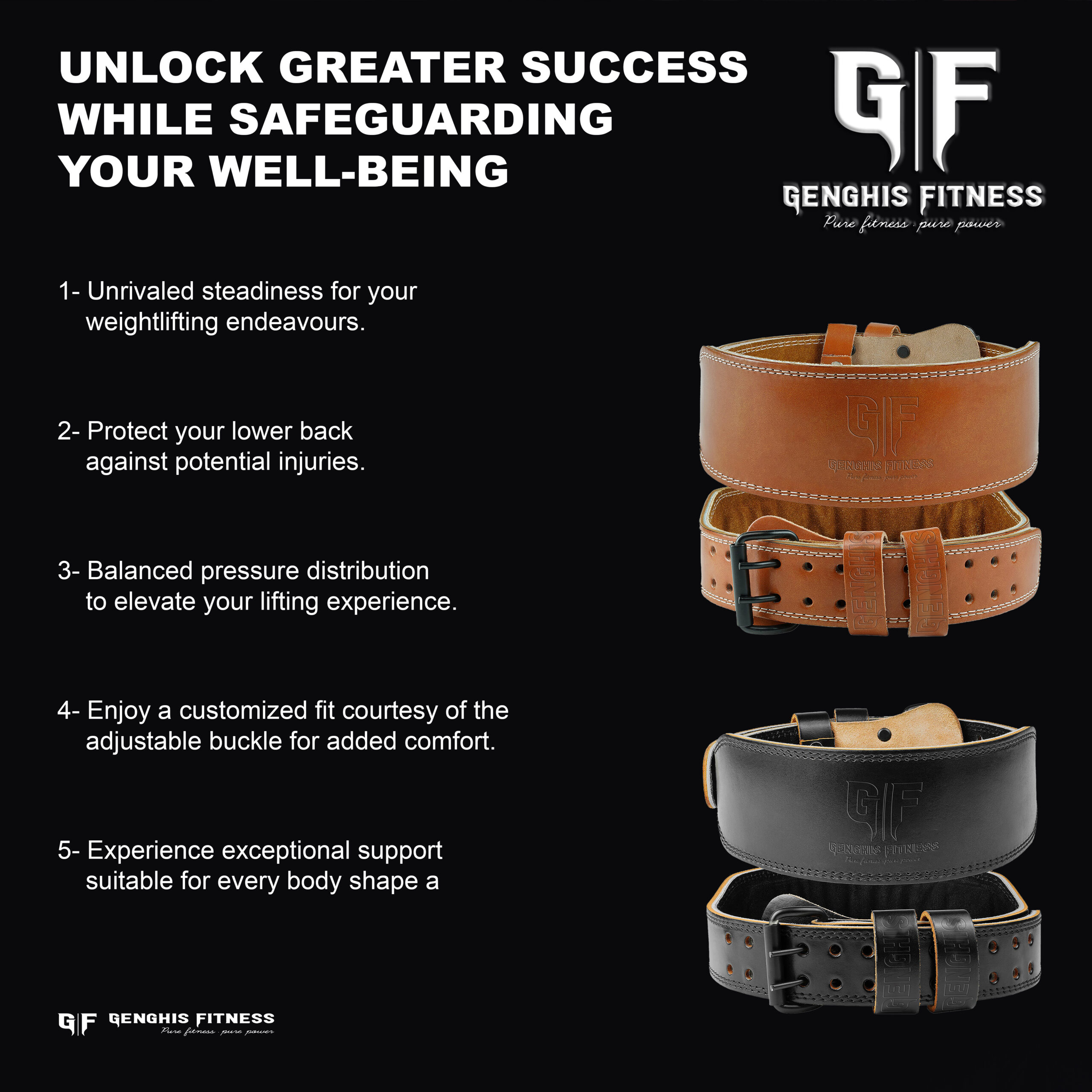
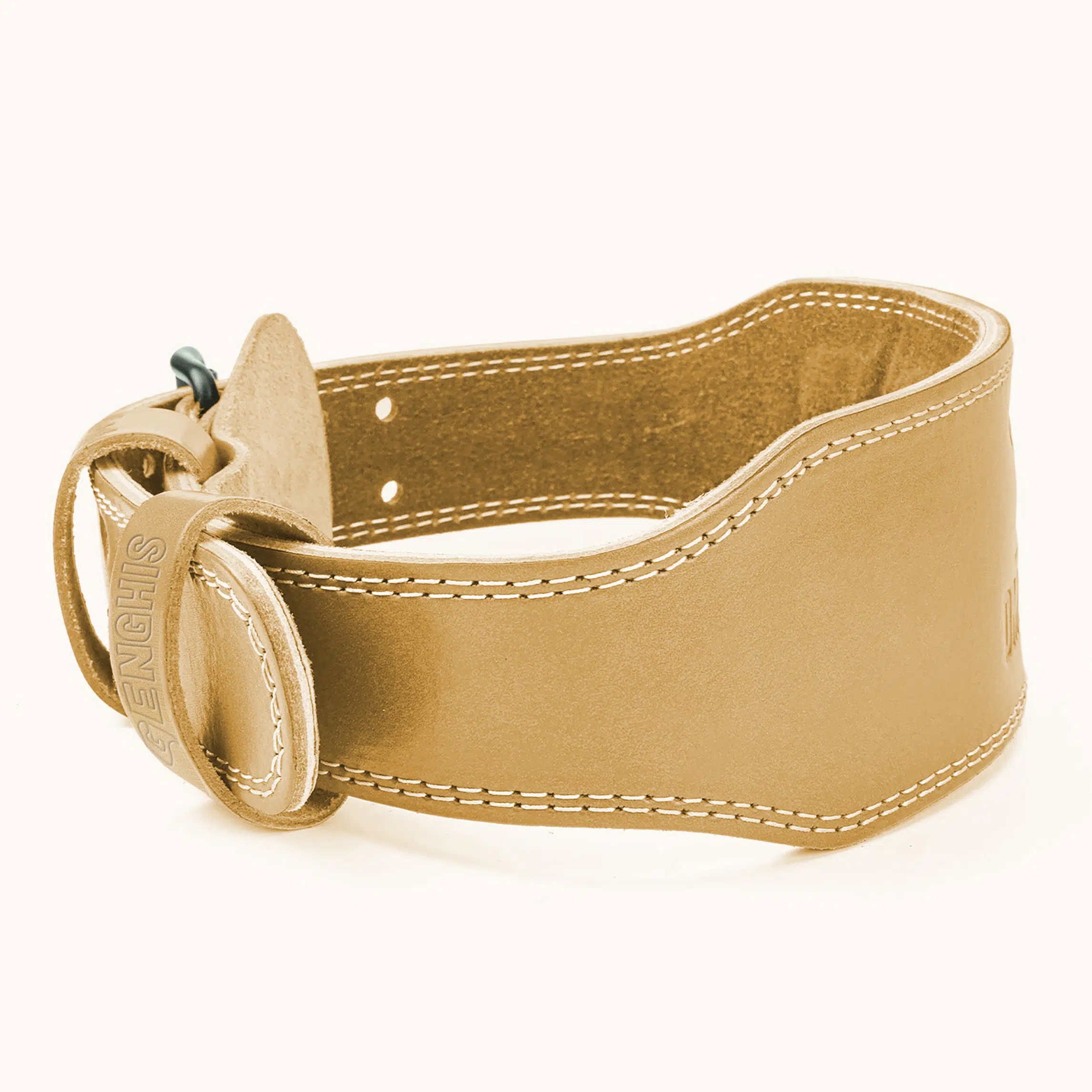
- Available colors: Black, Brown, Red
- Break-in period: 2 to 4 weeks of consistent use
Why Buy From Genghis Fitness
4-Inch Width — Competition Standard
Uniform 4-inch width throughout meets the maximum belt width specification for most raw powerlifting federations. Confirm your specific federation rules before competition.
Free Worldwide Shipping on Orders $100+ or 3+ Items
Flat rate $12 on smaller orders. Express available. Full shipping policy
30-Day Return Window — No Hassle
Not satisfied? Email [email protected] within 30 days. Refund to original payment method within 10 business days. Return policy
Built for Real Training — Not for the Shelf
Every product is designed and tested for the demands of serious strength training, powerlifting, CrossFit, and competitive athletics.
Related Guides
- Weightlifting Belt for Beginners: Do You Need One and How to Use It
- Weightlifting Belt for Powerlifters: The Complete Guide
- Weightlifting Belt for CrossFit: What Actually Works in a WOD
- Neoprene vs Leather Weightlifting Belt: The Definitive Comparison
- How to Use Leather Weight Lifting Straps
- Leather Weightlifting Belt Care: Essential Tips and Best Practices
Frequently Asked Questions
What is the advantage of a double-prong buckle over a single-prong?
A double-prong buckle creates two contact points between the prongs and the belt holes, which distributes the locking force across a wider area and reduces any tendency for the belt to loosen under repeated loading cycles. Single-prong belts are faster to buckle and unbuckle between sets. Both closure types provide equivalent support under load. The double-prong is a personal preference choice, not a performance advantage.
Is a 4-inch belt suitable for Olympic weightlifting?
A uniform 4-inch leather belt restricts thoracic and hip flexion more than narrower or tapered belts, which can interfere with the overhead squat and clean catch positions in Olympic lifting. For general strength training and powerlifting movements, 4 inches is the standard and optimal width. For Olympic lifting specifically, many athletes prefer a belt with a tapered front panel that narrows to 2 to 3 inches at the front to allow more freedom in the receiving position.
How do I know which hole to buckle at?
Apply the belt and take a full diaphragmatic breath before buckling. Tighten to the hole where you can still fully expand your abdomen against the belt but the belt does not shift when you push outward. If you cannot breathe into the belt, it is too tight. If the belt moves when you brace, it is too loose. The right hole feels firm against your core expansion without restricting the breath itself.
Does leather stretch over time?
Full-grain leather does elongate slightly during the break-in period, typically half to one full hole width over the first four to six weeks of consistent use. This is normal and the reason experienced lifters size down when between sizes on a new leather belt purchase. After the initial break-in the belt stabilizes and does not continue to stretch with regular use and normal leather care.
Can I use this belt for CrossFit workouts?
A 4-inch rigid leather belt is not well suited for CrossFit programming that mixes heavy barbell work with gymnastics, box jumps, and dynamic movement. The rigidity that makes leather belts effective for maximal lifts becomes a restriction on the varied movement patterns in CrossFit. For general gym use and strength-focused sessions, it performs as designed. For CrossFit or functional fitness, a neoprene or nylon belt with a hook-and-loop or auto-lock closure is a more practical choice.
Belt Size Guide
| Size | Waist (inches) | Waist (cm) | Fits belt hole |
|---|---|---|---|
| XS | 20 – 24 in | 51 – 61 cm | Holes 2–4 |
| S | 25 – 29 in | 64 – 74 cm | Holes 2–4 |
| M | 30 – 34 in | 76 – 86 cm | Holes 2–4 |
| L | 35 – 39 in | 89 – 99 cm | Holes 2–4 |
| XL | 40 – 44 in | 102 – 112 cm | Holes 2–4 |
| XXL | 45 – 49 in | 114 – 124 cm | Holes 2–4 |
Measure your waist at navel height while relaxed and not flexed. Order so your most-used training tightness falls on hole 3 of 5. Between sizes? Order the smaller size — leather stretches slightly during break-in.
Additional information
| Weight | ,75 kg |
|---|---|
| Dimensions | 8 × 6 × 4 cm |
| COLOR | Black-4"Leather Weightlifting Belt, Brown-4 Leather Weightlifting Belt |
| SIZE |
You must be logged in to post a review.
Related products
-

-
Custom Designed Lifting Belts | Personalized
176,00 €Select options This product has multiple variants. The options may be chosen on the product page -
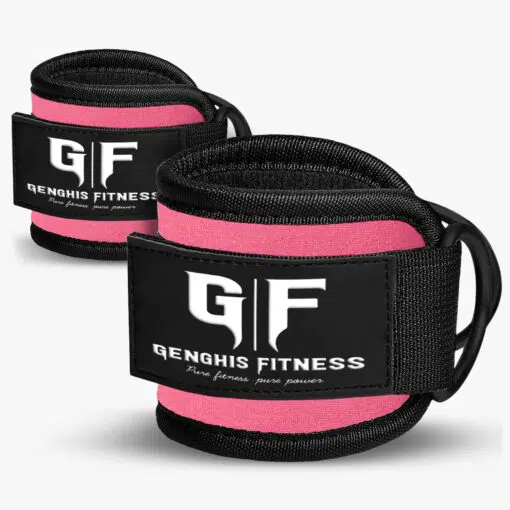
Ankle Straps for Cable Machine | Padded Neoprene
27,00 €Select options This product has multiple variants. The options may be chosen on the product page -
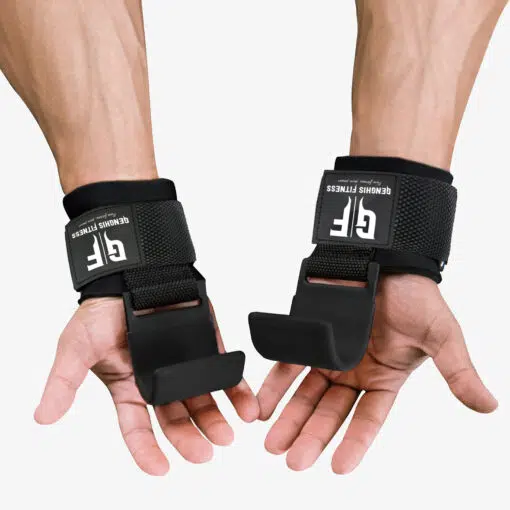
Weight Lifting Hooks | 600lb Rated Steel Hooks
31,00 €Select options This product has multiple variants. The options may be chosen on the product page

Reviews
There are no reviews yet.