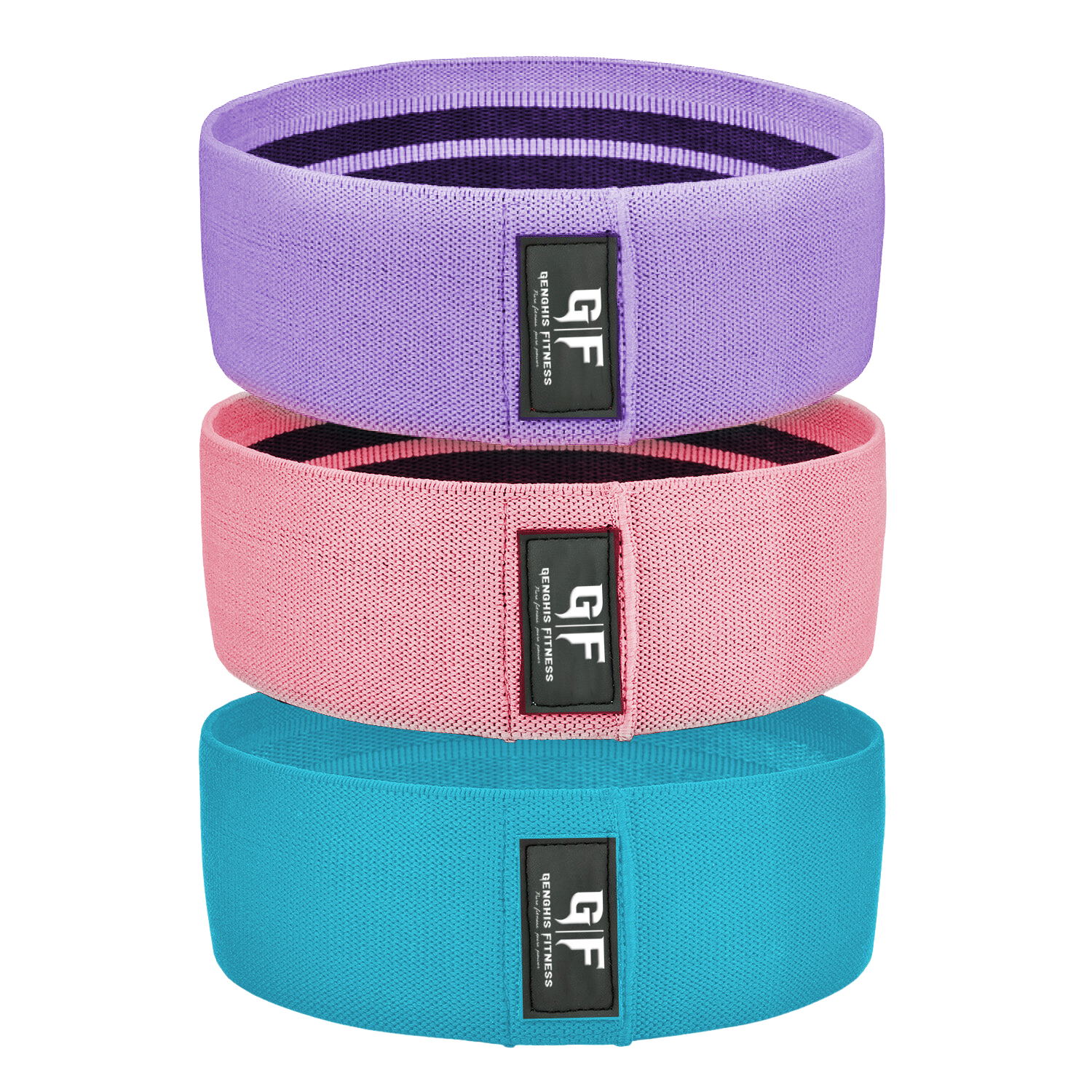
How to Use Booty Bands: Placement, Technique, and Getting Real Results
The gap between athletes who get genuine training results from booty bands and those who use them for a few weeks and see nothing is almost entirely a technique and programming problem. The bands themselves are simple equipment. What makes them effective is knowing where to position them on the body, how to maintain the correct tension and alignment during each exercise, how to brace and move to maximize muscle activation, and how to build on the work progressively rather than doing the same routine indefinitely.
This guide covers all of that: placement principles, technique cues for the most important exercises, common errors that reduce activation, and the habit structure that produces consistent improvement.
Band Placement: The Foundation of Everything
Band placement determines which muscles are being loaded. The same hip circle band placed at different positions on the leg creates entirely different training stimuli.
Above the Knees
Placing the band on the lower thigh, just above the kneecap, is the standard position for most booty band exercises. At this position, the band creates lateral resistance that the hip abductors, primarily the gluteus medius and minimus, must work against to maintain knee alignment. This is the correct placement for lateral band walks, banded squats, clamshells, hip thrusts, and glute bridges.
Just Below the Knees
Moving the band to just below the knee increases the moment arm for the hip abductors by moving the resistance point farther from the hip joint. This makes the same band resistance harder for the hip abductors without requiring a heavier band. It is a useful progression when you have reached the heaviest band in a set but want to continue increasing the training stimulus. Check that this position is comfortable before using it for a full set, as the tibial area below the knee can be sensitive to band pressure.
Around the Ankles
An ankle-level band position is used for exercises that target hip abduction through a standing range of motion, such as standing hip abduction and fire hydrants. At this position, the band loads the entire range of leg movement rather than only the range produced by the hip abductor muscles working against a band above the knee. This provides a different and complementary stimulus.
Technique Cues by Exercise
Lateral Band Walk
Start in a quarter-squat position with the feet hip-width apart and the band above the knees. Take a controlled lateral step with the lead foot, maintaining the quarter-squat depth throughout. Do not let the trailing foot slide all the way to meet the lead foot. Keep at least hip-width distance between the feet at the narrowest point of each step cycle so the band stays under tension throughout. Torso stays upright. Eyes forward. Do not lean toward the direction of travel.
The most common error is rising out of the quarter-squat position with each step, which reduces hip abductor tension and turns the exercise into a stepping drill. Stay low. The hip abductors do the work. The legs and feet are just executing the movement.
Clamshell
Lie on the side with the hips and knees stacked vertically. Bend the knees to approximately 45 degrees. Keep the feet together throughout. Rotate the top knee upward by externally rotating the hip, not by rolling the pelvis backward. The pelvis should stay completely still. The movement is a hip rotation, not a hip roll.
Place a hand on the hip of the working side to monitor for pelvic movement. If you feel the pelvis rotating backward as the knee rises, reduce the range of motion until the pelvis stays stable. Build the range gradually as hip external rotation strength develops.
Banded Hip Thrust
Upper back against a bench, feet flat on the floor hip-width apart, band above the knees. Before driving the hips up, press the knees outward against the band and maintain that outward pressure through the entire movement. Drive through the heels, not the toes. At the top, the torso should be parallel to the floor, the glutes fully contracted, and the knees still pressing outward against the band.
Many athletes allow the knees to drift inward at the top of the hip thrust when the glutes are maximally contracted. This is the exact position where the outward knee pressure matters most. Focus specifically on maintaining the outward press at the top position where it is hardest to maintain.
Banded Squat
Standard squat stance with the band above the knees. Throughout the entire descent and ascent, maintain conscious outward pressure against the band. The band is not just providing resistance. It is providing feedback. If the knees cave inward at any point in the range, you can feel it through the band tension releasing.
Use this feedback deliberately. The banded squat is one of the most effective ways to train the knee outward drive pattern because the band makes the error immediately obvious. Treat each rep as a technique practice opportunity, not just a conditioning set.
Common Errors That Reduce Results
- Using the band too lightly. A band that offers no real resistance provides no real training stimulus. The hip abductors must work hard against the band to develop. Choose a resistance that makes the last 4 to 5 reps of each set genuinely challenging.
- Allowing the band to roll during exercises. A rolled band concentrates pressure and delivers inconsistent resistance. Fabric hip circle bands eliminate this problem. If using a latex band that rolls, reposition it before each set.
- Rushing through reps without a peak contraction pause. The shortened position at the top of clamshells, hip thrusts, and standing hip abduction is where the most muscle activation occurs. A one to two second pause here makes every rep more effective.
- Skipping the bands when pressed for time. Ten minutes of quality band activation before squatting is more valuable than skipping it entirely. Build the habit of doing at least a minimal activation set even when the session is abbreviated.
- Staying on the same resistance indefinitely. If the bands never get harder, the muscles have no reason to continue adapting. Progress the resistance systematically.
Building the Habit of Consistent Band Use
The athletes who get the most from booty bands are the ones who use them consistently enough that activation becomes automatic. The first few sessions will require deliberate focus on technique. After 4 to 6 weeks of consistent use, the exercises should feel natural and the muscle activation should occur without conscious effort.
Keep the hip circle bands in your gym bag permanently. Having them available removes the friction of deciding whether to bring them. Pre-select which exercises you will do before each session rather than deciding when you arrive. These two habits, equipment always present, exercises decided in advance, eliminate the decision points where consistent band use typically breaks down.
When to Add Cable Machine Work
Hip circle band training provides effective hip abductor and glute training up to the resistance limit of the heaviest band in the set. For athletes who develop enough hip strength to consistently complete the prescribed reps with the heaviest available band and want to continue building load, cable machine exercises using the ankle straps for cable machine provide precisely adjustable resistance that can progress indefinitely beyond what any band set offers.