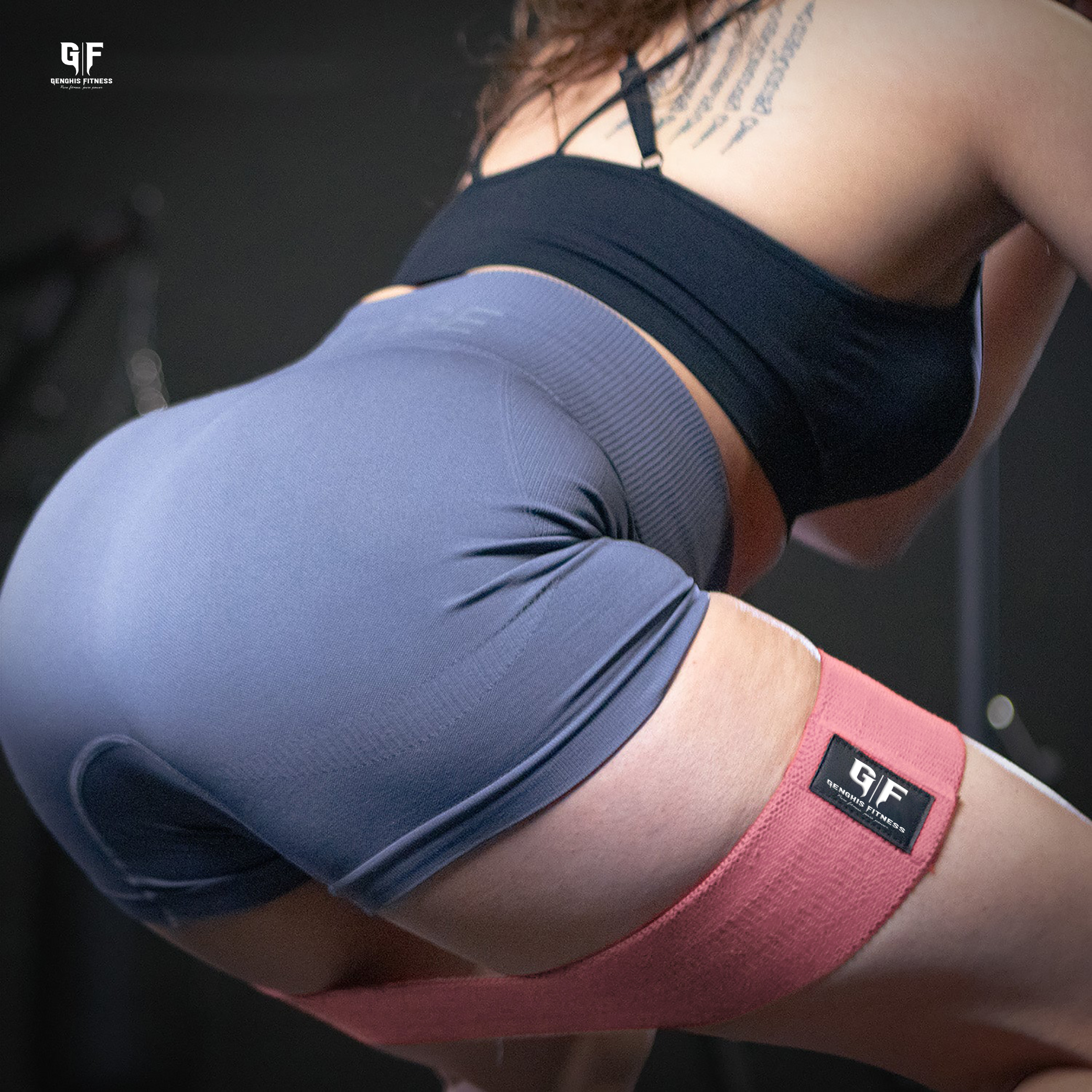
Resistance Band Butt Workout: A Complete Guide to Building Glutes with Bands
Resistance bands have become the most accessible tool for glute training, and for good reason. They add resistance to bodyweight movements that stop being challenging after a few weeks, they can be used anywhere without a rack or a cable machine, and they create a constant tension through the full range of motion that free weights do not replicate. A well-designed band butt workout builds meaningful strength in the glute maximus, gluteus medius, and hip external rotators.
This guide covers the anatomy of effective glute training, the specific exercises that produce the best results with bands, how to structure a complete band-based glute session, and how to progress over time so the bands continue to provide a real training stimulus.
The Glute Muscles and Why All Three Matter
The gluteal complex consists of three muscles with different functions. The gluteus maximus is the largest and most powerful, responsible for hip extension and external rotation. It is the primary driver in squats, hip thrusts, and deadlift-pattern movements. The gluteus medius sits on the outer hip and controls hip abduction, internal rotation, and pelvic stability during single-leg movements. The gluteus minimus lies beneath the medius and shares its abduction function.
Most people who want stronger, better-developed glutes focus almost exclusively on the gluteus maximus through hip extension work. The gluteus medius is equally important for aesthetics, because the medius creates the lateral fullness of the hip, and for function, because weakness there causes the knee to collapse inward during squatting and contributes to lower back and knee injury risk.
A complete resistance band glute workout trains all three muscles. Hip extension exercises for the maximus. Abduction exercises for the medius and minimus. Hip external rotation exercises for the deeper rotators.
The Best Resistance Band Glute Exercises
Banded Hip Thrust
The hip thrust is the most effective exercise for the gluteus maximus. Adding a band above the knees and pushing the knees out against it throughout the movement recruits the gluteus medius simultaneously. Set up with the upper back against a bench or sofa, feet flat on the floor hip-width apart, band above the knees. Drive through the heels, push the hips upward until the torso is parallel to the floor, squeeze hard at the top, and control the descent.
Work up to 3 to 4 sets of 12 to 20 repetitions. When bodyweight plus band resistance becomes easy, add a dumbbell or plate across the hips. The Genghis Fitness hip circle bands are well-suited for this exercise because the hip circle design stays in position above the knees through the full hip extension range.
Banded Squat
A band above the knees during squats forces the hip abductors to resist the inward pull of the band throughout the movement, adding a hip abduction component to every rep. The band also serves as a knee-tracking cue: if the knees collapse inward, the band is not being resisted. Maintain outward pressure on the band throughout the squat.
Three sets of 15 to 20 repetitions with a medium-resistance band is a standard protocol for banded squat work. This is most effective as an activation movement before heavier barbell squatting rather than as a standalone loaded squat replacement for strong athletes.
Lateral Band Walk
Place the band above the knees and take controlled lateral steps in a quarter-squat position, maintaining constant tension on the band. Lead 10 to 15 steps in one direction, then return. This directly targets the gluteus medius and is one of the most effective exercises for building the lateral hip that creates the characteristic shape of well-developed glutes.
Keep the torso upright and the knees bent throughout. Do not let the stance come so narrow that the band goes slack between steps. Maintain the tension through the full movement by keeping the feet at least hip-width apart even at the narrowest point of the step.
Donkey Kick
On all fours, loop a band around one ankle and anchor the other end under the knee of the same side or around the opposite wrist. Kick the banded leg back and upward, driving through the heel and squeezing the glute at the top of the movement. Keep the hips level and avoid rotating the torso. Three sets of 15 to 20 repetitions per side.
The donkey kick isolates the gluteus maximus in the hip extension pattern without the quad and hamstring involvement of a squat or hip thrust. It is an effective finishing exercise at the end of a glute session when the primary muscles are already fatigued.
Clamshell
Lying on the side with the band above the knees, keep the feet together and rotate the top knee upward like a clamshell opening. Hold at the top for one second and control the return. This directly isolates the gluteus medius through hip external rotation. Three sets of 15 to 20 repetitions per side, using a resistance level that makes the last 5 reps genuinely challenging.
Standing Hip Abduction
Stand with the band above the knees and lift one leg directly out to the side, keeping the torso upright and the standing leg slightly bent. Pause at the top and return with control. This trains the gluteus medius in its abduction function in a standing position that closely mimics the demands placed on it during walking, running, and single-leg squatting.
Structuring a Complete Band Glute Session
A well-structured band glute session covers all three heads of the gluteal complex across 30 to 45 minutes. A sample structure:
- Lateral band walks: 3 sets of 12 to 15 steps each direction
- Clamshells: 3 sets of 15 to 20 repetitions per side
- Banded hip thrust: 4 sets of 12 to 15 repetitions
- Banded squat: 3 sets of 15 to 20 repetitions
- Donkey kick: 3 sets of 15 repetitions per side
- Standing hip abduction: 2 sets of 15 repetitions per side
Rest 45 to 60 seconds between sets. This volume is appropriate for an intermediate athlete training glutes twice per week. Beginners should start with two to three exercises and work up to the full circuit over several weeks.
How to Progress Over Time
Progression with resistance bands follows the same logic as progression with any training tool: when the current resistance is no longer challenging, increase it. Most band sets include multiple resistance levels. Move to the next resistance level when you can complete all sets with perfect form and no longer feel a burn in the target muscle by the last 5 reps.
For the hip thrust, progress by adding a dumbbell or weight plate across the hips once bands alone are no longer sufficient. For lateral walks and clamshells, move to heavier bands progressively. For banded squats, transition to barbell squats with the band used as an activation cue above the knees rather than the primary resistance.
Pairing Bands with Cable Machine Exercises
Athletes with access to a cable machine can extend their glute training by adding cable kickbacks and cable hip abduction to their band-based work. The Genghis Fitness ankle straps for cable machine attach to the cable machine and allow full range-of-motion hip extension and abduction exercises with adjustable cable resistance. Pairing band-based activation work with cable-loaded strengthening exercises creates a more complete glute training stimulus than bands alone.
Summary
A resistance band butt workout, built around hip extension, abduction, and external rotation exercises, develops all three heads of the glute complex with equipment that requires no gym membership and fits in a drawer. Structure the session to cover all three movement patterns, progress the resistance systematically, and pair band work with heavier loaded exercises as your strength develops. The bands build the activation and the isolation. The barbell and cable work build the load.