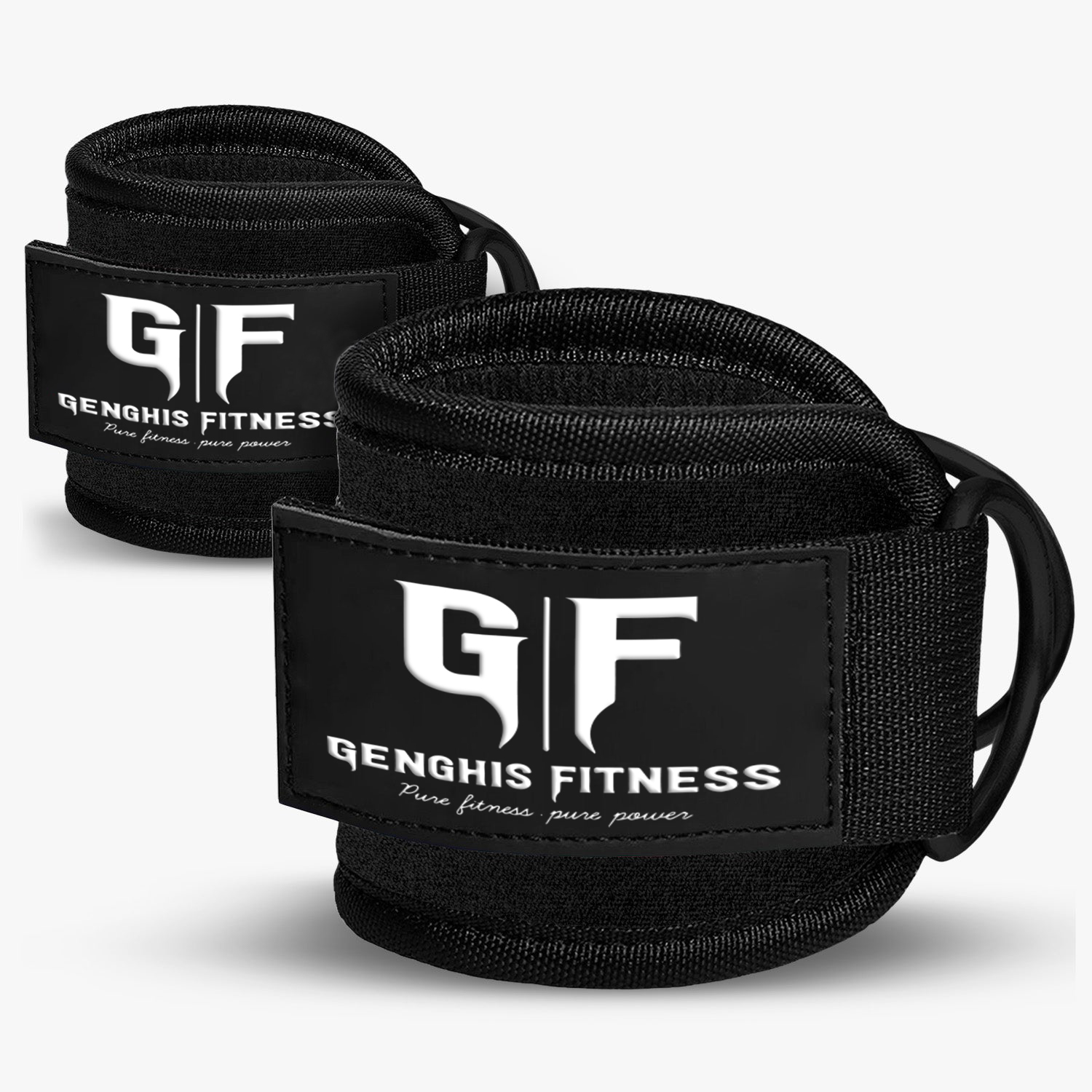
LEG WORKOUTS WITH ANKLE STRAPS: BUILD COMPLETE LOWER BODY DEVELOPMENT USING THE CABLE MACHINE
Most leg workouts rely almost entirely on bilateral barbell and machine movements: squats, leg press, Romanian deadlifts, and leg curls. These are excellent exercises and should form the foundation of any serious lower body program. But they all share a limitation: they are bilateral, they restrict the training plane to sagittal movement primarily, and they cannot isolate the gluteus medius, cable-resisted hip flexors, or the glute in the hip-extended position as effectively as cable training with ankle straps. A leg workout that incorporates ankle strap cable exercises alongside compound lifts produces more complete lower body development than compound training alone. This guide shows you exactly how to build that complete program.
WHY ANKLE STRAP CABLE EXERCISES FILL REAL GAPS IN LEG TRAINING
The three muscles most commonly undertrained in standard lower body programs are the gluteus medius, the hip flexor complex, and the gluteus maximus in its isolated shortened position. Squats and deadlifts train the gluteus maximus powerfully through hip extension under load, but they do not isolate it in a way that allows you to drive maximum targeted volume into that muscle specifically without systemic fatigue from the compound movement limiting total training stimulus. Hip abductions specifically target the gluteus medius in a way that no compound exercise replicates. And standing cable hip flexor pulls load the iliopsoas in its shortened position against meaningful resistance, which bodyweight exercises cannot match. Ankle straps on the cable machine unlock all three of these training opportunities with adjustable resistance and constant tension throughout the range of motion.
THE COMPLETE ANKLE STRAP LEG WORKOUT
WARM-UP: HIP CIRCLE BAND ACTIVATION
Before loading any cable exercises, prime the hip musculature with hip circle band activation work. Clamshells, lateral band walks, and standing hip abductions with a band activate the gluteus medius and prepare the hip stabilizers for the loaded cable work that follows. Two to three sets of 15 reps of each exercise with a moderate resistance band takes about five minutes and meaningfully improves glute activation quality during subsequent cable exercises. Athletes who skip this activation step consistently report a weaker mind-muscle connection during cable kickbacks and abductions, which reduces the training stimulus per set significantly and defeats much of the purpose of the cable isolation work.
EXERCISE 1: CABLE GLUTE KICKBACKS
Attach the ankle strap to one leg and face the cable stack. Grip the frame for stability and maintain a slight forward lean at the hips. Drive the working leg backward through full hip extension, squeezing the glute deliberately at peak extension. Lower under control over 2 seconds. This is the foundational ankle strap exercise for gluteus maximus isolation. Perform 3 to 4 sets of 15 to 20 reps per leg at a resistance that allows full range of motion with quality glute contraction throughout every rep. Increase resistance progressively each week as strength develops.
EXERCISE 2: STANDING CABLE HIP ABDUCTIONS
Stand sideways to the cable machine with the ankle strap on the leg farther from the pulley. Keep the pelvis level by actively engaging the standing-leg glute throughout the movement. Lift the working leg directly sideways to approximately 45 degrees, pause at the top, and lower under control. This is the most effective exercise for isolated gluteus medius development, which is critical for athletic hip stability and knee injury prevention. Research on hip abductor strength and knee valgus confirms that strong gluteus medius function significantly reduces the knee valgus collapse that is a primary mechanism of ACL injury during dynamic movements. Perform 3 sets of 12 to 15 reps per leg.
EXERCISE 3: CABLE HIP FLEXOR DRIVES
Face away from the cable machine with the ankle strap on the working leg. Drive the knee forward and upward against the cable resistance, pausing briefly at the top of the movement. Lower under control and repeat. The hip flexor complex, particularly the iliopsoas, is chronically undertrained in most strength programs because it is strongly activated during seated exercises but rarely loaded through its full range against meaningful resistance in the gym. Strong hip flexors contribute to sprint mechanics, jumping power, and lower extremity stability during athletic movements. Perform 3 sets of 12 to 15 reps per leg.
EXERCISE 4: CABLE STANDING LEG CURLS
Face the cable machine with the ankle strap on the working leg. Drive the heel upward toward the glute against the cable resistance, curling the leg through the knee flexion arc. The cable provides constant tension through the full curl range in a way that lying machine leg curls cannot match in the most shortened position of the hamstring. Perform 3 sets of 12 to 15 reps per leg as a hamstring isolation finisher. Pair this with Romanian deadlifts or good mornings in the same session for complete hamstring development across the full strength curve of the muscle.
EXERCISE 5: CABLE HIP ADDUCTIONS
Stand sideways to the cable machine with the ankle strap on the leg closest to the pulley. Bring the working leg across the body against the cable resistance, targeting the hip adductors. The adductors are commonly neglected in strength programs despite being critical for groin injury prevention and multi-directional hip stability in athletic movements. Perform 3 sets of 12 to 15 reps per leg with moderate resistance, focusing on a controlled eccentric return rather than allowing the cable to snap the leg back rapidly between reps.
HOW TO STRUCTURE ANKLE STRAP EXERCISES IN A COMPLETE LEG WORKOUT
The optimal placement for ankle strap cable exercises is after primary compound movements when the central nervous system has been maximally stimulated by heavy squats and deadlifts, and the target muscles are warm and ready for isolated stimulus. A practical complete leg session structure: primary squat variation for strength, primary hip hinge variation for posterior chain loading, then ankle strap cable exercises for targeted isolation volume. This sequence produces comprehensive lower body development that compound movements alone simply cannot achieve regardless of the training volume applied to them.
For athletes using knee sleeves for compound work and a lever belt for heavy squats and deadlifts, transitioning to ankle strap cable work afterward allows you to remove the heavier support equipment and train in a more mobile configuration suited to the lower-load, higher-rep cable isolation exercises that follow.
PROGRESSIVE OVERLOAD WITH ANKLE STRAP CABLE EXERCISES
Progressive overload applies to cable exercises exactly as it does to barbell work. The cable stack allows precise resistance adjustment in small increments, which is an advantage over dumbbells for exercises like kickbacks and abductions where small load increases are appropriate to maintain quality technique. Add one to two increments of cable resistance when you can complete all planned sets with good form and feel the target muscle working through the full range of motion without compensation. Track your cable resistance settings the same way you track barbell weights and approach the progression with the same discipline and consistency that your compound training demands.
FINAL WORDS
Leg workouts with ankle straps complete a lower body training program that compound exercises alone leave unfinished. The gluteus medius, hip flexors, and isolated glute volume that ankle strap cable exercises deliver fill the gaps that barbell training leaves. Build your leg sessions around heavy compound work first, add ankle strap cable exercises afterward as targeted isolation, and progress the resistance systematically over weeks and months. The Genghis Fitness ankle straps give you the secure, comfortable attachment that makes these exercises productive rather than a constant battle with shifting equipment. Use them, progress them, and build the complete lower body that heavy compound lifting alone was always leaving partially underdeveloped.
Certified strength and conditioning specialists with over 10 years of experience in powerlifting, nutrition, and evidence-based fitness content. Based in New York City.
Browse all related guides in the gym accessories guides for how-to guides, buying recommendations, and training applications across every gym accessory.