Genghis Fitness · Gear Reviews
Weightlifting Belts Reviews: What Real Athletes Find After Months of Use, Key Quality Tests, and Honest Assessments Across Belt Types
Updated 2026 | By Team Genghis Fitness | 19 min read
The weightlifting belt review landscape is dominated by first-impression assessments: how a belt looks out of the box, how it feels in the first session, whether the hardware seems solid at first handling. Real training use reveals a different set of qualities that first impressions completely miss. Leather break-in trajectory, stitching integrity at the stress points after hundreds of sets, hole spacing that suits real training needs, and whether the bracing feel changes over a full competition preparation cycle are the variables that determine whether a belt is genuinely good or merely acceptable in the short term.
This guide structures the review process the way experienced athletes evaluate belts: by what matters across months of real training use, with honest observations from each belt category.
The Variables That Matter After Months of Use
Leather break-in quality: Full-grain vegetable-tanned leather softens at the flex points used in training while retaining structural integrity in the body of the belt. Budget leather either stays uniformly stiff (insufficient fiber quality to break in) or softens too rapidly and uniformly (beginning to lose structural integrity). Quality leather reaches an optimal state around 20 to 40 training sessions and holds that state for years. A study in the Journal of Strength and Conditioning Research confirmed that belt rigidity directly determines IAP amplification, validating why leather grade is the most important single quality variable.
Stitching durability: The stress points where a belt folds during squats and deadlifts experience thousands of flex cycles across a training career. Double-row waxed-thread stitching at these points outlasts single-row or synthetic-thread construction by years. Look for any signs of thread loosening or pulling at the edge stitching after 3 months of regular use. Quality stitching shows zero change. Budget stitching begins showing slight loosening at the highest-stress fold points.
Hole spacing and adjustment range: A belt sized correctly should close in the middle 2 to 3 holes of the range, leaving adjustment room for natural bodyweight fluctuations. Belts with sparse hole spacing (every 2 inches rather than every 1 inch) offer less fine-tuning of tightness and create situations where the only options are slightly too loose or slightly too tight.
Hardware longevity: Prong tightness on single-prong belts should be evaluated after several months: the prong should still seat firmly in holes without any wobble. Lever screw tightness should be checked periodically as described in our lever belt guide. Hardware that loosens within months indicates inferior casting quality.
10mm Lever Belt: Long-Term Assessment
The 10mm lever belt occupies the competition-standard tier of the leather belt market. Athletes using this belt through a full 16-week competition preparation cycle report consistent bracing feel across the entire cycle with no detectable change in the leather’s response to bracing after proper break-in. The lever mechanism maintains its closure tension reliably across hundreds of opening and closing cycles when the mounting screws are checked and tightened at the 3-month mark as standard maintenance. The full review of this belt category is in our 10mm lever belt reviews guide.
Nylon Belt: Long-Term Assessment
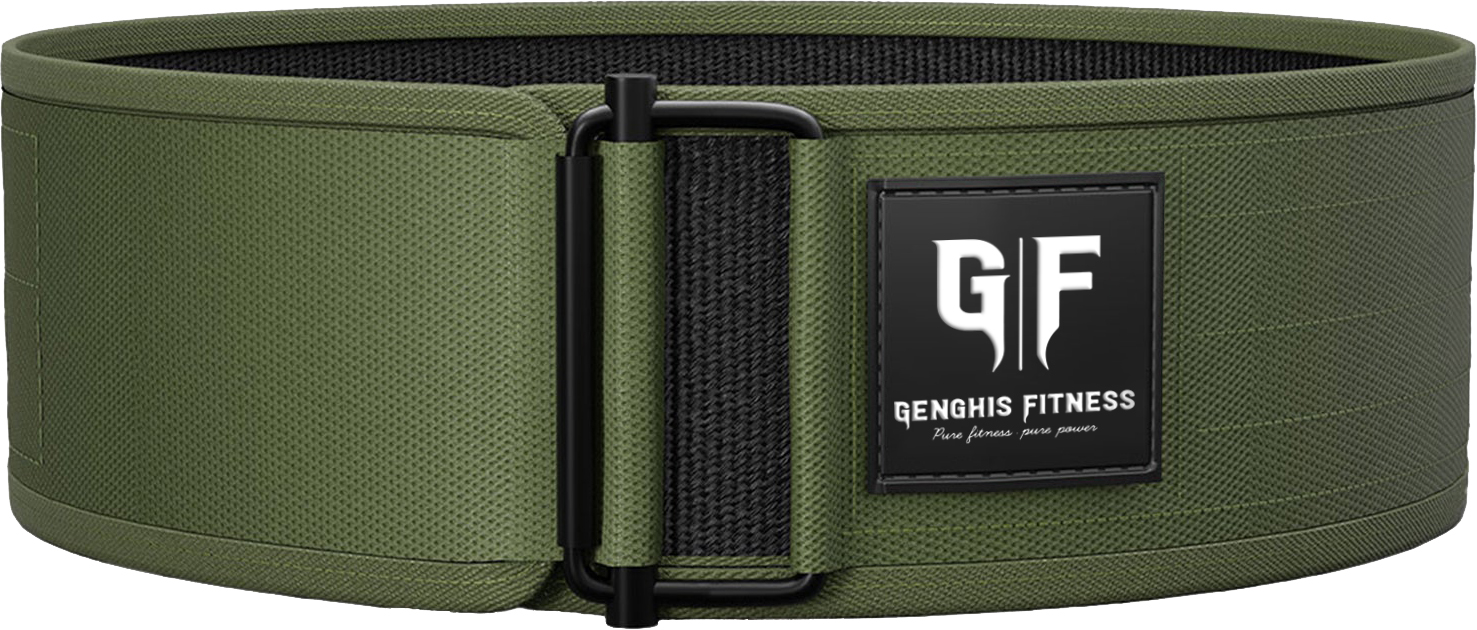
The nylon lifting belt excels across extended use for athletes who train across varied movement patterns. The velcro closure retains grip through dozens of training sessions before showing any reduction in hold strength, and the reinforced core maintains consistent stiffness without the break-in curve of leather. The primary long-term concern with velcro closure belts is velcro contamination: chalk and gym debris that accumulates in the velcro surfaces reduces hold strength. Regular velcro cleaning with a stiff brush restores full hold. Athletes who use chalk heavily in training should clean the velcro every 2 to 3 weeks to maintain hold strength.
4-Inch Leather Belt: Long-Term Assessment
The 4-inch leather weightlifting belt in prong closure configuration provides the adjustment flexibility that lever belts lack across a training year where bodyweight fluctuates between off-season and competition preparation. Athletes doing significant weight cuts or bulks between competition cycles find the prong’s hole-by-hole adjustment range more practical than the lever’s fixed setting. The leather quality evaluation criteria are the same as for lever belts: grain consistency, edge finishing quality, and stitching integrity are the tells for construction quality regardless of closure type.
Frequently Asked Questions
How Do You Know When a Belt Needs Replacing?
Leather belts rarely need replacing if maintained correctly. The end of a leather belt’s useful life is marked by structural cracking through the thickness of the leather at high-stress flex points, not surface cracking which is cosmetic. A leather belt that has developed full-thickness structural cracks at the flex zones has lost integrity and should be replaced. Quality leather belts maintained with conditioning every 4 to 6 months routinely last 10 to 20 years of regular training use. Nylon belts need replacing when the velcro hold is irretrievably compromised or when the core loses its stiffness, typically after 3 to 5 years of regular use.
Is a More Expensive Belt Always Better?
Above a quality threshold, additional price does not linearly translate to better performance. A full-grain leather belt at 80 to 120 dollars performs equivalently to a full-grain leather belt at 200 dollars for most athletes. Price differences above the quality threshold reflect brand premium, custom embossing, and marketing investment rather than functional performance differences. The material and construction quality variables described in this guide are a more reliable guide to belt performance than price alone. Our complete material comparison is in the belt material comparison guide.
Built to Last. Designed to Perform.
Leather and nylon belts built for years of serious training. Quality you can verify before you buy.
Shop 10mm Lever Belt Shop Nylon BeltWhen reading weightlifting belt reviews online, one thing stands out consistently across platforms from Reddit powerlifting communities to dedicated gear review sites: the lifters who are happiest with their belt choice are the ones who matched the belt type to their actual training style rather than buying based on brand name alone. A belt that gets five stars from a competitive powerlifter deadlifting 600 pounds may feel like overkill to a recreational lifter running three full-body sessions per week, and a soft flexible belt that works great for a CrossFit athlete will leave a serious squatter feeling unsupported on heavy working sets.
Another point that comes up repeatedly in honest belt reviews is the break-in period for full-grain leather. New leather belts are stiff, sometimes uncomfortably so, and first impressions are often negative. Lifters who push through those first few weeks consistently report that once the leather softens slightly and molds to the torso, the support quality is unmatched by any synthetic alternative. If you are evaluating a leather belt, give it a genuine trial period before forming a final opinion.
Sizing errors account for a large percentage of negative reviews across all belt categories. Measuring your waist incorrectly or ordering based on your pants size rather than a proper tape measurement leads to a belt that either gaps at the back or cannot close at all. Always measure your bare waist at navel height before ordering. A well-fitted belt from any reputable manufacturer will serve you far better than a premium belt in the wrong size, no matter how many stars it carries on a review page.
Certified strength and conditioning specialists with over 10 years of experience in powerlifting, nutrition, and evidence-based fitness content. Based in New York City.
TRAIN WITH EQUIPMENT THAT MATCHES YOUR EFFORT
Serious strength training demands serious gear. A lever belt, quality straps, and knee sleeves are not accessories. They are tools.
Lifting Straps Knee SleevesThe complete weightlifting belt guides answers every belt question in one place: which type suits your training, how to size correctly, how to break in leather, and how to brace with a belt for maximum intra-abdominal pressure.