USING WEIGHT LIFTING HOOKS: THE COMPLETE GUIDE TO WHEN AND HOW THEY WORK BEST
Using weight lifting hooks correctly requires understanding the specific application sequence, the exercise categories where hooks provide the best performance-to-convenience ratio, and the exercises where their limitations make alternative grip tools the better choice. Hooks are not a universal grip solution. They are a precision tool that provides the fastest application and release of any grip assistance device while sacrificing some of the tactile bar feedback and maximum loading security that strap alternatives provide. Matching hook use to the exercise contexts where their specific properties deliver the best outcomes is what makes them a high-value addition to a complete grip kit rather than a partial replacement for the other tools they complement.
THE APPLICATION SEQUENCE: FIVE TO TEN SECONDS EVERY SET
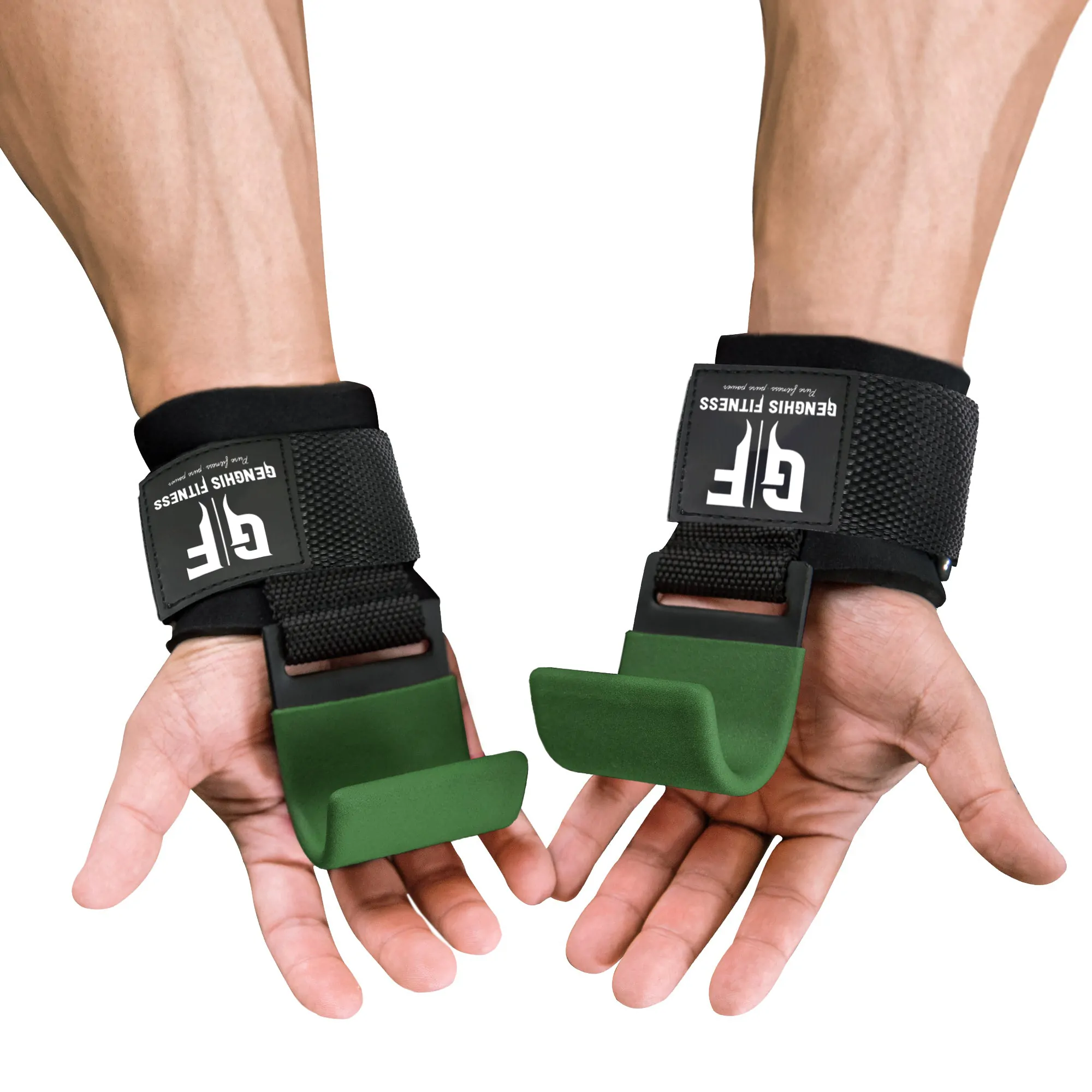
The application sequence for lifting hooks takes approximately five to ten seconds when the technique is established. Open the wrist strap, position the hook opening over the bar from above with the palm facing the bar, close and tighten the strap at the correct tension for the working wrist circumference, then grip the bar through the hook body. The hook engages the bar by hanging from it, with the bar resting in the curve of the hook rather than in the palm. The closing grip over the hook body provides stability during the exercise rather than grip force that must fight bar rotation. Research on grip fatigue and pulling exercise performance confirms that mechanisms that reduce grip activation demands allow better target muscle recruitment during pulling exercises, which is the mechanism through which hooks improve training quality during accessory pulling work.
BARBELL AND DUMBBELL ROWS: THE PRIMARY USE CASE
Barbell and dumbbell rows are the primary exercise category where weight lifting hooks deliver their clearest performance advantage. During multiple-set row training at moderate to heavy loading, the between-set application and removal time of loop straps accumulates into several minutes per session. With hooks, each application takes five to ten seconds and each removal is instantaneous: release grip and the hook slides free. For athletes who perform four to six sets of rows in a session with frequent loading adjustments between sets, this time saving represents a meaningful practical advantage that accumulates across every back training session in a training career.
SHRUGS AND RACK PULLS: SHORT SETS, HEAVY LOADS
Shrugs and rack pulls benefit from hook use for the same reason: they are pulling exercises at moderate to heavy loading where set duration is relatively short, transitions between loading increments are frequent, and the convenience advantage of hooks over straps is most meaningful. Heavy shrugs in particular, where the static grip demand per rep is high but the actual pulling range of motion is minimal, place sustained forearm flexor loading that accumulates into grip fatigue before the target trap and upper back musculature has reached adequate training stimulus. Hooks eliminate this forearm limitation without requiring the longer application time that strap wrapping demands between shrug sets.
CABLE EXERCISES AND ACCESSORY CIRCUITS
Lat pulldowns and cable rows in accessory circuits where exercises are cycled rapidly benefit from hooks when the loading is within the hook’s safe operating range. The fast transition that hooks provide between cable exercises is most valuable in training contexts where multiple exercises are performed in succession with minimal rest, as the hook’s release speed allows the athlete to move directly to the next exercise or loading position without the unwrapping time that loop straps require. For athletes who train in a circuit or superset format, hooks are the most practical grip tool for the pulling exercises within these sequences.
WHERE HOOKS ARE NOT THE RIGHT TOOL
The exercises where hooks are not the preferred grip tool are the near-maximum deadlift and rack pull attempts where absolute mechanical grip security is the priority. Figure 8 straps provide the closed-loop security that eliminates grip failure as a possibility at near-maximum loading in ways that hook design cannot replicate. The exercises where tactile bar feedback matters for technique quality control during heavy pulling, leather loop straps provide the full-grain leather surface contact that hooks’ metal interface does not. Hooks complement these tools by covering the moderate-intensity volume work where their speed advantage is most valuable and strap security and tactile feedback are secondary concerns.
WRIST STRAP TENSION: THE KEY VARIABLE FOR HOOK STABILITY
Correct wrist strap tension is the primary variable that determines hook position stability during exercises. A strap that is too loose allows the hook body to shift position during the pull, with the bar contact point moving unpredictably during the set. A strap that is too tight restricts wrist circulation during extended wearing across a full session. The correct tension allows the hook to remain in the same position throughout the full set without requiring the athlete to readjust between reps, while maintaining comfortable wrist blood flow during the rest periods between sets. Adjust the closure incrementally until this equilibrium is achieved, and verify by performing several practice reps before the first working set.
HARDWARE INSPECTION AND MAINTENANCE
Maintaining weight lifting hooks requires periodic visual inspection of the hook hardware and wrist strap. Check the hook metal for surface cracks, deformation at the bar contact curve, or wear at the strap attachment point that indicates the load the hook has sustained is approaching the material’s fatigue limit. Check the strap for fraying, particularly at the buckle or velcro closure areas where mechanical stress concentrates during tightening. Replace hooks at the first sign of material degradation rather than continuing to train with hardware whose load-bearing integrity is in question under dynamic pulling loads.
COMPLETE PULLING SETUP WITH HOOKS AND BELT
Pair hooks with a quality lever belt for the moderate-intensity pulling sessions where both convenience and spinal support are priorities. The belt manages the lumbar loading of heavy rows and shrugs. The hooks manage the grip demand. Together they address the two primary mechanical limitations in moderate-intensity accessory pulling work without the application time overhead that strap and prong-belt combinations require during sessions with frequent exercise and loading changes. Add loop straps and figure 8 straps to the grip kit for the loading contexts where hook properties are not optimal.
FINAL WORDS
Using weight lifting hooks effectively means applying them in the exercise contexts where their speed advantage outweighs their feedback and security limitations: barbell rows, dumbbell rows, shrugs, rack pulls, lat pulldowns, and cable rows at moderate to heavy loading across multi-exercise training sessions with frequent transitions. The Genghis Fitness weight lifting hooks are built with steel hook construction at the grade required for reliable performance across the loading range of serious training, with adjustable wrist strap closure for consistent positioning across different wrist circumferences. Master the five-second application sequence, inspect the hardware regularly, and let the convenience advantage of correctly used hooks make every back training session more efficiently structured. Athletes who build hooks into their accessory pulling sessions alongside loop and figure 8 straps for heavy compound work report that their back training volume increases measurably because the application overhead that was previously discouraging multiple transitions between pulling exercises at different cable or barbell stations is eliminated by the hook’s five-second transition time.
Certified strength and conditioning specialists with over 10 years of experience in powerlifting, nutrition, and evidence-based fitness content. Based in New York City.
For the complete collection of dip belt, arm blaster, and ankle strap guides, visit the gym accessories guides covering every gym accessory that extends what barbells alone cannot provide.