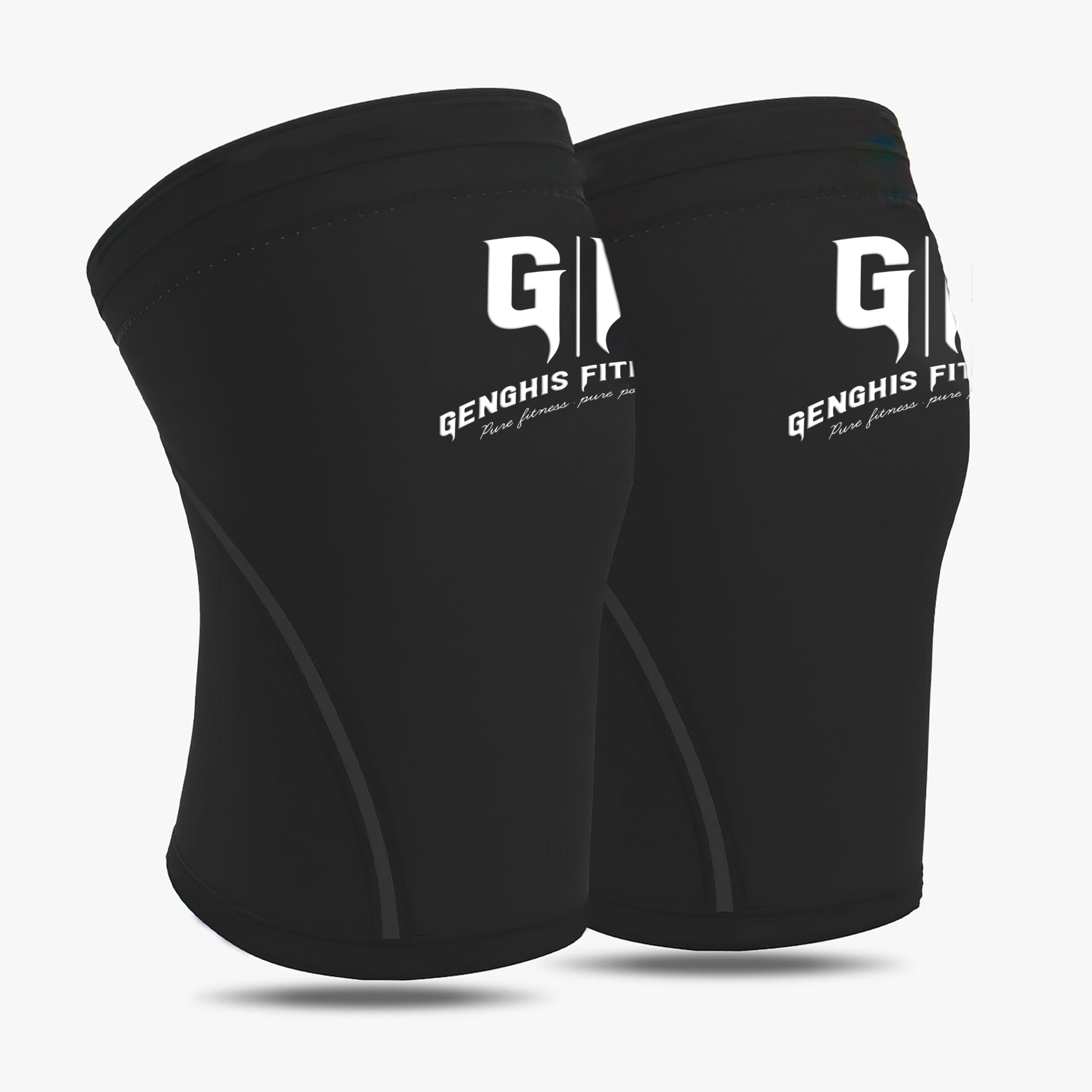
KNEE SLEEVES FOR LIFTING: THE THREE MECHANISMS THAT MAKE THEM WORTH WEARING EVERY SESSION
Knee sleeves for lifting are among the most consistently useful pieces of training equipment across strength sports, and their benefits extend well beyond the protection against cold joints that casual observers might attribute to them. The mechanisms through which knee sleeves improve lifting performance and support long-term joint health are specific, research-supported, and apply across the full range of lifting disciplines from powerlifting to Olympic weightlifting to general strength training. Understanding these mechanisms and using knee sleeves correctly as a result of that understanding produces better outcomes than wearing them out of habit or general protective instinct without knowing what they actually do.
MECHANISM 1: THERMAL RETENTION AND TISSUE MECHANICS
The thermal mechanism is the most immediately intuitive benefit of knee sleeves for lifting. Neoprene maintains elevated tissue temperature around the knee joint throughout the training session, including during rest periods between heavy sets when the joint would otherwise cool progressively. Research on thermotherapy and joint tissue mechanics demonstrates that warm joint tissue has better viscoelastic properties than cold tissue: it is less stiff, more capable of distributing mechanical stress across a wider contact area during loading, and more resistant to the acute strain injuries that cold, stiff tissue sustains under sudden loading. For lifters who train in cold environments or who experience knee stiffness during long rest periods between heavy sets, the thermal benefit is especially significant and immediately noticeable.
MECHANISM 2: PROPRIOCEPTIVE ENHANCEMENT UNDER LOAD
The proprioceptive mechanism is less intuitive but equally well-supported by evidence. Mechanoreceptors in the skin and soft tissues around the knee joint provide the nervous system with continuous feedback about joint position, movement direction, and loading force. Research on compression garments and joint proprioception confirms that the compression applied by knee sleeves activates these mechanoreceptors more consistently than bare skin, improving the quality and speed of proprioceptive feedback during dynamic loading. For lifters, this improved feedback means the nervous system receives clearer information about knee tracking position during the squat descent, enabling more precise motor corrections that keep the knee aligned over the foot and reduce the valgus collapse risk that accumulates under heavy loading and neuromuscular fatigue.
THE VALGUS COLLAPSE CONNECTION: WHY PROPRIOCEPTION MATTERS MOST IN HEAVY SETS
The valgus collapse connection is particularly relevant for athletes who train at high intensities. Research on hip abductor weakness and dynamic knee valgus identifies knee valgus collapse as the primary acute technique failure under heavy squatting when neuromuscular fatigue is present, and confirms that reduced proprioceptive feedback is a contributing mechanism to this failure mode. Athletes who train multiple heavy squat sessions per week, where the fifth and sixth sets of a demanding session are the highest-risk reps for technique failure, receive the most consistent proprioceptive benefit from sleeves worn throughout the full session. The sleeves maintain the feedback quality that bare knees lose under fatigue, extending technique integrity across the reps where it most matters for both performance and injury prevention.
MECHANISM 3: JOINT COMPRESSION AND FLUID MANAGEMENT
Compression knee sleeves also provide mild joint capsule compression that limits the accumulation of inflammatory fluid during and after high-volume squat training. Athletes who train lower body at high volumes without sleeves often notice visible knee joint puffiness and increased stiffness at the end of heavy sessions. The compression maintained by sleeves throughout the session limits the available space for this fluid accumulation and facilitates lymphatic drainage that clears inflammatory byproducts from the joint environment. This mechanism is less impactful than thermal and proprioceptive benefits for most athletes but contributes meaningfully for those training at the highest volumes who notice the most significant post-session joint response without sleeves.
SIZING: THE MOST IMPORTANT PURCHASE DECISION
Correct sizing is the most important purchase decision for knee sleeves for lifting. A sleeve that does not provide genuine compression against the knee joint delivers none of the proprioceptive or thermal benefits that make compression sleeves effective. Measure the circumference of the leg at the center of the kneecap and compare this measurement to the manufacturer’s sizing chart. When between two sizes, choose the smaller size for functional compression. The Genghis Fitness knee sleeves are sized based on kneecap center circumference, which is the most accurate measurement for predicting the compression level provided during squatting. A correctly sized sleeve requires deliberate effort to pull on but creates firm, functional compression rather than loose contact during training.
5MM VS 7MM: WHICH THICKNESS IS RIGHT FOR YOUR LIFTING
The 5mm versus 7mm neoprene choice affects compression level and range-of-motion comfort. 5mm neoprene is appropriate for general lifting, powerbuilding, and functional fitness training where full range of motion comfort is as important as compression level. 7mm neoprene is the competition powerlifting standard, providing maximum compression and a minor elastic rebound contribution at the expense of some range-of-motion comfort at deep squat positions. Most athletes outside of competition powerlifting are better served by 5mm, which provides all three functional mechanisms without the restriction that 7mm creates at the extreme end of squat depth.
HOW TO WEAR AND CARE FOR KNEE SLEEVES FOR LIFTING
Wear knee sleeves from the first warm-up set of every lifting session that includes knee-loading exercises. The thermal benefit accumulates progressively and the joint is best protected when it was warm before being loaded, not only when working sets are underway. Remove sleeves and air dry completely after every session before sweat can saturate and degrade the neoprene. Hand wash monthly with mild soap in cool water. Never machine wash or tumble dry. These practices maintain the elastic compression and thermal properties across the two to three year service life that well-maintained quality neoprene provides under regular heavy lifting use.
COMPLETE LOWER BODY SUPPORT SYSTEM
Knee sleeves for lifting work best as part of a complete lower body support system. Knee wraps provide the elastic rebound and maximum compression needed for the heaviest squat sets on maximum effort days, applied over the sleeves for the top working sets. A quality 10mm lever belt provides lumbar IAP support during all heavy compound lifting. Lifting straps eliminate grip as a limiting variable for heavy deadlift and pulling work within the same training sessions. The sleeves cover the knee joint across the full session. The wraps cover the heaviest sets. The belt covers the lumbar spine. The straps cover the grip. Together these tools address every major joint and performance variable in a complete lower body lifting program.
FINAL WORDS
Knee sleeves for lifting deliver three specific, research-supported benefits: thermal retention that improves joint tissue mechanics throughout the session, proprioceptive enhancement that improves technique quality under heavy loading and fatigue, and joint capsule compression that limits post-training inflammatory fluid accumulation. These benefits are most accessible when the sleeve is correctly sized for genuine compression, worn from the first warm-up set of every lower body session, and maintained with regular rinsing and periodic washing to preserve neoprene performance over its service life. The Genghis Fitness knee sleeves deliver these benefits through quality neoprene construction and correct sizing guidance. Use them on every lifting session that loads the knee joint and let the three-mechanism combination compound into better technique, joint health, and training consistency over a full training career.
Certified strength and conditioning specialists with over 10 years of experience in powerlifting, nutrition, and evidence-based fitness content. Based in New York City.
More sizing guides, care instructions, and sport-specific recommendations are collected in the knee sleeves, wraps and joint support guides for all four joint support categories in one location.