YOGA STRAPS: HOW THIS SIMPLE PROP UNLOCKS DEEPER STRETCHES AND FASTER FLEXIBILITY GAINS FOR ATHLETES
What a Yoga Strap Does That Nothing Else Can Replace
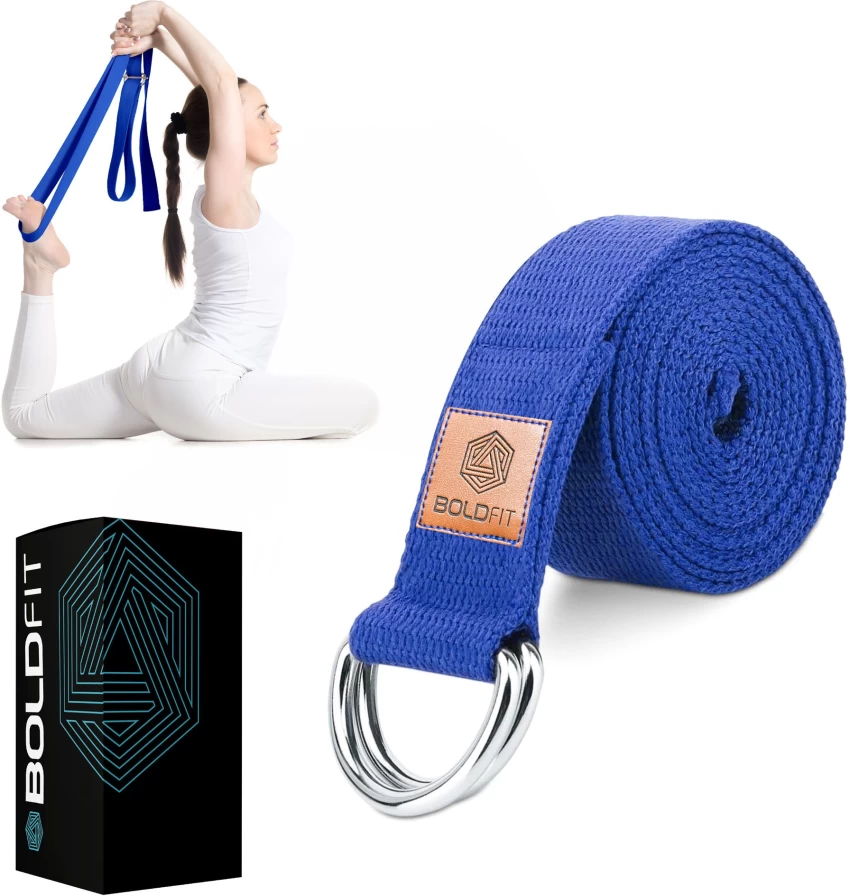
A yoga strap is a length of cotton or nylon webbing, typically 6 to 10 feet long, with a buckle or D-ring at one end that allows it to be formed into a loop of adjustable length. Its function is simple and transformative: it extends the reach of the hands when flexibility limits direct contact with the feet, ankles, or shins during stretching exercises. When you cannot grasp your foot directly in a seated forward fold because your hamstrings prevent the torso from folding far enough forward, a strap looped around the foot allows you to maintain the correct posture and spine length while still applying meaningful tension to the hamstrings. Without the strap, the only option is rounding the spine dramatically to close the distance, which stretches the lower back instead of the hamstrings. Research published in the International Urogynecology Journal confirmed that proper stretching alignment with props produces greater targeted tissue lengthening than compensated stretching without props. For athletes using yoga as a mobility tool alongside strength training, a strap turns correctly performed stretching into a sustainable daily practice that produces real flexibility gains rather than performed flexibility that does not actually lengthen the target tissues. Pair strap-assisted stretching with hip circle band activation work that strengthens the hip abductors through the new ranges of motion the straps help you access.
The Best Yoga Strap Exercises for Strength Athletes
Supine Hamstring Stretch With Strap
Lying on the back, loop the strap around one foot and extend that leg toward the ceiling, keeping it as straight as the hamstrings allow. Hold the strap ends with both hands and use the arms rather than the leg muscles to create the stretching tension. The other leg remains flat on the floor. This position provides a precise, adjustable hamstring stretch with the lower back fully supported and the pelvis in a neutral position. Hold for 90 seconds to three minutes per side. The strap allows you to gradually walk the hands up the strap toward the foot as the hamstrings lengthen across the hold, progressively deepening the stretch within each session and across weeks of consistent practice.
Seated Forward Fold Assist
Loop the strap around both feet in a seated forward fold and hold the strap ends rather than reaching for the feet directly. The strap allows you to sit tall with a long spine throughout the hold rather than rounding to close the distance between the hands and feet. With the spine long and the sit bones grounded, the hamstring stretch is isolated correctly and the lower back is not being used as a compensatory flexion point. Over weeks of consistent practice with the strap, the hands progressively walk closer to the feet on the strap as flexibility improves, and eventually the strap becomes unnecessary for the same pose.
Lying Quad and Hip Flexor Stretch
Lying on the stomach, loop the strap around one ankle and bend that knee to bring the heel toward the glute. Hold the strap over the shoulder and gently pull the foot closer to the glute using the strap to assist where hand-to-foot direct grip is not yet possible. This position stretches the rectus femoris and hip flexors of the bent leg in a loaded extension position that is highly effective for athletes with tight hip flexors from heavy squatting and prolonged sitting. Hold for 60 to 90 seconds per side.
Shoulder and Chest Opener
Hold the strap with both hands wider than shoulder width behind the body and raise both arms overhead, bringing the strap over the head to the front in a shoulder mobility drill. The width of the grip determines the intensity: the wider the grip, the more accessible the movement. Narrow the grip progressively as shoulder mobility improves. This is one of the most effective shoulder opening exercises available for athletes whose bench pressing and rowing volume has tightened the anterior shoulder and reduced internal shoulder mobility. The strap allows the movement to be performed at whatever width the current shoulder mobility allows rather than being limited to movements where the hands must touch. Complement this shoulder work with elbow sleeves on heavy pressing days to protect the joint through high-volume upper body training.
Hip Flexor and Pigeon Assist
In pigeon pose, loop the strap around the back foot and hold it over the same-side shoulder to assist in drawing the heel toward the glute. This adds a quad and hip flexor stretch component to the standard pigeon pose hip external rotator stretch, creating a more comprehensive hip opening. The strap makes this combination pose accessible to athletes who cannot reach the back foot in pigeon due to tightness in the hip flexors and quads of the rear leg, which is common in heavy squatters and powerlifters.
Choosing a Yoga Strap
Length
Six-foot straps work for most athletes of average height performing standard stretching exercises. Eight-foot straps provide more versatility for taller athletes and for exercises where a longer reach is needed, such as the overhead shoulder opener. Ten-foot straps are the most versatile but can feel unwieldy for shorter athletes performing exercises that do not require the full length. For most strength athletes starting with strap-assisted stretching, a six or eight-foot strap covers all primary applications effectively.
Buckle vs D-Ring Closure
Metal D-ring closures allow quick loop adjustment by sliding the webbing through the ring, which is convenient when progressively walking the hands up the strap within a hold. Buckle closures are slightly more secure but slower to adjust. For stretching applications where you want to adjust the loop size mid-hold as flexibility develops within the session, a D-ring or cinch buckle design is the more practical choice. Either closure type holds adequately for all standard stretching loads.
Building Strap-Assisted Stretching Into Your Training Week
The most effective approach to strap-assisted stretching is to perform it consistently three to four times per week for a minimum of eight weeks before evaluating results. Flexibility adaptation is slow compared to strength adaptation, and the temptation to abandon the practice before meaningful results appear is a common reason athletes see minimal long-term benefit from occasional stretching efforts. Commit to the practice for at least two months, measuring progress by noting which exercises have improved and where the strap is now positioned compared to eight weeks earlier.
Attach strap stretching to your existing post-training cool-down routine: two to three strap exercises for three minutes each adds only eight to ten minutes to any session and produces far more consistent practice than attempting to schedule yoga as a separate activity. Use the supine hamstring stretch and the shoulder opener after every session where those areas were loaded, and add the quad and hip flexor stretch after every lower body day. Combine this strap practice with hip circle band activation before training and you have a complete mobility system that bookends every session with appropriate preparation and recovery work.
FINAL WORDS
A yoga strap is one of the most affordable and highest-return training accessories available. It costs less than a single training session but extends the effectiveness of every stretching session you will do for years. Buy a quality strap, learn the exercises in this guide, practice them consistently, and watch the flexibility limitations that currently restrict your squat depth, your overhead position, and your hip hinge mechanics progressively resolve over weeks and months of committed practice. The athletes who reach the flexibility they want are not the ones with the best natural mobility. They are the ones who practice consistently with the right tools, including straps for stretching, knee sleeves and lifting belts for protection during heavy training, and the discipline to address both strength and mobility as equally important training priorities.
Certified strength and conditioning specialists with over 10 years of experience in powerlifting, nutrition, and evidence-based fitness content. Based in New York City.
The full lifting strap guides covers every strap decision: lasso vs figure-8, leather vs cotton, how to wrap correctly, when straps help versus when grip training matters more.