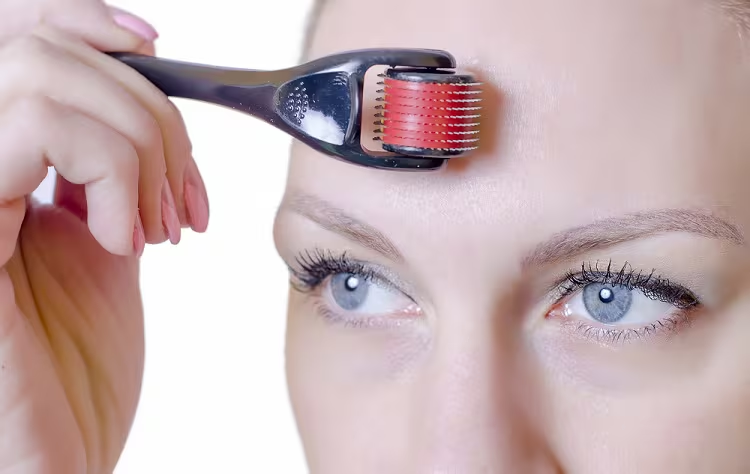
Benefits of Dermarolling: What the Science Says About Microneedling at Home
Dermarolling, also called microneedling, has moved from high-end dermatology clinics into most people’s bathroom cabinets over the last decade. The at-home version uses a roller covered in hundreds of tiny needles that create micro-punctures in the skin’s surface. The logic behind it is straightforward: controlled micro-injury triggers the skin’s wound-healing response, stimulating collagen and elastin production in the process.
Done correctly with the right device and proper technique, dermarolling produces measurable improvements in skin texture, scar appearance, and collagen density. Done incorrectly, it causes irritation, infection, and damage that takes weeks to repair. This guide explains the actual benefits, the science behind them, how to use a dermaroller safely, and what to realistically expect from consistent use.
How Dermarolling Works
When the micro-needles penetrate the skin, they create tiny channels that trigger the body’s repair cascade. The skin responds by releasing growth factors including platelet-derived growth factor and transforming growth factor beta, which stimulate fibroblast activity. Fibroblasts are the cells responsible for producing collagen and elastin, the structural proteins that give skin its firmness and elasticity. The result of repeated, controlled stimulation is increased collagen density in the dermis over weeks and months of consistent treatment.
Clinical research on professional microneedling is well-documented in journals indexed on PubMed. Studies have demonstrated statistically significant improvements in acne scar appearance, fine lines, skin texture, and overall skin quality through repeated microneedling sessions. The at-home version uses shorter needles (0.2 to 0.5mm) compared to professional treatments (0.5 to 2.5mm), which limits the depth of penetration and the intensity of the response, but still produces meaningful results with consistent use.
Documented Benefits of Dermarolling
Collagen Induction and Skin Firmness
The primary documented benefit of microneedling is collagen induction therapy. Multiple randomized controlled trials have confirmed that repeated microneedling sessions increase collagen type I and type III density in the dermis. The improvement in skin firmness and texture is measurable on clinical assessment and visible in before-and-after photography in most study participants after four to six sessions spaced two to four weeks apart.
This collagen-building effect is why dermarolling has particular appeal for people in their thirties and beyond, when natural collagen production begins declining at roughly one percent per year. Regular microneedling does not halt aging, but it does provide a mechanical stimulus for collagen synthesis that is difficult to achieve through topical products alone, which cannot penetrate deep enough to trigger the dermal response that needles can.
Acne Scar Improvement
Atrophic acne scars, which are the depressed, pitted scars that result from inflammatory acne, respond particularly well to microneedling because the collagen remodeling process fills in the depressed areas from below. Multiple clinical studies have reported significant improvement in scar depth and appearance after three to six microneedling sessions. Results are comparable to those achieved with more aggressive treatments like fractional laser resurfacing in several head-to-head studies, at a fraction of the cost.
The mechanism works by breaking up the fibrous scar tissue beneath the depression and stimulating the growth of new, normally-organized collagen in its place. Results take several months to fully materialize because collagen remodeling is a slow biological process. Expecting overnight results leads to disappointment and over-treatment. Expecting gradual, consistent improvement over three to six months is realistic and borne out by the research.
Stretch Marks
Stretch marks are essentially scars caused by rapid stretching of the dermis, common during growth spurts, pregnancy, and significant weight changes in either direction. The collagen induction mechanism of microneedling applies here the same way it does for acne scars. Several studies have shown improvement in stretch mark appearance, color, and texture after multiple microneedling sessions, though results for older, white stretch marks are more modest than for newer, reddish ones where active remodeling is still possible.
Enhanced Topical Product Absorption
The micro-channels created by dermarolling temporarily increase the skin’s permeability to topical products applied immediately after treatment. Serums containing vitamin C, hyaluronic acid, retinol, and growth factors penetrate significantly deeper during this window than they would through intact skin. This is one reason many dermarolling protocols pair the treatment with a high-quality serum applied immediately after rolling.
This benefit requires careful attention to product selection. Only apply products with clean, simple formulations and known safe ingredients immediately after dermarolling. Anything with fragrance, alcohol, or potentially irritating actives at high concentrations should be avoided in the post-rolling window because the enhanced absorption works in both directions and can drive irritants deeper into the skin than you would want.
How to Use a Dermaroller Safely at Home
Choosing the Right Needle Length
For at-home use, 0.2 to 0.3mm needles are appropriate for general skin texture improvement and product absorption enhancement. These lengths do not reach the dermis and create superficial stimulation only. For collagen induction, 0.5mm is the minimum effective length for home use, but this depth requires careful technique and more recovery time between sessions. Lengths above 0.5mm are better left to professional clinical settings where sterility, technique, and post-treatment care can be properly controlled.
Technique and Frequency
Roll the device in three directions over each area: vertical, horizontal, and diagonal. Apply light to moderate pressure, enough for the needles to engage the skin without dragging. Roll each direction three to four times before moving to the next area. Avoid the delicate skin directly around the eyes and lips unless using the very shortest needle lengths designed specifically for those areas.
For 0.5mm needles, use the roller no more than once every two to four weeks to allow adequate collagen recovery time between sessions. For 0.2 to 0.3mm lengths, more frequent use is possible because the depth of penetration is minimal. Always disinfect the roller with isopropyl alcohol before and after each use, and replace the roller head every three to six months as the needles dull with use.
Before and After Care
Cleanse your face thoroughly before rolling. Use a gentle, alcohol-free cleanser and ensure there is no active irritation, sunburn, rosacea flare, or active acne in the treatment area. Immediately after rolling, apply a fragrance-free hyaluronic acid serum or peptide serum while the skin is slightly flushed. Avoid retinol, vitamin C, and exfoliating acids for twenty-four hours post-treatment. Apply SPF the following morning because the skin is more photosensitive after treatment.
The redness and slight puffiness that occurs immediately after dermarolling typically resolves within two to four hours for short needle lengths and up to twenty-four hours for 0.5mm treatments. This is a normal inflammatory response and part of the process. If redness persists beyond twenty-four hours or you develop pustules, swelling, or significant pain, discontinue and consult a dermatologist. Physical recovery is non-negotiable in skincare the same way it is in training. Tools like elbow sleeves protect joints during heavy sessions for exactly the same reason: managing the recovery process properly determines long-term results.
Who Should Avoid Dermarolling
Dermarolling is not appropriate for everyone. People with active acne, eczema, psoriasis, rosacea in the treatment area should not use a dermaroller on affected skin because the micro-injury can spread bacteria, worsen inflammation, and cause flares. Anyone taking blood thinners or isotretinoin (Accutane) should avoid microneedling because the wound-healing response is impaired or the skin is too sensitized for mechanical injury.
Keloidal skin, meaning skin prone to raised keloid scar formation, is also a contraindication for dermarolling. The collagen stimulation that produces desirable improvements in most people can trigger excessive scar tissue formation in keloidal skin. When in doubt, a consultation with a board-certified dermatologist before starting at-home microneedling is always the right call.
What Results to Realistically Expect
With consistent use at 0.5mm needle depth once every three to four weeks, most people see noticeable improvement in skin texture and mild fine lines within six to eight weeks. Acne scar improvement typically requires four to six sessions over three to four months before significant change is visible. Stretch marks respond more slowly and require six or more sessions for measurable improvement.
Photography under consistent lighting conditions is the most reliable way to track progress because skin changes happen gradually and are easy to underestimate when you look at your face every day. Take a standardized photo every four weeks before your next treatment session. The comparison over three to six months will show you what the daily mirror cannot. Apply the same long-term measurement mindset to your training by tracking lifts and body composition over months rather than days.
FINAL WORDS
Dermarolling works when done correctly, with appropriate needle lengths, proper technique, clean equipment, and realistic expectations about the timeline for results. The collagen induction, scar improvement, and product absorption benefits are supported by credible clinical research. Approach it with the same discipline you bring to your training: consistent effort, correct form, adequate recovery, and patience for the process to produce results. That combination works in the gym and it works on your skin too. For everything you need to train at your best, the hip circle bands and ankle straps at Genghis Fitness are ready when you are.
Certified strength and conditioning specialists with over 10 years of combined experience in powerlifting, nutrition coaching, and evidence-based fitness content. Based in New York City, the Genghis Fitness team tests every protocol in the gym before writing about it.