ANKLE STRAPS MATERIAL GUIDE: NEOPRENE VS LEATHER VS NYLON AND HOW TO CHOOSE THE RIGHT ONE
Why Ankle Strap Material Affects Your Training
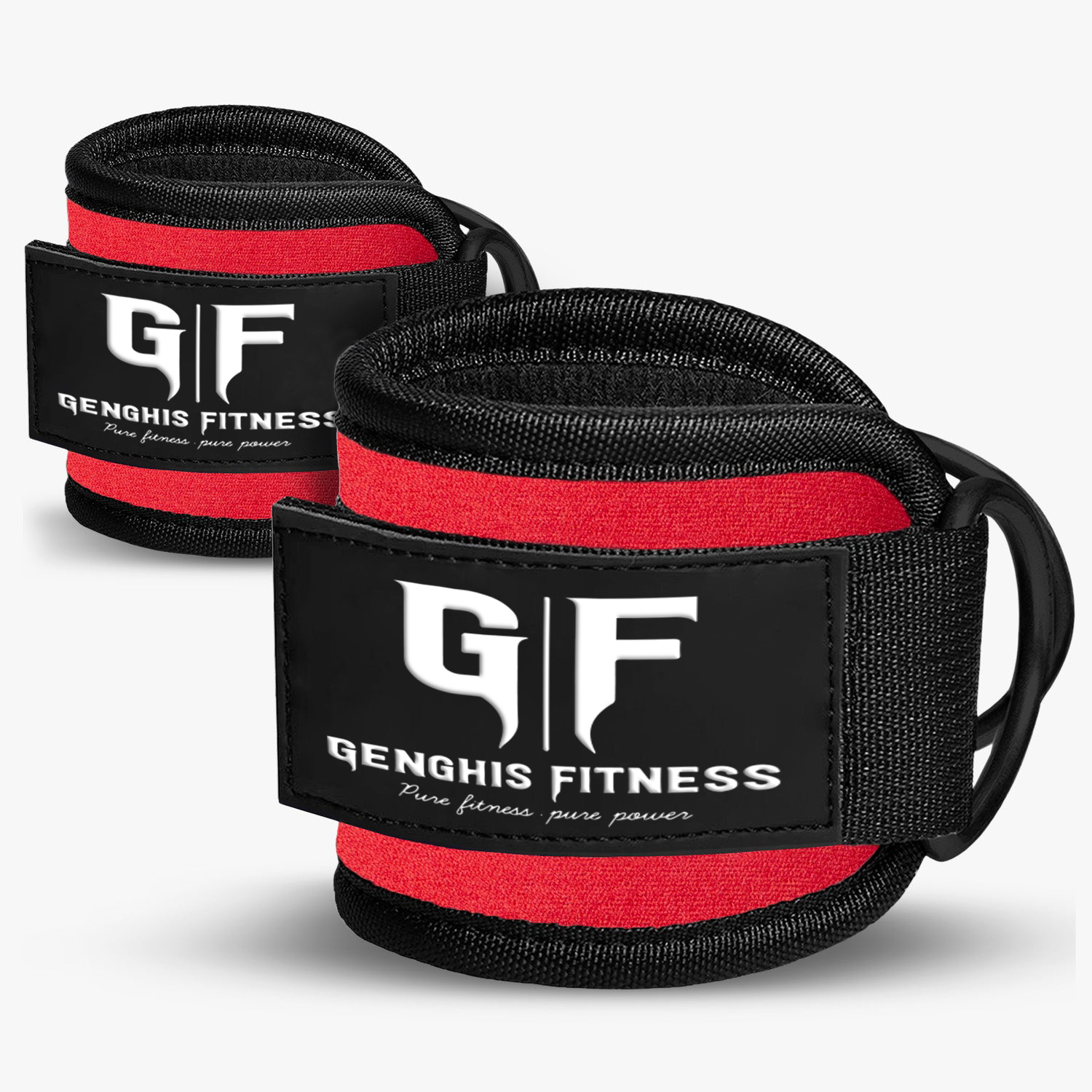
An ankle strap for cable machine training is a simple tool with a deceptively important material decision at its core. The strap wraps around the ankle and attaches to the cable machine, allowing you to perform hip extension, abduction, flexion, and hamstring curl movements against cable resistance. During these exercises the strap must stay in position on the ankle through multiple repetitions of dynamic leg movement without slipping, rotating, or digging into the ankle bones. The material determines how well it stays in position, how comfortable it is during extended use, how durable it is across thousands of repetitions, and how easy it is to clean after sweaty sessions. Quality ankle straps for cable machines from Genghis Fitness are built to meet all four criteria. Understanding the material differences lets you make the best choice for your specific training needs.
Neoprene Ankle Straps
Performance Characteristics
Neoprene ankle straps combine the compression properties of closed-cell foam with a grippy surface texture that prevents the strap from rotating or slipping during dynamic leg movements. The foam material conforms slightly to the shape of the ankle, distributing the cable load across a broader contact area than a stiff material would. This load distribution is particularly important for athletes with smaller or bony ankles where a rigid strap would concentrate pressure on the malleolus bones and create discomfort that shortens sets prematurely. Neoprene also retains warmth around the ankle joint, which may be a minor benefit during cold-environment training but is not a primary performance factor for most users.
Durability and Maintenance
Neoprene ankle straps typically last 12 to 18 months of regular training use before the foam begins to lose its structural integrity and the surface texture wears smooth. They clean easily with a cold-water hand wash and mild detergent, air drying completely before storage. Never machine wash or tumble dry neoprene, which degrades the closed-cell foam structure irreversibly. The D-ring attachment point is the area most likely to show early wear; inspect it before each session for any separation between the D-ring and the strap material.
Leather Ankle Straps
Performance Characteristics
Leather ankle straps are the most durable material option and the choice of athletes who train heavy cable work multiple times per week for years. Vegetable-tanned or top-grain leather provides a stiff, stable cuff that does not flex or deform under the force of heavy cable resistance, maintaining a consistent cable load direction throughout every rep. Leather grips the ankle skin slightly rather than sliding, which helps maintain strap position during dynamic movements better than smoother synthetic materials. Over time, leather ankle straps conform to the shape of the individual ankle through use, creating a custom-feeling fit that synthetic materials cannot replicate.
Break-In and Care
New leather ankle straps require a brief break-in period of three to four weeks during which the leather is slightly stiff and may leave mild redness marks on the ankle skin. This resolves as the leather softens with use. Apply a small amount of leather conditioner to the inner contact surface before the first few sessions to accelerate the softening. After break-in, maintain leather ankle straps by wiping down with a dry cloth after each session, applying conditioner every four to six weeks to prevent drying and cracking, and storing away from direct sunlight and heat. A quality leather ankle strap maintained this way lasts three to five years, far outlasting neoprene or nylon alternatives.
Nylon Ankle Straps
Performance Characteristics
Nylon ankle straps are the most affordable and lightest option. They use woven nylon webbing as the strap body, which is strong and resistant to tearing under normal cable training loads. The primary limitation of nylon compared to neoprene and leather is comfort during extended use. Nylon webbing does not provide the cushioning of neoprene foam or the conforming comfort of broken-in leather, which can make high-rep sets with heavy cable resistance uncomfortable at the ankle contact points if the strap is cinched tightly enough to prevent slipping. Nylon straps with a neoprene or foam inner lining address this limitation and are a significant upgrade over bare nylon webbing for anyone doing serious cable lower body work.
Cleaning and Longevity
Nylon ankle straps are the easiest to clean of the three material types. They can be hand-washed in cool water with mild detergent and air dried, and they tolerate this treatment more frequently than leather or neoprene without material degradation. Durability depends heavily on the stitching quality at the D-ring attachment and the buckle or Velcro closure. The nylon webbing itself is very durable, but failure at the attachment hardware stitching is the common failure mode for lower-quality nylon straps. Inspect these attachment points regularly.
D-Ring and Closure System: What Matters Beyond the Material
D-Ring Load Rating
The D-ring is the connection point between the ankle strap and the cable machine attachment. It must be rated to handle the tensile loads of cable training, which for glute kickbacks and hip abductions at meaningful cable weights can exceed 100 to 150 pounds of force at the D-ring. A D-ring made from welded solid steel handles this load safely. A cast D-ring or a poorly welded ring can fail under sustained heavy loading. Check that any ankle strap you purchase specifies a solid steel D-ring and that it shows no flexing or deformation when you pull on it with significant manual force before trusting it under cable load.
Closure Security
The closure system holds the strap around the ankle and must not allow slipping or rotation during dynamic leg movements. Velcro closures are fast and adjustable but can accumulate chalk and sweat debris that reduces holding strength. Buckle closures are more secure but slower to adjust. The best ankle straps for serious cable training use a combination of a padded inner surface that grips the ankle naturally and a closure that provides at least two contact points of adjustment for a snug, non-slip fit regardless of ankle size. Genghis Fitness ankle straps use a closure system designed specifically to handle the rotational forces that cable hip exercises produce without slipping.
Choosing the Right Material for Your Training
For athletes doing occasional cable lower body work as an accessory movement, neoprene ankle straps provide the best combination of immediate comfort and adequate durability at a reasonable price. For athletes who train cable glute and hip work three or more times per week as a primary training stimulus, leather ankle straps provide superior durability and the best long-term fit through the break-in and conformation process. For athletes on a tight equipment budget who need a functional starting point, a quality padded nylon strap with solid D-ring hardware is a reasonable entry point that covers the basic function adequately.
Do not sacrifice D-ring quality for material preference. A neoprene strap with a solid welded steel D-ring is safer and more effective than a leather strap with a cast or poorly constructed ring attachment. The cable load hits the D-ring on every rep. It needs to be the strongest component in the system, regardless of what the strap body is made from.
FINAL WORDS
The material of your ankle strap determines comfort, durability, and maintenance requirements across your cable lower body training. Neoprene for comfortable all-around use at moderate frequency. Leather for serious daily training volume with the best long-term fit. Nylon for a budget-friendly starting point with padded liner upgrade. Whatever material you choose, verify the D-ring is solid welded steel and the closure holds securely under real training loads before trusting it with your heaviest cable work. Get the right Genghis Fitness ankle strap for your training frequency and build the glute and hip strength that translates into better performance in every other movement you do.
Certified strength and conditioning specialists with over 10 years of experience in powerlifting, nutrition, and evidence-based fitness content. Based in New York City.
Browse all related guides in the gym accessories guides for how-to guides, buying recommendations, and training applications across every gym accessory.