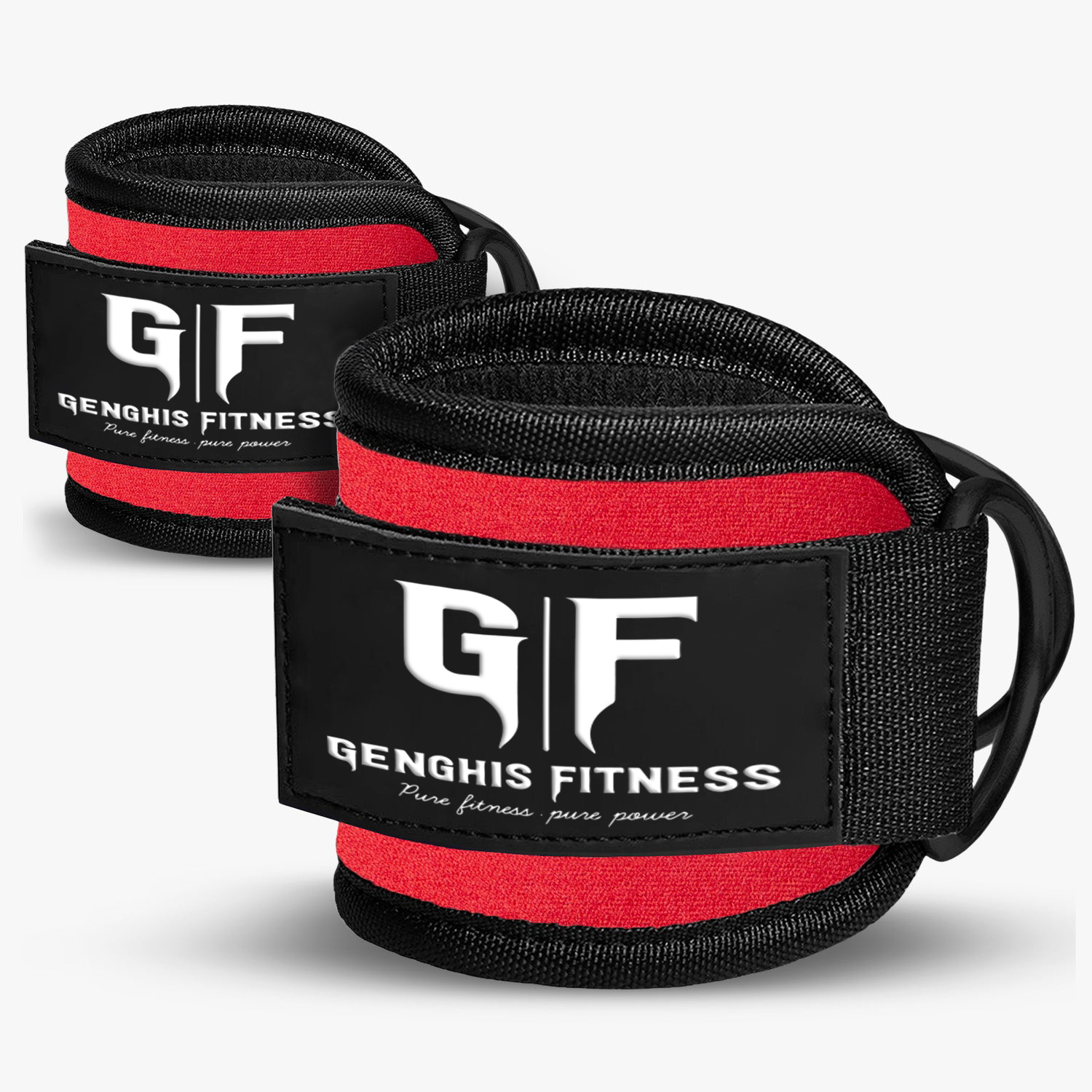
ANKLE STRAPS WITH PADDING: THE COMPLETE BUYER’S GUIDE FOR CABLE MACHINE TRAINING
Ankle straps for cable machines are simple accessories that unlock a wide range of lower body and glute isolation exercises that are impossible to replicate with free weights alone. Choosing the right ankle strap, specifically one with adequate padding and a secure attachment mechanism, makes the difference between a comfortable and effective training tool and one that cuts into your skin, slips during sets, and kills your focus. This guide covers everything you need to know to pick the right padded ankle strap and use it correctly.
WHY PADDING MATTERS
An unpadded ankle strap applies cable force directly to the bony prominences and soft tissue of the ankle through only a thin neoprene or nylon layer. Under load, especially on exercises like cable kickbacks and leg abductions where significant force is transferred to the ankle, this creates localized pressure that causes discomfort within a few sets and can lead to skin bruising and irritation over repeated use.
Padded ankle straps distribute the load across a wider surface area through a thick neoprene, foam, or gel padding layer that conforms to the ankle contour. This pressure distribution eliminates the localized discomfort that interrupts focus during working sets and allows higher rep ranges and heavier loads without the skin irritation that cuts training sessions short.
KEY FEATURES TO LOOK FOR
PADDING THICKNESS AND MATERIAL
Neoprene padding of at least 10mm thickness provides adequate cushioning for most training loads. Gel-infused neoprene offers superior pressure distribution and is worth the additional cost for athletes who perform high-volume cable work. Foam padding degrades faster than neoprene under sweat and repeated compression and should be avoided in higher-end options.
ATTACHMENT MECHANISM
The D-ring attachment connecting the strap to the cable machine pulley should be a solid steel or stainless steel ring of at least 4 to 5mm gauge. Lightweight aluminum D-rings bend under heavy loads and create safety hazards. The strap-to-D-ring connection should be double-stitched and reinforced with a box-X stitch pattern for maximum durability under directional force.
CLOSURE SYSTEM
Hook-and-loop Velcro closure is the most common system and works well when the Velcro is wide enough, typically 50mm or more, to distribute the clamping force and prevent the strap from twisting under load. Buckle closure systems provide more consistent tension but take longer to adjust and can dig into the ankle if improperly fitted. Double Velcro closure straps with overlapping panels provide the most secure fit.
BEST EXERCISES WITH PADDED ANKLE STRAPS
Cable kickbacks are the most popular ankle strap exercise, targeting the gluteus maximus through hip extension against cable resistance. Position the cable at the lowest pulley setting, attach the strap to the working leg, face the machine, and extend the leg backward with a controlled motion. The cable provides constant tension throughout the movement that free weights cannot replicate.
Cable lateral leg raises target the gluteus medius, the hip abductor responsible for lateral hip stability and the wide-hipped aesthetic associated with developed glutes. Standing side-on to the machine, raise the working leg away from the body against cable resistance. This movement is particularly valuable for athletes whose sport demands lateral stability including basketball, tennis, and soccer players.
Straight-leg cable pull-throughs, cable hip adductions, and lying cable hamstring curls round out the most effective ankle strap exercise menu. Pairing ankle strap work with the hip circle band exercises covered in our guide to hip circle bands creates a comprehensive glute and hip isolation approach that targets all three gluteal muscles through distinct movement patterns.
SIZING AND FIT
Most ankle straps are adjustable across a range of ankle circumferences, typically 8 to 12 inches for standard sizing. Measure your ankle circumference at the narrowest point above the ankle bones before purchasing to confirm a given strap’s range covers your size. The strap should feel snug without restricting circulation, and you should be able to fit one finger under the strap when properly fastened.
Straps that are too loose rotate during exercises, concentrating force on one side of the ankle and undermining both comfort and movement quality. Straps that are too tight restrict blood flow and cause numbness during higher-rep sets. Taking a minute to adjust the fit properly at the start of each session ensures optimal comfort and performance throughout the workout.
CARE AND MAINTENANCE
Neoprene ankle straps should be rinsed with fresh water after each use to prevent sweat salt crystallization that degrades the neoprene and Velcro over time. Wipe the D-ring with a dry cloth to prevent rust on steel hardware. Air dry rather than machine wash or tumble dry, as heat damages neoprene elasticity and Velcro hook fibers.
Inspect D-rings and stitching at the D-ring connection point regularly for signs of wear. A bent D-ring or fraying stitching at the attachment point represents a failure risk under load and should be replaced before the strap is used for heavy work. Quality padded ankle straps from reputable fitness equipment brands typically last two to three years with regular use and proper care.
PROGRAMMING ANKLE STRAP WORK INTO YOUR LOWER BODY ROUTINE
Ankle strap cable exercises work best when programmed as isolation finishers after compound lower body movements rather than as primary exercises. Squats, Romanian deadlifts, and hip thrusts develop the foundational strength and mass in the glutes, hamstrings, and quads. Cable kickbacks, lateral raises, and pull-throughs then isolate the specific muscles and movement patterns that compound movements cannot load in isolation with the same precision.
Three to four sets of twelve to twenty repetitions per exercise is the appropriate rep and set range for ankle strap isolation work, targeting the metabolic stress and time-under-tension that drives hypertrophy in muscles that are secondary movers in compound lifts. The mind-muscle connection during slow, controlled ankle strap exercises is critical for activation quality. Moving fast and relying on momentum defeats the purpose of isolation work that these exercises are designed to provide.
ANKLE STRAPS VERSUS RESISTANCE BANDS FOR GLUTE ISOLATION
Both ankle cable straps and resistance bands isolate glute and hip muscles effectively, but through different resistance profiles. Cables provide constant tension throughout the entire range of motion as the resistance is load-dependent rather than distance-dependent. Resistance bands provide progressive tension that increases as the band stretches and then releases tension at the shortened position.
The constant tension of cable machines is generally superior for muscle hypertrophy training because it maintains high mechanical tension throughout the full range of motion rather than reducing it at the most shortened position where the muscle is typically weakest. For glute isolation specifically, the constant tension from cable kickbacks produces more consistent activation across the movement range than band kickbacks that lose tension at the peak contraction point. The hip circle band complements cable work by adding variable resistance during warm-up activation and bodyweight exercises where cable access is unavailable.
FINAL WORDS
A quality padded ankle strap is an inexpensive investment that substantially expands the range of effective lower body and glute exercises available in any gym with a cable machine. The padding is non-negotiable for regular use at meaningful loads. Steel hardware, double stitching, and wide Velcro closure are the three quality indicators worth paying attention to when comparing options. Get the right strap, adjust it properly, and the cable machine becomes one of the most versatile tools in your lower body training toolkit.
Certified strength and conditioning specialists with over 10 years of experience in powerlifting, nutrition, and evidence-based fitness content. Based in New York City.
For the complete collection of dip belt, arm blaster, and ankle strap guides, visit the gym accessories guides covering every gym accessory that extends what barbells alone cannot provide.