BARBELL HACK SQUAT: THE OLD-SCHOOL QUAD BUILDER THAT DESERVES A PLACE IN YOUR LEG PROGRAM
What the Barbell Hack Squat Is
The barbell hack squat is performed with the barbell positioned behind the body, held at arms length just below the glutes, and involves squatting down and standing back up with the bar dragging close to the back of the legs throughout the movement. It was a staple exercise of early-twentieth century strongmen and bodybuilders before the leg press machine and hack squat machine became ubiquitous in commercial gyms, and it produces a unique quad-dominant loading stimulus that is genuinely difficult to replicate with other free weight exercises. The behind-the-body bar position forces a more upright torso than a conventional barbell squat, shifting the center of mass forward and increasing the relative demand on the quadriceps compared to the posterior chain. Research published in the Journal of Strength and Conditioning Research confirmed that more upright torso positions during squatting produce significantly greater quad activation relative to posterior chain involvement, which is exactly what the barbell hack squat position creates. Protect the knees through the forward knee travel this exercise demands with quality knee sleeves.
How to Perform the Barbell Hack Squat
Setup
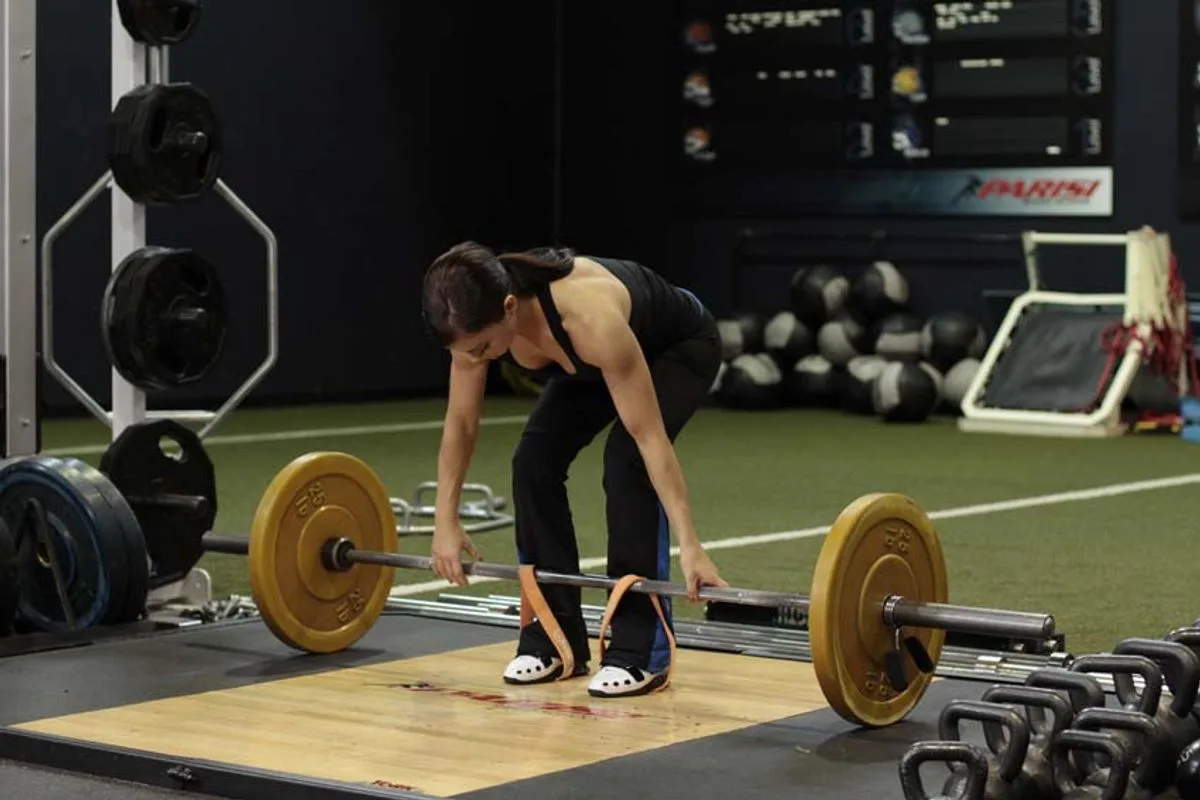
Stand with a barbell on the floor behind your feet. Feet are at roughly shoulder width, toes pointed slightly outward. Hinge down and grip the bar with an overhand grip, hands just outside the hips. The bar should be touching or very close to the back of the ankles in this starting position. Use lifting straps on working sets to avoid grip fatigue limiting the quality of leg work.
The Lift
Drive through the heels to stand upright, keeping the bar close to the back of the legs throughout the ascent. The bar will naturally drag up the back of the calves and hamstrings as you rise. At the top, stand fully upright with the hips locked out. Lower under control by bending the knees and hinging at the hips, keeping the bar close to the legs throughout the descent. The bar must stay very close to the body on both the ascent and descent for the upright torso position to be maintained. If the bar drifts away from the body, the torso will pitch forward and the exercise loses its quad-dominant character.
Common Difficulty: Bar Clearance at the Bottom
The most common challenge in the barbell hack squat is that the bar contacts the back of the legs as the depth increases, which limits how deep many athletes can go before the bar is physically blocked by their calves. Heel elevation of 1 to 2 inches on plates shifts the shin angle forward enough to create additional clearance for the bar at depth, which is why most hack squat practitioners use some degree of heel elevation. The heel elevation also further increases the upright torso angle and quad emphasis, making it a technique that serves both clearance and training purposes simultaneously.
Why Barbell Hack Squats Produce Unique Quad Development
The barbell hack squat loads the quads through a forward-knee, upright-torso pattern that is mechanically similar to the machine hack squat but provides the free weight stability demand that machine movements eliminate. The result is a quad exercise that produces both the targeted quad stimulus of machine work and the stabilizer and coordination demands of free weight training in the same movement. For athletes who do not have access to a hack squat machine, the barbell variation delivers the same training intent with just a barbell and floor space. For athletes who have both available, alternating between them prevents the adaptation that occurs when the same mechanical stimulus is repeated identically across weeks. Complement barbell hack squats with hip circle band warm-up work before each session and finish with leg extensions for additional quad isolation volume.
Programming Barbell Hack Squats
Use the barbell hack squat as an accessory quad exercise after primary back squats or as a primary quad movement on a second weekly leg session. Three to four sets of 8 to 12 reps with progressive loading across training blocks produces the consistent overload needed for quad development. The grip demand of holding the barbell behind the body makes straps essentially mandatory for heavier working sets. Start lighter than you expect to need: the unusual bar position makes the movement feel mechanically awkward for the first several sessions, and the load can be increased rapidly once the mechanics become familiar. Within four to six weeks of consistent practice most athletes find the barbell hack squat as natural as any other squat variation.
For athletes who want a complete quad-dominant lower body session without a hack squat machine, pair barbell hack squats with heel elevated goblet squats and leg extensions for a thorough quad training session that requires only a barbell, dumbbells, and a leg extension machine or cable setup. Use a lifting belt for spinal support on heavier hack squat sets and knee sleeves throughout the session to keep the joint warm through the full quad-dominant volume.
Barbell Hack Squat vs Machine Hack Squat: Key Differences
The machine hack squat places the athlete in a fixed movement path with back support, which reduces the stabilizer and coordination demand but allows heavier loading and a more isolated quad stimulus. The barbell hack squat requires free balance throughout the movement, activating the stabilizing muscles of the ankle, knee, and hip that machine movements bypass. For athletes building a well-rounded lower body that performs as well as it looks, the barbell variation develops functional strength and movement coordination alongside the quad size. For athletes specifically chasing maximum quad isolation volume, the machine version allows higher loads with less systemic fatigue. The two exercises are best understood as complementary tools that cover different aspects of quad development rather than substitutes where one is categorically superior.
A practical approach for athletes with access to both: use machine hack squats as the primary quad-focused movement on one of two weekly leg sessions, where the controlled path and higher loads provide a strong hypertrophy stimulus, and use barbell hack squats on the second leg session as a free weight quad builder that also develops stability and coordination. This rotation provides variety that prevents movement-specific adaptation, reduces the monotony that leads athletes to abandon effective exercises through boredom, and trains the quad from slightly different mechanical angles within the same weekly training structure. Support both variations with knee sleeves throughout every quad-focused session and with lifting straps on barbell hack squat working sets to ensure grip security through the behind-the-body bar position.
Building Toward Heavier Barbell Hack Squat Loads
Most athletes who try barbell hack squats for the first time are humbled by how difficult the bar position makes maintaining balance and achieving depth compared to conventional squats. The first four to six sessions should use lighter loads than feel challenging, focusing on the mechanical skill of keeping the bar close to the body, achieving consistent depth, and maintaining an upright torso throughout. Once this pattern is grooved, load can be added progressively every one to two weeks in the same manner as any other squat variation. Athletes who progress the barbell hack squat patiently from this skill-development base consistently find that it becomes a loaded and effective quad exercise within six to eight weeks. The initial awkwardness is simply the motor learning period for an unfamiliar movement, not evidence that the exercise does not work or is not suited to the athlete’s mechanics. Track barbell hack squat loads and reps alongside other key lifts and apply the same progressive overload commitment that drives results in conventional squats and leg presses.
FINAL WORDS
The barbell hack squat is an old exercise that most modern gym athletes have never tried and most would benefit from adding to their leg training. It produces superior quad stimulus through the upright torso position that behind-the-body bar placement creates, requires no specialized equipment beyond a barbell, and provides the free weight stability challenge that machine alternatives cannot match. Add heel elevation, use lifting straps for grip security, protect the knee with Genghis Fitness knee sleeves, and build the quad development this underused classic produces.
Certified strength and conditioning specialists with over 10 years of experience in powerlifting, nutrition, and evidence-based fitness content. Based in New York City.
GEAR UP FOR SQUATS
Protect your knees and brace your core harder with the right equipment.
10mm Lever Belt Knee Wraps