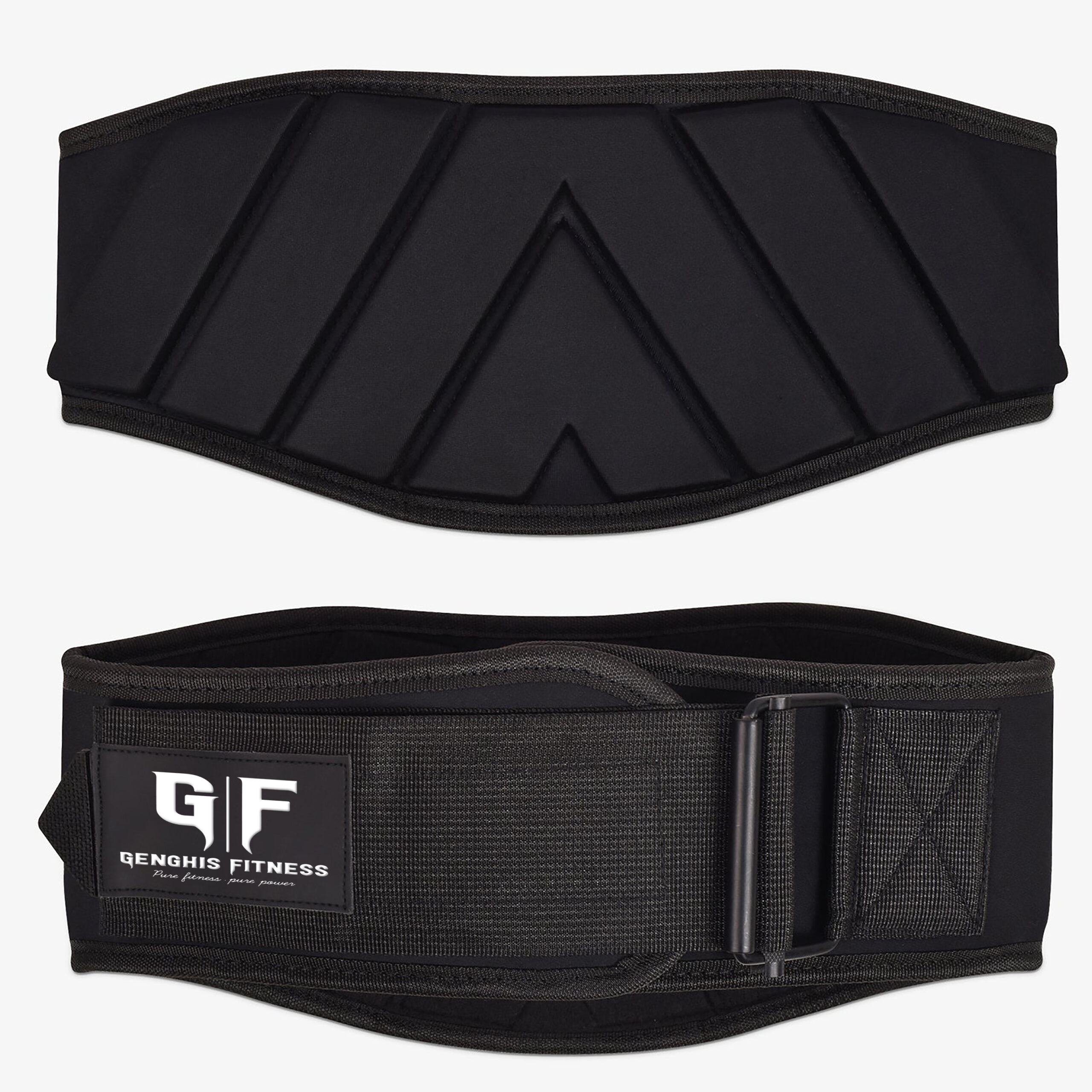
Benefits of a Nylon Lifting Belt for Strength Training
A nylon lifting belt sits at the intersection of practicality and performance. It is not the maximum-support option for a competition powerlifter approaching a world record attempt. It is the belt that gets used on every session, stays comfortable through varied programming, and never gives you a reason not to put it on. For a significant portion of strength athletes, those qualities matter more than the extra rigidity of a competition-grade leather belt.
Immediate Comfort With No Break-In Period
Full-grain leather belts require two to four weeks of consistent training before the material conforms to your torso shape and reaches its optimal fit. During that period the belt is stiff, sometimes uncomfortable on the hip bones, and requires deliberate effort to position correctly before each set. Nylon belts are immediately comfortable from the first session. The webbing is flexible enough to conform without requiring a break-in period, and the auto-lock or lever buckle provides a consistent fit from your first set.
This matters practically for athletes who are starting to use a belt for the first time. The learning process for belt use — finding the right tightness for different movements, developing the habit of consistent application, learning how to brace effectively against the belt — is easier to work through when the belt itself is not fighting you with stiffness that takes weeks to resolve.
Continuous Tightness Adjustment
The auto-lock buckle on the Genghis Fitness 4-Inch Nylon Lifting Belt adjusts continuously along the webbing rather than in fixed hole increments. This means the difference in tightness between your squat setting and your deadlift setting can be a centimeter rather than a full hole position. Prong and lever belts on leather jump from setting to setting in fixed increments determined by the spacing of the holes.
The practical benefit is precision. Some lifters want noticeably more tightness for squats — where the hip position is more upright and the brace point is higher — than for deadlifts, where hip flexion freedom at the start position matters. A continuous-adjustment buckle lets you dial in exactly the right tightness for each movement without being limited to what the nearest hole provides.
Lightweight and Low Maintenance
A nylon belt weighs a fraction of a leather belt of equivalent width and coverage. This is irrelevant during the lift itself, but it matters for athletes who train at a gym other than their home facility and carry their equipment. A nylon belt takes up minimal space in a bag and adds almost no weight to the load.
Nylon webbing is machine washable on a cold gentle cycle. Leather belts require specific conditioning treatments, must be kept dry during storage, and can crack if neglected over time. A nylon belt comes out of a wash cycle and hangs to dry. The stainless steel hardware on quality nylon belts does not rust under normal gym humidity and sweat exposure. Maintenance is a non-issue.
Suitable for High-Frequency Training
Athletes who train five or more days per week using a belt on multiple sessions need a belt that stays comfortable across high training volume without creating additional recovery demands. Leather belts in the break-in phase can leave pressure marks and cause minor bruising on the hip crests with high-frequency use until the leather has fully conformed. A nylon belt applies pressure evenly from the first session and causes no such issues during high-frequency use.
The fast application and removal of an auto-lock buckle also keeps training sessions moving efficiently. On a busy training day with multiple exercises requiring belt use, the ability to strap on and remove the belt in under two seconds per set versus five to eight seconds for a prong closure saves meaningful time across a full session.
The Right Choice for General Strength Training
A nylon lifting belt is not a compromise for athletes who cannot afford leather. It is the appropriate tool for general strength training where the primary goal is building strength progressively across compound movements at moderate to heavy intensities. The majority of training sessions for the majority of athletes fit this description. For the small number of sessions — maximum effort tests, competition simulations, true peak loading days — the additional rigidity of leather provides a measurable advantage. For everything else, a quality nylon belt does the job efficiently and comfortably.
Related reading
Best Nylon Lifting Belt | Nylon Lifting Belt Review | Weightlifting Belt for Beginners
When to Upgrade From Nylon to Leather
A nylon lifting belt serves most strength athletes well through the beginner and intermediate stages of training. The signal to consider upgrading to leather is when you notice the belt feeling slightly less stable at the very top end of your training loads. This happens because nylon webbing, while firm, does not achieve the absolute rigidity of full-grain leather at 10mm. At loads above 85 percent of your maximum, the difference in how completely each material holds its shape under pressure becomes perceptible.
A second signal is competition planning. If powerlifting competition is a goal, training consistently in federation-legal equipment makes sense. A leather single-prong or lever belt is required for competition in most powerlifting federations, and the positional adjustments that come with a different belt type are easier to make over months of training rather than in the weeks before a meet.
Neither of these signals means the nylon belt was a poor investment. It served its purpose effectively during the training period where it was the right tool. Many experienced athletes keep their nylon belt in the bag and use it for warm-up sets, moderate-intensity days, and upper body sessions where a full leather belt is more than the movement requires. The nylon belt continues earning its place in the lineup even after a leather belt is added to the collection.
The decision framework is practical. If your training is primarily general strength work without competition focus, a quality nylon belt may be the only belt you ever need. If your training is specifically powerlifting-oriented and your loads are consistently in the heavy range, a leather belt investment is warranted and the nylon belt becomes the secondary tool for lighter work.
The combination of immediate usability, low maintenance, precise adjustment, and competitive pricing makes a nylon lifting belt a genuinely compelling first belt for any serious strength athlete. The athletes who benefit most from starting with nylon are those who train consistently across multiple movement patterns and want a belt that disappears into the training session rather than demanding attention to fit and feel throughout. When the belt is working well, you stop thinking about the belt and start thinking about the lift. That is the practical definition of the right tool for the job.