Best Dip Belts: How to Choose the Right One for Weighted Pull-Ups and Dips
Dip belts are simple equipment but the quality range between a belt that works well and one that fails under load is significant. A poorly constructed dip belt digs into the hip bones at heavy weights, has a carabiner that opens unexpectedly, or uses a chain that kinks and fails to hold plates securely. Any of these failures at maximum load is at minimum a dropped plate and at worst a safety incident.
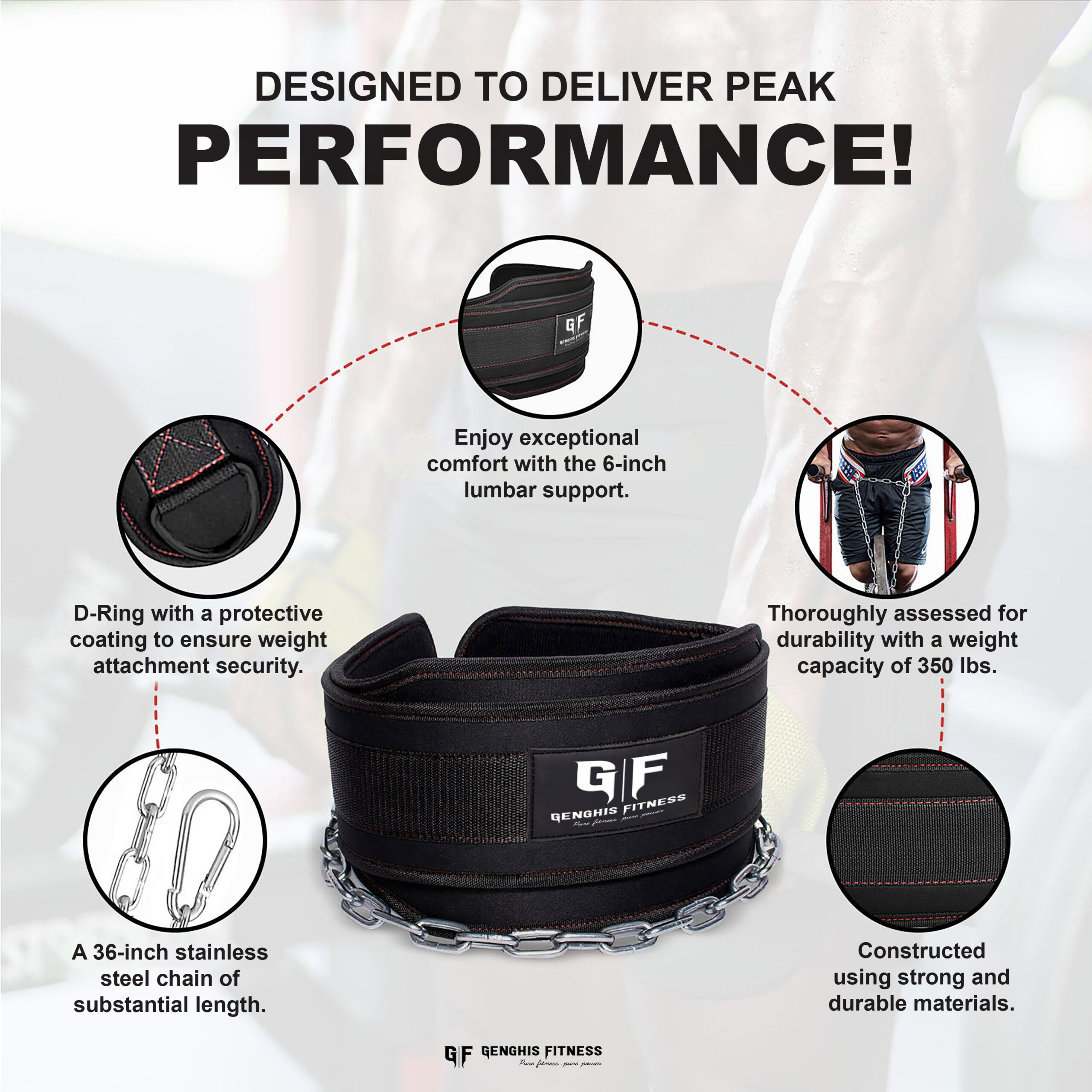
This guide covers the properties that define a quality dip belt, the exercises it is best suited for, how to load it safely, and what the Genghis Fitness dip belt with chain offers within this framework.
What a Dip Belt Does
A dip belt extends progressive overload to bodyweight calisthenic movements that stop providing an adequate training stimulus at high bodyweight rep counts. Once an athlete can perform 15 or more clean pull-ups or dips, adding load via a chain-suspended weight plate continues driving the strength and muscle development that bodyweight volume alone cannot produce.
The dip belt consists of a padded hip belt worn around the upper hips, a chain that hangs between the legs, and a carabiner or clip that threads through the center hole of standard weight plates. The loaded plates hang freely below the athlete during the exercise, creating additional gravitational resistance throughout the full range of the movement.
What to Look for in a Dip Belt
Hip Padding Width and Thickness
The hip contact area is where all the load transfers from the weight plates to the athlete’s body. At light loads of 10 to 25 pounds, almost any padding is sufficient. At heavy loads of 45 pounds and above, the padding width and thickness determine whether the belt is comfortable enough to train through a full working set or becomes a source of hip bone discomfort that interrupts the exercise before the target muscles are exhausted.
Look for belts with a minimum of 4 inches of padded width at the hip contact area. Neoprene or dense foam padding that does not compress to a thin layer under load is preferable to thin padding that bottoms out. The dip belt with chain is designed with hip belt padding appropriate for heavy training loads.
Chain Length and Load Rating
The chain must be long enough that the loaded plates hang below the knees at the top of the pull-up or dip range of motion. A chain that is too short causes the plates to contact the floor before the full range is completed. A chain that is too long creates excessive swinging momentum that destabilizes the movement.
Verify that the chain material is steel, not nylon or rope alternatives that have lower load ratings and are more susceptible to abrasion damage from plate center holes. The chain’s load rating should exceed the maximum weight you intend to use with a meaningful safety margin.
Carabiner Security
The carabiner is the single connection between the loaded chain and the secured loop on the belt. A carabiner that opens under load is the primary failure mode of lower-quality dip belts. Use a steel carabiner rated for the load being used, verify the gate is fully closed before each set, and inspect the carabiner for cracks or deformation before every heavy session.
Belt Width and Buckle Security
The belt section itself must stay in position on the hips during the exercise. A belt that rides up onto the waist during pull-ups does not distribute the load correctly. Look for a belt that sits securely on the iliac crest with a buckle or velcro closure that holds its position under the sustained downward pull of loaded plates.
How to Load a Dip Belt Safely
Thread the chain through the center hole of the first weight plate. Add additional plates as needed. Secure the carabiner through the chain loop after the plates are threaded. Check that the carabiner gate is fully closed and locked if a locking carabiner is used.
Stand on a bench or box to reach the pull-up bar or dip station rather than jumping with loaded plates hanging between the legs. Jumping while loaded creates unnecessary impact and can cause the plates to swing aggressively on landing. Step off the box after confirming the plates are hanging freely and the carabiner is secure.
Start with lighter loads than you expect to need. Ten to twenty-five pounds is an appropriate starting range for most athletes transitioning from bodyweight calisthenics to weighted work. Increase load when you can complete 6 to 8 clean, full-range repetitions at the current weight.
Best Exercises with a Dip Belt
- Weighted pull-ups and chin-ups: the primary application. Load the chain with plates and perform pull-ups through full range from dead hang to chin over bar.
- Weighted dips: parallel bar dips with chain-loaded plates. The most effective weighted chest and tricep exercise available.
- Weighted knee raises: hanging from the pull-up bar with plates loaded, raise the knees to the chest for weighted core work.
- Weighted L-sit holds: hanging with plates and holding the legs parallel to the floor as a static core strength exercise.
Programming Weighted Calisthenics
Treat weighted pull-ups and dips with the same progressive overload principles applied to barbell exercises. Work sets of 5 to 8 repetitions at a weight that requires genuine effort to complete. When all sets are completed cleanly, add 5 to 10 pounds. Track the loads the same way you track barbell weights.
Pair the dip belt with chain with reversible elbow sleeves for high-volume dip sessions where the elbow joint accumulates stress from repeated pressing cycles. For pull-up sessions where grip eventually becomes a limiting factor, lifting straps wrapped around the pull-up bar allow the back and bicep muscles to be trained to their limit independently of hand endurance.
Building a Progressive Weighted Calisthenics Program
Weighted pull-ups and dips respond to the same progressive overload principles as barbell exercises. Keep a training log recording the load, sets, and reps for every weighted calisthenics session. When all prescribed sets can be completed with clean form and full range of motion, add 5 to 10 pounds at the next session. Athletes who apply this discipline to their dip belt training typically double their weighted pull-up and dip loads within 6 to 12 months of consistent progressive programming.