The Bhagavad Gita and Yoga: Core Teachings Every Serious Person Should Know
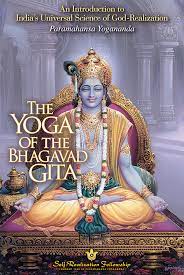
The Bhagavad Gita is a 700-verse Sanskrit text embedded within the Mahabharata, one of the great epics of ancient India. It takes the form of a dialogue between the warrior Arjuna and his charioteer Krishna on the battlefield just before a great war begins. Arjuna is paralyzed by doubt and moral conflict, and Krishna’s responses constitute one of the most comprehensive expositions of yoga philosophy, duty, and the nature of the self in the history of world literature.
For people who approach their training, work, and life with seriousness and intentionality, the Bhagavad Gita offers frameworks for thinking about effort, results, discipline, and identity that have proven remarkably durable across centuries and cultures. You do not need to be Hindu, religious, or spiritual to find genuine practical value in these ideas. Several of its core teachings align directly with what modern psychology and high-performance coaching have rediscovered independently.
The Core Context: Arjuna’s Crisis
The opening scenario of the Bhagavad Gita is a crisis of purpose and action. Arjuna, a skilled warrior facing a battle against members of his own family and respected teachers, throws down his bow and refuses to fight. His crisis is not cowardice but moral paralysis: he cannot see how any possible outcome justifies the destruction involved in achieving it. Krishna’s response over 18 chapters addresses this paralysis by examining the nature of the self, duty, action, and liberation.
This opening scenario is relatable in ways that have little to do with ancient warfare. The athlete who cannot push through training because they are convinced the results will not justify the effort, the professional paralyzed by fear of imperfect outcomes, the person who has lost connection to why they are doing what they are doing, all face versions of Arjuna’s crisis. The Gita’s response to this crisis is what makes it worth engaging with across any era and any culture.
Karma Yoga: The Path of Action
One of the most famous passages in the Gita is from Chapter 2: You have a right to perform your prescribed duties, but you are not entitled to the fruits of your actions. This is the core of Karma Yoga, the yoga of action. The teaching is not that results do not matter, but that attachment to specific results as the condition for your effort and identity creates suffering, impairs performance, and corrupts the quality of the action itself.
In athletic terms: train with full effort and commitment because the effort and the process are the expression of your character, not because you are guaranteed a specific medal, number on a scale, or lifting total. The outcome is influenced by your action but not fully controlled by it. Performing with excellence regardless of external result is associated with higher performance and lower anxiety. Research on this connection is well-documented in performance psychology literature accessible through PubMed.
Jnana Yoga: The Path of Knowledge
Jnana Yoga is the yoga of discriminative knowledge, the practice of clearly distinguishing the eternal self from the temporary constructs of body, emotions, and ego. In the Gita, Krishna repeatedly points Arjuna toward the understanding that his identification with his body, his social roles, and his emotional reactions is what creates his suffering, not the circumstances themselves.
Practically, this teaching addresses the patterns of over-identification that undermine athletic and personal development: defining your worth entirely by your last performance, treating training setbacks as evidence of fundamental inadequacy, or losing your sense of stable identity when the body changes, declines, or gets injured. Building a more stable sense of self that is not entirely dependent on physical output is not weakness. It is the psychological foundation that allows you to train harder, recover from failure more quickly, and maintain effort across longer time horizons.
Bhakti Yoga: The Path of Devotion
Bhakti Yoga is the path of devotion and love directed toward something greater than the individual self. In a secular context, Bhakti points toward the experience of being genuinely dedicated to something beyond personal gain: a sport pursued for its own beauty, a craft developed for excellence itself, a community or team supported because contributing to something larger than yourself has intrinsic value.
Athletes who experience this quality of devotion to their sport describe it as one of the primary sources of meaning in their training. The effort is no longer purely instrumental toward a personal goal but has a quality of love and respect for the practice itself. This orientation sustains effort through periods when results are not coming and maintains engagement long after the initial motivational excitement has faded.
Svadharma: The Duty Unique to You
The concept of svadharma, one’s own duty or nature, appears repeatedly in the Gita. Krishna tells Arjuna that it is better to follow one’s own dharma imperfectly than to follow someone else’s dharma perfectly. In the context of training, this is the counterweight to the constant comparison culture of social media fitness: your optimal path is the one suited to your actual body, circumstances, history, and goals, not a replica of someone else’s approach.
Determining your svadharma in training requires honest self-knowledge: what does your body respond to? What is sustainable for your recovery capacity, your schedule, and your life circumstances? What form of training do you actually sustain over years versus starting and abandoning repeatedly? The answers are personal and cannot be borrowed from someone else’s program. The custom-designed lifting belts at Genghis Fitness exist for exactly this reason: because what serves one athlete may not serve another, and quality should be built around what you actually need.
The Gita on Equanimity
Throughout the text, Krishna describes samatvam, which translates as equanimity or evenness of mind, as the defining characteristic of the wise person. The Gita does not advocate emotional flatness or indifference. It advocates a stable center that can experience success without arrogance and failure without despair. This quality of equanimity is exactly what allows sustained high performance over a training career and a life.
People who experience equanimity in competition and training do not feel less. They feel fully but are not overwhelmed by their feelings. The win does not make them careless. The loss does not make them quit. The injury is managed without catastrophizing. This is an orientation that can be developed through practice over time, and the Gita’s extensive treatment of it provides a philosophical framework for understanding why equanimity is worth cultivating.
How to Read the Bhagavad Gita
The Bhagavad Gita has been translated into English dozens of times with widely varying quality and interpretive emphasis. For a first reading, the translation by Eknath Easwaran (published by Nilgiri Press) is widely recommended for its clarity and accessibility without sacrificing philosophical depth. Barbara Stoler Miller’s scholarly translation is another excellent option for readers who prefer a more academic approach. Reading with a commentary alongside the text helps significantly, as many passages are opaque without context.
Reading the Gita does not require adopting any religious position. Approach it as you would any serious philosophical text: with curiosity, critical engagement, and willingness to be challenged. The ideas it contains about action, identity, duty, and equanimity are worth your time regardless of what you believe about their cosmic framing. The nylon lifting belt and lifting straps from Genghis Fitness support the physical side. Philosophy supports the mental side. Both matter.
FINAL WORDS
The Bhagavad Gita addresses the timeless challenges of action, identity, duty, and resilience in terms that remain remarkably applicable to contemporary athletic and personal development. Its core teachings on process focus, non-attachment, self-knowledge, and equanimity have been validated repeatedly by modern performance psychology, often under different names. Engage with these ideas seriously and you will find they offer frameworks for the mental side of training that no rep scheme or periodization model can provide.
Certified strength and conditioning specialists with over 10 years of experience in powerlifting, nutrition, and evidence-based fitness content. Based in New York City.