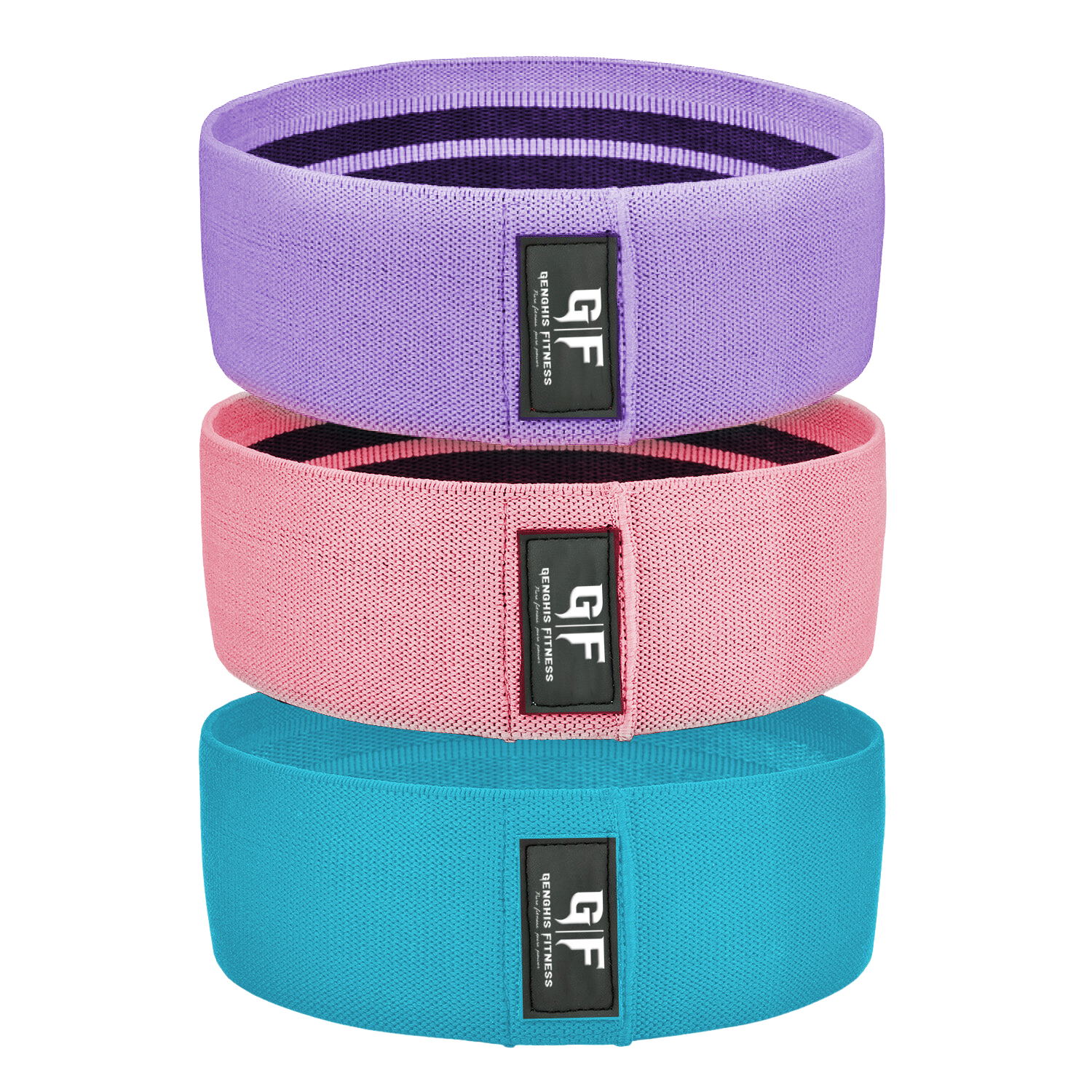
Booty Band Recovery Tips: How to Recover Faster Between Hip Training Sessions
Training with hip circle bands creates a genuine muscular training stimulus in the hip abductors and glutes. Muscles that have been genuinely trained require adequate recovery before they can be trained again productively. Recovery is not passive. It is an active process involving nutrition, sleep, movement quality management, and targeted recovery practices that accelerate the return to full training capacity.
This guide covers the recovery principles most relevant to hip circle band training, the practices that most effectively reduce soreness and restore function between sessions, and how to structure the training week to allow productive recovery without reducing overall training volume.
Understanding Hip Abductor Recovery Demands
The hip abductors, primarily the gluteus medius, are relatively small muscles compared to the primary lower body movers like the quadriceps and hamstrings. Smaller muscles generally recover faster from comparable training stimuli because the total volume of tissue that needs repair is lower. The hip abductors can typically be trained 3 to 5 times per week without accumulating the kind of systemic fatigue that limits heavy barbell training frequency.
That said, beginners who have never trained the hip abductors directly will experience more soreness and require more recovery time in their first 3 to 4 weeks than intermediate athletes whose hip abductors are already adapted to regular loading. Starting frequency at 3 sessions per week and allowing the adaptation to occur before increasing to 5 sessions prevents the excessive soreness that disrupts training quality.
Sleep: The Primary Recovery Driver
Sleep is where the majority of muscle protein synthesis and connective tissue repair occurs. Research in the NIH research database on resistance training recovery has established that athletes sleeping less than 7 hours per night show significantly reduced muscle protein synthesis rates and slower return to full strength capacity after training compared to athletes sleeping 7 to 9 hours.
For athletes using hip circle bands as part of a broader training program involving barbell work, sleep quality affects recovery from all training simultaneously. Prioritizing 7 to 9 hours of sleep per night is the single highest-return recovery investment available.
Protein Intake for Muscle Repair
Muscle protein synthesis requires dietary protein as the substrate for tissue repair. Inadequate protein intake after training sessions extends the recovery timeline regardless of how well other recovery practices are managed. The target range of 1.6 to 2.2 grams of protein per kilogram of body weight per day covers the recovery needs of most athletes in regular band training.
Distribute protein intake across meals rather than concentrating it. A meal or shake containing 25 to 35 grams of complete protein within 2 hours of training provides the amino acids needed for the immediate post-training synthesis window. Subsequent meals maintaining protein intake through the day sustain the elevated synthesis rates that continue for 24 to 48 hours after training.
Active Recovery Sessions
Light movement on rest days from primary band training sessions accelerates recovery by increasing blood flow to the trained muscles without creating additional training stimulus. A 15 to 20 minute session of gentle movement, walking, light cycling, or the yoga-style band exercises described in the booty band yoga guide, maintains circulation to the hip abductors and reduces the muscle stiffness and soreness that accumulates with complete rest.
Active recovery should feel genuinely restorative, not like additional training. If a recovery session leaves the muscles more fatigued than before it started, it was too intense and defeated its purpose. Light activity at low intensity is the correct prescription.
Foam Rolling and Self-Massage
Foam rolling the outer hip, IT band, glutes, and hip flexors reduces the tissue tension that accumulates in these areas after band training and heavy compound lower body work. Rolling creates localized compression that temporarily increases blood flow to the compressed tissue and reduces the mechanical tension in the muscle fibers.
Roll each area for 30 to 60 seconds with moderate pressure. Avoid rolling directly over bony prominences or joints. The most effective target areas after hip circle band training are the outer hip over the gluteus medius, the IT band from the hip to just above the knee, the piriformis in the outer glute area, and the hip flexors at the front of the hip.
Foam rolling after training and on active recovery days is more effective for recovery than rolling before training. Pre-training rolling has been shown in research to temporarily reduce force production capacity in the treated muscles, which is not what you want before training. Save it for post-training and recovery days.
Contrast Therapy: Heat and Cold
Alternating heat and cold application after hip band training sessions accelerates blood flow to the trained muscles and may reduce delayed onset muscle soreness. Apply heat to the outer hip for 10 minutes, then cold for 5 minutes, alternating 2 to 3 times. The heat causes vasodilation and the cold causes vasoconstriction. The alternating cycles create a pumping effect on the local blood flow that enhances metabolic waste removal from the trained tissue.
A warm shower immediately after training followed by 30 to 60 seconds of cold water on the outer hip area is a practical version of this approach that requires no special equipment.
Managing Session Frequency for Optimal Recovery
The most effective training frequency for hip circle band work balances training stimulus with recovery capacity. For most athletes, 3 to 5 sessions per week allows adequate recovery while maintaining the training frequency needed for continued adaptation.
Signs that the current frequency is exceeding recovery capacity include: soreness that has not resolved before the next session, progressive decrease in the number of quality reps achievable at the current resistance level, reduced hip mobility that persists from session to session, and persistent fatigue in the outer hip during daily activities.
If these signs appear, reduce frequency by one session per week and maintain the reduction for 2 weeks before considering returning to the higher frequency. Accumulated training fatigue in small muscles can compound quickly when training frequency exceeds recovery capacity for an extended period.
Pairing Recovery with the Full Training Setup
Athletes using the hip circle bands as part of a program that also includes heavy barbell squatting with knee sleeves and a lifting belt should organize their training week so that the highest band training loads occur on the same days as heavy squatting rather than on the days following heavy squatting. This clusters the demanding lower body stimulus into fewer training days and allows more complete recovery periods between the most demanding sessions.