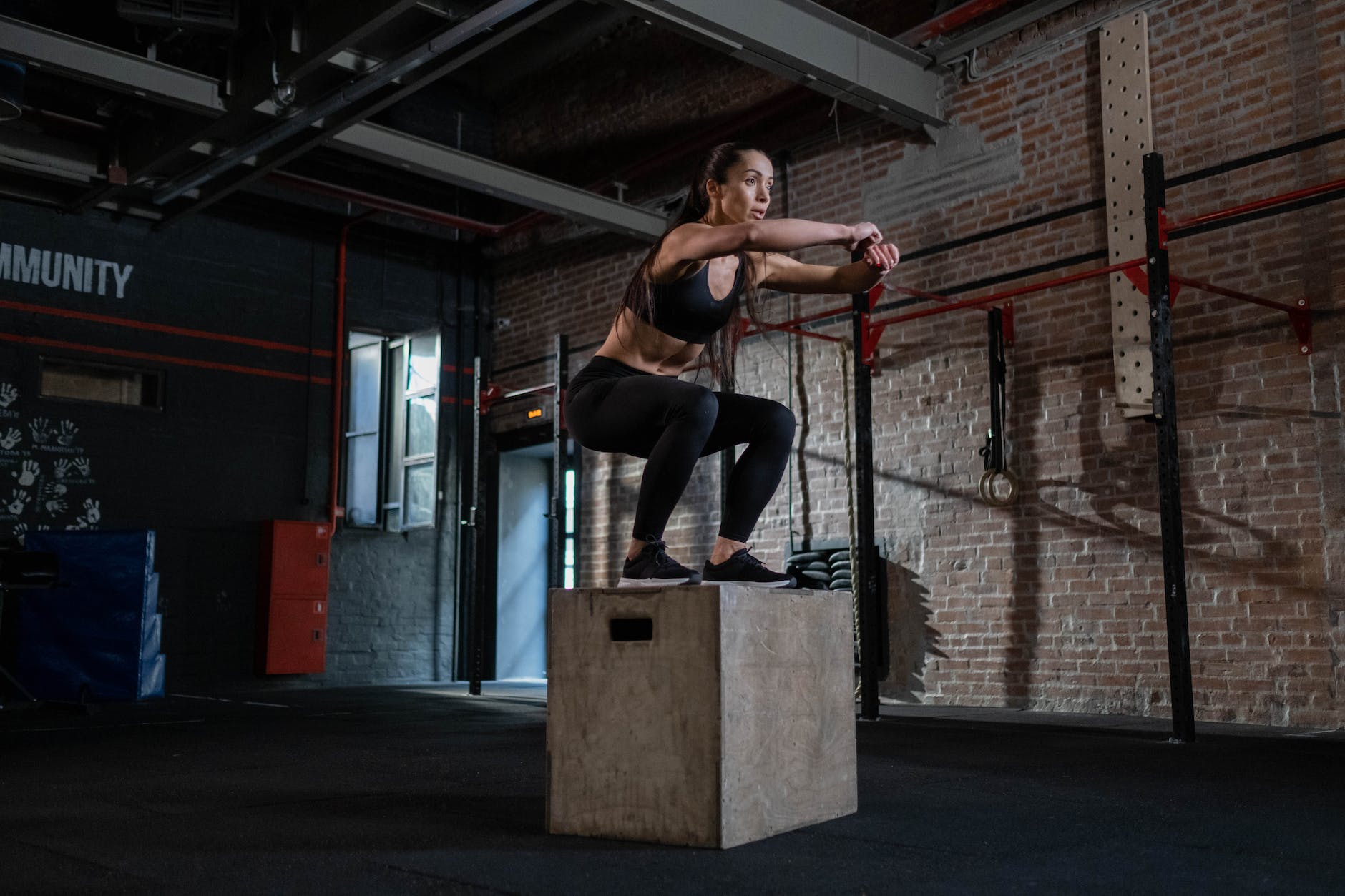
BOX JUMP: HOW TO TRAIN EXPLOSIVE POWER SAFELY AND EFFECTIVELY FOR ATHLETES OF ALL LEVELS
Why Box Jumps Build Power That Squats Alone Cannot
The barbell squat builds maximal lower body strength. Box jumps develop the rate of force development, the speed at which that strength is applied, which determines explosiveness in athletic movements. A strong athlete who cannot rapidly convert their strength into explosive movement does not jump as high, sprint as fast, or change direction as quickly as an athlete who has trained rate of force development specifically. Box jumps require the athlete to generate maximum lower body force in the shortest possible time, which is the definition of power, and the consistent practice of this maximum-rate-of-force expression trains the neuromuscular system to accelerate force production in a way that slow, heavy strength training does not. Research published in the Journal of Strength and Conditioning Research confirmed that plyometric jump training significantly improves vertical jump height, sprint speed, and change-of-direction performance beyond what strength training alone produces. Protect the knee through box jump landing impact with knee sleeves and maintain lower back health during high-volume jump training sessions with a neoprene belt.
How to Perform Box Jumps Safely and Effectively
Box Height Selection
Begin with a box height where landing is comfortable and controlled with minimal knee bend beyond 90 degrees. A box that is too high for current jumping ability forces excessive joint stress at landing and increases the risk of the athlete clipping the box edge, which is the most common cause of box jump injury. Most beginners should start with a box 12 to 18 inches high and progress to 24, 30, and 36 inches only when landing mechanics at the lower heights are consistently clean. The goal of box jump training is power development, not box height as a vanity metric.
The Jump
Stand facing the box at an arm-length distance. Perform a quick countermovement, swinging the arms down while bending the knees to a quarter-squat position, then explosively drive through the legs and swing the arms upward simultaneously. The arm swing contributes significantly to jump height and should be practiced as a deliberate part of the jump mechanics. Land on the box with both feet simultaneously, absorbing the landing with a controlled bend at the ankles, knees, and hips.
The Landing
Land softly and quietly. A loud landing indicates excessive impact force that the muscles and connective tissue must absorb. Soft landings, where the athlete bends progressively through the ankle, knee, and hip to distribute the impact across multiple joints and over a longer time period, reduce peak joint stress and produce better force absorption mechanics that transfer into safer athletic landings during sports movements. Never jump down from the box backward. Step down one foot at a time from the front or side. The landing impact from jumping down backward at high box heights is substantial and avoidable.
Box Jump Variations
Depth Drop to Box Jump
Step off a box of moderate height and immediately jump onto a second box upon landing. The depth drop creates a rapid eccentric loading of the legs that, when immediately followed by a concentric jump, trains the stretch-shortening cycle at higher intensity than a standard box jump. This variation is appropriate for athletes who have established clean box jump mechanics and are specifically targeting reactive jumping power.
Lateral Box Jump
Standing beside a box, jump laterally to land on top, then step down and repeat. The lateral direction trains the hip abductors and external rotators alongside the primary jumping muscles, producing a more athletically complete power exercise than sagittal-plane jumps alone. Pair lateral box jumps with hip circle bands during warm-up to activate the glute medius that controls the landing mechanics of lateral jumping.
Single-Leg Box Jump
Jumping from one leg and landing on the same leg on the box develops unilateral power and landing mechanics that directly mirror the single-leg push-off and landing demands of sprinting and changing direction. This variation is significantly more challenging than bilateral box jumps and requires established bilateral jump mechanics before it is appropriate to attempt.
Programming Box Jumps for Strength Athletes
Box jumps are most effective when performed at the beginning of a training session before fatigue accumulates from strength work. The nervous system needs to be fresh to express maximum power output, and fatigued jumps produce diminished power expression and compromised landing mechanics. Three to five sets of three to five explosive jumps, each performed with maximum intent and full recovery of two to three minutes between sets, constitutes an effective box jump training block.
For athletes whose primary training focus is strength rather than power sports, two days per week of five sets of three box jumps immediately before primary lower body strength training provides the power training stimulus that improves athletic performance while adding minimal fatigue to the strength training session that follows. This pairing of power work before strength work takes five to eight minutes and produces more complete athletic development than strength training alone. Use knee sleeves throughout the entire session including the jump work to protect the joint through the full session volume.
Box Jump Safety: The Mistakes That Cause Injuries
Box jumps have an undeserved reputation as dangerous exercises. The injuries associated with them are almost universally caused by specific, avoidable errors rather than the exercise itself. The most common injury mechanism is missing the box edge on the way up, where the toes clip the front edge of the box and the athlete falls forward. This happens when the box height is too ambitious relative to current jumping ability, when fatigue has degraded the jump mechanics, or when the athlete is not fully focused on the jump before leaving the ground. The fix is straightforward: use a box height where successful, controlled landing is reliable across all sets, reduce volume before fatigue accumulates significantly, and treat each jump as a deliberate maximum-effort movement rather than a casual repetitive motion.
The second common injury mechanism is jumping down from the box rather than stepping down. Jumping down backward from a 30 or 36-inch box creates a landing impact that is comparable to a significant fall, and the backward direction limits the athlete’s ability to absorb it properly through the normal forward-loaded landing mechanics. Always step down from the box, one foot at a time, from the front or side, regardless of how fresh the athlete feels. The time saved by jumping down rather than stepping is seconds per set. The injury consequence of a poor landing from that height is weeks to months. This is never a worthwhile trade. Use knee sleeves for every box jump session to provide the joint warmth and proprioceptive feedback that supports safe, consistent landing mechanics across all sets, and hip circle bands in the warm-up to activate the hip abductors that control landing alignment during the lateral and sagittal plane box jump variations.
FINAL WORDS
Box jumps develop the explosive power that heavy squats and deadlifts build the foundation for but cannot fully express on their own. Train them before strength work, keep volume per session low to maintain quality, progress box height conservatively rather than ego-driven, and protect the landing joints with Genghis Fitness knee sleeves. Build the explosive power that makes strength useful in the athletic contexts where it matters most.
Certified strength and conditioning specialists with over 10 years of experience in powerlifting, nutrition, and evidence-based fitness content. Based in New York City.