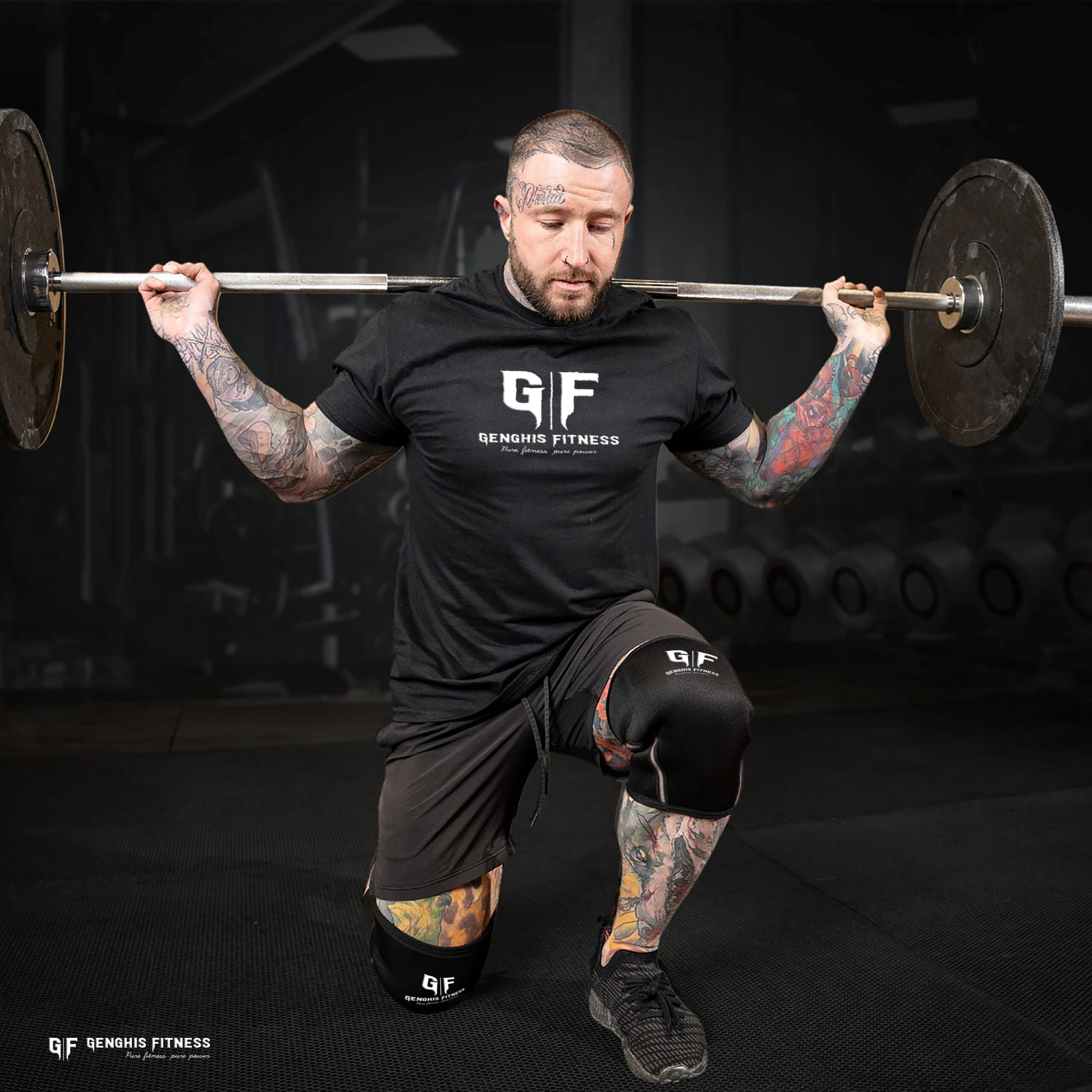
COMPRESSION KNEE SLEEVES: THE COMPLETE GUIDE TO MECHANISMS, SELECTION, AND USE
Compression knee sleeves are among the most widely used joint support tools across strength training, running, cycling, team sports, and rehabilitation applications. The term compression refers to the circumferential pressure that the sleeve applies to the knee joint by virtue of the sleeve being smaller than the knee circumference it fits over, requiring the sleeve material to stretch as it is applied. This circumferential compression is the primary mechanism through which knee sleeves deliver their training and performance benefits: thermal retention, proprioceptive enhancement, and fluid management. Understanding these mechanisms and how to select, size, and use compression sleeves correctly maximizes their contribution to training quality and joint health.
MECHANISM 1: THERMAL RETENTION AND TISSUE TEMPERATURE
Compression increases the temperature of the tissues within the compressed area by reducing heat dissipation from the skin surface and creating a warm microenvironment around the joint. For the knee joint specifically, elevated tissue temperature improves the viscoelastic properties of the cartilage, tendons, and ligamentous structures that surround and stabilize the joint during dynamic loading. Research on thermotherapy and joint mechanics demonstrates that warm tissue is less stiff, more capable of distributing mechanical stress across a wider contact area during loading, and more resistant to the acute strain injuries that cold, stiff tissue is more susceptible to under sudden loading. Compression knee sleeves worn from the first warm-up set of every lower body session maintain these improved tissue properties throughout the session, including during rest periods when the joint would otherwise cool.
MECHANISM 2: PROPRIOCEPTIVE ENHANCEMENT
Mechanoreceptors in the skin and soft tissues surrounding the knee joint send continuous signals to the nervous system about joint position, movement direction, and force magnitude. Compression applied by a knee sleeve activates these mechanoreceptors more consistently than bare skin, improving the quality and speed of proprioceptive feedback during dynamic loading. Research on compression and joint proprioception confirms measurably improved joint position sense during dynamic tasks when compression garments are worn. For athletes performing heavy squats, the improved proprioceptive feedback from compression sleeves means the nervous system receives clearer, faster information about knee tracking position during the descent, allowing more precise motor corrections that keep the knee over the foot and reduce valgus collapse risk under heavy loading.
MECHANISM 3: COMPRESSION AND FLUID MANAGEMENT
High-volume squatting, jumping, and running generate inflammatory byproducts in the joint capsule and surrounding soft tissues that contribute to the joint puffiness and stiffness that athletes often notice after training. The circumferential compression of knee sleeves limits the available space for this fluid accumulation by maintaining external pressure on the joint capsule, and facilitates lymphatic drainage that clears inflammatory byproducts from the joint environment. Athletes who train without sleeves often notice visible knee joint puffiness and increased stiffness at the end of heavy lower body sessions that sleeve users typically do not experience at equivalent training volumes, because the compression is limiting the fluid accumulation that produces these symptoms.
COMPRESSION LEVEL: HOW THICKNESS AND SIZING INTERACT
The compression level of a knee sleeve is determined by two variables: the neoprene thickness and the sleeve’s size relative to the athlete’s knee circumference. Thicker neoprene at 7mm provides more compression than 5mm neoprene at the same size relative to knee circumference. A sleeve that is one size smaller than the neutral-fit size for a given knee circumference provides more compression than a neutral-fit sleeve. For most training applications, 5mm neoprene in the correct size for the athlete’s knee circumference provides adequate compression for all three mechanisms. For competitive powerlifting where additional compression and minor elastic rebound contribution are wanted, 7mm in a size smaller than neutral provides maximum compression.
SIZING: THE MOST IMPORTANT PURCHASE DECISION
Correct sizing is the most important purchase decision for compression knee sleeves. A sleeve that does not provide genuine compression against the knee joint delivers none of the proprioceptive or thermal benefits that make compression sleeves effective. Measure the circumference of the leg at the center of the kneecap. Compare this measurement to the manufacturer’s sizing chart. When between two sizes, choose the smaller size for functional compression rather than superficial comfort. The Genghis Fitness knee sleeves are sized using measurements taken at the kneecap center, which is the most accurate position for predicting the compression level the sleeve will provide during squatting and other knee flexion exercises. A correctly sized sleeve requires deliberate effort to put on but feels firmly supportive rather than painfully restrictive during training.
CONSTRUCTION QUALITY: SEAM TYPE AND INNER LINING
Flat-lock seam construction eliminates the pressure ridges that raised seams create against the skin during repeated knee flexion and extension. Quality compression sleeves for strength training use flat-lock stitching throughout because training involves hundreds of knee flexion cycles per session under significant compressive loading, making seam comfort directly relevant to sustained session wear. A moisture-wicking inner lining reduces sweat accumulation at the skin-sleeve interface and allows the sleeve to be worn comfortably across long training sessions without the skin irritation that pure neoprene linings can create under sustained moisture exposure.
HOW TO WEAR AND CARE FOR COMPRESSION KNEE SLEEVES
Wear compression knee sleeves from the first warm-up set of every lower body training session. The thermal benefit accumulates progressively during the session and the sleeves are most protective of a joint that was warm before it was loaded. Remove sleeves and air dry after every training session before they accumulate sweat and bacterial growth. Hand wash monthly with mild soap in cool water and air dry completely before storing. Do not machine dry or tumble dry neoprene, as heat degrades the closed-cell structure that provides both compression and thermal retention. Store loose or hung rather than tightly rolled to preserve the elastic memory that maintains compression over the sleeve’s two to three year service life.
BUILDING A COMPLETE LOWER BODY SUPPORT SYSTEM
Compression knee sleeves and knee wraps serve complementary roles within a complete lower body support system. Sleeves provide session-wide thermal and proprioceptive support across all intensities. Knee wraps provide maximum compression and elastic rebound for the heaviest sets only. Use sleeves throughout the entire session and add wraps over the sleeves for the top working sets on maximum effort squat days. The 10mm lever belt provides lumbar IAP support alongside the knee joint support that sleeves and wraps cover, and lifting straps handle grip demands on heavy pulling days within the same training program. This complete system addresses every major joint under heavy compound loading.
FINAL WORDS
Compression knee sleeves work through three real mechanisms, all confirmed by research: thermal retention that improves tissue properties across the full session, proprioceptive enhancement that improves technique quality under heavy loading and fatigue, and compression that limits inflammatory fluid accumulation. They work best when correctly sized for genuine compression, worn from the first warm-up set of every lower body session, and maintained properly to preserve their functional properties across their service life. The Genghis Fitness knee sleeves are built to the neoprene density and construction standards that deliver these benefits reliably. Size correctly, wear consistently, care for them properly, and let the three-mechanism combination protect and support the knee joints that every lower body training session depends on.
Certified strength and conditioning specialists with over 10 years of experience in powerlifting, nutrition, and evidence-based fitness content. Based in New York City.
This guide is part of the Genghis Fitness knee sleeves, wraps and joint support guides, where 68 articles cover every joint support type across knee, wrist, and elbow applications.