FINDING YOUR KNEE SLEEVE SIZE: THE EXACT MEASUREMENT METHOD AND HOW TO VERIFY FIT
Finding the correct knee sleeve size is the single most important step in getting actual functional benefit from a knee sleeve rather than a loose tube of neoprene that slides during squats and does nothing for proprioception or thermal retention. A knee sleeve that does not provide genuine circumferential compression against the knee joint delivers none of the three functional benefits that make sleeves worth wearing: thermal retention, proprioceptive enhancement, or joint capsule compression. This guide walks through the measurement method, the common errors that produce wrong-size purchases, and how to verify correct fit before committing to a size for training use.
WHERE TO MEASURE: THE KNEECAP CENTER IS THE CORRECT POINT
Measure the circumference of the leg at the center of the kneecap. This is the correct measurement point because it predicts the compression level the sleeve will provide at the joint, which is where the functional benefits of the sleeve are delivered. Measuring above or below the kneecap produces a larger number that corresponds to a sleeve too big to provide adequate compression at the joint itself. Use a flexible fabric measuring tape held snugly against the skin without compressing the tissue. Take the measurement standing with the knee fully extended, not bent. Record the measurement in either inches or centimeters depending on which unit the manufacturer’s sizing chart uses.
THE MOST COMMON MEASUREMENT ERROR AND HOW TO AVOID IT
The most common sizing error is measuring the thigh rather than the knee. The thigh circumference at mid-thigh is typically four to eight inches larger than the knee circumference, depending on the athlete’s body composition and leg development. Ordering based on thigh measurement produces a sleeve that fits the thigh but slides down during squatting because it is too large to maintain contact at the knee joint itself. The knee sleeve is sized for the knee, not the thigh. This seems obvious but the inconsistency between different manufacturers’ measurement instructions leads many athletes to measure at the wrong point and then be confused when their sleeve slides during training.
WHEN TO SIZE DOWN: ALWAYS AT A BOUNDARY
When the knee circumference measurement falls near the boundary between two adjacent sizes, always choose the smaller size. Research on compression and joint proprioception confirms that the proprioceptive benefit of a compression sleeve is only delivered when the sleeve provides genuine circumferential compression against the joint. A sleeve that is one size larger than the correct fit provides only light contact rather than functional compression, which reduces the proprioceptive mechanism to approximately the level that bare skin provides. Sizing down when near a boundary ensures the sleeve is snug enough to maintain functional compression throughout the full range of squat depth without sliding. The practical consequence of this sizing principle is that the first experience with correctly sized sleeves often feels noticeably tighter than athletes expect from a comfort product, which is exactly correct: a sleeve that feels like compression gear is performing its function, while one that feels like a comfortable tube is not providing meaningful proprioceptive or thermal benefit.
THE TENSION TEST: VERIFYING CORRECT FIT BEFORE HEAVY TRAINING
The tension test verifies correct fit before beginning heavy training with a new pair of sleeves. Put the sleeve on and stand with the knee fully extended. The sleeve should feel noticeably snug around the kneecap area. Bend the knee through the full squat range. The sleeve should maintain its position without sliding upward or downward as the knee flexes, and should provide clear resistance to the expansion of the joint as it flexes. At the bottom of a squat, the sleeve should feel firm rather than loose. If the sleeve slides during the bend, it is too large. If it creates significant cutting-in pressure at the sleeve edges, it may be one size too small, though this is less common than sizing too large.
THE GENGHIS FITNESS SIZING CHART AND HOW TO USE IT
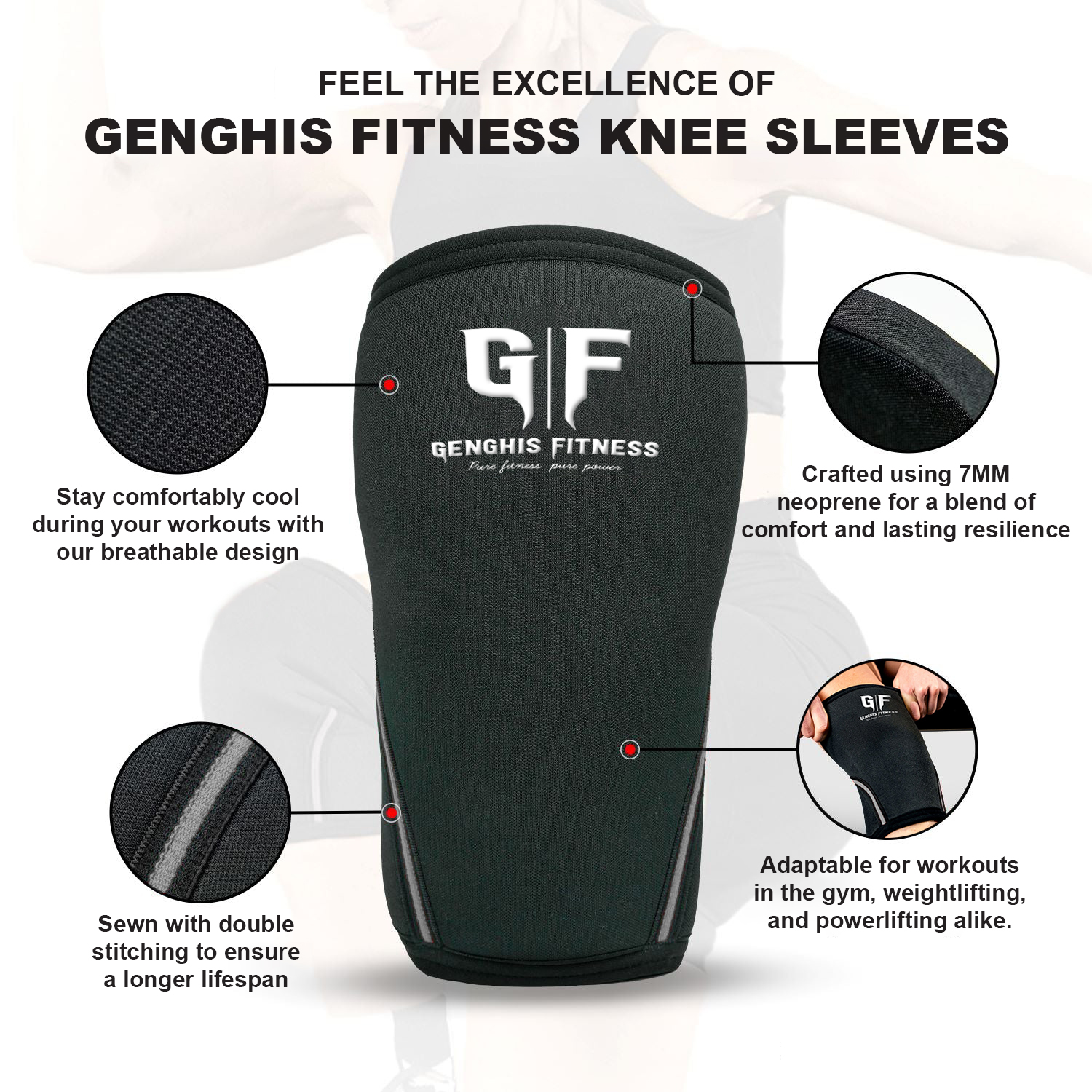
The Genghis Fitness knee sleeves are sized based on knee circumference at the kneecap center, which is the most accurate measurement for predicting functional compression during squatting. The sizing chart is calibrated to produce firm, functional compression at the knee joint for athletes whose measurements fall in the middle of each size range, with adequate adjustment capacity for athletes at either end of the range. When your measurement falls clearly in the middle of a size range, that size produces compression with the optimal balance of security and comfort. When your measurement is within one centimeter of a size boundary, choose the smaller size.
5MM VS 7MM AND HOW THICKNESS AFFECTS SIZING
Knee sleeve sizing differences between 5mm and 7mm neoprene affect the compression level delivered by the same nominal size. A 5mm sleeve in size medium provides less absolute compression force than a 7mm sleeve in size medium because the thinner material stretches more readily. Athletes who are between sizes and want to add extra compression for competition or maximum effort training can either size down in 5mm or use 7mm at their standard size. Most athletes outside of competition powerlifting are better served by 5mm at the correct size, which provides all three functional mechanisms without the range-of-motion restriction that 7mm creates at deep squat positions.
SLEEVE SIZING AFTER EXTENDED USE
Knee sleeves that are correctly sized when purchased may feel slightly looser after several months of regular use as the neoprene stretches with repeated application and removal. This is normal and does not indicate a quality defect. Some athletes find that sizing down slightly at replacement after a year or more of use maintains the original compression level. If a sleeve is sliding during training to a degree that impairs its functional position, it has either stretched beyond its compression threshold or was sized too large initially and replacement or resizing is appropriate.
HOW TO USE CORRECTLY SIZED SLEEVES FOR MAXIMUM BENEFIT
Use the correctly sized sleeve from the first warm-up set of every lower body session that includes knee-loading movements. Consistent sleeve use from the warm-up is more effective than putting them on only for the heaviest sets, because the thermal benefit accumulates progressively and joint tissue is best protected when it was warm before heavy loading begins rather than only during the working sets. Pair with knee wraps for maximum effort squatting when elastic rebound is warranted, a quality belt for lumbar support during all heavy compound work, and lifting straps for heavy pulling sessions to complete the support system.
FINAL WORDS
Finding the correct knee sleeve size requires measuring at the kneecap center rather than the thigh, sizing down when near a boundary, and verifying the compression level with the tension test before heavy training. The Genghis Fitness knee sleeves are sized to the kneecap center measurement and designed to provide functional compression at the knee joint across the full range of squat depth. Get the measurement right, size for compression rather than comfort, verify the fit before loading, and wear them consistently from the first warm-up set of every lower body session to access all three functional benefits that correctly sized knee sleeves provide. An extra minute spent measuring correctly at the right anatomical position saves the frustration of purchasing and returning incorrectly sized sleeves and ensures the first training session with new sleeves delivers the functional compression that makes the investment worthwhile.
Certified strength and conditioning specialists with over 10 years of experience in powerlifting, nutrition, and evidence-based fitness content. Based in New York City.
Browse all related guides in the knee sleeves, wraps and joint support guides for knee sleeve vs knee wrap comparisons, 5mm vs 7mm thickness guides, wrist wrap length selection, and how to size joint support equipment correctly for your training demands.