GLUTE EXERCISES WITH ANKLE STRAPS: THE COMPLETE CABLE GLUTE TRAINING GUIDE
Glute exercises with ankle straps on a cable machine address the specific gap between what compound barbell training develops and what complete glute development requires. Squats and deadlifts load the gluteus maximus heavily through the hip extension pattern, but they share that loading across the hamstrings, quadriceps, and adductors in ways that limit how specifically the glute can be targeted within any given set. Ankle strap cable glute exercises isolate the gluteus maximus and gluteus medius against constant progressive cable tension, delivering the targeted isolation volume that compounds the glute stimulus from barbell work into more complete development of both the size and shape of the glute complex.
CABLE GLUTE KICKBACK: THE FOUNDATION EXERCISE
The cable glute kickback is the foundational glute exercise with the ankle strap. Attach the ankle strap to a low cable pulley and face the machine. With a slight forward lean at the hip, drive the working leg backward and upward through full hip extension until the glute is fully contracted. Pause at peak contraction for two seconds with deliberate glute squeeze before lowering under three-second control to the starting position. Research on eccentric loading and glute hypertrophy confirms the controlled descent is where the primary hypertrophy stimulus occurs, making the three-second eccentric as important as the concentric drive for glute development outcomes.
STANDING CABLE HIP ABDUCTION: GLUTEUS MEDIUS ISOLATION
Standing cable hip abduction develops the gluteus medius, the muscle responsible for lateral hip stability during single-leg loading and the primary hip abductor that prevents the knee valgus collapse associated with lower extremity injury. Stand sideways to the cable machine with the strap on the ankle nearest the pulley. Drive the working leg outward away from the body against the cable resistance through the full available hip abduction range, hold one second at peak abduction, and return under control. Research on gluteus medius strength and dynamic knee stability confirms that targeted gluteus medius training reduces valgus collapse during squatting and single-leg athletic movements, making hip abduction cable work an injury prevention exercise alongside its glute development benefit.
CABLE DONKEY KICKS: UPPER GLUTE EMPHASIS
Cable donkey kicks are a variation of the glute kickback performed from a quadruped position with the hands and standing knee on a bench or the floor. The quadruped position changes the hip angle relative to the standing cable kickback, shifting the gluteus maximus loading emphasis toward the upper portion of the muscle and producing a different shape stimulus that targets the upper glute region more specifically. Drive the working leg backward and upward from the bent-knee position, squeezing the glute at the top with the working knee extended behind the body. The quadruped position requires a stable support surface and a cable angle that allows the movement without the cable pulling at an angle that disrupts the exercise mechanics.
STANDING CABLE HIP EXTENSION: COMBINED HIP FLEXOR AND GLUTE LOADING
Standing cable hip extension, where the athlete stands facing away from the low pulley with the strap on one ankle and drives the working leg forward then backward against cable resistance, creates a reciprocal hip flexion and extension stimulus that addresses both the hip flexor and the glute in the same exercise from an angle that the standard kickback does not replicate. This variation is useful for athletes who want to develop both hip flexors and glutes within a single cable station setup without changing the cable or strap position between exercises. The hip flexion phase as the leg moves forward trains the hip flexors eccentrically. The extension phase as the leg moves backward trains the glute concentrically.
LATERAL CABLE WALK: PROGRESSIVE OVERLOAD ON THE BAND WALK PATTERN
Lateral cable walk with ankle strap provides a continuous lateral band walk stimulus with progressive cable resistance rather than the fixed band resistance that deteriorates as the band stretches. Attach the strap to the ankle farthest from the pulley, position the cable at low height, and walk laterally with the cable creating adduction resistance against every abduction step. This produces continuous gluteus medius and hip abductor loading through the full walking pattern rather than only at the most stretched band position. The cable resistance allows the exact intensity to be set through the weight stack rather than relying on the specific band tension available, enabling progressive overload that band alternatives cannot provide.
PROGRAMMING A COMPLETE GLUTE CABLE SESSION
Program glute ankle strap cable exercises in groups of two to three exercises after the primary compound lower body movements of the session. A practical glute cable sequence: cable kickbacks for four sets of 15 to 20 reps per leg, standing cable hip abduction for three sets of 15 to 20 reps per leg, cable donkey kicks for three sets of 12 to 15 reps per leg. This 10-set sequence provides substantial isolated glute volume across both the extension and abduction functions of the full glute complex, adding to the compound stimulus from the preceding barbell work rather than competing with it for neuromuscular resources. Rest 60 seconds between sets during this cable sequence rather than the longer rest periods used for compound exercises, as the isolated nature of the exercises allows faster recovery between sets than heavy barbell work requires, and the shorter rest periods maintain the metabolic environment that produces the glute pump and activation quality that are hallmarks of effective glute isolation training.
ANKLE STRAP QUALITY FOR GLUTE CABLE TRAINING
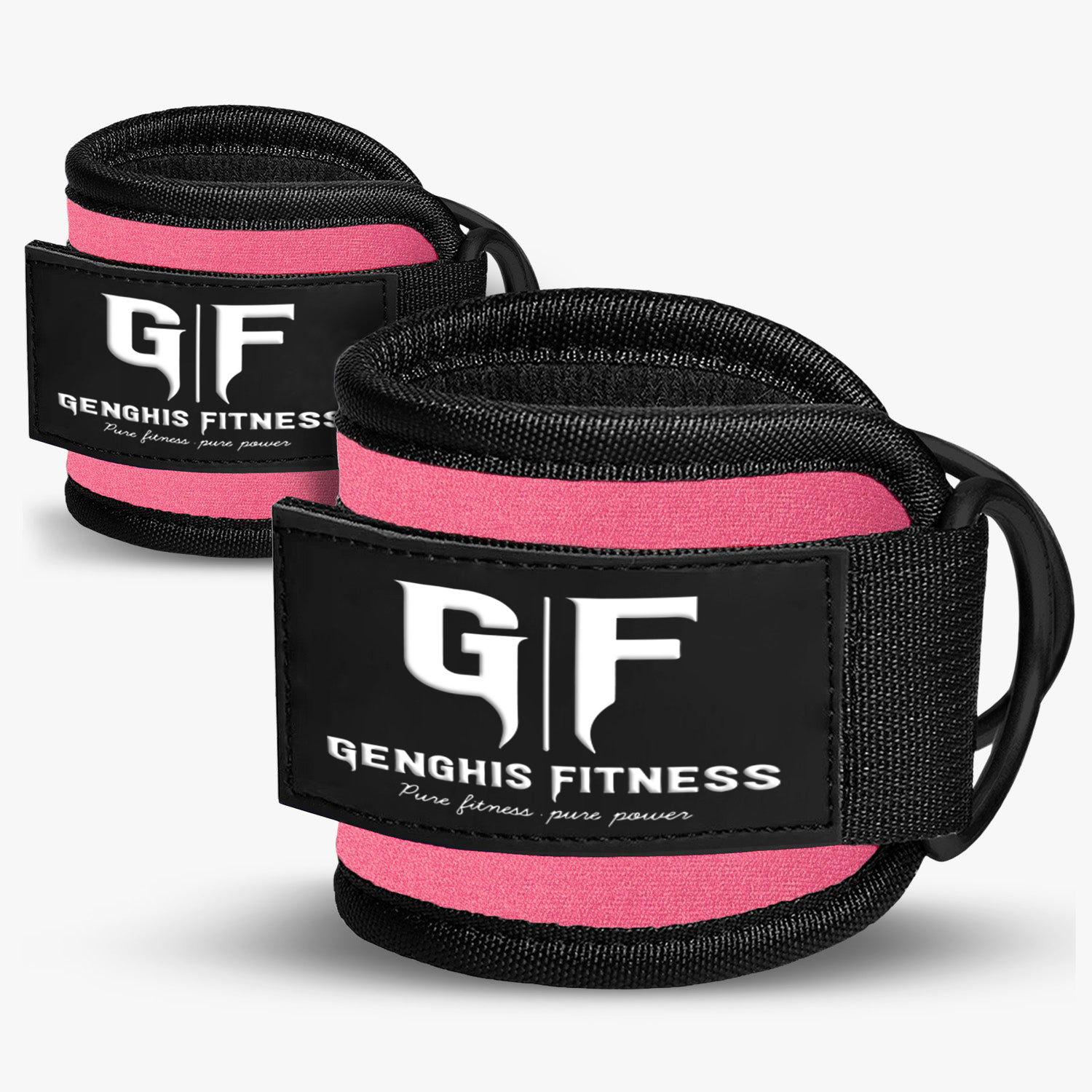
The Genghis Fitness ankle straps maintain their position against the ankle throughout the full range of motion of every glute cable exercise without the slippage that reduces both the effectiveness and the comfort of the exercises. The D-ring attachment is rated for the dynamic loading of repeated cable exercises across a full training session, and the strap closure holds the correct tension without requiring adjustment between sets. These construction qualities allow the athlete to focus on the glute contraction quality of each rep rather than managing strap position and tension during the exercise.
COMBINING CABLE WORK WITH BAND ACTIVATION
Combine ankle strap cable glute work with hip circle band activation exercises to create a comprehensive glute training segment that addresses both the activation and progressive loading dimensions of complete glute development. Band activation before the cable work primes the gluteus medius and prepares the mind-muscle connection for the isolation demands of the cable exercises. Cable exercises after the band work provide the progressive, quantifiable overload that band resistance alone cannot deliver as training capacity grows. Knee sleeves throughout every session for joint warmth during the full lower body training day.
FINAL WORDS
Glute exercises with ankle straps at the cable machine provide the isolated, progressive, constant-tension glute loading that completes the glute development picture that compound training begins. The cable kickback, standing hip abduction, donkey kick, hip extension, and lateral cable walk exercises in this guide address the gluteus maximus extension function and gluteus medius abduction function comprehensively with the Genghis Fitness ankle straps that make every ankle-to-cable connection reliable across every set. Program consistently after compound training, progress the cable resistance systematically, and pair with band activation and complete lower body support equipment for the training environment that produces the best glute development outcomes.
Certified strength and conditioning specialists with over 10 years of experience in powerlifting, nutrition, and evidence-based fitness content. Based in New York City.
The full gym accessories guides covers how to load a dip belt, use an arm blaster correctly, and how hip circle bands fit into a lower body warm-up.