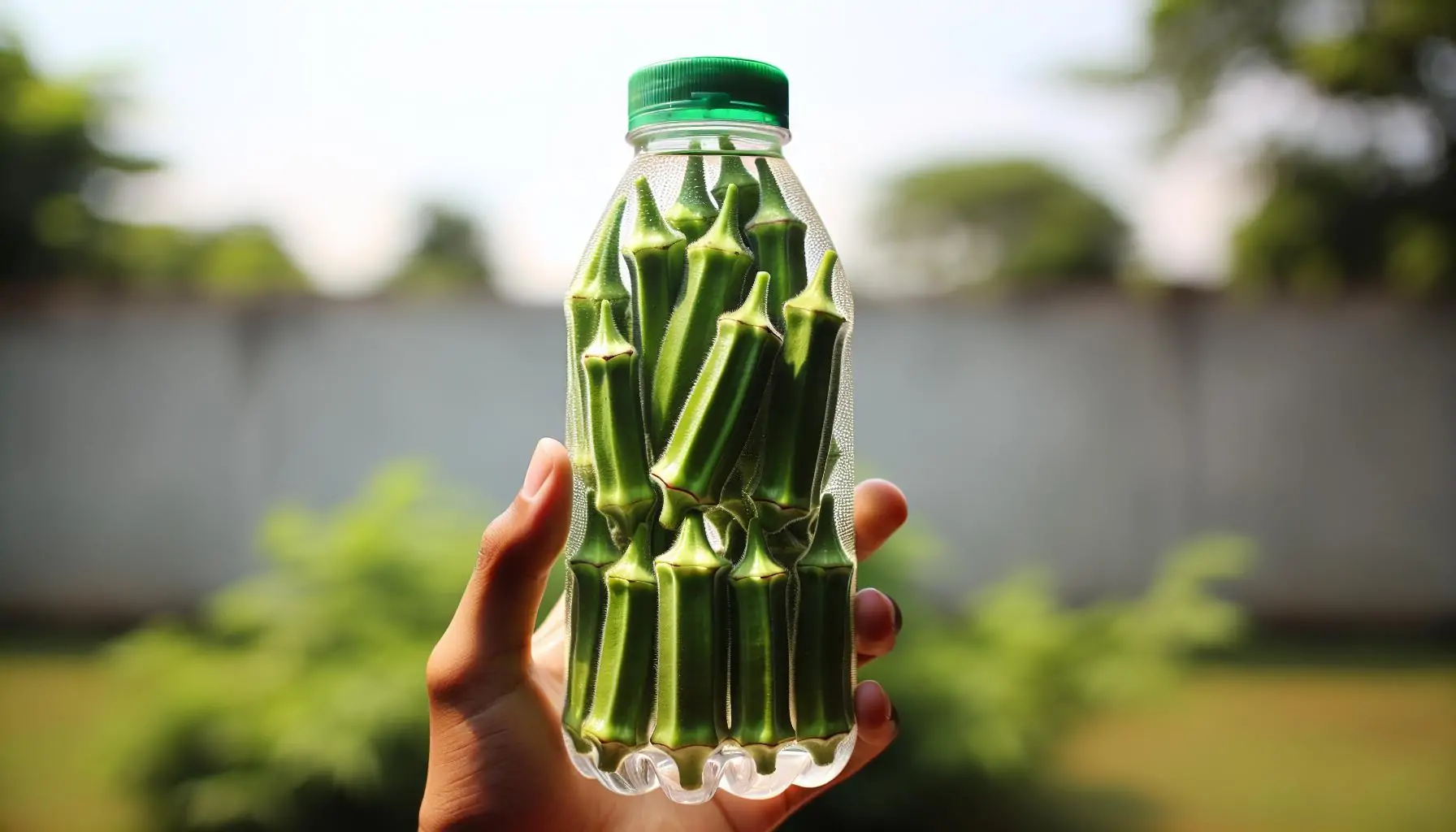
HEALTH BENEFITS OF OKRA WATER: WHAT ACTUALLY HAPPENS WHEN YOU DRINK IT
Okra water, made by soaking sliced okra pods in water overnight and drinking the infused liquid, has gained significant attention in wellness communities, particularly in West African and Caribbean diaspora populations where okra has been a traditional food and folk remedy for generations. The trend has spread considerably through social media, with claims ranging from blood sugar management to cholesterol reduction to libido enhancement. Separating the genuine evidence from the speculation gives you a clear picture of what okra water can and cannot do.
WHAT OKRA WATER CONTAINS
Soaking okra in water extracts the water-soluble compounds from the pods into the infusion. The primary extracted compounds are mucilage polysaccharides, particularly a pectin-like fiber that creates the characteristic slippery texture of okra water. Flavonoids including quercetin, kaempferol, myricetin, and catechins leach into the water alongside polyphenolic acids. Vitamin C, B vitamins including B6 and folate, and minerals including magnesium and potassium are present at low to moderate concentrations in the infusion.
The mucilage content is the most pharmacologically interesting component. Studies indexed on PubMed have characterized okra’s mucilage polysaccharide profile and confirmed its activity as a viscous soluble fiber with properties similar to those of other documented medicinal mucilages from marshmallow root and slippery elm. The extraction efficiency from overnight soaking is reasonable for polyphenols and mucilage but lower than cooking or consuming whole okra pods.
BLOOD SUGAR MANAGEMENT: THE MOST-STUDIED CLAIM
The blood sugar management claim for okra water has the most research support of any application. Multiple animal studies found that okra extract significantly reduced blood glucose in diabetic animal models. The mechanisms include mucilage polysaccharides slowing carbohydrate digestion and absorption by forming a viscous layer in the small intestine, similar to the mechanism of prescription viscous fiber supplements like psyllium and beta-glucan.
The myricetin content of okra specifically has documented glucose-lowering effects in cell and animal studies through improved insulin signaling pathways. A small human study found that participants who consumed okra water daily for four weeks showed reduced postprandial blood glucose responses compared to baseline. While this human evidence is preliminary and limited by small sample size, it is directionally consistent with the animal studies and the proposed mechanisms. For athletes managing blood sugar stability for body composition, okra water is a reasonable addition to the dietary approach described in our moringa tea and fenugreek tea guides.
CHOLESTEROL REDUCTION
Okra’s mucilage polysaccharides bind bile acids in the small intestine, forcing the liver to produce new bile from cholesterol and thereby reducing circulating LDL cholesterol. This is the same mechanism as pharmaceutical bile acid sequestrants and the soluble fiber cholesterol-lowering effect documented for oats and psyllium.
Animal studies consistently find meaningful LDL cholesterol reductions from okra preparations. Human evidence is limited but includes a study in Egyptian patients with metabolic syndrome that found daily okra powder supplementation significantly reduced total cholesterol and LDL compared to placebo over eight weeks. The bile acid binding mechanism is well-established enough from related soluble fiber research that the cholesterol-lowering application for okra water is plausible and consistent with its fiber chemistry.
ANTIOXIDANT AND ANTI-INFLAMMATORY PROPERTIES
The quercetin, kaempferol, and myricetin content of okra water provide antioxidant activity consistent with these well-characterized flavonols across all food sources containing them. Anti-inflammatory effects through NF-kB inhibition and cytokine reduction are similarly consistent with the documented mechanisms of quercetin and kaempferol from other dietary sources.
For athletes managing the training-induced oxidative and inflammatory burden, okra water as a daily morning drink adds a flavonol antioxidant contribution that complements the tea-based anti-inflammatory approach. The mucilage component additionally supports gut health through its prebiotic-adjacent effects on the intestinal environment, though dedicated prebiotic teas like burdock root and dandelion root tea provide stronger evidence for gut microbiome support.
HOW TO MAKE OKRA WATER
Cut two to three medium okra pods into slices, removing the stem ends. Place the sliced pods in a glass of water, approximately 200 to 250ml, and refrigerate overnight for eight to twelve hours. In the morning, remove the okra pieces and drink the infused water. The resulting liquid will be slightly viscous from the extracted mucilage with a mild, slightly vegetal flavor that most people find easily tolerable.
Some preparations recommend squeezing the soaked pods to extract more mucilage before drinking, which increases the viscosity and mucilage concentration of the final preparation. For the blood sugar and cholesterol applications where the mucilage mechanism is most relevant, this more concentrated extraction makes sense. Fresh okra pods produce the most flavorful and highest-yield preparation; dried okra is a less effective substitute for the mucilage extraction.
REALISTIC EXPECTATIONS
Okra water is a genuinely nutritious beverage with biologically plausible mechanisms for the blood sugar and cholesterol benefits it is traditionally attributed with. It is not a substitute for medical treatment of diabetes or hypercholesterolemia, and it is not the dramatic metabolic cure that some social media presentations suggest. The evidence base is limited primarily to animal studies with small and preliminary human data.
At the practical level, drinking okra water daily costs pennies per serving, provides flavonols and mucilage through a preparation that is easy to maintain as a habit, and aligns with the broader evidence-based approaches to blood sugar and cholesterol management through dietary soluble fiber and polyphenol intake. This is the appropriate framing: a useful dietary tool as part of a comprehensive approach, not a standalone solution.
OKRA WATER VERSUS EATING WHOLE OKRA
The soaked water preparation extracts only the water-soluble fraction of okra’s nutritional content, meaning the mucilage polysaccharides, flavonoids, water-soluble vitamins, and some minerals transfer to the drinking water while the fiber from the cell wall structure, fat-soluble compounds, and proteins remain in the discarded pods. Eating whole cooked okra pods delivers more total nutritional value than drinking the infused water alone, including insoluble fiber that supports gut motility and the full polyphenol content bound within the plant matrix.
The practical case for okra water over eating whole okra is convenience and palatability for people who dislike okra’s texture when cooked. The preparation is simple, produces a mild-tasting beverage that is easier to consume consistently than cooked okra for many people, and delivers the most pharmacologically relevant fraction, the mucilage and flavonoids, effectively through the soaking extraction. For maximum benefit, incorporating both whole okra in cooking and the soaked water preparation covers the full nutritional profile that neither method alone provides.
TRADITIONAL AND CULTURAL CONTEXT
Okra water’s traditional use in West African and Caribbean food culture predates the social media wellness trend by generations. In Jamaican folk medicine, okra water is used for blood sugar regulation and general wellness. In Nigerian traditional practice, okra and okra-based preparations are used for digestive health and as a tonic. This long traditional use across multiple independent cultures is consistent evidence that practical beneficial effects are observed, even where the formal clinical trial evidence is still developing.
Understanding the cultural origin of okra water prevents the condescension of treating generational folk wisdom as ignorance waiting to be corrected by modern science, while also preventing the overclaiming that sometimes accompanies wellness trend adoption. The current science validates the blood sugar and cholesterol mechanisms that make traditional use biologically plausible. More rigorous human clinical trials will further characterize the effect sizes and optimal protocols in the coming years.
FINAL WORDS
Okra water has genuine nutritional value and biologically credible mechanisms for its traditional blood sugar and cholesterol applications. The mucilage polysaccharide mechanism for glucose and bile acid binding is real and consistent with well-documented soluble fiber pharmacology. The flavonol antioxidant content adds anti-inflammatory value. The evidence base is more limited in humans than in animal studies, but the safety profile is excellent and the cost is negligible. Drink it daily if blood sugar stability, cholesterol management, or general dietary polyphenol density is a goal. Maintain appropriate expectations about the magnitude of effect from a single food preparation, and it earns a consistent place in a health-focused daily routine.
Certified strength and conditioning specialists with over 10 years of combined experience in powerlifting, nutrition coaching, and evidence-based fitness content. Based in New York City, the Genghis Fitness team tests every protocol in the gym before writing about it.