HEALTH BENEFITS OF SENNA TEA: WHAT IT DOES, HOW TO USE IT SAFELY, AND WHEN TO STOP
Senna tea is the most powerful herbal laxative available without a prescription, and it is one of the few over-the-counter treatments for constipation approved by regulatory authorities in the US, UK, and EU. The dried leaves and pods of Senna alexandrina contain anthraquinone glycosides, specifically sennosides A and B, that stimulate large intestine motility through a mechanism so effective it is used in hospital settings for bowel preparation before colonoscopy. Understanding what it does and how to use it safely is essential before treating it as a casual wellness tea.
WHAT SENNA CONTAINS AND HOW IT WORKS
Sennosides A and B are the primary active compounds. They pass through the small intestine largely unabsorbed, reach the colon where bacteria convert them to active metabolites, and then stimulate peristalsis by irritating the colonic mucosa and reducing water reabsorption from the colon. The result is increased bowel motility and softer, more easily passed stools within six to twelve hours of consumption.
This mechanism is direct, consistent, and well-characterized in clinical pharmacology research indexed on PubMed. The FDA has approved senna as a Category I nonprescription laxative, meaning sufficient evidence exists for safe and effective use in appropriate indications at appropriate doses.
CLINICAL EVIDENCE FOR CONSTIPATION RELIEF
Multiple randomized controlled trials confirm senna’s efficacy for acute constipation, opioid-induced constipation in palliative care, and pre-procedure bowel preparation. A Cochrane review comparing senna to other laxatives found it effective and comparably safe to psyllium and lactulose for constipation management when used at standard doses.
For athletes dealing with constipation from low dietary fiber, insufficient hydration, or the constipating effect of some pain medications and supplements, senna tea provides reliable short-term relief. The contrast with gentler herbal laxatives like burdock root tea and dandelion root tea is significant: those support healthy gut motility gradually through prebiotic mechanisms while senna produces an acute pharmacological effect.
THE CRITICAL SAFETY RULES
Senna should not be consumed for more than seven consecutive days without medical guidance. Extended daily use causes laxative dependence, where the colon becomes reliant on the stimulant effect and natural motility decreases. Electrolyte imbalances, particularly potassium depletion, occur with regular use and can cause muscle weakness and cardiac irregularities in predisposed individuals.
Senna is contraindicated during pregnancy, in people with inflammatory bowel disease, bowel obstruction, or appendicitis, and in children under two years old. Cramping and diarrhea are common at doses above the recommended level. The simplest safety rule: use it occasionally for acute constipation relief, never as a daily beverage, and never for weight loss purposes where it is sometimes misleadingly promoted.
SENNA AND WEIGHT LOSS MYTHS
Senna tea is heavily marketed in some wellness circles as a weight loss tool, often sold as detox tea or skinny tea. This application is not supported by evidence and is potentially harmful. The apparent weight loss from senna use is water loss from accelerated intestinal transit, not fat reduction. It reverses immediately upon rehydration. Using senna repeatedly for this purpose leads to dependence, electrolyte depletion, and digestive dysfunction.
For sustainable weight management supported by genuine metabolic evidence, see our guides on weight loss strategies and what to eat for weight loss. These approaches address the actual causes of weight management challenges rather than inducing temporary water loss.
HOW TO PREPARE AND DOSE SENNA TEA
Steep one senna tea bag or one teaspoon of dried senna leaves in hot water for five to ten minutes. The recommended dose for adults is 15 to 30mg of sennosides, which corresponds approximately to one standard commercial tea bag. Drinking in the evening typically produces results the following morning. Start with the lower end of the dose range and assess response before increasing.
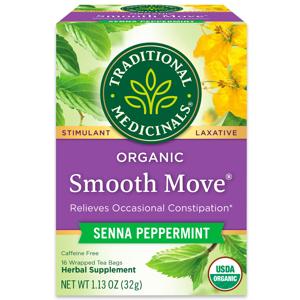
The taste is mildly bitter and slightly astringent. Adding honey or lemon improves palatability. Senna combines with peppermint tea to reduce cramping through peppermint’s antispasmodic effect on intestinal smooth muscle, which can make senna more comfortable for people who experience significant cramping from the stimulant laxative effect alone.
BUILDING LONG-TERM DIGESTIVE HEALTH
Senna tea addresses the symptom of constipation acutely but does not address the underlying causes. Long-term digestive health is better served by increasing dietary fiber, adequate hydration, regular physical activity, and the prebiotic fiber approach of burdock root and dandelion root tea that feeds the beneficial gut bacteria responsible for healthy colonic motility. Reserve senna for situations where acute relief is genuinely needed, not as a substitute for these foundational practices.
For the comprehensive picture of how herbal teas support digestive health across acute relief and long-term gut function, explore our guide to teas for digestion and teas for bloating relief alongside this senna overview.
SENNA TEA VERSUS OTHER HERBAL LAXATIVES
The strength of senna’s laxative effect distinguishes it fundamentally from the gentler herbal options commonly grouped with it. Dandelion root’s inulin, burdock root’s prebiotic fiber, and flaxseed mucilage all support healthy gut motility through microbiome-feeding mechanisms that operate over days and weeks. These are the tools for maintaining digestive regularity as a baseline. Senna is the tool for resolving an established constipation episode quickly. They occupy completely different therapeutic roles despite all being classified as natural digestive aids.
Understanding this distinction prevents the common mistake of using senna daily as a maintenance laxative and simultaneously prevents the opposite mistake of trying to resolve acute constipation with prebiotic teas that work on a completely different timescale. The right approach is prebiotic teas daily for long-term regularity, senna occasionally when acute constipation requires pharmacological relief within hours rather than days.
The seven-day maximum guideline for senna use is not arbitrary caution. It is based on the documented onset time for laxative dependence, which occurs when the colon becomes reliant on stimulant signals and loses sensitivity to the natural distension and neural signals that normally trigger peristalsis. Once dependence develops, the constipation on withdrawal from senna is often worse than the original episode that prompted its use. Respecting the seven-day limit prevents this dependence cycle from starting.
One practical consideration for athletes using senna: bowel preparation protocols before colonoscopy or medical procedures often use significantly higher senna doses than the single-cup relief dose described here. These protocols are medically supervised precisely because of the fluid and electrolyte management required at higher doses. This is not a reason to fear standard one-cup senna tea use, but it illustrates the dose-dependent nature of the safety considerations that make following the standard recommended dose important for home use.
FINAL WORDS
Senna tea works. That is not in question. The clinical evidence for its acute constipation relief is among the strongest of any herbal preparation, and it has earned legitimate pharmaceutical approval for this specific use. What makes senna different from most of the teas covered in this series is that the power that makes it effective is also the reason it requires deliberate dose control and strict frequency limits. Use it when you genuinely need it, follow the seven-day maximum guideline, and treat it as what it is: a reliable short-term pharmaceutical tool in a tea form, not a daily wellness beverage. For everything else in your digestive health toolkit, the gentler, long-term supportive approach of prebiotic teas and motility-supporting herbs is where the real sustainable benefit lives.
Certified strength and conditioning specialists with over 10 years of combined experience in powerlifting, nutrition coaching, and evidence-based fitness content. Based in New York City, the Genghis Fitness team tests every protocol in the gym before writing about it.