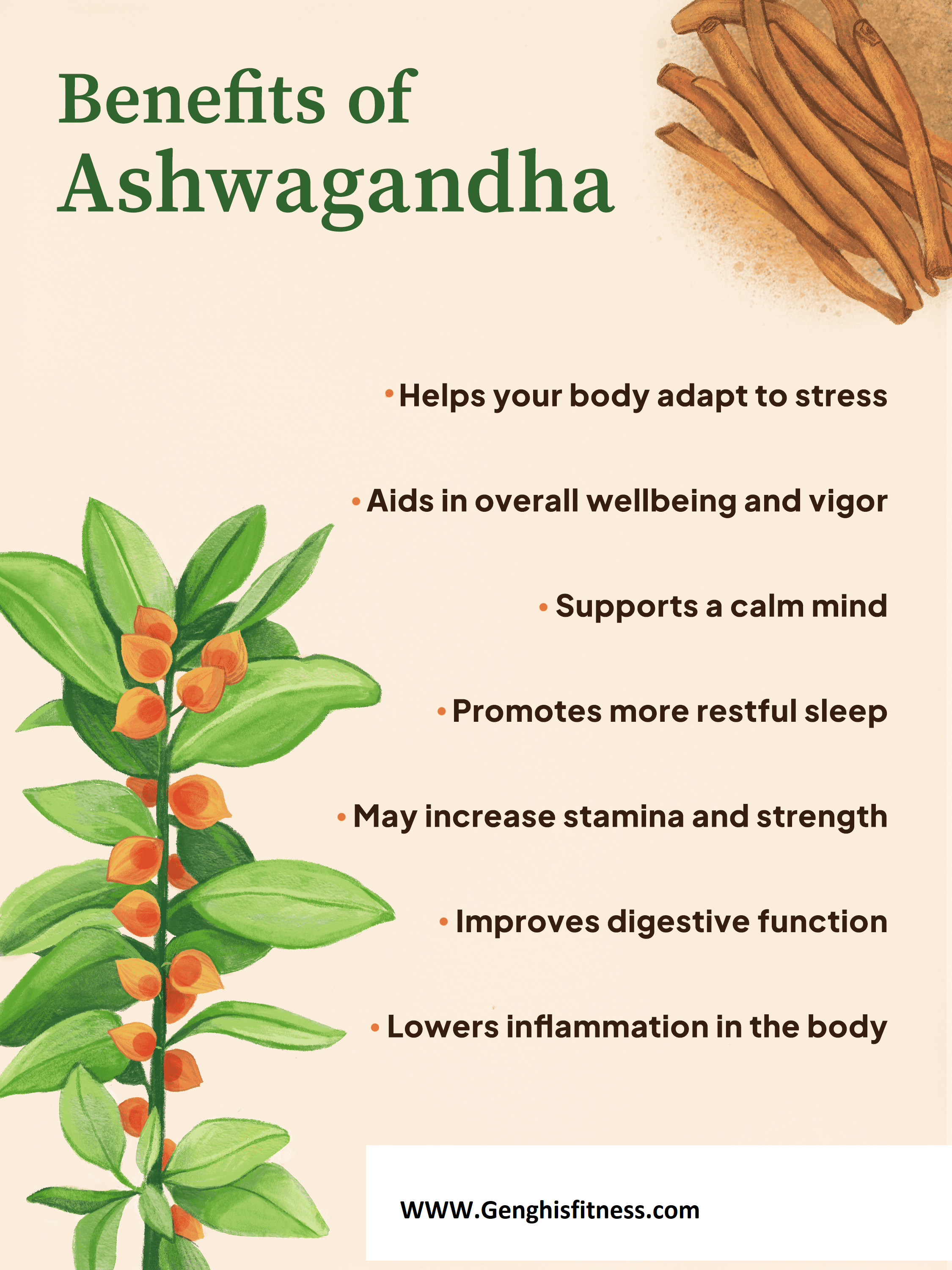
HOW ASHWAGANDHA BENEFITS WOMEN: HORMONAL BALANCE, STRESS, AND ATHLETIC PERFORMANCE
Ashwagandha, Withania somnifera, is the most widely used adaptogenic herb in Ayurvedic medicine and one of the most studied herbal supplements in modern clinical research. While much of the performance and testosterone research has been conducted in men, a growing body of evidence specifically examines ashwagandha’s effects in women, with particularly interesting findings for hormonal balance, stress management, thyroid function, and reproductive health. The female-specific evidence is now substantial enough to guide practical use.
THE ADAPTOGENIC MECHANISM: HOW ASHWAGANDHA MANAGES STRESS
Ashwagandha’s primary mechanism is modulation of the hypothalamic-pituitary-adrenal axis, the hormonal pathway that regulates the stress response through cortisol. The withanolide compounds, particularly withaferin A and withanolide D, normalize HPA axis activity by reducing excessive cortisol secretion without fully suppressing the stress response. This is the definition of adaptogenic action: normalizing an overactivated system rather than sedating it.
A randomized controlled trial found that ashwagandha root extract significantly reduced serum cortisol, perceived stress scores, and anxiety measures compared to placebo over eight weeks. Studies indexed on PubMed consistently find this cortisol-normalizing effect across multiple populations and preparations. For women dealing with chronic stress from career, family, and training demands simultaneously, this HPA axis normalization has wide downstream effects.
FEMALE HORMONAL BALANCE
Cortisol excess directly suppresses progesterone production by competing for the same precursor molecule, pregnenolone, through a pathway sometimes called the pregnenolone steal. Chronically elevated cortisol from ongoing stress effectively reduces progesterone relative to estrogen, contributing to the estrogen dominance symptoms that many women experience, including irregular cycles, PMS severity, mood fluctuations, and poor sleep.
By normalizing cortisol, ashwagandha indirectly supports progesterone levels and improves the estrogen-progesterone balance. A trial in perimenopausal women found ashwagandha supplementation significantly improved menopause symptom scores including hot flashes, mood changes, and sleep disturbance compared to placebo. The mechanism operates through this stress-hormone balance pathway rather than direct estrogenic activity.
THYROID FUNCTION SUPPORT
Ashwagandha has documented effects on thyroid hormone levels that are specifically relevant for women, who are significantly more likely than men to develop hypothyroidism. A study found that ashwagandha root extract supplementation for eight weeks significantly increased serum T3 and T4 levels in subclinical hypothyroid patients compared to placebo. The proposed mechanism involves ashwagandha’s direct stimulation of thyroid hormone synthesis and its antioxidant protection of thyroid tissue from the oxidative damage that contributes to autoimmune thyroid conditions.
For women with subclinical hypothyroidism or with thyroid dysfunction driven by chronic stress, ashwagandha’s combined HPA axis normalization and thyroid support addresses two interrelated aspects of the hormonal dysfunction simultaneously. Women taking thyroid medication should work with their prescribing physician before adding ashwagandha, as the thyroid-stimulating effects may require medication dose adjustment.
FEMALE SEXUAL HEALTH AND LIBIDO
A randomized double-blind trial published in BioMed Research International found that ashwagandha root extract significantly improved sexual function scores in women compared to placebo, including arousal, lubrication, orgasm satisfaction, and overall sexual satisfaction. The mechanisms involved include improved genital blood flow from nitric oxide enhancement, reduced anxiety-driven inhibition of sexual response through cortisol normalization, and possibly direct effects on androgenic precursor availability.
Chronic stress is one of the most common suppressors of female sexual function, and ashwagandha’s cortisol-reducing effect addresses this root cause more directly than symptomatic interventions. This application positions ashwagandha as a foundational stress management tool with sexual health benefits as a natural downstream consequence.
ATHLETIC PERFORMANCE IN WOMEN
A randomized controlled trial in recreationally active women found that ashwagandha supplementation for twelve weeks significantly improved VO2 max, muscle strength, and recovery compared to placebo. The mechanisms include reduced exercise-induced cortisol elevation, improved mitochondrial function from withanolide compounds, and enhanced recovery through reduced inflammatory signaling.
For female athletes managing the hormonal suppression that can accompany high training volumes, ashwagandha’s cortisol-normalizing effect helps maintain the hormonal environment needed for adaptation without reducing training intensity. This is particularly relevant for athletes in sports with high aerobic demands or competition weight pressures where HPA axis dysregulation is a documented performance limiter. Compare with the anti-inflammatory and recovery support approaches covered in our muscle recovery guide.
DOSING AND PRACTICAL USE
Clinically effective doses range from 300 to 600mg of standardized ashwagandha root extract daily. KSM-66 and Sensoril are the two most studied proprietary extracts with the most consistent clinical trial results. Taking ashwagandha with food reduces the mild gastrointestinal discomfort that occasional users experience. Evening timing supports the cortisol-lowering effect that benefits sleep quality, though morning and evening split dosing is used in many trials with equivalent results.
Ashwagandha is safe for most healthy women at the doses used in clinical trials. Women who are pregnant should avoid it due to traditional contraindications and limited safety data. Women with autoimmune thyroid conditions like Hashimoto’s should consult a healthcare provider before use given the thyroid-stimulating effects.
COMPARING ASHWAGANDHA TO OTHER WOMEN’S HERBAL SUPPLEMENTS
Ashwagandha occupies a distinct position in the women’s herbal supplement landscape because its primary mechanism, HPA axis normalization, operates at a more fundamental level than most hormone-specific herbs. Where spearmint tea specifically reduces androgens, where maca directly influences pituitary hormone signaling, and where black cohosh interacts with estrogen receptors, ashwagandha addresses the stress-hormone system that regulates all of these downstream hormonal processes.
This upstream action means ashwagandha is relevant for a broader range of hormonal concerns than any single-mechanism herb. Women dealing with the combination of chronic stress, fatigue, irregular cycles, poor sleep, and low libido that characterizes HPA axis dysregulation benefit more from addressing the root cause through ashwagandha than from stacking multiple hormone-specific supplements that address the downstream symptoms without normalizing the cortisol environment driving them.
BUILDING ASHWAGANDHA INTO A DAILY SUPPLEMENT ROUTINE
Ashwagandha pairs naturally with spearmint tea for women managing androgen-related concerns alongside chronic stress. The combination addresses both the HPA axis dysregulation through ashwagandha and the androgenic excess through spearmint’s 5-alpha reductase inhibition. Adding chamomile tea in the evening supports the GABA-A relaxation pathway alongside ashwagandha’s cortisol reduction for deeper sleep and faster recovery.
Consistency is more important than dose optimization for adaptogenic herbs. Taking 300mg of a standardized ashwagandha extract daily for at least eight weeks before evaluating results gives the HPA axis normalization mechanism enough time to produce measurable changes in cortisol patterns, mood, and stress reactivity. Expecting dramatic effects within days misunderstands how adaptogenic mechanisms work compared to acute pharmacological interventions.
Women navigating the decision about ashwagandha supplementation benefit from understanding that the quality of the specific product matters as much as the decision to use ashwagandha at all. The clinical trials that produced positive results used standardized extracts with verified withanolide content, specifically KSM-66 standardized to at least 5 percent withanolides and Sensoril standardized to at least 10 percent withanolide glycosides. Generic ashwagandha powder without standardization or third-party testing may contain significantly lower withanolide concentrations that do not replicate the clinical trial results. Paying for quality verification through certification labels and transparent product testing is a worthwhile investment for a supplement you plan to take daily for months.
FINAL WORDS
Ashwagandha’s benefits for women are among the most comprehensively evidenced in the adaptogenic herb category. Cortisol normalization, progesterone support, thyroid function enhancement, sexual health improvement, and athletic performance gains are all supported by controlled human trials rather than just traditional use or theoretical mechanisms. The breadth of benefit reflects the upstream nature of HPA axis regulation: normalizing cortisol produces positive effects across every system that chronic cortisol elevation was suppressing. Start with 300mg of a standardized extract in the evening, assess your response over four to six weeks, and build from there. The evidence supports making ashwagandha a daily fixture in any woman’s wellness routine who is managing chronic stress alongside training and life demands.
Certified strength and conditioning specialists with over 10 years of combined experience in powerlifting, nutrition coaching, and evidence-based fitness content. Based in New York City, the Genghis Fitness team tests every protocol in the gym before writing about it.