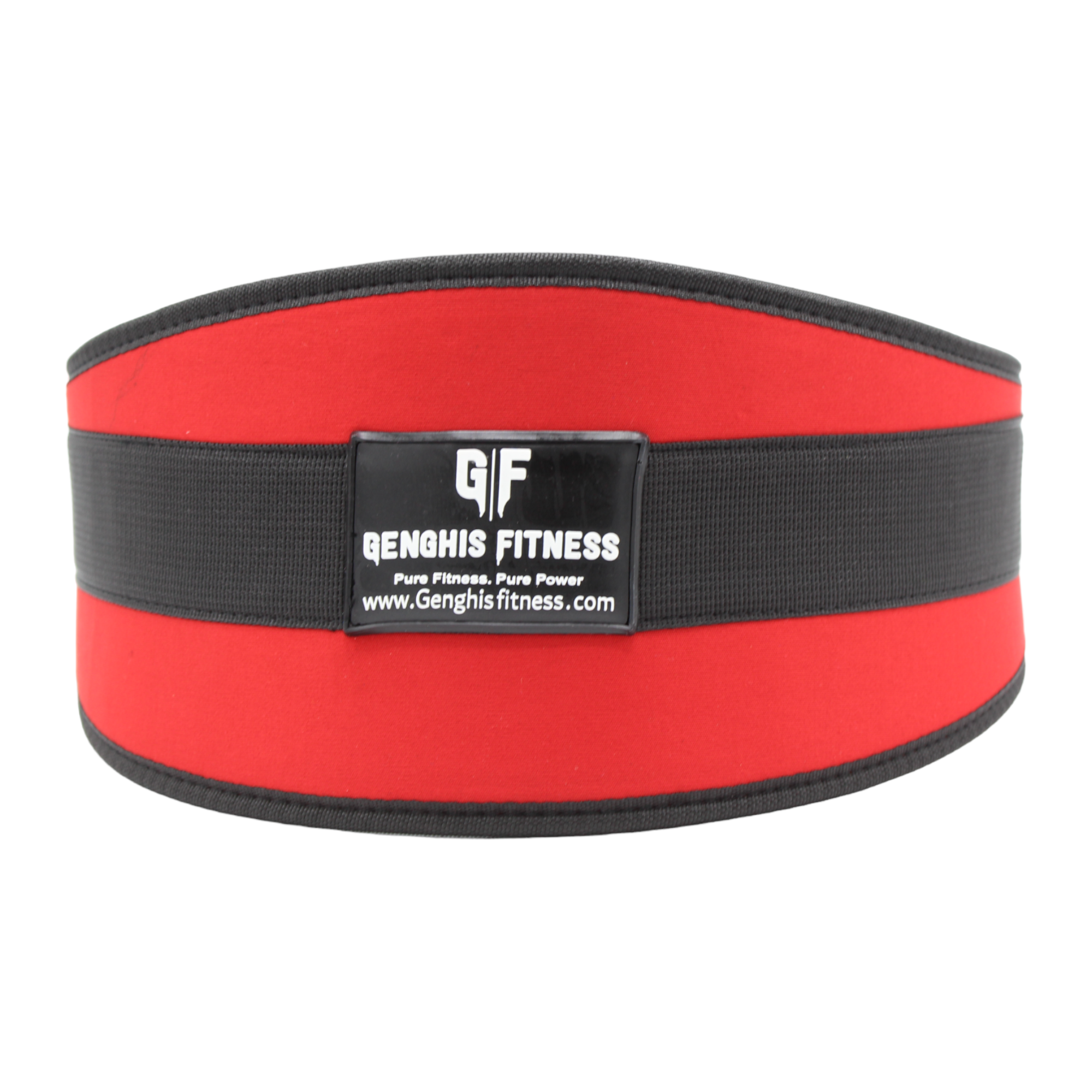
HOW TO SIZE A NEOPRENE WEIGHTLIFTING BELT: GET THE FIT RIGHT THE FIRST TIME
Why Sizing a Neoprene Belt Correctly Matters
A neoprene weightlifting belt that does not fit correctly cannot do its job. Too large and the belt compresses under bracing pressure without creating the firm wall you need to push against. Too small and it digs into the lower ribs or hip bones, makes breathing uncomfortable, and creates the kind of distraction during a heavy set that breaks focus at exactly the wrong moment. Neoprene weightlifting belts fit differently from leather or nylon alternatives because neoprene has inherent give in the material. Understanding how to measure correctly and how neoprene sizing differs from other belt materials makes the difference between a belt that feels like it was made for you and one that spends most of its life in a drawer.
The good news is that sizing a neoprene belt is straightforward when you measure correctly. Unlike jeans or shirt sizes, a weightlifting belt is sized by actual torso circumference at the navel, not by a garment size that may or may not correspond to your actual dimensions. Research from the Journal of Strength and Conditioning Research confirms that weightlifting belts generate meaningful intra-abdominal pressure increases during heavy lifts only when the belt fits snugly. A loosely fitting belt provides no meaningful advantage over training without one. Getting the size right from the start means every session with the belt delivers the spinal support you bought it for.
How to Measure for a Neoprene Belt
The Only Measurement That Matters
Stand upright in a relaxed posture, not sucking in the stomach and not pushing it out. Locate your navel. Wrap a soft fabric tape measure around your torso at the exact level of the navel, keeping the tape parallel to the floor all the way around. Make sure the tape sits flat against the skin without pulling tight or hanging loose. Read the measurement in inches. This is the number you will use to select your neoprene belt size. Write it down before you forget it.
Why You Should Not Use Your Pants Size
Pants sizes use waist measurements taken at a point lower than the navel and are frequently vanity-sized by manufacturers, meaning a 34-inch pants waist may actually correspond to a 36 or 37-inch actual waist circumference. Using your pants size to select a weightlifting belt is one of the most reliable ways to end up with the wrong size. Always measure your actual torso circumference at the navel with a tape measure specifically for belt sizing.
Accounting for Neoprene Stretch
Unlike leather and rigid nylon belts, neoprene has inherent elasticity. This means a neoprene belt that measures snug when you first put it on will feel slightly less snug after a few sessions as the material stretches minimally to conform to your torso shape. When your neoprene belt measurement falls right on the border between two sizes, select the smaller size. The minor initial tightness resolves within a few sessions and the fit will be more secure long-term than starting with the larger size that becomes too loose as the neoprene settles.
Standard Neoprene Belt Sizing Charts
Typical Size Ranges
Most neoprene belt manufacturers follow a sizing convention where extra small covers waist measurements of roughly 26 to 30 inches, small covers 30 to 34 inches, medium covers 34 to 38 inches, large covers 38 to 42 inches, extra large covers 42 to 46 inches, and double extra large covers 46 to 50 inches. These ranges vary slightly between manufacturers, so always check the specific chart for the belt you are considering rather than assuming universal sizing. A medium from one brand may correspond to a large from another.
Checking the Manufacturer Chart
Every reputable neoprene belt manufacturer provides a sizing chart based on waist circumference. Find your measured circumference in that chart and select the corresponding size. If your measurement falls in the overlap between two sizes, consult the notes on the chart. Most manufacturers will recommend either the smaller size for maximum compression or the larger size for comfort during extended wear, depending on the intended application of the belt. For training belts focused on support rather than extended comfort, err toward the smaller size.
Testing the Fit Before You Commit
The Snug Test
When the belt is on and closed at its middle adjustment setting, it should feel firm around your entire torso without any loose sections at any point around the circumference. Press your fingers under the belt at the front, the back, and both sides. You should not be able to slide your fingers more than about an inch under the belt anywhere around the circumference at this middle closure setting. If you can easily slide your whole hand under the belt at any point, it is too large. If you cannot close it comfortably at any setting, it is too small.
The Breath Test
With the belt at your intended training tightness, take a full diaphragmatic breath and push your belly outward against the front panel of the belt. You should feel clear resistance from the belt as you do this. The belt should not move significantly or allow the belly to push through without resistance. If the belt gives excessively and you do not feel a solid wall to brace against, the fit is too loose either because the size is too large or the closure is not tight enough for training use.
The Movement Test
With the belt on at training tightness, perform a few bodyweight squats to depth and a hip hinge to a deadlift position. The belt should stay at the navel throughout both movements without sliding up toward the ribs or down toward the hips. A neoprene belt that migrates during movement is either the wrong size or positioned incorrectly on the torso. If it slides consistently downward, try a smaller size. If it sits fine during squats but feels like it cuts into the hips at the bottom of the squat, try positioning it one to two centimeters higher on the torso or consider a tapered front belt design. Pair the correctly sized neoprene belt with knee sleeves on heavy squat days for complete joint support.
Neoprene Belt Width and Its Effect on Sizing
Neoprene belts come in widths ranging from 4 inches to 6 inches. A wider belt covers more of the lumbar and abdominal area and provides more comprehensive support, but it also requires more precise torso length to fit without riding up into the ribs or down onto the hip bones. Athletes with shorter torsos between the bottom rib and the top of the pelvis often find 4-inch neoprene belts more comfortable than 6-inch models regardless of the circumference fit. If you have a shorter torso, consider selecting a 4-inch model and adjusting your circumference sizing accordingly.
For athletes with longer torsos, a 6-inch neoprene belt fills the lumbar window between ribs and pelvis more completely and can provide superior coverage during both squatting and deadlifting. The Genghis Fitness neoprene belt is designed to balance width and torso coverage effectively for the majority of athletes. Measure your torso height from just above the hip crest to just below the lowest rib if you are unsure whether a 4 or 6-inch width suits your proportions, and compare that measurement against the belt width you are considering.
What to Do If You Are Between Sizes
Being between sizes is common because torso circumference does not always land neatly in the middle of a manufacturer size range. When you are between sizes in a neoprene belt, the practical approach is: if training intensity and maximum support are the priority, choose the smaller size for a tighter brace surface. If comfort during extended training sessions or general fitness use is the priority, choose the larger size. Most serious strength athletes buying a neoprene belt for working sets on compound lifts will be better served by the smaller size, since the slightly tighter initial fit provides the firmer bracing wall that the application demands.
FINAL WORDS
Sizing a neoprene weightlifting belt correctly takes five minutes of measurement and a clear look at the manufacturer chart. Do not skip this step or guess based on clothing size. Measure at the navel, find your size on the chart, round down when between sizes for training applications, and test the fit with the breath and movement tests before your first heavy session. A correctly sized Genghis Fitness neoprene belt delivers real lumbar support and proprioceptive feedback through every working set. An incorrectly sized one is an expensive piece of neoprene that sits in your bag.
Certified strength and conditioning specialists with over 10 years of experience in powerlifting, nutrition, and evidence-based fitness content. Based in New York City.
TRAIN WITH EQUIPMENT THAT MATCHES YOUR EFFORT
Serious strength training demands serious gear. A lever belt, quality straps, and knee sleeves are not accessories. They are tools.
10mm Lever Belt Lifting StrapsExplore the full weightlifting belt guides for lever belt comparisons, leather belt reviews, neoprene belt recommendations, sizing guides, and sport-specific belt selection across powerlifting, CrossFit, and Olympic lifting.