How to Size a Weightlifting Belt: A Precise Measurement Guide
Getting the size right on a weightlifting belt is a five-minute process that most buyers skip or do incorrectly. They guess based on their clothing size, order the middle option in the range, or assume the sizing will be close enough. Then the belt arrives and closes at the wrong point in the hole range, or does not close at all, and they either train with a poorly fitted belt or go through the hassle of a return and exchange.
Sizing a weightlifting belt correctly requires one measurement, taken at one specific location, mapped to the manufacturer’s chart. This guide walks through every step of that process with enough detail to get it right the first time.
The Single Measurement That Matters
Belt size is determined by your waist circumference at the belt position, not your general waist size, not your pants size, and not a measurement taken at the navel. The belt position is one to two inches above the iliac crest, which is the bony protrusion at the top of the hip.
Find the iliac crest by placing your hands on your hips. The bone you feel at the top of each hip is the iliac crest. Move your hands upward one to two inches above that point. This is where the belt will sit during training. Take your measurement here.
Use a flexible fabric tape measure. Wrap it around your torso at this position, keeping the tape level all the way around. Stand relaxed. Do not draw in or push out. Breathe normally and measure at the end of a relaxed exhale. Record the number in inches. This is the number you use for every belt sizing chart.
Why Clothing Size Does Not Apply
Clothing sizes are based on measurements taken at the natural waist, which for most people is at or near the navel. Belt sizing is based on a measurement taken significantly lower, closer to the hips. These measurements are often different, sometimes by several inches. An athlete with a 34-inch clothing waist might measure 36 or 38 inches at the belt position depending on their hip-to-waist ratio. Using clothing size to choose a belt size almost guarantees an incorrect fit.
Reading a Belt Sizing Chart
Every belt manufacturer publishes a sizing chart that maps circumference measurements to size designations. A typical chart looks like this:
- Small: 26 to 32 inches
- Medium: 32 to 38 inches
- Large: 38 to 44 inches
- X-Large: 44 to 50 inches
- XX-Large: 50 to 56 inches
These ranges represent where the belt’s hole pattern is designed to close. A belt in a given size is designed to close comfortably in the middle of its hole range when the wearer’s measurement matches the middle of that size range. When your measurement falls at the lower end, the belt closes toward the tighter holes. When it falls at the upper end, toward the looser end.
The goal is for your measurement to land within the middle third of the size range. This gives you room to tighten or loosen by two holes in either direction as your body changes across a training year.
What to Do at the Border Between Sizes
Border measurements, where your number falls exactly at the overlap point between two sizes, require a decision. The standard recommendation is to size down when at a border.
Here is why: a belt where your measurement is at the large end of the smaller size will close in the middle-to-loose zone of the hole pattern. You have room to tighten. A belt where your measurement is at the small end of the larger size will close at or near the tightest hole, leaving no room to tighten further when you need it. Sizing down at the border preserves the adjustment range you need.
The exception is if you are currently in a weight gain phase and expect your measurement to increase by several inches over the coming months. In that case, sizing up at the border may be more practical to avoid outgrowing the smaller belt quickly.
Taking a Second Measurement for Bracing Expansion
Some belt manufacturers ask for a second measurement taken after a full core brace. After measuring at your relaxed exhale, take a full breath into the belly and push the abdominal wall outward as hard as you can, as you would before a heavy lift. Measure again in this expanded state.
The difference between your relaxed and braced measurements, typically 2 to 4 inches for trained athletes, tells the maker how much expansion range the belt needs to accommodate. A belt sized to the relaxed measurement with standard hole spacing provides approximately two holes of tightening range below the resting position, which is sufficient for most athletes.
Width Sizing: The Second Variable
Belt length sizing and belt width are separate decisions. Once you have your circumference measurement for length sizing, check the space between the top of your iliac crest and the bottom of your lowest floating rib on the side of your torso.
- Less than 4 inches: A 3-inch or tapered belt is the more comfortable choice. A full 4-inch belt will contact both the hip crest and the rib simultaneously.
- 4 to 5 inches: Either width can work. Test a 4-inch belt first. If hip mobility is affected during squats, move to a tapered design.
- More than 5 inches: A 4-inch straight belt seats cleanly and provides the maximum bracing surface.
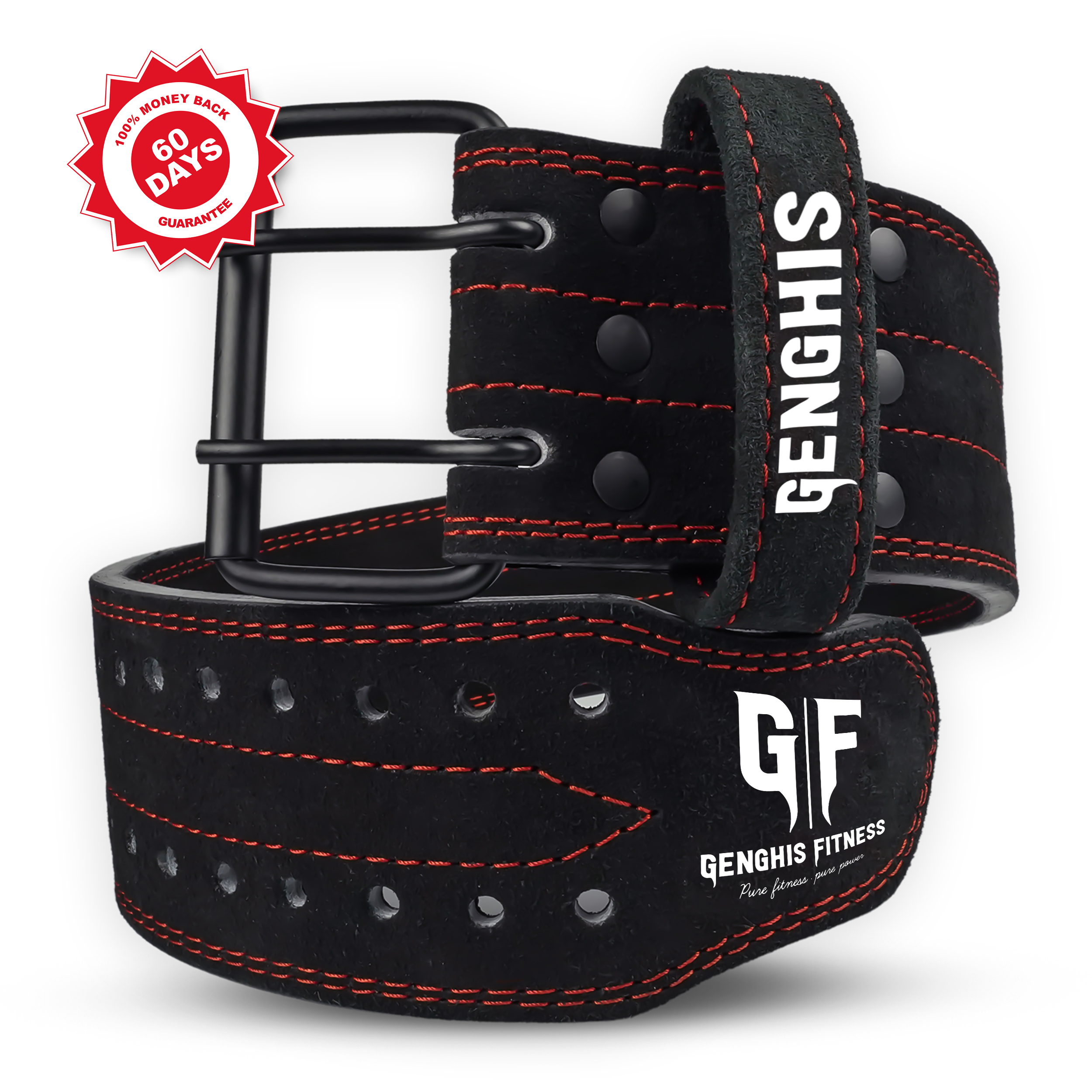
The Genghis Fitness 4-inch leather weightlifting belt suits athletes with average to longer torsos. The Genghis Fitness nylon lifting belt is available in configurations that work across a range of torso dimensions and is worth considering for athletes who find standard leather width uncomfortable at the hip or rib contact points.
Verifying Fit When the Belt Arrives
When your belt arrives, put it on at the correct position and close it. The closure should land in the middle portion of the hole range, not at the extreme ends. If the belt closes at the very first hole, it is too large. If it cannot close at all, or closes only at the last hole, it is too small.
New leather will feel stiffer than the final broken-in fit. If the closure is in the correct hole zone but the belt feels tight, that stiffness will reduce significantly over 6 to 10 training sessions as the leather conforms to your body. A belt that is correctly sized but new is not the same as a belt that is too small. Give the break-in process time before concluding the sizing is wrong.
Sizing Nylon and Neoprene Belts
The same belt-position measurement applies for nylon and neoprene belts. The difference is that these materials are more elastic than leather, so they accommodate a wider measurement range per size designation. When sizing a nylon belt with a velcro or roller closure, the continuous adjustment available means the measurement only needs to fall within the general size range rather than mapping precisely to the hole zone.
Always read the specific sizing chart for the product you are buying. Nylon belt sizing can vary significantly between manufacturers. The Genghis Fitness neoprene weightlifting belt sizing guide follows the same belt-position measurement principle and maps to standard small through extra-large designations using the measurement taken one to two inches above the iliac crest.