LATEST IN KNEE SLEEVE TECHNOLOGY: WHAT HAS ACTUALLY IMPROVED AND WHAT IS JUST MARKETING
Knee sleeve technology has evolved meaningfully over the past decade, and some of those improvements translate into real training benefits. Others are primarily aesthetic changes or marketing repositioning of existing materials that do not meaningfully affect training outcomes. Separating the genuine advances from the superficial ones requires understanding what the original neoprene knee sleeve was designed to accomplish, which of those functions are now delivered more effectively by newer materials and construction approaches, and which supposed improvements do not deliver measurable benefits that justify the premium pricing they typically command in the current market.
WHAT ORIGINAL NEOPRENE KNEE SLEEVES WERE DESIGNED TO DO
The standard neoprene knee sleeve was designed around three functional mechanisms: thermal retention that maintains elevated tissue temperature around the joint throughout a training session, proprioceptive enhancement through compression-mediated mechanoreceptor activation, and mild compression that reduces inflammatory fluid accumulation during and after high-volume training. Research on compression and joint proprioception confirmed the proprioceptive mechanism. Research on thermotherapy and joint mechanics confirmed the thermal benefit. These two mechanisms remain the primary functional justification for knee sleeve use, and any assessment of newer sleeve technology must be evaluated against whether it improves delivery of these two mechanisms versus simply changing the product appearance or marketing positioning for a higher price point.
It is worth noting that the original neoprene sleeve, when correctly sized and made from adequate neoprene density, delivers these functional benefits reliably and consistently. The improvements in modern construction described below are genuine enhancements to comfort, durability, and precision of compression delivery. They are not corrections to fundamental functional failures in original neoprene sleeve design. Athletes who use well-made standard neoprene sleeves correctly are already accessing the primary functional mechanisms. The improvements enhance the delivery of those mechanisms, not the mechanisms themselves.
GENUINE IMPROVEMENTS IN MODERN KNEE SLEEVE CONSTRUCTION
NEOPRENE DENSITY CALIBRATION
The most meaningful technical advance in knee sleeve construction over the past decade is improved calibration of neoprene density to the specific compression requirements of different training applications. Original neoprene sleeves were produced in relatively uniform density, requiring athletes to choose between standard 5mm and 7mm thickness options that defined the available compression range. Modern manufacturing allows more precise density calibration that produces targeted compression profiles: higher compression at the patellar tendon attachment zone where compression benefits are highest, graduated compression at the superior and inferior sleeve edges that reduces the tourniquet effect of abrupt compression changes, and maintained warmth throughout the sleeve body without the uneven compression distribution that uniform-density sleeves can produce at joint margins.
SEAM CONSTRUCTION ADVANCES
Flat-lock seam construction, which places the seam flat against the skin surface rather than raised against it, has become standard in quality knee sleeves where it was less common a decade ago. Flat-lock seaming eliminates the pressure ridge that raised seams create against the skin during repetitive knee flexion and extension, which becomes a significant comfort issue in high-repetition training contexts such as Olympic lifting, CrossFit, and high-rep squat sessions. This is a genuine construction improvement that translates to measurably better comfort during high-volume training without changing the compression or thermal properties of the sleeve itself. Athletes who previously found knee sleeves uncomfortable during high-rep work often find the difference significant when switching to flat-lock construction from older raised-seam alternatives.
INNER SURFACE MATERIALS
The inner surface lining material of modern quality knee sleeves has improved in moisture management and skin comfort. Earlier sleeves used simple neoprene or basic fabric linings that accumulated sweat and created skin friction during extended wear. Quality modern sleeves use moisture-wicking inner linings that move sweat away from the skin surface, reducing the skin irritation and bacterial accumulation that made older sleeves unpleasant to wear across long training sessions and between sessions without thorough washing. This improvement is meaningful for training comfort and hygiene without affecting the compression or thermal properties that determine functional performance.
INNOVATIONS THAT ARE PRIMARILY MARKETING
COMPRESSION ZONE MAPPING
Some premium knee sleeves are marketed with elaborate compression zone diagrams that suggest precisely targeted support at specific anatomical structures. In practice, the compression distribution in a sleeve is determined primarily by the neoprene density and the sleeve dimensional geometry relative to the knee joint, not by graphic zone patterns printed on the outside of the sleeve or claimed in marketing materials. A well-fitted sleeve of appropriate neoprene density will provide appropriate compression across the joint simply by virtue of its correct geometry. Paying a significant premium for zone-mapped compression claims that are not supported by independent biomechanical testing data is paying for marketing rather than technology that translates to measurable training outcomes.
SPECIALTY MATERIAL CLAIMS
Various premium sleeve products claim performance benefits from proprietary blends, nano-materials, or specialty fibers woven into the neoprene matrix. The fundamental functional properties of a knee sleeve, thermal retention and compressive force transmission, are primarily determined by neoprene density and sleeve geometry. Independent peer-reviewed research does not support meaningful performance advantages from the specialty material additions claimed by these premium products at their price premium over well-constructed standard neoprene sleeves. These claims should be evaluated with appropriate skepticism and compared against the demonstrated functional benefits of quality standard neoprene construction at a lower and more accessible price point for the vast majority of training athletes.
WHAT TO ACTUALLY LOOK FOR IN A QUALITY MODERN KNEE SLEEVE
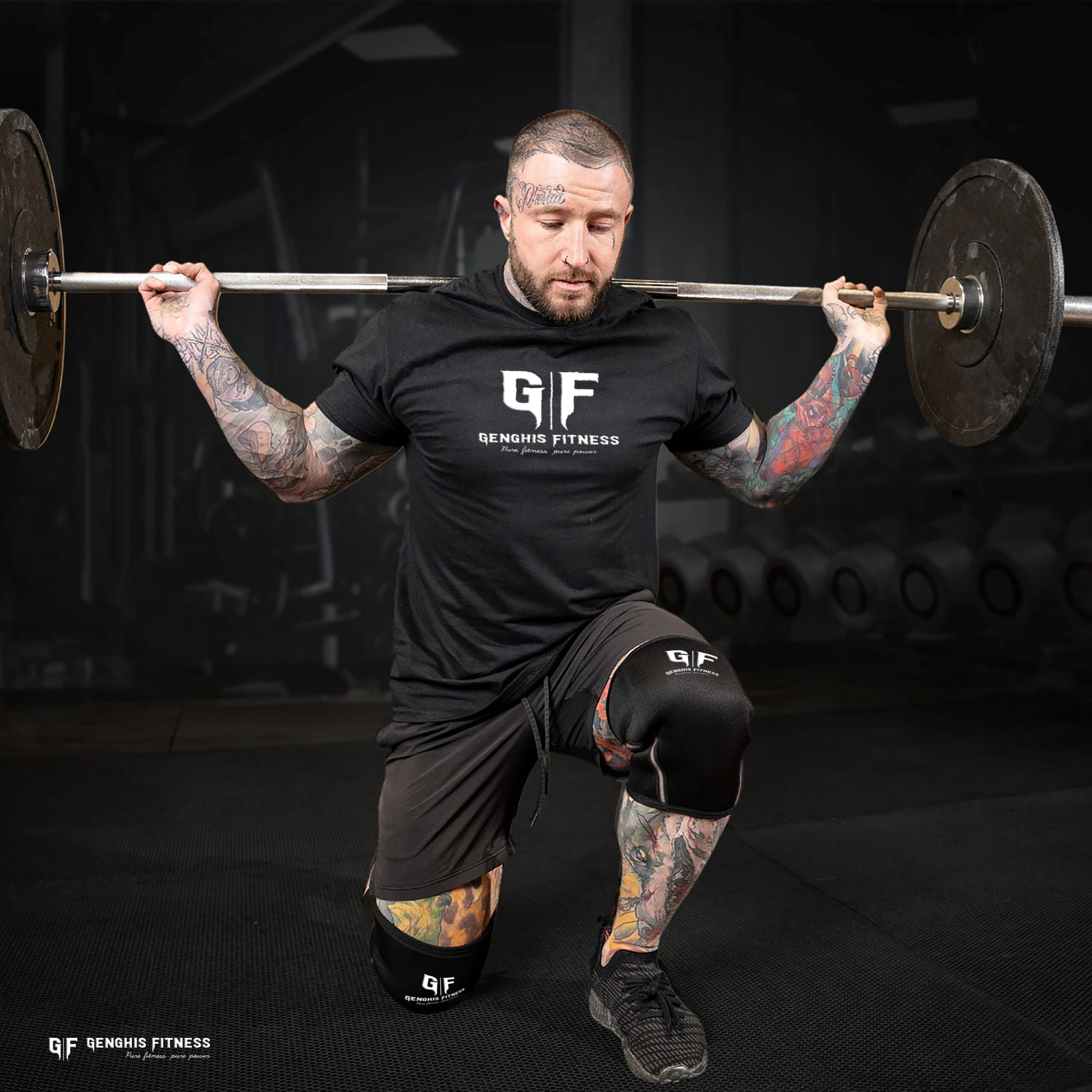
Given the genuine improvements and the marketing noise in the current market, the practical evaluation criteria for a quality modern knee sleeve are: appropriate neoprene density for the intended training application (5mm for general training and functional fitness, 7mm for competitive powerlifting where additional compression and minor elastic contribution are warranted), flat-lock seam construction throughout, quality moisture-wicking inner lining, correct sizing that creates functional compression rather than loose circumferential contact, and a manufacturer that specifies these construction details explicitly rather than describing their product only in marketing language. The Genghis Fitness knee sleeves are built to these construction standards and priced to reflect material and manufacturing quality rather than a premium for claims that do not translate into measurable training benefits.
INTEGRATING QUALITY KNEE SLEEVES INTO YOUR TRAINING SETUP
Quality knee sleeves worn consistently from the first warm-up set of every lower body session deliver the thermal and proprioceptive benefits that improve both training performance and joint health over a full training career. Pair them with a quality lever belt for heavy compound sets, knee wraps for maximum effort squatting when additional elastic rebound assistance is warranted, and lifting straps for high-volume deadlift training to cover all major support needs in a complete lower body heavy training setup. The technology in your equipment matters less than the consistency with which you use quality gear correctly and size it appropriately for functional compression rather than superficial comfort.
FINAL WORDS
Knee sleeve technology has genuinely improved in neoprene density calibration, seam construction quality, and inner surface materials over the past decade. These improvements translate into measurably better comfort during high-volume training, more precise compression delivery across the joint, and better hygiene across extended training sessions. The fundamental functional mechanism of thermal retention and proprioceptive enhancement is the same as it was in the original neoprene sleeve, and it remains most effectively delivered by a correctly sized, adequately dense neoprene sleeve worn consistently from the warm-up through every working set. Evaluate technology claims against what the research confirms rather than what marketing asserts. The Genghis Fitness knee sleeves deliver the construction improvements that matter without the marketing premium for claims that do not translate into real training benefits.
Certified strength and conditioning specialists with over 10 years of experience in powerlifting, nutrition, and evidence-based fitness content. Based in New York City.
For the full collection of knee sleeve, wrist wrap, and elbow sleeve guides, visit the knee sleeves, wraps and joint support guides covering sizing, thickness selection, sport-specific recommendations, and care instructions.