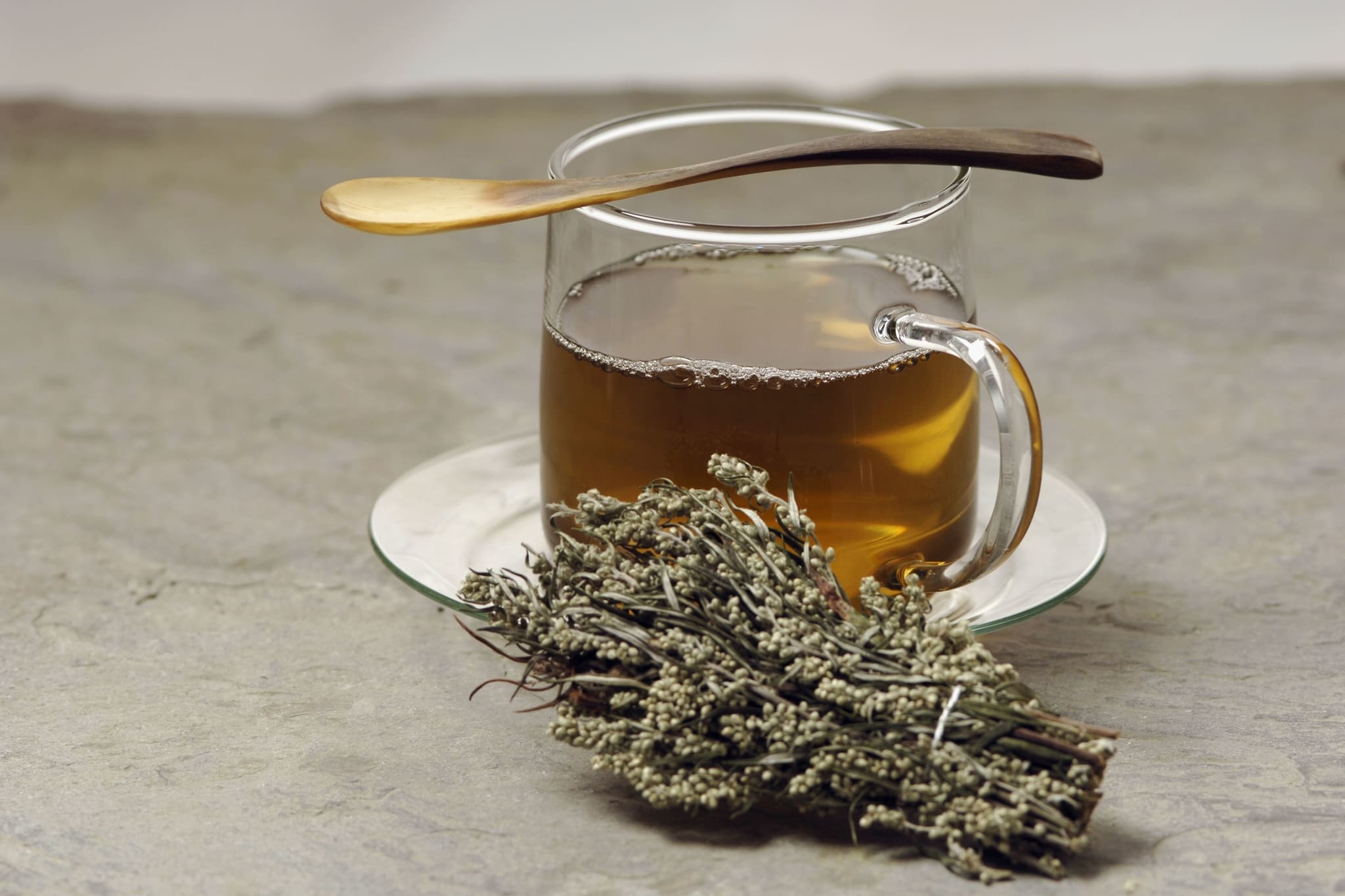
MUGWORT TEA: THE ANCIENT HERB FOR DIGESTION, DREAMS, AND WOMEN’S HEALTH
Mugwort, Artemisia vulgaris, is one of the most historically significant medicinal herbs in both Eastern and Western traditions. Used in Traditional Chinese Medicine for moxibustion, in European herbalism as a digestive bitter and menstrual regulator, and in Native American traditions for multiple ceremonial and medicinal applications, mugwort has been a consistent presence in human healing traditions for millennia. Modern research has begun characterizing the mechanisms behind some of its documented uses with interesting results. This is a complex herb that requires both appreciation and caution in equal measure.
WHAT MUGWORT TEA CONTAINS
Mugwort leaves and stems contain a rich essential oil profile dominated by thujone, camphor, cineole, borneol, and linalool. The thujone content is the primary reason for safety considerations around mugwort, as thujone is toxic in high doses and is the same compound responsible for the historical controversies around absinthe. Alongside the essential oil fraction, mugwort contains sesquiterpene lactones including artabsin, absinthin, and matricin, which are the primary bitter compounds driving the digestive properties.
Flavonoids including quercetin, luteolin, and isorhamnetin contribute antioxidant and anti-inflammatory activity. Coumarin derivatives including scopoletin have mild anticoagulant and antispasmodic properties. Studies indexed on PubMed have characterized the compound profile and confirmed antimicrobial activity of mugwort extracts against multiple pathogens including Helicobacter pylori.
DIGESTIVE BITTERS: THE CORE TRADITIONAL APPLICATION
The sesquiterpene lactone bitter compounds in mugwort are the basis for its primary traditional use as a digestive aid. Bitter compounds stimulate the production of digestive enzymes, gastric acid, and bile through gustatory reflexes that activate the vagus nerve and digestive secretory pathways. This bitter-stimulated enhancement of digestive function is the mechanism shared by all traditional herbal digestive bitters including dandelion root, gentian, and artichoke leaf.
Mugwort has historically been used specifically for heavy, fatty meals that challenge digestive capacity. The bitter compounds promote the bile secretion needed for efficient fat emulsification and the enzyme production needed for complete protein digestion. For occasional use as a pre-meal digestive aid before rich meals, one cup of mugwort tea is consistent with traditional practices that have been used effectively for centuries.
Compare the digestive bitter mechanism with the simpler carminative approach of fennel tea and the bile-stimulating effect of burdock root tea to understand the full range of dietary tools available for digestive support.
WOMEN’S HEALTH AND MENSTRUAL APPLICATIONS
Mugwort has been used as an emmenagogue across multiple cultural traditions, meaning it was used to stimulate or regulate menstrual flow. The mechanism involves artabsin and other sesquiterpene lactones stimulating uterine smooth muscle contractions. This same mechanism makes mugwort absolutely contraindicated during pregnancy, as uterine stimulation poses direct miscarriage risk.
For non-pregnant women experiencing delayed or irregular menstrual cycles associated with cold, stress, or constitutional factors as described in traditional frameworks, occasional mugwort tea has been used historically. The modern herbal medicine perspective acknowledges this traditional use while emphasizing that underlying hormonal or gynecological causes of menstrual irregularity require medical evaluation rather than herbal self-treatment.
SLEEP AND DREAM EFFECTS
Mugwort has an unusual reputation across many cultures for producing vivid, memorable dreams when consumed before sleep or used as a pillow herb. The thujone and other terpene compounds in mugwort interact with neurological receptor systems in ways that may affect dream vividness and recall through effects on acetylcholine and serotonin signaling during REM sleep phases. The research base for this specific application is largely anecdotal and ethnobotanical rather than from controlled clinical trials.
For athletes interested in sleep quality as a recovery metric, mugwort tea before sleep is a low-risk experiment at one cup occasionally. The calming essential oil compounds including linalool and borneol contribute mild sedative effects that support sleep onset regardless of the dream quality dimension.
ANTIMICROBIAL AND ANTI-INFLAMMATORY PROPERTIES
Mugwort extracts have demonstrated antimicrobial activity against Helicobacter pylori, Staphylococcus aureus, E. coli, and several fungal pathogens in laboratory studies. The sesquiterpene lactones contribute anti-inflammatory activity through NF-kB inhibition and cytokine suppression. These properties are consistent with the herb’s use in traditional medicine for infections and inflammatory conditions.
The anti-inflammatory profile of mugwort complements the digestive applications by reducing gastrointestinal mucosal inflammation alongside the bitter-stimulated improvements in digestive function. For someone dealing with both digestive sluggishness and gastrointestinal inflammation, mugwort tea addresses both dimensions in a single preparation.
SAFETY: UNDERSTANDING THE THUJONE CONCERN
Thujone is toxic in high doses, affecting the central nervous system through GABA receptor antagonism. At the concentrations present in a cup of mugwort tea prepared from dried herb, the thujone dose is well below levels associated with neurotoxicity. However, concentrated mugwort preparations, essential oil products, and very high consumption levels should be avoided.
The safety profile of mugwort tea at one to two cups consumed occasionally, meaning several times per week rather than multiple cups daily for extended periods, is generally considered acceptable for healthy non-pregnant adults in the herbal medicine literature. Daily high-dose consumption over months is not recommended. Pregnant women must avoid mugwort entirely. People with epilepsy should also avoid it due to thujone’s neurological activity.
PREPARATION AND APPROPRIATE USE
Steep one teaspoon of dried mugwort in hot water just below boiling for five to seven minutes. The flavor is distinctly bitter and aromatic with a sage-like, slightly menthol character. Most people benefit from a small amount of honey to balance the intensity. Mugwort blends well with chamomile for a more balanced digestive and relaxation blend that reduces the bitterness and combines complementary mechanisms.
Use mugwort tea as a specific tool for digestive support, menstrual concerns, or pre-sleep relaxation rather than as a daily maintenance beverage. Its potency and safety considerations make it better suited to targeted use than to the daily habitual consumption that is appropriate for milder herbal teas like peppermint or rose tea.
MUGWORT IN THE TRADITIONAL MEDICINE CONTEXT
Understanding mugwort requires appreciating that it has been used effectively in Traditional Chinese Medicine, European herbalism, and Native American healing traditions for millennia, primarily in ways that reflect accumulated practical knowledge rather than random experimentation. The specific applications that have persisted across all these traditions, primarily digestive bitters and menstrual support, are the applications most consistently supported by modern pharmacological research on the identified active compounds. Traditional wisdom and modern pharmacology converging on the same applications provides a reasonable signal that these uses reflect genuine observed efficacy.
Moxibustion, the Traditional Chinese Medicine practice of burning dried mugwort over acupuncture points, is the most studied traditional application in controlled research. Multiple systematic reviews have found evidence supporting moxibustion for breech presentation in pregnancy, osteoarthritis pain management, and several other clinical conditions. This research supports the general bioactive potency of Artemisia vulgaris compounds without directly testing the tea preparation specifically. The moxibustion research is included here not as evidence for tea consumption effects but as context for why this herb has maintained serious medical application in highly sophisticated traditional medicine systems for 2,000 years.
The long-term use pattern recommended for mugwort reflects how traditional herbal medicine systems have always approached potent herbs with significant bioactive effects: use them for specific purposes for defined periods rather than incorporating them as permanent daily fixtures in the way that gentler herbs like chamomile or peppermint are used. This targeted use philosophy is the correct approach for mugwort. Drink it before a rich meal to support digestion, use it occasionally for menstrual support under appropriate circumstances, or explore the sleep and dream applications occasionally rather than building it into the daily routine that safer herbs occupy. Respecting the potency of the herb through appropriate use patterns is what distinguishes effective herbal medicine from either over-cautious avoidance or reckless overconsumption.
Certified strength and conditioning specialists with over 10 years of combined experience in powerlifting, nutrition coaching, and evidence-based fitness content. Based in New York City, the Genghis Fitness team tests every protocol in the gym before writing about it.