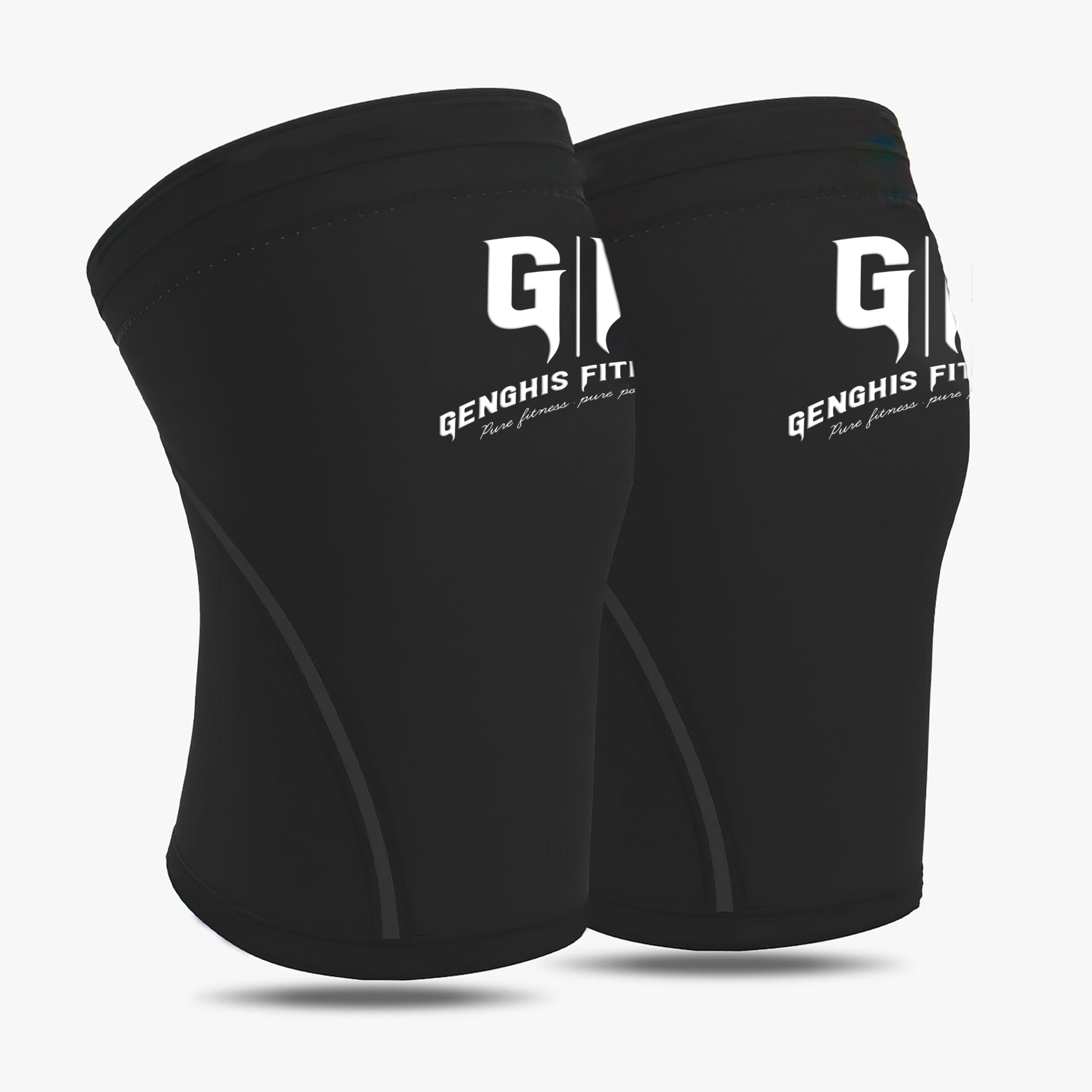
NEOPRENE KNEE SLEEVES: THE COMPLETE GUIDE FOR ATHLETES WHO TRAIN HARD
Neoprene knee sleeves are one of the most practical and widely used pieces of joint support equipment in strength training, functional fitness, and endurance sports. They are not braces and they are not wraps. They are compression garments that provide thermal retention, proprioceptive feedback, and joint support in a format that stays in place through an entire training session without requiring adjustment or removal between exercises. Understanding exactly what neoprene knee sleeves do, how to choose the right pair for your specific training demands, and how to integrate them into a complete equipment setup gives you a meaningful tool for both performance optimization and long-term joint health.
THE SCIENCE BEHIND NEOPRENE KNEE SLEEVES
THERMAL RETENTION AND JOINT WARMTH
Neoprene is a synthetic rubber with exceptional heat retention properties. When worn against the skin, a neoprene sleeve traps body heat around the knee joint, maintaining elevated tissue temperature throughout the training session including during rest periods between heavy sets when the joint would otherwise cool and stiffen progressively. Research on joint thermotherapy consistently demonstrates that elevated tissue temperature improves the viscoelastic properties of cartilage, tendons, and ligamentous tissue, reducing the stiffness that contributes to both acute injury risk and chronic wear accumulation. For athletes training in cold environments, in early morning sessions before the body has fully warmed up, or in garage gyms during winter months, neoprene sleeves provide passive thermal protection throughout the training session that significantly reduces the risk of loading a cold, stiff joint under heavy barbell loads.
PROPRIOCEPTION AND JOINT AWARENESS
Proprioception is the body’s ability to sense joint position, movement, and force in real time through mechanoreceptors in the skin and soft tissues surrounding the joint. The compression applied by a neoprene sleeve activates these mechanoreceptors more consistently than bare skin during dynamic loading, improving the quality and speed of proprioceptive feedback to the nervous system. Research on compression and joint proprioception confirms measurably improved joint position sense during dynamic tasks with compression garments. For heavy squatters and Olympic weightlifters, this enhanced proprioceptive feedback improves motor control quality during the movement, reduces the likelihood of knee valgus collapse under heavy loads, and supports more precise bar path mechanics throughout every rep of every working set.
COMPRESSION AND FLUID MANAGEMENT
The circumferential compression of a neoprene sleeve reduces the accumulation of synovial fluid and inflammatory fluid in the joint capsule during and after high-volume training. Athletes doing high-rep squatting, Olympic lifting, or jump training often notice knee puffiness and joint stiffness at the end of heavy sessions without sleeve use. Sleeve compression reduces this puffiness by limiting the space available for fluid accumulation and by facilitating the lymphatic drainage that clears inflammatory byproducts from the joint capsule. The result is a joint that feels better during the session and recovers faster between sessions than an unsleeved joint under equivalent training demands.
HOW TO CHOOSE THE RIGHT NEOPRENE KNEE SLEEVE
THICKNESS: 5MM VS 7MM
Neoprene knee sleeves are available in 5mm and 7mm thickness. The 5mm option is appropriate for most general training applications including CrossFit, recreational powerlifting, functional fitness, and endurance athletes using sleeves primarily for warmth and proprioceptive benefit during sustained activity. The 7mm option provides more compression and is used by competitive powerlifters who want the sleeve to contribute meaningful joint support during near-maximum squat efforts where the additional compression provides both physical support and the psychological confidence that comes with knowing the joint is fully protected. The 7mm sleeve is stiffer and warmer but also more restrictive and more demanding to wear during extended training sessions. Most athletes who are not competitive powerlifters are well served by 5mm sleeves for all their training needs.
SIZING: THE MOST IMPORTANT PURCHASE DECISION
Knee sleeve sizing determines whether the sleeve provides functional compression or is merely a loose fabric tube around the leg. Measure the circumference of the leg at the center of the kneecap and compare to the manufacturer’s sizing chart. When in doubt between two sizes, always size down for knee sleeves. A sleeve that slides down during a heavy squat set provides no meaningful compression or proprioceptive benefit and must be readjusted between sets, which is distracting enough to interrupt training focus. The correct fit should require deliberate effort to pull on but should feel firmly compressive rather than painfully constricting during training. The Genghis Fitness knee sleeves sizing runs true to manufacturer specifications and the sizing guide is accurate when compared against training waist circumference measurements taken at the kneecap.
CONSTRUCTION QUALITY MARKERS
Quality neoprene sleeves are constructed with flat-lock stitching at the seams rather than raised seams that create pressure ridges against the skin during repetitive knee flexion and extension. The neoprene density should be uniform without thin spots that would create uneven compression distribution across the joint. The inner lining should be made from a moisture-wicking fabric that reduces sweat accumulation and allows the sleeve to slide smoothly over the skin without bunching at the back of the knee. Inspect the top and bottom edge finishing: quality sleeves have a bound or reinforced edge that resists rolling during dynamic activity, while budget sleeves have raw edges that roll progressively throughout a training session and require constant manual adjustment.
KNEE SLEEVES VS KNEE WRAPS: WHEN TO USE EACH
Knee sleeves and knee wraps serve fundamentally different purposes and the distinction matters for using each tool correctly across different training contexts. Neoprene knee sleeves are worn for entire training sessions across all intensity levels. They provide warmth, proprioception, and moderate compression without meaningfully altering joint mechanics or providing elastic assistance at the bottom of the squat. Knee wraps are elastic bandages applied at high tension for maximum effort squatting only. They provide significantly more compression than sleeves, create an elastic rebound effect at the bottom of the squat that assists the ascent, and are appropriate only for the heaviest sets in a training session or for competition. The practical protocol for most serious athletes is straightforward: sleeves for every session at every intensity as a standard part of the warm-up and throughout the training session, wraps applied only for the top sets on maximum squat days and removed afterward.
CARING FOR YOUR NEOPRENE KNEE SLEEVES
Neoprene accumulates sweat, dead skin cells, and bacteria during training. Rinse your sleeves with cold water after every session before the biological material has time to penetrate deeply into the neoprene structure. Air dry completely before storing, never rolled or compressed inside a closed bag while still damp. Hand wash monthly with mild soap in cool water. Do not machine wash on high heat or put neoprene in a dryer. The heat degrades neoprene’s closed-cell structure, reducing compression memory and thermal retention properties progressively over time. Store loosely hung or flat, not compressed. Well-maintained neoprene knee sleeves from a quality manufacturer last two to three years of regular training use, making consistent basic maintenance the highest-return investment in sleeve longevity.
INTEGRATING SLEEVES INTO YOUR COMPLETE TRAINING SETUP
Wear your knee sleeves from the first warm-up set of every lower body training session, not just for heavy working sets. The thermal benefit accumulates throughout the session, and the sleeves are most protective of a joint that was warm before it was loaded. Pair them with a quality lever belt for heavy compound sets and lifting straps for high-volume deadlift work to cover all major support needs in a complete equipment setup. Athletes who approach their joint care equipment with the same intentionality they bring to their training programming consistently train longer, more productively, and with fewer forced interruptions than those who only reach for support gear after a problem has already developed and training has been compromised.
FINAL WORDS
Neoprene knee sleeves work. The research on joint thermotherapy, proprioceptive enhancement, and compression-based fluid management is consistent and well-established across multiple decades of sports science literature. The practical training experience of millions of athletes across strength sports and functional fitness confirms what the research shows. Choose the right thickness for your training context, size down for functional compression rather than superficial comfort, care for the material consistently to extend its service life, and wear them from the first warm-up of every lower body session. The Genghis Fitness knee sleeves are built to the construction and neoprene density standards that deliver these training and joint health benefits session after session. Get a pair, use them correctly, and protect the knees that carry everything else you do in and out of the gym.
Certified strength and conditioning specialists with over 10 years of experience in powerlifting, nutrition, and evidence-based fitness content. Based in New York City.
Browse all related guides in the knee sleeves, wraps and joint support guides for sleeve vs wrap comparisons, 5mm vs 7mm guides, and correct sizing for your training demands.