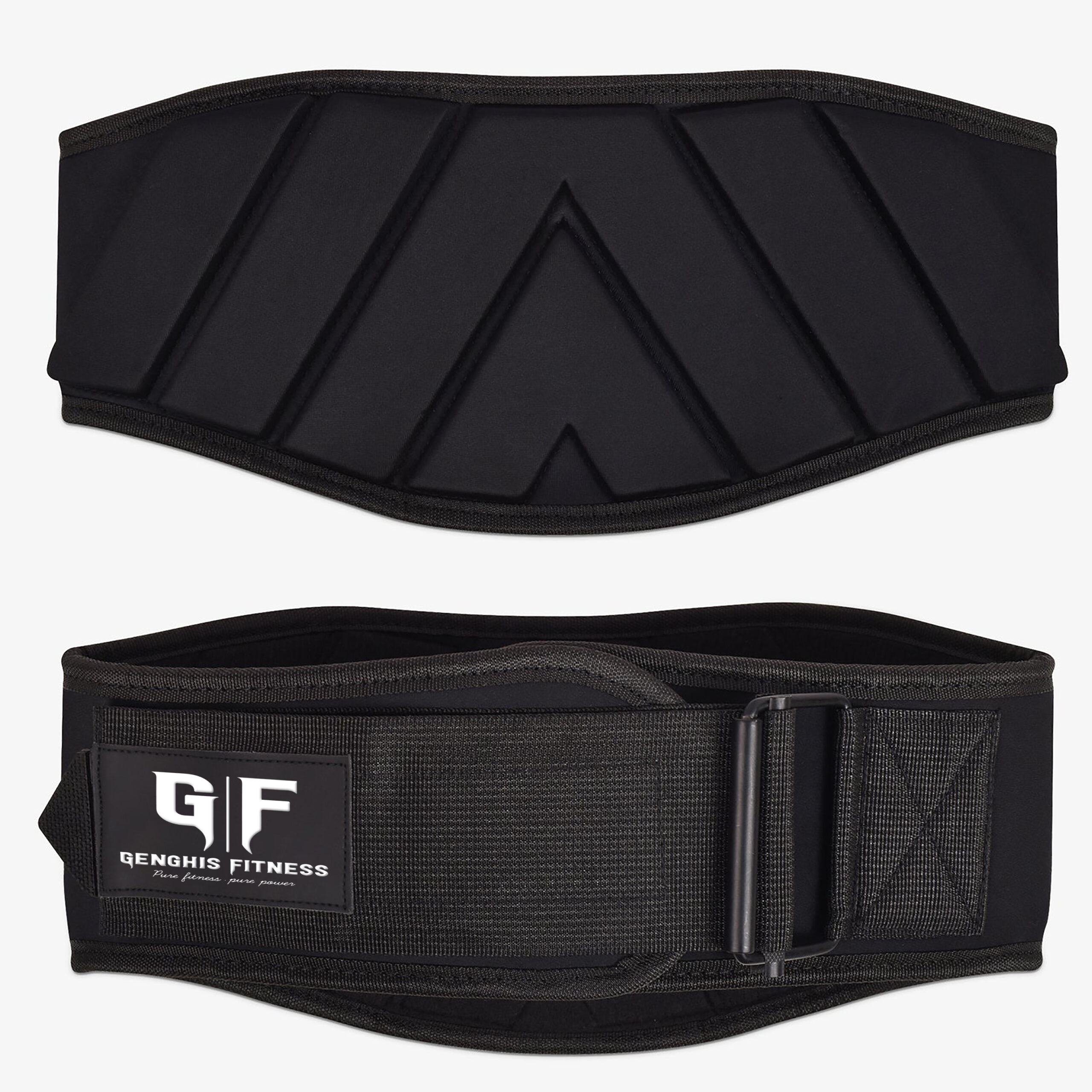
NEOPRENE WEIGHTLIFTING BELT WITH VELCRO: THE FUNCTIONAL FITNESS BELT GUIDE
A neoprene weightlifting belt with velcro closure combines the thermal retention and flexibility properties of neoprene construction with the quick-adjust convenience of velcro fastening, producing a belt designed for functional fitness training, CrossFit, and general strength training contexts where multiple exercises are performed in the same session at varying intensities and the belt must be applied and removed frequently between exercises. The neoprene material provides warmth to the lumbar area alongside the IAP support mechanism that all lifting belts provide, while the velcro closure allows the tension to be adjusted instantly without the application time overhead of prong or lever closures.
THE IAP MECHANISM IN A NEOPRENE VELCRO BELT
The IAP mechanism of a neoprene velcro belt operates identically to any other lifting belt: the core musculature braces outward against the belt’s circumferential surface to generate the intra-abdominal pressure that reduces lumbar spinal loading during heavy compound exercises. Research on belt material properties and IAP generation confirms that any belt that provides adequate rigidity at the bracing surface produces meaningful IAP amplification. Neoprene at the typical 7mm to 10mm thickness used in quality training belts provides this rigidity across the general training intensity range below near-maximum effort, making it appropriate for the compound strength training applications where it is most commonly used.
THE VELCRO ADVANTAGE: FASTEST IN-SESSION ADJUSTMENT
The velcro closure’s primary advantage is the fastest possible in-session application adjustment of any belt closure type. An athlete moving through a functional fitness circuit from deadlifts to overhead press to box jumps can tighten the velcro for the deadlifts, adjust it for the overhead press, and loosen it fully for the box jumps in five seconds each way. This speed of adjustment is the design purpose of the velcro closure and its main advantage over prong and lever belts in training contexts where the belt tension needs to vary between exercises or where the belt needs to come off entirely for movements where wearing it is counterproductive.
THE VELCRO LIMITATION: CONSISTENCY REQUIRES DELIBERATE APPLICATION
The velcro closure limitation compared to lever and prong alternatives is the consistency of tension engagement. Velcro can be applied at any tension within the available range, but the tension is not fixed by the mechanism in the way that a lever click or prong hole provides a specific, reproducible tension. Athletes who apply their neoprene velcro belt casually, pressing the velcro without careful attention to the tension level, may apply different tensions on different sets, producing inconsistent IAP support across a session. Athletes who deliberately apply the belt at a consistent tension each time access the same protection per set that more controlled closure types provide automatically.
THE NEOPRENE THERMAL BENEFIT BEYOND IAP
The neoprene material provides a secondary thermal benefit for the lumbar musculature that leather and nylon belts do not deliver equivalently. The closed-cell rubber structure of neoprene retains heat at the skin contact surface, maintaining elevated lumbar muscle temperature during rest periods between sets in a way that bare training leaves to cool. This thermal component is most relevant for athletes who train in cool environments or who experience lumbar stiffness during extended rest periods between heavy sets. The Genghis Fitness neoprene weightlifting belt provides both the IAP mechanism of any quality belt and this neoprene-specific thermal benefit alongside the velcro convenience.
VELCRO CARE: THE SPECIFIC MAINTENANCE REQUIREMENT
Velcro care is the primary maintenance consideration specific to neoprene velcro belts beyond the standard neoprene cleaning protocol. Velcro accumulates lint, chalk, and hair fibers during training use that reduce the velcro’s engagement strength progressively over weeks and months of regular use. Clean the velcro before and after every training session by running a fingernail or fine-toothed comb along the velcro strips to remove embedded material. Store the belt with the velcro pressed closed against a compatible surface rather than open to collect debris. A velcro closure that has been consistently maintained retains its engagement strength across years of training use. Neglected velcro that is not cleaned becomes less reliable and may require periodic velcro replacement to restore closure security.
WIDTH SELECTION FOR NEOPRENE VELCRO BELTS
Width selection for a neoprene velcro belt follows the same 4-inch standard that most lifting belt width discussions apply: 4 inches at the widest point provides adequate lumbar coverage for most athletes across the compound exercises where belt use is warranted. Some neoprene velcro belts are available in 6-inch wide designs that provide more contact area and potentially more IAP support, but the wider design also creates more contact with the hip bones during deep squatting and the hip crease during the deadlift starting position, which can be uncomfortable and disruptive to technique for some athletes. The 4-inch standard width serves most training applications without the hip contact complications that wider designs introduce.
CORRECT SIZING AT THE ILIAC CREST
Sizing a neoprene velcro belt follows the iliac crest measurement protocol that applies to all lifting belts. Measure the waist circumference at the iliac crest level, not the clothing waist measurement. The iliac crest measurement for a velcro belt determines which size provides the velcro strip length to allow adequate tension adjustment across the training and clothing layer range. A neoprene velcro belt that is too small will have the velcro strips at the extreme end of their overlap range at training tension, limiting the ability to tighten further if needed. A belt that is too large will require a large amount of velcro overlap that may reduce the positional stability of the closure under the outward bracing force during heavy compound exercises.
PAIRING WITH COMPLETE TRAINING SUPPORT
Pair the neoprene velcro belt with knee sleeves throughout functional fitness and strength training sessions for complete lower body joint support alongside the lumbar support the belt provides. Lifting straps address grip management during heavy pulling exercises within sessions where the neoprene belt provides lumbar support. For athletes who train at intensities approaching competition-level loading, transitioning from a neoprene velcro belt to a 10mm lever belt or nylon belt with buckle closure for the heaviest sets provides the rigidity and consistency advantage that near-maximum loading demands over neoprene’s somewhat more flexible structure.
FINAL WORDS
A neoprene weightlifting belt with velcro closure serves functional fitness training, CrossFit programming, and general strength training contexts where quick tension adjustment, neoprene thermal retention, and comfortable wearing across varied exercise types are the priorities. The Genghis Fitness neoprene weightlifting belt provides the IAP mechanism that makes any quality belt functionally protective, the neoprene thermal benefit specific to this material, and the velcro convenience that makes multi-exercise session use practical. Maintain the velcro consistently, size at the iliac crest measurement, apply with deliberate tension attention, and pair with the complete training support system that addresses every joint and performance variable in the diverse training sessions that this belt type serves.
The neoprene velcro belt’s position in the broader belt market is that of the convenient, comfortable training companion for athletes who prioritize session flexibility over maximum IAP rigidity. It is not the belt that elite powerlifters use for their competition-maximum squats and deadlifts, and it was not designed to be. It is the belt that makes belt use practical across the full range of a varied training week, from heavy compound work where the velcro can be tightened firmly for the IAP benefit to metabolic conditioning where the velcro can be loosened for movement comfort to the quick transition exercises that a prong or lever belt would make impractical. This context-appropriate role is where the neoprene velcro belt delivers genuine value and where athletes who understand its specific strengths use it most effectively.
Certified strength and conditioning specialists with over 10 years of experience in powerlifting, nutrition, and evidence-based fitness content. Based in New York City.
Related guides and comparisons are collected in the weightlifting belt guides, covering all belt materials, thicknesses, closure systems, and sport-specific recommendations in one location.