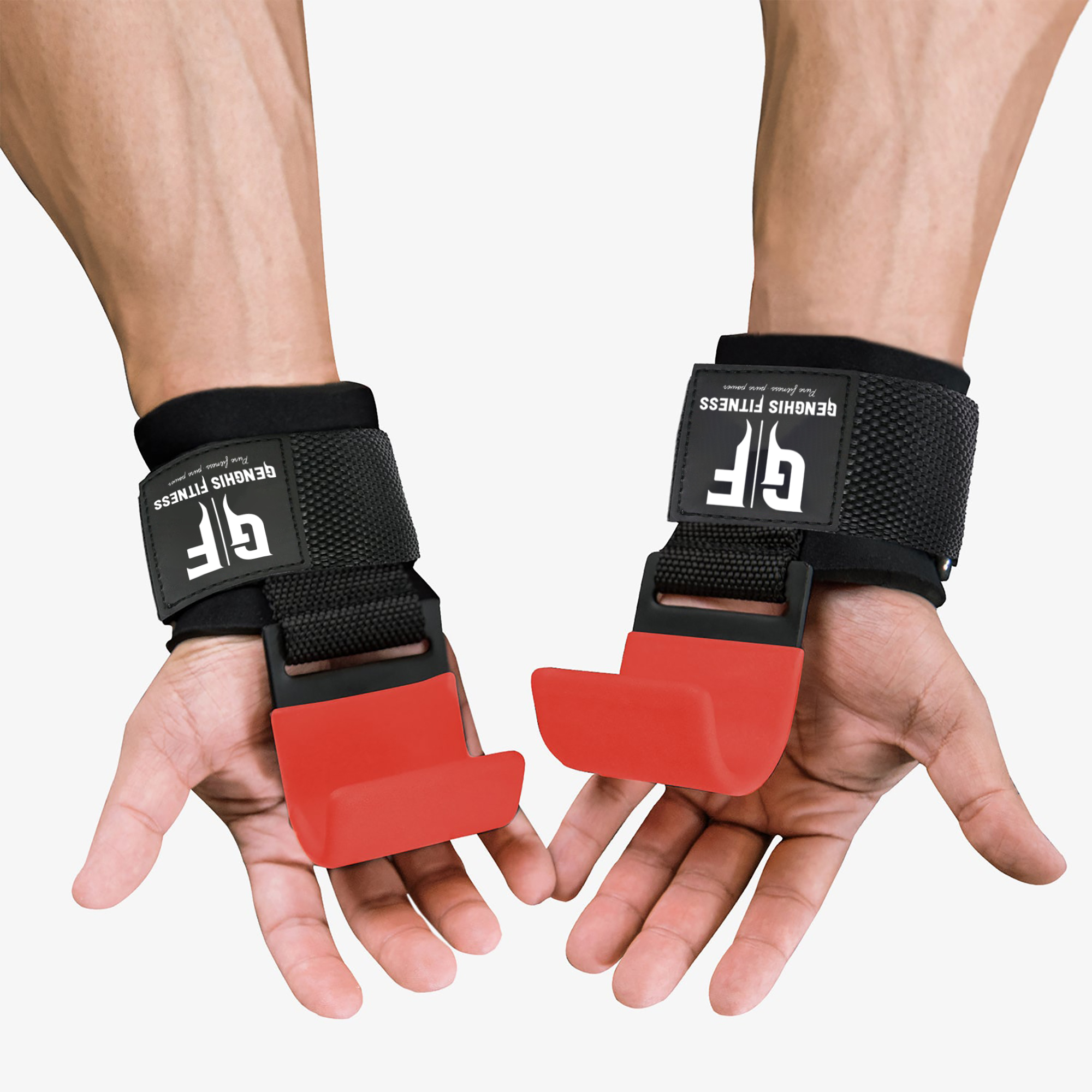
PADDED WEIGHT LIFTING HOOKS: HOW WRIST PADDING MAKES HEAVY PULLING COMFORTABLE AND PRODUCTIVE
The Problem With Unpadded Lifting Hooks
Standard lifting hooks do the job of securing the bar to the wrist effectively, but a metal hook attached to a narrow wrist strap creates a specific problem at heavy loads: the edge of the hook hardware and the wrist strap concentrate the cable load on a small area of the wrist and hand rather than distributing it across the broader surface that padded designs achieve. At submaximal loads this is a minor nuisance. At truly heavy loads, particularly during sustained deadlift sets or high-rep shrug sessions, the localized pressure from an unpadded hook becomes uncomfortable enough to cut sets short before the target muscles are actually fatigued. Padded weight lifting hooks solve this problem by placing a cushioning layer between the hook hardware and the wrist and hand, distributing the load across a larger contact surface and allowing the target muscles to determine the end of a set rather than wrist discomfort.
The hook mechanism itself, regardless of padding, transfers the load from the bar through the steel hook to the wrist strap and forearm, removing grip strength as the limiting factor for heavy pulling. Research published in the Journal of Human Kinetics confirmed that grip fatigue significantly limits pulling exercise volume before target muscles are fully worked. Hooks eliminate this limitation more completely than straps because the steel hook engages the bar mechanically rather than relying on friction from a fabric wrap. Adding padding to this already-effective mechanism addresses the comfort limitation that prevents many athletes from using hooks for high-volume work without discomfort accumulating across a session.
How Padded Lifting Hook Designs Work
Wrist Strap Padding
The wrist strap is the component that sits against the wrist and transmits the pulling load into the forearm. Padded wrist straps use neoprene, EVA foam, or dense gel padding bonded to the inner face of the strap material. This padding distributes the load from the hook across a wider area of the wrist, reducing the peak pressure at any single point and preventing the bone-on-strap contact that creates the bruising and discomfort unpadded hooks cause during high-volume heavy work. A wrist strap with 8 to 12mm of padding provides meaningful pressure distribution for loads up to 400 or more pounds, which covers the vast majority of athlete applications.
Palm Padding
Some padded hook designs extend the padding to cover the palm as well as the wrist, providing cushioning where the hook hardware exits the strap and contacts the hand. This palm padding is particularly valuable for athletes whose hook position during deadlifts or rows causes the hook body to press against the base of the fingers or the metacarpal bones. Palm cushioning prevents the callus wear and temporary numbness that can develop in athletes who train with hooks at high frequency without any hand protection.
Hook Material and Coverage
The hook itself should be solid forged or machined steel, not cast hardware. Cast hooks can have internal voids that create stress concentration points under repeated loading. Forged or machined steel hooks are solid throughout and rated for the loads that serious training demands. Some padded hook designs also coat the hook surface with a rubberized or vinyl covering that prevents the hook from slipping on the bar surface during the initial engagement and reduces the cold-metal contact that bare steel hooks produce in cold training environments.
Who Benefits Most From Padded Lifting Hooks
High-Volume Back and Trap Athletes
Athletes performing four to six sets of heavy shrugs, rack pulls, and rows multiple times per week accumulate significant wrist load per session. Without padding, this load concentrates on the same small areas of the wrist repeatedly, causing the progressive discomfort buildup that interferes with training quality in later sets and later sessions in the week. Padded hooks allow these athletes to maintain training quality throughout an entire back session and across a full training week without wrist discomfort determining when sets end.
Athletes With Small or Bony Wrists
Athletes with smaller wrist circumference or prominent wrist bones have less soft tissue cushioning between the hook hardware and the bones, making unpadded hooks disproportionately uncomfortable at equivalent loads compared to athletes with larger, more padded wrists. Padded hooks level this anatomical playing field by providing artificial cushioning that compensates for reduced natural padding. For these athletes, the difference between padded and unpadded hooks can mean the difference between hooks being a usable tool and hooks being too uncomfortable to use consistently at training loads.
Beginners to Hook Training
Athletes new to lifting hooks who have trained primarily with bare hands or loop straps often find the initial mechanical feel of a hook against the wrist surprising and uncomfortable until they adapt to it. Padded hooks make this adaptation period significantly more comfortable, which encourages consistent hook use rather than abandoning the tool after a few uncomfortable sessions. Once comfortable with padded hooks, some athletes transition to standard hooks for their heaviest sets while keeping padded hooks for volume work. Complement hook training with lifting straps for moderate loads where the full security of a hook is not needed and grip development through strap-assisted training remains beneficial.
Best Exercises for Padded Lifting Hooks
Heavy Barbell Shrugs
Heavy shrugs are the primary application where padded hooks produce the biggest comfort difference compared to standard hooks. The sustained downward load of a heavy barbell shrug set creates constant compressive force between the hook hardware and the wrist across every second of the set. At 300 pounds or more, even a few seconds of this sustained compression against unpadded hardware becomes uncomfortable enough to compromise focus on the trap contraction. Padded hooks allow the trap and upper back muscles to do the work without wrist discomfort competing for attention. Pair padded hooks with a 10mm lever belt for full lumbar support on heavy shrug loading.
Rack Pulls and Deadlifts
Rack pulls and conventional deadlifts at supra-maximal loads require the most secure grip assistance available, and padded hooks provide that security with wrist comfort that standard hooks cannot match at these extreme loads. The padded wrist strap distributes the eccentric loading of lowering a heavy rack pull across the full wrist contact area rather than concentrating it on the narrow strap edge, which produces significantly less post-session wrist soreness compared to unpadded alternatives.
Chest-Supported and Cable Rows
Machine and cable rowing movements involve constant cable tension throughout every rep, which creates more cumulative wrist load per rep than free-weight pulling where momentary load reduction occurs at the top of each rep. For high-rep cable row sets of 15 to 20 repetitions, the total hook-to-wrist contact load per set is substantial. Padded hooks make these high-rep volume sets comfortable from start to finish rather than producing progressive wrist fatigue that limits either the rep count or the load used.
Caring for Padded Lifting Hooks
Wipe down padded hook straps with a damp cloth after each session to remove sweat and chalk from the strap and padding surfaces. Chalk that packs into the foam padding layer over multiple sessions reduces the cushioning effectiveness by filling the foam cells with abrasive material. Hand wash the strap portion in cold water with mild soap every two to three weeks, rinse thoroughly, and air dry completely before storage. Inspect the stitching at the hook attachment point before each session for any signs of fraying or separation. Keep the steel hook itself wiped dry after sessions in humid training environments to prevent surface rust on hooks without rubberized coating.
FINAL WORDS
Padded weight lifting hooks make heavy pulling training more productive by removing wrist discomfort as a variable that determines the end of sets before the target muscles are actually fatigued. The padding is not about making training softer. It is about making the interface between your body and the equipment as comfortable as it needs to be so the actual training can proceed without distraction. Invest in quality Genghis Fitness lifting hooks, use them strategically on your heaviest pulls, and experience what back and trap training feels like when grip and wrist comfort are never the limiting factors.
Certified strength and conditioning specialists with over 10 years of experience in powerlifting, nutrition, and evidence-based fitness content. Based in New York City.
For the complete collection of dip belt, arm blaster, and ankle strap guides, visit the gym accessories guides covering every gym accessory that extends what barbells alone cannot provide.